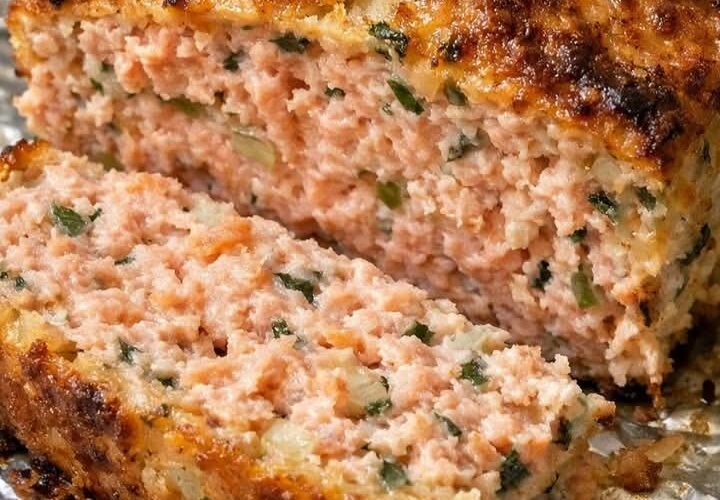
🐟 Oven-Baked 6-Ingredient Retro Salmon Loaf: The Ultimate Comfort Food Classic
There is something profoundly magical about mid-century American comfort food. Long before grocery store aisles were dominated by hyper-processed meal kits, home cooks relied on clever, shelf-stable ingredients to build hearty, nutritious dinners that could feed a crowd on a budget.
Enter the classic retro salmon loaf.
If you grew up anywhere near a family dinner table in the 1960s, 1970s, or 1980s, chances are you’ve encountered some version of this dish. It is a cousin to the traditional beef meatloaf, but lighter, distinctly savory, and packed with a nostalgic flavor profile that feels like a warm hug from grandmother.
Today, we are stripping away the overly complicated additions and returning to the absolute best version of this recipe: an Oven-Baked 6-Ingredient Retro Salmon Loaf. It’s simple, incredibly affordable, rich in healthy omega-3 fatty acids, and takes less than 10 minutes of hands-on prep work.
Whether you are looking to recreate a childhood favorite, trying to use up the canned goods in your pantry, or hunting for a budget-friendly seafood dinner that your whole family will actually eat, this recipe checks every single box. Let’s dive deep into how to make the perfect, non-soggy, deeply flavorful retro salmon loaf.
🧐 Why This Simple Recipe Actually Ranks as a Modern Superfood
Before we jump into the kitchen, let’s talk about why this vintage recipe deserves a permanent spot in your modern weekly meal rotation.
For a long time, canned seafood was unfairly relegated to the back of the pantry. But home cooks and nutritionists alike have rediscovered its immense value. Canned wild-caught pink salmon is an absolute powerhouse of nutrition. It is naturally high in high-quality protein, loaded with heart-healthy omega-3 fatty acids, and provides an excellent source of Vitamin D and calcium.
When you bake it into a loaf structured with classic saltine crackers and aromatic minced onions, you create a dish that balances rich seafood flavor with a comforting, buttery texture. It is a fantastic option for:
- Busy Weeknights: Prep takes minutes, leaving your hands free while it bakes in the oven.
- Budget-Conscious Meal Planning: Fresh salmon can be cost-prohibitive for large families. Canned salmon delivers the same nutritional benefits at a fraction of the price.
- Lenten or Friday Dinners: A wonderful alternative to fried fish sticks or heavy tuna casseroles.
🛒 The 6 Core Ingredients (Plus Easy Substitutions)
To keep this recipe truly authentic and remarkably easy, we are sticking to just six main ingredients (not counting the pantry-staple salt, pepper, and cooking spray). Each ingredient plays a vital role in ensuring the loaf holds its shape, stays moist, and tastes incredibly balanced.
1. Canned Pink Salmon (2 Cans, 14–15 oz Each)
This is the star of the show. Look for wild-caught canned pink salmon. When you open the cans, you will notice that the salmon contains some soft bones and skin.
- The Retro Way: Classic cooks often left the bones and skin right in! The bones are completely soft from the canning process and mash down easily, providing a massive boost of natural calcium.
- The Modern Way: If the texture or appearance bothers you, simply spend two minutes flaking the fish with a fork on a plate and removing the round backbone pieces and darker skin before mixing.
2. Finely Crushed Saltine Crackers (1 Cup / About 24 Crackers)
Forget breadcrumbs—authentic retro salmon loaf demands saltines. The crackers provide a distinct, buttery saltiness and create the perfect structural binder. They absorb the liquids without turning the loaf into a gummy paste, ensuring a tender slice that holds together cleanly on your plate.
3. Large Eggs (2)
The eggs act as your primary binding agent. They coagulate during the baking process, locking the flaked salmon and cracker crumbs into a cohesive loaf structure. Whisking them lightly before adding them ensures they distribute evenly throughout the mixture.
4. Whole Milk or 2% Milk (1/2 Cup)
Seafood can dry out quickly in a hot oven. Milk provides the essential moisture needed to keep the loaf succulent. Whole milk gives the richest flavor and a velvety interior texture, though 2% works wonderfully as well.
5. Finely Minced Onion (1/4 Cup)
A little bit of raw, finely minced white or yellow onion adds a sharp, aromatic crunch that cuts through the richness of the fish. Make sure to mince the onion very finely so that it cooks through completely during its time in the oven.
6. Dried Parsley Flakes (1 Tablespoon)
Parsley brings a touch of color and a clean, earthy note to the loaf. It breaks up the monochromatic look of the salmon and adds that classic visual aesthetic that screams mid-century home cooking.
🧂 The Optional Seasonings: We highly recommend adding 1/2 teaspoon of kosher salt and 1/4 teaspoon of black pepper to elevate the natural flavors, though you can adjust these based on how salty your specific brand of saltine crackers is!
🥣 Step-by-Step Instructions: How to Make an Authentic Salmon Loaf
Making this recipe is incredibly straightforward, but following the correct order of operations ensures your loaf won’t crumble when you go to slice it.
Step 1: Prep Your Oven and Loaf Pan
Preheat your conventional oven to 350°F (175°C). Line an 8.5 x 4.5-inch (or a standard 9×5-inch) loaf pan with a sheet of aluminum foil, leaving an inch of overhang on the sides. Spray the foil generously with nonstick cooking spray or brush lightly with oil.
Why use foil? Salmon loaf is delicate. The foil lining allows you to lift the entire loaf cleanly out of the pan after baking, making slicing incredibly easy and preventing the sides from sticking and tearing.Step 2: Prepare the Canned Salmon
Drain the liquid thoroughly from both cans of salmon. If you prefer a cleaner look and texture, transfer the salmon to a large plate. Use a fork to gently break the salmon apart, discarding the large skin pieces and the round, brittle vertebrae bones. If you don’t mind them, leave them in and simply mash them down with your fork until completely broken up.
Step 3: Crush Your Saltines
Place about 24 saltine crackers into a large zip-top plastic bag. Seal the bag, leaving a tiny gap for air to escape, and roll over it with a rolling pin or the back of a heavy measuring cup until you have fine crumbs. You want a few tiny rustic chunks left for texture, but it should mostly look like coarse sand. Measure out exactly 1 cup of these crumbs.
Step 4: Create the Base Mixture
In a small bowl, lightly beat your 2 large eggs with a fork. Pour in the 1/2 cup of milk, the 1/4 cup of finely minced onion, 1 tablespoon of dried parsley flakes, salt, and pepper. Stir this liquid mixture together. Pro-tip: Mixing your aromatics and liquids first ensures that the seasonings are perfectly distributed before they hit the bulky salmon.
Step 5: Combine and Fold
In a large mixing bowl, combine your flaked salmon and the 1 cup of crushed saltines. Pour the egg and milk mixture over the top. Using a rubber spatula or clean hands, gently fold and mix the ingredients together until a cohesive, wet dough forms. Avoid over-mixing or aggressively mashing the fish; you want to preserve some beautiful, recognizable flakes of salmon within the loaf.
Step 6: Form and Bake
Transfer the salmon mixture into your prepared, foil-lined loaf pan. Use the back of a spoon or your fingers to press the mixture firmly into the corners and smooth out the top into an even layer. This firm pressing is key to preventing air pockets that cause crumbling later. If desired, sprinkle an extra pinch of dried parsley or a dust of paprika across the top for visual flair.
Bake in the center rack of your preheated oven at 350°F (175°C) for 40 to 45 minutes. You will know it is done when the top forms a beautiful, light golden-brown crust, the edges look crispy and pulled away from the sides slightly, and an instant-read thermometer inserted into the dead center reads 160°F (71°C).Step 7: The Most Critical Step — Rest Before Slicing!
When the salmon loaf comes out of the oven, it will be incredibly fragile due to the hot steam inside. Do not try to slice it immediately! Let the loaf sit undisturbed in its pan on a wire rack for 10 to 15 minutes. As it cools slightly, the starches in the saltines and the proteins in the egg will fully set up, locking the juices inside and creating a firm structure.
Once rested, use the aluminum foil overhangs to carefully lift the entire loaf out of the pan and place it onto a cutting board. Use a sharp, serrated knife to cut clean, thick slices.🎛️ Master Guide: The Exact Baking Matrix
Depending on your kitchen equipment and your stylistic preference, you can adapt how you bake this retro classic. Use this quick reference guide to get perfect results every single time:
Baking Method Temperature Cooking Time Best Used For… Pro-Tip for Success Standard Loaf Pan (Classic) 350°F (175°C) 40–45 mins Ultimate moisture retention and traditional thick, uniform slices. Line with foil for easy lifting. Free-Form Loaf (Sheet Pan) 375°F (190°C) 30–35 mins Maximizing crispy, golden-brown edge crust all the way around. Shape tightly with your hands so it doesn’t flatten out. Muffin Tin (Mini Salmon Loaves) 375°F (190°C) 20–25 mins Built-in portion control, faster cooking, and kid-friendly serving. Grease the muffin wells heavily or use parchment liners. 👩🍳 Golden Rules to Prevent Crumbling and Sogginess
The two biggest complaints people have with fish loaves are that they either turn out dry and crumbly, or they become a soggy, wet mess. Let’s look at the simple food science behind avoiding both pitfalls.
How to Stop Your Salmon Loaf from Crumbling
If your loaf falls apart into a pile of loose fish when you cut it, one of three things went wrong:
- The crackers were too large: If your saltine pieces are massive chunks, they can’t create an unbroken network to trap the fish. Ensure they are rolled down to a fine, sandy consistency.
- It wasn’t packed tightly enough: When loading the mixture into the pan, compress it firmly. You want to push out any hidden air pockets.
- You cut it too hot: Slicing a salmon loaf the second it leaves the oven is a recipe for disaster. Give it that 10-to-15-minute rest period. It’s non-negotiable!
How to Prevent a Soggy Interior
No one wants a mushy dinner. If your loaf is waterlogged, it’s almost always a draining issue. Canned salmon sits in a significant amount of water or brine. You must pour the contents of the can into a fine-mesh strainer and let it sit for a minute or two. Give it a gentle press with a spoon to express that excess surface liquid before adding it to your mixing bowl.
🍋 Elevating Your Loaf: The Best Sauces and Variations
While this 6-ingredient recipe is utterly delicious completely on its own, adding a retro-inspired sauce can take it from a simple weeknight supper to a stunning dinner party centerpiece. Here are three classic sauces that pair exquisitely with the savory profile of cooked salmon.
🌿 1. The Classic Creamy Dill Sauce (Highly Recommended)
Nothing complements salmon quite like dill and lemon. This no-cook sauce can be whipped up while the loaf is in the oven.
- Ingredients:
- 1/2 cup sour cream (or plain Greek yogurt)
- 1/4 cup mayonnaise
- 1 tablespoon fresh lemon juice
- 1 tablespoon chopped fresh dill (or 1 teaspoon dried dill weed)
- 1/4 teaspoon garlic powder
- Salt and pepper to taste
- Method: Whisk all ingredients together in a small bowl. Chill in the refrigerator for at least 20 minutes before serving cold over warm slices of salmon loaf.
🍄 2. The Vintage Mushroom Cream Sauce
If you want to go full 1950s diner-style, this rich, warm gravy is an absolute showstopper.
- Ingredients:
- 1 can (10.5 oz) condensed cream of mushroom soup
- 1/3 cup whole milk
- 1/2 cup sliced canned or fresh mushrooms (sautéed)
- A splash of dry white wine (optional)
- Method: Combine the soup, milk, and mushrooms in a small saucepan over medium-low heat. Simmer for 5 minutes until smooth and piping hot. Pour generously over individual slices of the baked loaf.
🍅 3. The Tangy Glaze
If your family loves traditional beef meatloaf with a sweet and tangy top glaze, you can apply that same technique here.
- Ingredients:
- 1/3 cup ketchup
- 1 tablespoon yellow mustard
- 1 tablespoon brown sugar
- Method: Whisk together and brush evenly over the top of the salmon loaf during the last 15 minutes of its baking time. The sugars will caramelize into a glossy, flavorful crust.
🥗 What to Serve with Your Retro Salmon Loaf
To complete the nostalgic experience, pair your salmon loaf with classic, comforting side dishes. Because the loaf is relatively rich, it benefits immensely from sides that offer a contrast in texture or brightness.
The Starchy Classics
- Fluffy Mashed Potatoes: The absolute gold standard companion. A spoonful of cream sauce over both the salmon loaf and a well of mashed potatoes is pure culinary heaven.
- Buttered Egg Noodles: Tossed with a little sea salt and fresh parsley to mirror the flavors inside the loaf.
- Rice Pilaf: The light, fluffy grains absorb any accompanying sauces beautifully.
Bright and Green Sides
- Steam-Crisp Green Beans: Tossed with a squeeze of fresh lemon juice and a touch of melted butter to cut through the richness of the salmon.
- Classic Creamed Peas: A traditional mid-century pairing that adds sweetness and a beautiful color contrast to the plate.
- A Crisp Garden Salad: A simple bed of romaine or iceberg lettuce dressed with a bright, acidic vinaigrette helps refresh the palate between bites.
🧊 Storage, Reheating, and Leftover Secrets
If you have leftover salmon loaf, you are in luck! Salmon loaf keeps exceptionally well and makes for some of the best next-day lunches imaginable.
Storing in the Fridge
Allow the leftover loaf to cool completely to room temperature. Wrap it tightly in plastic wrap or aluminum foil, or place individual slices into an airtight container. It will keep beautifully in the refrigerator for up to 3 to 4 days.
Can You Freeze Salmon Loaf?
Yes! You can freeze this loaf either before or after baking.
- To Freeze Unbaked: Assemble the mixture in a disposable foil loaf pan, wrap it tightly with a double layer of plastic wrap and a final layer of heavy-duty aluminum foil. Freeze for up to 3 months. Thaw completely overnight in the refrigerator before baking according to the standard instructions.
- To Freeze Baked Leftovers: Slice the cooked, cooled loaf into individual portions. Wrap each slice tightly in plastic wrap, then place them all into a heavy-duty freezer bag. Freeze for up to 2 months. Thaw individual slices as needed for quick meals.
How to Reheat Without Drying It Out
Seafood is highly sensitive to reheating. If you blast it at high power in the microwave, it can become rubbery and develop an overly fishy aroma.
- The Oven Method (Best Result): Place your slices in a baking dish, add a tablespoon of water or broth to the bottom of the pan to create steam, and cover tightly with foil. Heat at 325°F (160°C) for 10 to 12 minutes until warmed through.
- The Skillet Method (The Leftover Secret): Melt a tiny pat of butter in a nonstick skillet over medium heat. Fry individual slices of cold salmon loaf for 2 to 3 minutes per side until a crispy crust forms on the cut surfaces. This completely transforms the texture and tastes arguably better than it did on night one!
🥪 The Ultimate Leftover Salmon Loaf Sandwich
If you have never tried a cold salmon loaf sandwich, you are missing out on one of life’s greatest simple pleasures. Take a cold slice of the leftover loaf, place it between two pieces of toasted white or sourdough bread, add a thick smear of mayonnaise or tartar sauce, and top with a crisp leaf of lettuce. It is crunchy, savory, creamy, and puts any standard tuna salad sandwich to absolute shame.
📋 Complete Printable Recipe Card
Keep this clean, standardized recipe card handy for the next time you need a fast, foolproof dinner option.
- Preheat & Prep
Temp: 350°F (175°C) | Time: 5 min
Preheat your oven to 350°F. Line an 8.5×4.5-inch loaf pan with aluminum foil, leaving an overhang on the sides. Spray the foil thoroughly with nonstick cooking spray.- Drain & Clean Salmon
Time: 5 min
Open both cans of pink salmon and drain away all canning liquids completely. If desired, flake the meat gently on a plate to remove and discard the dark skin and large backbones.- Crush & Measure Crackers
Time: 2 min
Place saltine crackers into a plastic bag and crush with a rolling pin until fine. Measure out exactly 1 cup of cracker crumbs and set aside.- Whisk Liquid Aromatics
Time: 2 min
In a small bowl, combine the 2 beaten eggs, 1/2 cup of milk, 1/4 cup of finely minced onion, 1 tablespoon of dried parsley flakes, and the optional salt and pepper. Whisk to integrate completely.- Combine & Fold
Time: 2 min
Place the flaked salmon and cracker crumbs into a large mixing bowl. Pour the liquid egg mixture over the top. Using a soft spatula, gently fold the ingredients together until everything is uniformly moistened.- Pack & Bake
Bake Time: 40–45 min
Transfer the salmon batter into your prepared loaf pan. Press it down firmly into the edges and smooth out the top surface. Place on the center rack of the oven and bake for 40 to 45 minutes until the top is golden-brown and firm.- Rest & Serve
Rest Time: 10–15 min
Remove from the oven and let the loaf rest in the pan for 10 to 15 minutes to set its structure. Use the foil handles to lift the loaf out, place on a board, cut into thick slices, and serve warm with your choice of sauce.❓ Frequently Asked Questions (FAQ)
Can I use fresh cooked salmon instead of canned?
Absolutely! If you have leftover baked or grilled fresh salmon, you can flake it down and use it in this exact recipe. You will need roughly 3 to 3.5 cups of flaked cooked salmon to replace the two cans. Because fresh salmon doesn’t have the same built-in moisture as canned, you may want to add an extra tablespoon of milk if the mixture feels a little too dry or powdery.
Can I make this gluten-free?
Yes, it is incredibly simple to modify. To make this recipe gluten-free, substitute the 1 cup of crushed saltine crackers with an equal amount of your favorite gluten-free cracker crumbs, or use 3/4 cup of gluten-free panko breadcrumbs. Check to make sure your binders are well integrated, as alternative grains absorb liquids at slightly different rates.
Why is my salmon loaf turning out too fishy?
The intensity of the fish flavor heavily depends on the brand and type of salmon used. Pink salmon is generally very mild and sweet compared to red sockeye salmon. If you are highly sensitive to fish flavors, ensure you thoroughly discard all the dark skin pieces from the meat before mixing, and consider adding a teaspoon of fresh lemon zest or a dash of garlic powder directly into the liquid mixture to brighten up the overall flavor profile.
Do I have to use milk?
If you are managing a dairy allergy, you can easily substitute the whole milk with an unsweetened, unflavored plant-based milk alternative like almond milk or oat milk. Alternatively, you can use an equal amount of chicken broth or even a bit of the reserved liquid from the salmon cans, though the texture won’t be quite as creamy.
Give this classic, ultra-simple recipe a try tonight! It’s a wonderful journey through culinary history that proves you don’t need fancy, expensive ingredients to make a deeply satisfying, home-cooked meal that brings everyone rushing to the table.