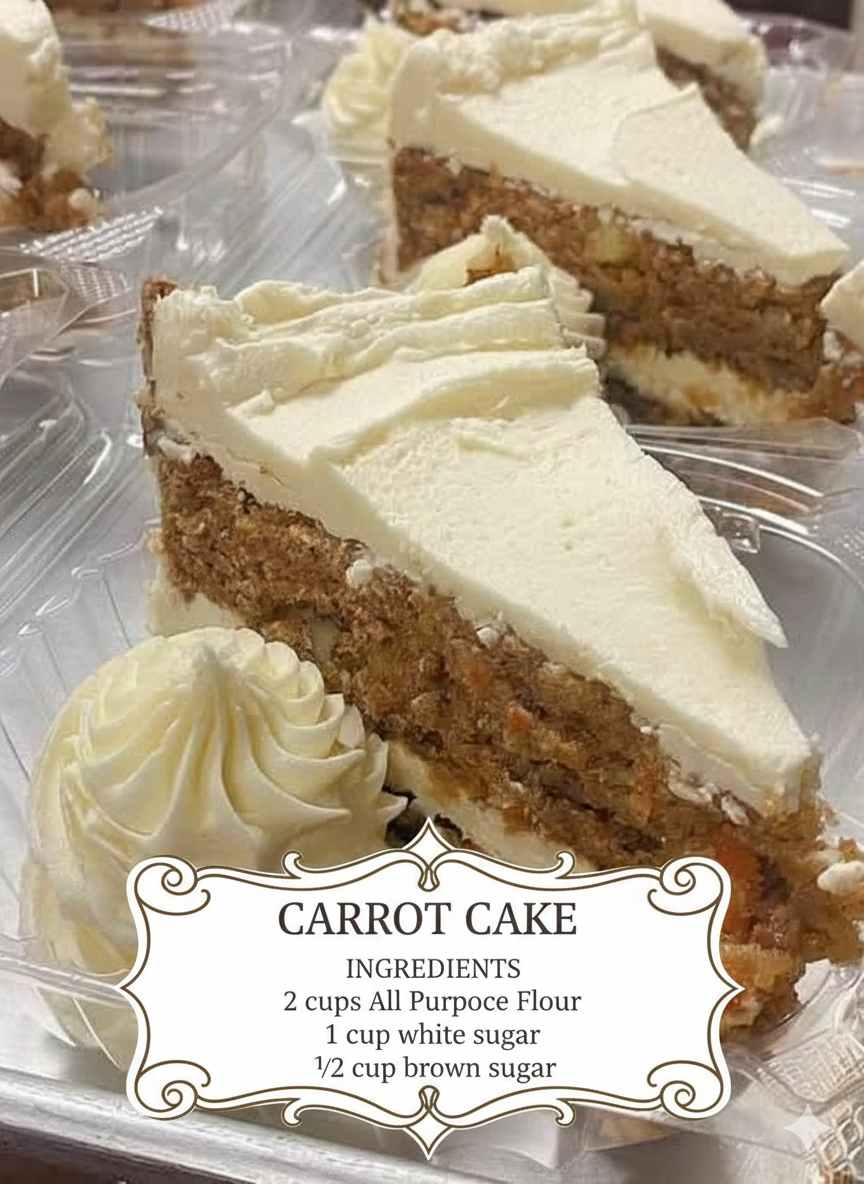
🍰 The Ultimate Carrot Cake: Moist, Fragrant, and Comforting
Introduction
Carrot cake is one of those rare desserts that manages to feel both indulgent and wholesome at the same time, a beautiful balance of sweetness, spice, and comfort baked into every slice. It carries a nostalgic warmth that reminds many people of cozy kitchens, family gatherings, and celebrations where the simplest ingredients come together to create something unforgettable. The aroma alone—rich cinnamon, warm nutmeg, and freshly grated carrots—sets the stage for an experience that is as soothing as it is flavorful, making this timeless dessert a beloved staple in countless households around the world.
Unlike many cakes that rely heavily on butter, this carrot cake uses a combination of vegetable oil and grated carrots, which keeps the crumb incredibly soft, moist, and tender even days after baking. The gentle sweetness of the carrots and the aromatic spices make it a cake that is delicious on its own, yet versatile enough to pair beautifully with your favorite frosting or a simple dusting of powdered sugar. Whether served at a holiday dinner, brought to a potluck, or made for a quiet weekend treat, this recipe proves that a handful of humble ingredients can produce a dessert worthy of celebration.
There’s a comforting simplicity in the process of making carrot cake, from the rhythmic motion of grating the carrots to the moment you pull a perfectly risen cake from the oven, golden and fragrant. This recipe honors the timeless tradition of homemade cakes while offering a reliable, easy-to-follow method that anyone—from beginner bakers to seasoned dessert enthusiasts—can master with confidence. The result is a cake with personality, depth, and the kind of comforting charm that makes every bite feel like a warm embrace.
Origin
While many people today associate carrot cake with holidays, brunch tables, or Southern American baking traditions, its earliest roots trace back many centuries to Europe. During medieval times, sweeteners like sugar were expensive and difficult to acquire, so cooks often relied on naturally sweet vegetables—such as carrots and beets—to add moisture and sweetness to cakes and puddings. This practice allowed bakers to produce satisfying desserts even during times of scarcity, proving that creativity in the kitchen has always been a key ingredient in culinary evolution.
Carrots, in particular, became a popular choice not only because they were affordable and easy to grow, but because they offered a subtle sweetness that complemented spices and grains beautifully. Early carrot-based desserts appeared in European cookbooks as early as the 1500s, evolving over centuries into more refined cakes and puddings as cooking techniques and ingredients became more widely available. These early recipes set the stage for what would eventually become the carrot cake we know today—moist, spiced, and deeply comforting.
In the United States, carrot cake surged in popularity during the mid-20th century, especially in the 1960s and 1970s, when home cooks began embracing more creative and wholesome baking trends. The introduction of cream cheese frosting as its signature topping solidified carrot cake’s place as an American classic. Today, it is celebrated worldwide as a dessert that seamlessly blends history, flavor, and tradition, maintaining its reputation as a recipe that respects its roots while continuing to delight modern bakers and dessert lovers alike.
Cultural Significance
Carrot cake has become far more than just a dessert; it holds a meaningful place in culinary culture because of the way it bridges different traditions, flavors, and histories. Its widespread popularity speaks to its universal appeal, resonating with people who appreciate comforting, spice-infused desserts that evoke memories of family gatherings, celebrations, or moments of quiet indulgence. The ingredients—carrots, spices, oil—reflect a humble origin that has blossomed into a beloved treat across cultures and generations, making carrot cake a dessert that feels both familiar and deeply cherished.
In many homes, carrot cake is tied to rituals and family traditions, appearing at Easter brunches, Thanksgiving tables, birthday celebrations, or as a simple weekend treat that brings everyone together. The warmth of cinnamon and nutmeg, combined with the soft sweetness of carrots, creates a flavor profile that feels timeless, offering comfort in every bite. This emotional connection to the cake reflects how certain desserts become woven into cultural identity, not only satisfying hunger but also symbolizing togetherness, generosity, and celebration.
The cake’s enduring popularity also highlights a growing appreciation for desserts that feel grounded in nature. Carrots lend a rustic charm, while spices evoke a sense of heritage and tradition. This connection to the earth and the past makes carrot cake an especially meaningful dessert in cultures that value nourishment from simple, wholesome ingredients. As a result, carrot cake remains an icon of culinary comfort—sweet, warm, and deeply rooted in the joys of both everyday and festive moments.
Ingredients Quantity
This carrot cake recipe uses a thoughtful balance of straightforward ingredients that come together harmoniously to create a flavorful, moist, and beautifully textured cake. You will begin with 1 cup of grated carrots, which provide natural moisture, subtle sweetness, and vibrant color. The grated carrots not only keep the cake wonderfully soft but also contribute to its characteristic depth, making them the heart of the recipe. Their texture blends seamlessly into the batter, creating the smooth, tender crumb that carrot cake is so famous for.
Next, you will need 1 cup of sugar, which adds essential sweetness and helps the cake brown beautifully as it bakes. The sugar combines with 1 egg, which provides structure and richness, ensuring the cake rises properly and maintains a light yet sturdy texture. Alongside the egg, ½ cup of vegetable oil supplies the moisture that gives carrot cake its signature softness, while 1 teaspoon of vanilla extract adds aromatic warmth that enhances the sweetness of the carrots and spices.
For the dry ingredients, you will use 1 cup of all-purpose flour, which forms the base structure of the cake. To help it rise and achieve a tender crumb, the recipe includes 1 teaspoon baking powder and 1 teaspoon baking soda, a combination that lifts the batter and creates a beautifully airy texture. Flavor comes from ½ teaspoon cinnamon and ¼ teaspoon nutmeg, spices that add warmth and depth, making every bite rich and comforting. Finally, ¼ teaspoon salt balances the sweetness, and 1 cup of milk incorporates seamlessly to bring the batter to the perfect consistency. Together, these ingredients create a cake that is moist, aromatic, balanced, and truly memorable.
Optional Additions
Carrot cake is one of the most versatile desserts because it welcomes countless variations without losing its signature character. If you enjoy additional texture, consider stirring in ½ cup of chopped walnuts or pecans, which add a delightful crunch that contrasts beautifully with the cake’s tender crumb. These nuts also contribute depth and nuttiness, enhancing the earthy sweetness of the carrots and complementing the spices with richness and warmth. Toasting the nuts beforehand intensifies their flavor even more.
For those who appreciate bursts of sweetness, you may add ½ cup of raisins or golden raisins to the batter. Their natural sugars plump during baking, transforming into soft, juicy bites that mingle perfectly with the cake’s spiced profile. Another fruit-forward option is adding ¼ cup of crushed pineapple, which boosts moisture and adds a bright, tropical note that pairs wonderfully with carrots. This variation is especially popular in Southern-style carrot cakes and creates a more decadent, melt-in-your-mouth experience.
If you love aromatic complexity, consider adding a pinch of cloves, a dash of ginger, or grated orange zest for a citrusy lift. For richer indulgence, fold in ¼ cup of shredded coconut, which adds both texture and natural sweetness. The cake also pairs beautifully with different frostings—cream cheese frosting, whipped vanilla frosting, or even a light glaze—allowing you to tailor it to any occasion or personal preference. These optional additions invite creativity while preserving the soul of the classic carrot cake.
Tips for Success
To ensure your carrot cake turns out perfectly moist, tender, and beautifully risen, a few mindful steps can make all the difference. First, always use freshly grated carrots rather than pre-shredded ones. Pre-shredded carrots are often dry and lack the natural moisture needed to keep the cake soft and luscious. Freshly grated carrots, on the other hand, provide the perfect level of moisture and blend seamlessly into the batter, enhancing both flavor and texture in a way that prepackaged options cannot match.
Second, be careful not to overmix the batter after combining the wet and dry ingredients. Overmixing can develop too much gluten in the flour, resulting in a dense or chewy cake rather than the soft, tender crumb that makes carrot cake so irresistible. Stir the ingredients together just until everything is incorporated, and stop as soon as you no longer see streaks of flour. This technique helps maintain the cake’s lightness and ensures it bakes evenly without sinking or becoming tough.
Finally, make sure your oven is fully preheated before placing the cake inside, as proper temperature is essential for achieving the correct rise and texture. Grease and flour your pan thoroughly to prevent sticking, and avoid opening the oven door too early, which can cause the cake to fall. Allow the cake to cool completely before frosting or cutting, as cooling helps the crumb set and ensures clean, beautiful slices. Following these simple but important tips guarantees a carrot cake that is flavorful, moist, and consistently delicious every time.
Instructions
Begin by preheating your oven to 350°F (175°C) and preparing your baking pan by greasing it generously with butter and lightly dusting it with flour. This step ensures that your cake will release smoothly from the pan once baked, preserving its texture and shape. Next, in a large mixing bowl, combine 1 cup of grated carrots, 1 cup of sugar, 1 egg, ½ cup vegetable oil, and 1 teaspoon vanilla extract. Stir these ingredients together until the mixture is smooth and cohesive, with the carrots evenly distributed throughout.
In a separate bowl, whisk together 1 cup all-purpose flour, 1 teaspoon baking powder, 1 teaspoon baking soda, ½ teaspoon cinnamon, ¼ teaspoon nutmeg, and ¼ teaspoon salt. These dry ingredients provide structure, lift, and flavor to your cake, and whisking them ensures they blend evenly into the batter. Add the dry mixture to the carrot mixture, stirring gently until the flour is just incorporated—a crucial step that prevents overmixing and keeps the cake tender. Once blended, pour in 1 cup of milk, stirring only until the mixture becomes smooth and uniform.
Pour your finished batter into the prepared cake pan, spreading it evenly to ensure consistent baking. Place the pan in the preheated oven and bake for 40–45 minutes, or until a toothpick inserted into the center comes out clean. The cake will rise beautifully, filling your kitchen with the warm aroma of spices and sweet carrots. Once fully baked, remove it from the oven and allow it to cool completely before frosting, slicing, or serving. This cooling period allows the flavors to settle and ensures a perfect, moist texture in every slice.
Description
This carrot cake emerges from the oven as a golden, fragrant masterpiece, its surface slightly domed and beautifully textured, promising a moist interior beneath its subtly crisp exterior. The aroma that fills the kitchen is irresistible—a blend of warm cinnamon, earthy nutmeg, and sweet carrots that creates a sense of comfort and home. The cake’s soft crumb yields gently to the touch, revealing a tender interior that is flecked with vibrant orange strands of carrot, giving each slice a delightful visual appeal that perfectly complements its flavor.
The texture is one of the cake’s most defining features: moist but not heavy, soft yet structured, with a fine crumb that melts pleasantly on the tongue. The combination of vegetable oil, milk, and freshly grated carrots creates a moistness that lasts for days, making each slice as satisfying as the first. The spices are beautifully balanced, offering warmth without overwhelming the sweetness of the cake, while the vanilla adds a subtle floral note that ties all the flavors together into a harmonious whole.
Visually and aromatically inviting, this cake stands on its own even without frosting, though it pairs wonderfully with cream cheese frosting, vanilla buttercream, or a simple dusting of powdered sugar. Each bite offers a comforting blend of flavors and textures that feel both nostalgic and timeless, reminding you why carrot cake remains one of the most beloved desserts around the world. It is the embodiment of homemade warmth and celebration, transforming simple ingredients into a dessert that is both elegant and deeply satisfying.
Nutritional Information
Carrot cake, while indulgent, offers a thoughtful balance of nutrients thanks to its combination of wholesome ingredients and carefully measured sweetness. The carrots contribute fiber, antioxidants, and natural sweetness, while the milk provides protein and calcium that enrich each slice. The vegetable oil adds essential fats that give the cake its signature moistness, and the egg provides structure and additional nutrients. These components work together to create a dessert that feels satisfying without being overly heavy, offering both comfort and energy in every serving.
A typical slice of this carrot cake contains a moderate amount of sugar and fat, reflecting its nature as a sweet treat meant to be enjoyed mindfully. However, the inclusion of spices like cinnamon and nutmeg adds not only warmth and flavor but also potential antioxidant benefits. The balance of carbohydrates, fats, and proteins in the cake contributes to steady energy release, making it a dessert that satisfies cravings without causing sharp spikes in blood sugar when enjoyed in reasonable portions. This makes it a fitting choice for celebrations or occasional indulgence.
Those wishing to adjust the nutritional profile can easily adapt the recipe by reducing the sugar slightly, using a lighter milk, or incorporating whole wheat flour for added fiber. Optional additions like nuts or fruit can further enhance the cake’s nutritional value. Ultimately, carrot cake strikes a delightful balance between nourishment and indulgence, offering a sweet experience that aligns beautifully with a mindful approach to enjoying desserts as part of a varied and balanced lifestyle.
Conclusion
Carrot cake remains a cherished classic because it effortlessly combines simplicity, warmth, and timeless flavor into a dessert that feels truly special. This recipe brings together fresh carrots, gentle spices, and a tender crumb to create a cake that is both comforting and richly satisfying. Whether enjoyed on its own or adorned with frosting, each bite carries a sense of home, tradition, and celebration that resonates across cultures and generations. It is the kind of dessert that invites you to slow down and savor the small, meaningful pleasures in life.
The beauty of this carrot cake lies not only in its flavor but in its approachability. With basic ingredients and straightforward steps, it welcomes bakers of all experience levels to enjoy the process and craft something delicious. Its versatility allows for countless variations, making it suitable for every occasion—from festive gatherings to quiet afternoons accompanied by a warm drink. The cake’s moistness, aromatic spices, and inviting sweetness ensure it remains a favorite wherever it is served.
In a world filled with elaborate desserts, this carrot cake stands as a reminder that some of the best recipes are those rooted in simplicity and made with heart. The comforting aroma, golden crumb, and delicate flavor create an experience that transcends mere ingredients, transforming into a cherished memory with every slice. It is a cake to be shared, celebrated, and treasured, offering joy and nourishment in equal measure.
Recommendation
If you love desserts that combine warmth, simplicity, and depth of flavor, this carrot cake is an essential addition to your recipe collection. Its soft, moist texture and perfectly balanced spices make it a dessert that appeals to a wide range of tastes, from those who enjoy traditional baked goods to those seeking something subtly refined and aromatic. Whether you serve it unfrosted, topped with cream cheese frosting, or paired with a simple glaze, it offers a satisfying experience that is both comforting and memorable.
This recipe is also perfect for bakers seeking a reliable, foolproof cake that turns out beautifully every time. Its straightforward method and versatile ingredient list make it ideal for beginners, yet its rich flavor and elegant texture make it satisfying for experienced bakers as well. Try experimenting with nuts, raisins, pineapple, or coconut for delightful variations that adapt the cake to different tastes or seasons. With each customization, the recipe continues to shine, proving its adaptability and enduring appeal.
Above all, I wholeheartedly recommend this carrot cake because it embodies the spirit of homemade baking—warm, inviting, and full of heart. It’s a dessert that can brighten gatherings, soothe quiet evenings, or turn ordinary moments into something truly special. Once you try it, you’ll likely find yourself returning to this recipe again and again for its reliability, charm, and timeless flavor.
Embracing Healthful Indulgence
At its core, this carrot cake represents the beautiful balance between enjoyment and nourishment—a perfect example of what healthful indulgence can look like. Made with naturally sweet carrots, aromatic spices, and simple pantry staples, it offers comfort without excess, allowing you to savor each bite with gratitude and awareness. Embracing desserts like this means appreciating food for the joy it brings, the memories it evokes, and the connection it fosters, both with ourselves and with others around the table.
Healthful indulgence is not about eliminating sweetness but about savoring it mindfully, choosing desserts that offer both pleasure and substance. The carrots lend natural fiber and nutrients, while the milk and egg provide structure and nourishment that create a satisfying sense of fullness. Enjoying this cake as part of a balanced lifestyle highlights the beauty of moderation—finding joy in flavors that comfort the soul while respecting the body’s needs and rhythms. Each slice becomes a moment of calm, creativity, and celebration.
Baking this carrot cake is also a form of self-care, reminding us that nourishment extends beyond physical sustenance. The act of mixing ingredients, smelling spices warm in the oven, and sharing slices with loved ones fosters connection and grounding. In this way, carrot cake becomes more than a dessert; it becomes a ritual of appreciation, presence, and delight. Embrace it fully, savoring each tender bite as part of a lifestyle that honors balance, joy, and the simple pleasures that make life beautifully sweet.