Introduction
Butterfinger Balls are a decadent no-bake treat that captures the iconic crunchy, peanut buttery essence of Butterfinger candy bars in bite-sized, chocolate-coated form. These irresistible candies combine crushed Butterfinger pieces with creamy peanut butter and powdered sugar for a rich, fudgy center, then enrobed in smooth semi-sweet chocolate for the ultimate indulgence. Perfect for holiday platters, gift-giving, or satisfying sweet cravings without turning on the oven, this recipe has become a favorite among dessert lovers for its simplicity and addictive flavor profile.
What sets Butterfinger Balls apart is their perfect textural contrast—the flaky, crisp bits from the candy bars nestled in a soft, dough-like mixture, all encased in a glossy chocolate shell that cracks satisfyingly upon biting. With minimal prep and no baking required, they’re an ideal make-ahead dessert that yields about 24 pieces, making them great for parties or snacking. The combination of peanut butter and chocolate echoes classic buckeyes or truffles but with that signature Butterfinger twist of caramelized crunch.
In this in-depth blog post, we’ll delve into every aspect of Butterfinger Balls, from their modern origins in home baking trends to precise tips for flawless results. Whether you’re a candy-making novice or a seasoned sweet tooth, this guide will equip you to create these crowd-pleasing treats that disappear faster than you can make them.
Origin
Butterfinger Balls emerged as a contemporary no-bake confection in the early 2010s, inspired by the longstanding popularity of Butterfinger candy bars and the rise of easy, viral dessert recipes on platforms like Pinterest and food blogs. The original Butterfinger bar was invented in 1923 by the Curtiss Candy Company in Chicago, with its unique flaky, orange-colored peanut butter crisp center coated in chocolate. The name reportedly came from a contest where “Butterfinger” referred to someone clumsy, but the bar’s crisp texture made it an instant hit.
No-bake peanut butter balls, often called buckeyes in the Midwest due to their resemblance to buckeye nuts, have roots in American home cooking dating back decades, typically made with peanut butter, butter, and powdered sugar dipped in chocolate. The innovation of incorporating crushed Butterfinger bars into the dough likely arose from creative bakers seeking to amplify the peanut butter-chocolate synergy and add extra crunch, turning a simple treat into a homage to the beloved candy.
These balls gained widespread traction around the holiday season in the 2010s and 2020s, appearing on sites like Allrecipes, Pinterest boards, and blogs specializing in quick desserts. They’re part of a broader trend of “candy-inspired” no-bake treats, blending convenience with nostalgia for classic confectionery flavors.
Cultural Significance
Butterfinger Balls embody the spirit of American dessert culture—nostalgic, indulgent, and effortlessly shareable. Butterfinger bars themselves hold iconic status in U.S. pop culture, famously featured in The Simpsons as Bart’s favorite and through memorable ad campaigns like “Nobody better lay a finger on my Butterfinger.” This candy’s crisp, peanutty profile has made it a staple in Halloween buckets, movie theater concessions, and ice cream mix-ins.
By transforming the bar into homemade balls, this recipe taps into the DIY food movement, where home cooks recreate store-bought favorites with a personal touch. It’s particularly beloved during holidays like Christmas and Halloween, appearing on cookie trays alongside fudge and peppermint bark, symbolizing festive abundance and childhood nostalgia. The no-bake aspect appeals to busy families, reflecting modern values of convenience without sacrificing taste.
Culturally, these treats highlight America’s enduring love affair with peanut butter and chocolate combinations, a duo that’s quintessentially comforting and universally craved. They bridge generations, evoking memories of candy bars while offering a sophisticated, bite-sized presentation for adult gatherings.
Ingredients Quantity
For approximately 24 Butterfinger Balls, gather these exact ingredients:
- 2 cups crushed Butterfinger candy bars (about 8-10 full-size bars, finely crushed using a food processor or placed in a zip-top bag and smashed with a rolling pin).
- 1 cup creamy peanut butter (smooth variety preferred for even texture; avoid natural types that separate).
- 1/2 cup unsalted butter, softened to room temperature for easy mixing.
- 2 cups powdered sugar, sifted if lumpy to ensure a smooth dough.
- 2 cups semi-sweet chocolate chips (high-quality brands like Ghirardelli melt best).
- 1 tablespoon vegetable oil or coconut oil, to thin the chocolate for smoother dipping and a shinier finish.
These measurements create a balanced dough that’s firm yet pliable and a coating that’s not overly thick. For larger batches, simply double or triple proportionally.
Optional Additions
The base recipe is delightfully straightforward, but optional additions can customize Butterfinger Balls to suit tastes or occasions. For extra crunch, mix in 1/2 cup chopped peanuts or rice cereal into the dough. A pinch of sea salt (about 1/4 teaspoon) enhances the sweet-salty profile.
For variety, substitute milk chocolate chips for a sweeter coating or dark chocolate for bitterness. Add 1 teaspoon vanilla extract to the dough for warmth. Holiday twists include sprinkling crushed candy canes on top before the chocolate sets or drizzling with white chocolate.
Vegan adaptations use plant-based butter, peanut butter, and dairy-free chocolate. These enhancements keep the essence intact while allowing creativity.
Tips for Success
Mastering Butterfinger Balls lies in a few key techniques for perfect texture and appearance. Crush the candy bars finely but not to powder—leave some small flakes for that signature crunch. Use room-temperature ingredients for the dough to blend seamlessly without overmixing.
Chill the rolled balls thoroughly (at least 30 minutes, or overnight) to firm them up, making dipping easier and preventing crumbling in the warm chocolate. Melt chocolate gently to avoid seizing; the added oil ensures fluidity.
Work in batches during dipping to keep chocolate melted, and tap off excess for even coating. If the dough is too sticky, refrigerate briefly before rolling. Store properly to maintain freshness—these tips yield professional-looking results every time.
Instructions
Create perfect Butterfinger Balls with these step-by-step instructions:
- Begin by crushing the Butterfinger bars into fine crumbs with some texture—use a food processor for efficiency or a rolling pin for control.
- In a large mixing bowl, combine the 2 cups crushed Butterfinger, 1 cup creamy peanut butter, 1/2 cup softened unsalted butter, and 2 cups powdered sugar—mix with a sturdy spoon or electric mixer until a uniform, dough-like consistency forms.
- Scoop and roll the mixture into 1-inch balls using your hands or a cookie scoop for uniformity, placing them on a parchment-lined baking sheet.
- Refrigerate the balls for at least 30 minutes (or freeze for 15) to firm up, which aids in clean dipping.
- Melt the 2 cups semi-sweet chocolate chips with 1 tablespoon oil in a microwave-safe bowl, heating in 30-second bursts and stirring until completely smooth.
- Dip each chilled ball into the melted chocolate using a fork, letting excess drip off before returning to the parchment.
- Allow the coated balls to set at room temperature or speed up in the fridge—garnish if desired while chocolate is wet.
This no-fuss process delivers gourmet candies effortlessly.
Description
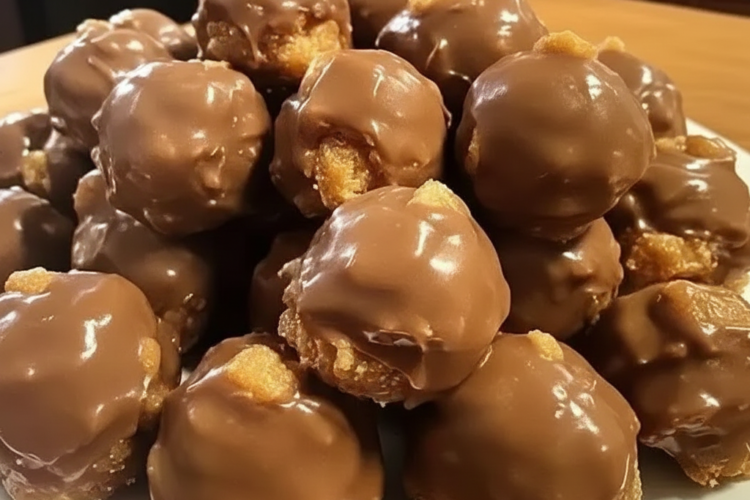
Butterfinger Balls are visually stunning round confections with a glossy dark chocolate exterior that encases a speckled, golden-orange peanut butter filling dotted with crunchy flakes. The surface often shows subtle ridges from dipping, and optional toppings add festive flair.
Aromas of rich chocolate mingle with peanut butter nuttiness. Biting in reveals a satisfying snap from the shell, yielding to a creamy, fudgy interior bursting with Butterfinger’s distinctive crisp layers and caramelized notes. The flavor is intensely sweet and peanutty, balanced by semi-sweet chocolate.
Nutritional Information
Each Butterfinger Ball (based on 24 servings) contains approximately 180-200 calories, primarily from fats and sugars. Breakdown includes about 10-12g fat (from peanut butter, butter, and chocolate), 20-25g carbohydrates (mostly sugars), 3-4g protein, and minimal fiber.
They’re rich in energy but high in added sugars and saturated fats—enjoy in moderation. Variations with dark chocolate or less sugar can adjust macros slightly. Consult specific brands for precise values.
Conclusion
Butterfinger Balls represent the pinnacle of easy, nostalgic no-bake desserts, blending convenience with irresistible flavor and texture. From their candy bar-inspired roots to their place on modern holiday tables, these treats capture pure joy in every bite.
Making them at home allows control over ingredients and freshness, resulting in a superior version of store-bought candies. They’re a recipe destined to become a tradition.
Recommendation
I wholeheartedly recommend whipping up a batch of Butterfinger Balls for your next celebration or craving—they’re foolproof and universally loved. Serve on dessert platters or package in tins for thoughtful gifts.
Pair with coffee or milk for enhanced enjoyment. This treat deserves a spot in every sweet repertoire.
Embracing Healthful Indulgence
While richly indulgent, Butterfinger Balls can fit into a balanced lifestyle when enjoyed mindfully. The peanut butter provides healthy fats and protein for satiety, and making them homemade avoids preservatives.
Portion control is key—savor one or two as a treat. Opt for high-quality chocolate with higher cocoa content for antioxidants. These balls remind us that occasional sweetness enhances life’s pleasures without derailing wellness.