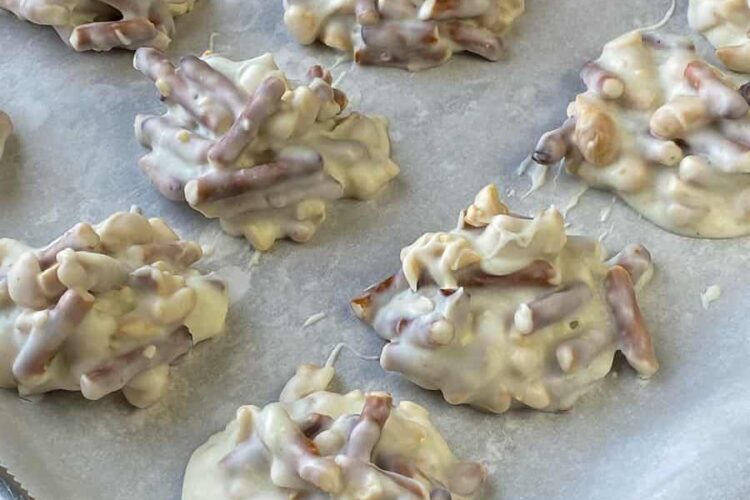
White Chocolate Haystacks: Crunchy, No-Bake Holiday Classics
Introduction
White Chocolate Haystacks are delightful, no-bake confections that combine the creamy sweetness of melted white chocolate with the satisfying crunch of chow mein noodles, creating addictive clusters that resemble little haystacks—hence their whimsical name. This simple yet irresistible treat is elevated with optional chopped nuts for earthy depth, shredded coconut for tropical flair, and a touch of vanilla extract for aromatic warmth, resulting in bites that are simultaneously rich, crispy, and perfectly balanced in sweetness. Dropped by spoonfuls onto parchment and chilled until firm, they set quickly into portable, shareable morsels that require no oven and minimal cleanup.
The genius of White Chocolate Haystacks lies in their effortless preparation—ready in about 10 minutes of active time plus chilling—making them ideal for last-minute holiday gifts, cookie exchanges, party platters, classroom treats, or whenever a quick sweet craving strikes. Their versatility shines through endless customizations: add dried cranberries for tart contrast, mini chocolate chips for extra decadence, or festive sprinkles for visual pop. They’re naturally gluten-free (with certified noodles), travel well without melting in moderate temperatures, and store beautifully for weeks. In this extraordinarily comprehensive guide, we’ll explore their origins as a mid-century American no-bake classic, cultural significance in holiday and everyday snacking traditions, precise ingredient quantities with detailed roles and substitutions, abundant optional additions for seasonal or dietary variations, professional tips for achieving perfect texture and flavor every time, thorough step-by-step instructions with troubleshooting, vivid multi-sensory descriptions capturing their allure, complete nutritional analysis including lighter adaptations, thoughtful conclusions on their enduring popularity, enthusiastic recommendations for serving occasions and pairings, and reflections on embracing them as a form of joyful, mindful indulgence.
These haystacks transcend typical candy-making by offering sophisticated flavor in childlike simplicity: the white chocolate coats every noodle strand in silky luxury, creating clusters that shatter crisply before melting smoothly on the tongue. Their neutral color palette serves as a blank canvas for seasonal decoration—red and green sprinkles for Christmas, pastels for Easter, orange and black for Halloween—while the core crunch-sweet combination appeals across ages. For busy households, they represent stress-free creativity; for experienced cooks, endless experimentation. Whether packaged in clear bags tied with ribbon as thoughtful gifts or piled on dessert tables for self-serve grazing, White Chocolate Haystacks deliver pure happiness with every crunchy bite.
The profound appeal of these treats extends deeply into emotional territory—they evoke nostalgic memories of church bazaars, grandmother’s holiday tins, or childhood kitchen helpers dropping spoonfuls alongside adults. In an age of complicated confections requiring tempering or specialty tools, haystacks remind us that profound joy often comes from minimalism: quality white chocolate, crunchy elements, and imagination. Their no-bake nature makes them accessible year-round, yet they shine brightest during holidays when time is precious and sweetness abundant.
Origin
White Chocolate Haystacks emerged in mid-20th-century America as part of the no-bake dessert boom fueled by convenience ingredients and post-war kitchen innovation. Chow mein noodles—crispy fried wheat noodles popularized through Chinese-American cuisine in the early 1900s—became pantry staples by the 1950s, often used in “Chinese chicken salad” or as crunchy toppings.
The haystack concept likely originated in the 1950s-1960s when home cooks experimented with coating noodles in melted chocolate or butterscotch for quick treats, inspired by similar “cluster” candies like peanut clusters or cornflake wreaths. White chocolate versions gained traction in the 1970s-1980s as white chocolate chips became widely available (introduced commercially by Nestlé in the 1940s but mainstream later). Coconut and nut additions echoed tropical or nut cluster traditions.
Recipes proliferated through community cookbooks, women’s magazines, and church fundraisers under names like “white trash candy” or “haystacks,” reflecting playful, unpretentious origins. The 1990s-2000s saw explosion via the internet, with variations adding marshmallows, pretzels, or seasonal candies. This recipe’s streamlined approach—pure white chocolate with optional coconut/nuts—represents refined modern classic.
Cultural Significance
In American snacking culture, no-bake treats like haystacks symbolize resourceful creativity and holiday abundance—quick to make in large batches for sharing. They appear at Christmas cookie exchanges, Easter baskets, Halloween parties (as “spider nests” with additions), and potlucks year-round.
Their neutral base allows festive adaptation, while crunch-sweet profile appeals universally. In Midwestern and Southern communities, similar clusters feature in church cookbooks as budget-friendly crowd-pleasers.
They promote inclusivity: naturally gluten-free options, nut-free variations, kid-friendly assembly. In wellness contexts, portion control and quality chocolate allow mindful enjoyment.
Ultimately, White Chocolate Haystacks celebrate simple pleasures—crunch, sweetness, sharing—in busy times.
Ingredients Quantity
Yields about 24-30 haystacks:
- 2 cups (about 100-120g) chow mein noodles: Essential crunch.
- 12 ounces (340g) white chocolate, chopped or chips: Creamy coating.
- 1 teaspoon pure vanilla extract: Aromatic enhancement.
- ½ cup chopped nuts (pecans, peanuts, almonds—optional): Texture and flavor.
- ½ cup shredded coconut (sweetened or unsweetened—optional): Tropical note.
Quality white chocolate (containing cocoa butter) critical for smooth melt and set.
Optional Additions
Endless creativity:
- Dried fruit: cranberries, raisins, apricots.
- Mini chips: butterscotch, peanut butter, semi-sweet.
- Pretzels or cereal for extra crunch.
- Sprinkles, sea salt, espresso powder.
- Marshmallows for chew.
Seasonal: candy corn, peppermint, pumpkin seeds.
These maintain core while adapting.
Tips for Success
Extensive advice:
- Use real white chocolate (cocoa butter) for proper set.
- Melt gently—microwave 30-second intervals or double boiler.
- Stir thoroughly for smoothness.
- Work quickly once mixed—chocolate sets fast.
- Use two forks for coating if dipping individually.
- Drop small for bite-size.
- Chill promptly for firm texture.
- Line sheet generously.
- Store layered with parchment.
Double for crowds.
These ensure perfect haystacks.
Instructions
Thorough process:
- Line large baking sheets with parchment or wax paper.
- Melt white chocolate gently in microwave (30-second bursts, stirring) or double boiler until completely smooth.
- Remove from heat; stir in vanilla.
- Add chow mein noodles, nuts, coconut; fold gently until fully coated.
- Drop by heaping tablespoonfuls onto prepared sheets, shaping slightly into mounds.
- Chill in refrigerator 30 minutes until firm.
- Store in airtight container, refrigerated or cool place.
Enjoy!
Description
Shiny white clusters resembling miniature haystacks, studded with noodle strands, nut pieces, coconut flakes. Aroma: rich vanilla-white chocolate with subtle toasted notes.
Texture: initial crisp noodle crunch yielding to creamy chocolate melt. Flavor: sweet luxurious white chocolate, vanilla warmth, nutty depth or coconut sweetness.
Addictive contrast in every bite.
Nutritional Information
Per haystack (1/30 batch, approximate):
- Calories: 100-120
- Fat: 7g
- Carbohydrates: 12g (Sugars: 9g)
- Protein: 1-2g
Moderate indulgence; nuts add benefits.
Conclusion
White Chocolate Haystacks masterfully blend crunch and creaminess into effortless joy—perfect for holidays or anytime sweetness needed.
Recommendation
Essential holiday treat-making, gifting, snacking. Customize freely.
Embracing Healthful Indulgence
Portion-controlled, quality chocolate. Mindful enjoyment celebrates simple pleasures responsibly.