Introduction
Crepes are one of the most elegant and versatile dishes in the culinary world, embodying the simplicity and sophistication of French cuisine. These thin, delicate pancakes can be transformed into sweet indulgences or savory meals, making them suitable for breakfast, brunch, lunch, dinner, or dessert. Unlike thicker American pancakes, crepes are light and lacy, with crisp edges that fold beautifully around fillings. The basic recipe provided here—using all-purpose flour, milk, eggs, butter, sugar, salt, and vanilla—yields tender, flavorful crepes that serve as a blank canvas for endless creativity. Whether you’re a novice cook or an experienced home chef, mastering crepes opens up a world of culinary possibilities. This guide will take you through their fascinating history, cultural importance, precise ingredients, optional variations, expert tips, step-by-step instructions, vivid descriptions, nutritional insights, and more. By the end, you’ll be equipped to create perfect crepes every time, embracing this timeless treat as a healthful yet indulgent part of your repertoire.
The allure of crepes lies in their adaptability and ease of preparation. With just a few pantry staples, you can whip up a batch in minutes, and the batter improves with a short rest. Crepes have captivated food lovers worldwide, from street vendors in Paris to high-end restaurants serving flambéed Crepes Suzette. This blog post delves deeply into every aspect of the recipe, ensuring you not only follow the steps but understand the why behind them. Prepare to embark on a delicious journey that celebrates the humble yet extraordinary crepe.
Origin
The origins of crepes are steeped in history and legend, tracing back to the northwest region of France known as Brittany. Most culinary historians agree that modern crepes emerged in the 13th century in this coastal area, where buckwheat flour—introduced to Europe around the 12th century—became a staple due to the region’s poor soil, unsuitable for wheat but ideal for hardy buckwheat. Savory versions, called galettes, were made from buckwheat and filled with simple, hearty ingredients like cheese, ham, or eggs, providing affordable sustenance for peasants.
One popular folklore tale recounts a 13th-century Breton housewife accidentally spilling thin buckwheat porridge onto a hot flat stone in her fireplace, creating the first crisp, thin pancake. Rather than waste it, she ate it, and the accidental discovery spread rapidly. The word “crepe” derives from the Latin “crispa,” meaning curled or wrinkled, referring to the delicate, ruffled edges that form during cooking.
Earlier roots may extend to ancient times, with similar thin pancakes enjoyed by Greeks and Romans, but the French crepe as we know it solidified in Brittany. By the Middle Ages, crepes were offered as tokens of loyalty to feudal lords. White wheat flour crepes for sweeter versions gained popularity in the 12th-14th centuries as wheat became more accessible. The famous Crepes Suzette, a flambéed orange dessert crepe, was allegedly invented in 1895 by a young waiter named Henri Charpentier, who accidentally set a sauce alight while preparing dessert for the Prince of Wales.
Crepes spread beyond Brittany through trade and migration, evolving into a national French treasure while retaining strong regional ties.
Cultural Significance
Crepes hold profound cultural significance in France, particularly tied to traditions and celebrations. The most notable is La Chandeleur, or Candlemas, celebrated on February 2nd. This holiday, blending Christian and pagan roots, commemorates the presentation of Jesus at the temple. Legend dates it to 472 AD, when Pope Gelasius I distributed pancakes to pilgrims in Rome; in France, these evolved into crepes. Known as “Le Jour des Crêpes,” families flip crepes while holding a gold coin in the other hand for prosperity—if successful, good luck ensues for the year.
The round, golden crepe symbolizes the sun, marking the return of longer days after winter, or sometimes a coin for wealth. In Brittany, creperies abound, serving galettes with cider, a quintessential regional meal. Crepes are street food staples in Paris, sold from carts with fillings like Nutella or ham and cheese.
Worldwide, crepes have been adapted: Russian blini with caviar, Japanese harajuku-style folded crepes, Mexican crepas. They represent French elegance—simple ingredients yielding refined results—appearing in fine dining as Crepes Suzette or casual brunches. Crepes embody community, often made collaboratively during holidays, fostering joy and togetherness.
In modern culture, crepes symbolize versatility and indulgence without excess, bridging sweet and savory worlds.
Ingredients Quantity
For this classic sweet crepe recipe, yielding about 12-15 crepes (depending on pan size), you’ll need:
- 1 cup (125g) all-purpose flour: Provides structure and tenderness.
- 2 tablespoons granulated sugar: Adds subtle sweetness, enhancing browning.
- 1/4 teaspoon salt: Balances flavors and strengthens gluten.
- 1 1/2 cups (360ml) milk (whole or 2% for richness): Hydrates the batter for a smooth, creamy texture.
- 3 large eggs: Bind ingredients, add richness, and contribute to the delicate structure.
- 2 tablespoons unsalted butter, melted (plus more for the pan): Imparts buttery flavor and prevents sticking.
- 1 teaspoon vanilla extract: Infuses warm, aromatic notes perfect for sweet crepes.
These precise quantities ensure a batter that’s thin enough to spread easily but sturdy for flipping. Measurements are crucial—use a kitchen scale for flour if possible for accuracy.
Optional Additions
While the basic recipe is perfection, optional additions allow customization:
For the batter: Add 1-2 tablespoons cocoa powder for chocolate crepes; zest of one lemon or orange for citrus brightness; 1/4 cup buckwheat flour blended with all-purpose for a nutty, Breton-style twist (great for savory).
Flavor enhancers: A pinch of cinnamon or nutmeg for warmth; replace vanilla with almond extract for nutty undertones.
Dietary adaptations: Use gluten-free flour blend; plant-based milk and vegan butter for dairy-free; reduce sugar or omit for savory crepes.
Fillings and toppings abound: Sweet options include fresh berries, bananas, Nutella, whipped cream, lemon curd, or powdered sugar. Savory: Ham, cheese, spinach, mushrooms, or eggs.
Advanced: For Crepes Suzette, prepare an orange butter sauce with Grand Marnier.
These additions keep the recipe versatile without overpowering its elegance.
Tips for Success
Achieving perfect crepes requires technique as much as ingredients. Here are expert tips:
Rest the batter: Allow 10-30 minutes (or overnight in the fridge) for gluten relaxation, yielding tender crepes and better flavor development.
Use a blender: For lump-free batter—blend dry ingredients first, then add wet.
Pan choice: An 8-10 inch non-stick skillet or crepe pan works best; heat over medium for even cooking.
Grease lightly: Brush with melted butter or spray—too much causes spotting.
Pour and swirl: Use 1/4 cup batter, pour into the center, and immediately tilt/swirl for a thin, even layer.
Cook indicators: Wait for edges to curl and top to set (1-2 minutes); flip gently with a spatula.
Don’t fear the first crepe: It’s often imperfect—use it to adjust heat.
Stack wisely: Layer with parchment to prevent sticking; keep warm in a low oven.
Practice flipping: For tradition, flip with a coin on Chandeleur!
These tips, honed from generations, ensure flawless results.
Instructions
Follow these detailed steps for flawless crepes:
- In a mixing bowl, whisk together the 1 cup flour, 2 tablespoons sugar, and 1/4 teaspoon salt until combined. This ensures even distribution.
- In a separate bowl or blender, whisk the 1 1/2 cups milk, 3 eggs, 2 tablespoons melted butter, and 1 teaspoon vanilla until frothy.
- Gradually pour wet into dry, whisking constantly to avoid lumps. Blend if needed for smoothness. The batter should be thin like heavy cream—if thick, add a splash of milk.
- Cover and rest 10-15 minutes (or longer) at room temperature.
- Heat an 8-10 inch non-stick pan over medium. Lightly grease with butter.
- Pour 1/4 cup batter into the center. Immediately swirl to coat thinly.
- Cook 1-2 minutes until edges brown and top sets with bubbles.
- Flip carefully with a spatula; cook 30-60 seconds more.
- Slide onto a plate. Repeat, greasing as needed.
- Stack crepes, keeping warm in a 200°F oven if desired.
- Serve warm with toppings, folded or rolled.
Enjoy immediately for best texture.
Description
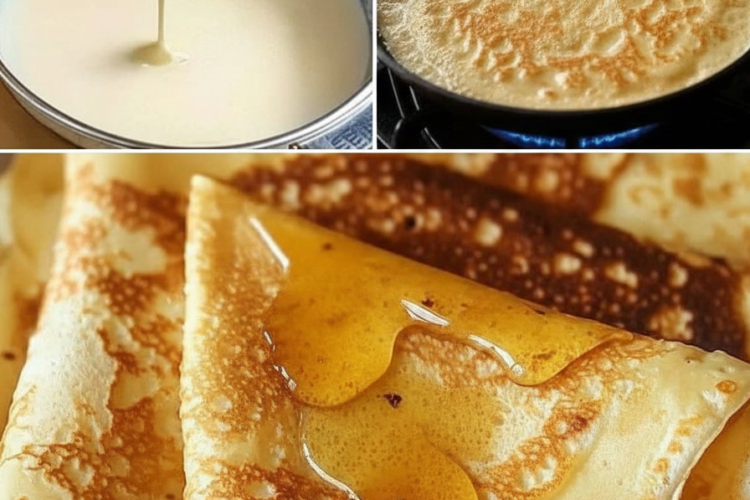
A perfectly made crepe is a sight to behold: ultra-thin, almost translucent, with lacy, golden-brown edges that crisp slightly while the center remains tender and pliable. The surface may show delicate bubbles or a subtle mottling from the pan’s heat, giving it an artisanal charm. Folded into quarters or rolled around fillings, crepes reveal their versatility—sweet ones glistening with syrup or dusted in sugar, savory ones oozing melted cheese.
The aroma is intoxicating: buttery warmth with hints of vanilla, evoking cozy French bistros. Texture is key—silky soft yet resilient, melting in the mouth without heaviness. Filled with strawberries and cream, they burst with freshness; with ham and egg, hearty satisfaction.
Crepes are poetry on a plate—simple yet sublime, inviting endless personalization.
Nutritional Information
Per plain crepe (based on recipe yielding 12 crepes, without fillings):
- Calories: Approximately 90-100
- Protein: 4g (from eggs and milk)
- Carbohydrates: 10-12g (mostly from flour)
- Fat: 4g (from butter and eggs)
- Sugar: 2-3g (added plus natural from milk)
- Fiber: Minimal (0.5g)
- Key nutrients: Calcium from milk, some B vitamins from eggs.
Whole recipe (unfilled): About 1200 calories, suitable for multiple servings. Crepes are relatively low-calorie compared to thicker pancakes, but fillings add significantly—e.g., Nutella increases sugar/fat. Opt for whole milk for more vitamins; add fruits for fiber/antioxidants.
Overall, plain crepes offer balanced indulgence—protein-rich, not overly sugary.
Conclusion
Crepes represent the pinnacle of culinary elegance: humble ingredients transformed into something extraordinary. From their ancient Breton origins to modern global adaptations, crepes have endured as a symbol of versatility, tradition, and joy. This recipe, with its precise balance of flour, eggs, milk, and subtle sweetness, captures the essence of classic French crepes while allowing room for personal flair. Whether enjoyed simply with lemon and sugar or elaborately filled, crepes bring people together, evoking memories of festivals, family gatherings, and leisurely brunches.
Mastering crepes is rewarding—each batch improves with practice, yielding delicate masterpieces that delight the senses. As you experiment with fillings and variations, you’ll discover why this dish has captivated generations.
Recommendation
I highly recommend starting with this basic recipe exactly as written for your first few batches to build confidence. Once comfortable, branch into savory galettes or decadent desserts. Serve for special occasions like Chandeleur or casual weekends. Pair sweet crepes with fresh fruits and yogurt for breakfast, or savory with salads for light dinners. For a showstopper, try Crepes Suzette.
Stock your pantry with these staples, and crepes will become a go-to. They’re quick, affordable, and impressive—perfect for impressing guests or treating yourself.
Embracing Healthful Indulgence
Crepes exemplify healthful indulgence: light yet satisfying, allowing enjoyment without guilt. By using quality ingredients and mindful fillings—like berries, nuts, or veggies—you create nutrient-packed meals. Eggs provide protein for satiety, milk calcium for bones, while the thin profile keeps portions controlled.
In a world of heavy desserts, crepes offer balance—sweet enough to satisfy cravings, versatile for wholesome twists. Embrace crepes as a mindful treat, celebrating flavor, tradition, and well-being in every delicate fold.