Introduction
Cabbage Rolls, also known as stuffed cabbage, golabki in Polish, halupki in Slovak or Ukrainian traditions, or sarma in Balkan cuisines, are a beloved comfort food that wraps savory seasoned meat and rice in tender cabbage leaves, simmered to perfection in a simple tomato sauce. This hearty dish combines humble ingredients into a flavorful, satisfying meal that’s both nourishing and evocative of family gatherings, holiday tables, and generational recipes passed down through immigrant communities. The large blanched cabbage leaves encase a filling of ground meat—beef, pork, or turkey—mixed with cooked rice, onions, and basic seasonings, creating juicy parcels that absorb the tangy tomato bath during cooking. Ideal for cool weather dinners, batch cooking, or potlucks, these rolls offer a balance of protein, grains, and vegetables in one cozy package, with minimal active prep leading to impressive results.
What makes cabbage rolls enduringly popular is their versatility and economy: using affordable cuts and pantry staples while delivering deep, developed flavors through gentle simmering. They can be adapted to dietary needs, scaled for crowds, or even frozen for future meals. As we dive into their rich history, precise preparation, and enhancements, you’ll discover why this timeless recipe continues to warm hearts and homes across cultures and continents.
Origin
Cabbage rolls trace their origins to ancient times, with early versions appearing in Middle Eastern and Mediterranean cuisines where vine leaves were stuffed (dolma), evolving to use cabbage in colder climates where it thrived. The modern stuffed cabbage as we know it emerged in Eastern Europe, particularly Poland (gołąbki, meaning “little pigeons” for their shape), Ukraine, Russia, and the Balkans during the Middle Ages, influenced by Ottoman Empire expansions that introduced rice-based fillings. Jewish communities adapted kosher versions without pork, while Scandinavian countries developed similar dishes with cream sauces.
In America, cabbage rolls arrived with 19th and early 20th-century immigrants from Poland, Hungary, Slovakia, and other regions, becoming staples in Midwest and Northeast households, often called halupki in Pennsylvania coal regions or golumpki elsewhere. Post-World War II, they featured in community cookbooks and church suppers, simplified with ground meat and canned tomato products for busy families. This basic recipe reflects those immigrant adaptations, focusing on accessibility while preserving traditional techniques.
Cultural Significance
Cabbage rolls hold profound cultural significance as symbols of heritage, hospitality, and resilience in Eastern European and immigrant communities worldwide. In Poland, gołąbki are a Christmas Eve staple (wigilia), served meatless with mushroom sauce for the meat-free vigil, while meat versions grace everyday tables and festivals. Ukrainian holubtsi vary by region, sometimes with buckwheat, reflecting agricultural roots. In Romanian and Serbian sarma, fermented cabbage adds tang, often prepared for weddings and holidays as labor-of-love dishes signifying abundance.
For diaspora families in the U.S. and Canada, cabbage rolls evoke ancestral ties, made in large batches for reunions or funerals, fostering bonds through shared preparation. They represent resourceful cooking—turning tough cabbage and scraps into feasts—during harsh winters or economic times. Today, they bridge old and new worlds, celebrated in food festivals and revived in modern kitchens for their wholesome appeal amid processed food trends.
Ingredients Quantity
This straightforward Cabbage Rolls recipe yields about 12-16 rolls, serving 6-8 people depending on portion size.
- 1 large head of cabbage (about 3-4 pounds): Provides the tender wrappers; choose firm, green varieties.
- 1 pound ground meat (beef, pork, turkey, or a mix): The hearty filling base; 80/20 beef for juiciness or turkey for leaner.
- 1 cup cooked rice (white or brown): Adds texture and bulk; day-old rice works best to absorb flavors.
- 1 onion, finely chopped: Infuses savory depth.
- 1 teaspoon salt: Seasons the filling.
- 1/2 teaspoon black pepper: Provides mild heat.
- 1/4 cup tomato sauce (plus more for the cooking liquid): Contributes tang and moisture; use a full can (15 oz) diluted with water for better coverage.
These modest quantities create balanced, flavorful rolls that can be doubled easily.
Optional Additions
Elevate cabbage rolls with optional additions for deeper flavor or customization. Include garlic (2-3 minced cloves) or herbs like dill, parsley in the filling. Add an egg for binding or Parmesan cheese for richness. For the sauce, incorporate canned diced tomatoes, sauerkraut, or brown sugar for sweet-sour balance. Vegetarian versions use lentils or mushrooms instead of meat. Spice with paprika, caraway seeds, or bay leaves. These keep the essence while personalizing.
Tips for Success
Achieve perfect cabbage rolls with these essential tips. Freeze the cabbage head overnight then thaw to soften leaves without blanching—avoids tearing. Select larger outer leaves for easier rolling; core the head first. Don’t overfill (1/4-1/3 cup per leaf) to prevent bursting. Secure with toothpicks if needed. Layer extra cabbage in the pot bottom to prevent scorching. Simmer low and slow (1-2 hours traditionally) for tenderness; this recipe’s shorter time works but longer enhances flavor. Make ahead—rolls improve reheated. Freeze uncooked or cooked for months. These ensure tender, intact results.
Instructions
Follow these detailed steps for delicious Cabbage Rolls.
- Blanch cabbage: Core the large head and boil whole in a large pot of water 5-10 minutes until leaves soften, then peel carefully. Alternatively, blanch individual leaves 30 seconds as specified.
- Prepare filling: Cook 1 cup rice if needed. In a bowl, mix 1 pound ground meat, cooked rice, finely chopped onion, 1 teaspoon salt, and 1/2 teaspoon black pepper thoroughly.
- Assemble rolls: On a flat surface, place a cabbage leaf vein-side down. Add about 1/4 cup filling near the stem. Fold stem over, tuck sides, and roll snugly. Repeat.
- Cook: In a Dutch oven, spread some tomato sauce/water mix on bottom. Arrange rolls seam-side down. Pour 1/4 cup (or more) tomato sauce mixed with water to cover. Bring to boil, then simmer covered 20-25 minutes (or longer for softer).
- Serve: Garnish with fresh parsley or dill. Enjoy hot, perhaps with sour cream.
Description
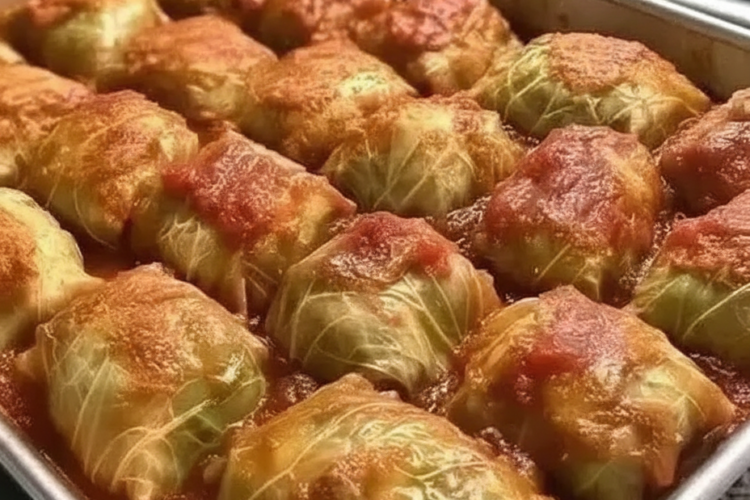
Cabbage Rolls appear as neat, plump parcels of pale green cabbage enveloping a savory filling, nestled in a pool of vibrant red tomato sauce, often garnished with bright herbs for contrast. The leaves tenderize to a silky texture, yielding to juicy, seasoned meat-rice mixture with onion flecks and subtle pepper notes. Simmering infuses everything with tangy tomato essence, creating a comforting aroma of homey warmth. Each bite balances soft wrapper, hearty interior, and saucy moisture—satisfyingly rustic yet elegant.
Nutritional Information
Per serving (based on 8 servings): Approximately 250-300 calories, 15-20g protein (from meat), 10-15g fat, 20-25g carbohydrates (from rice and cabbage), 4-6g fiber. Rich in vitamin C and K from cabbage, iron from meat; low-carb potential with cauliflower rice. Values vary by meat choice—turkey leaner.
Conclusion
Cabbage Rolls embody timeless comfort and cultural legacy, transforming simple elements into a dish greater than its parts—one that nourishes body and soul while connecting us to traditions worldwide.
Recommendation
I enthusiastically recommend making Cabbage Rolls for your next family meal or gathering; their heartfelt flavors and make-ahead ease guarantee smiles and seconds.
Embracing Healthful Indulgence
Cabbage Rolls embrace healthful indulgence through vegetable-forward wrappers, lean protein options, and whole grains, allowing rich satisfaction with built-in nutrition—perfect for balanced, flavorful eating.