Introduction
The holiday season is synonymous with warmth, joy, and the irresistible aroma of freshly baked treats wafting through the home, and few desserts capture this essence quite like Classic Christmas Sugar Cookies. These delightful confections, with their buttery texture, subtle vanilla flavor, and endless decorating possibilities, have become a cornerstone of Christmas celebrations around the world. Whether shaped into festive trees, stars, bells, or snowmen, and adorned with colorful icing and sprinkles, they evoke childhood memories of family baking sessions and holiday gatherings. More than just a sweet snack, these cookies represent tradition, creativity, and sharing—often left out for Santa Claus with a glass of milk or exchanged as heartfelt gifts among loved ones. Their simplicity belies their magic: a basic dough that transforms into edible works of art, perfect for involving children in the kitchen or for seasoned bakers seeking a reliable canvas for intricate designs.
What makes Classic Christmas Sugar Cookies so enduringly popular is their versatility and accessibility. The recipe provided here yields a dough that is easy to work with, holds its shape beautifully during baking, and results in cookies that are crisp at the edges yet soft in the center—a perfect balance that appeals to all palates. Originating from humble European roots and evolving into an American holiday staple, these cookies have transcended cultures, becoming a symbol of festive indulgence. In this comprehensive guide, we’ll explore every facet of these beloved treats, from their historical origins to detailed baking instructions, nutritional insights, and ways to embrace them as a healthful yet joyful part of your celebrations. By the end, you’ll be equipped not only to bake the perfect batch but also to appreciate the deeper stories and joys they bring to the holiday table.
As we dive into the world of Classic Christmas Sugar Cookies, imagine the laughter of family members gathered around a floured countertop, cookie cutters in hand, transforming plain dough into a winter wonderland of shapes. This blog post will serve as your ultimate resource, ensuring your cookies turn out flawless every time while inspiring you to add personal touches that make them uniquely yours.
Origin
The story of Classic Christmas Sugar Cookies is a fascinating journey through time, blending medieval European traditions with American innovation. The roots of Christmas cookies, in general, trace back to Medieval Europe, where the introduction of exotic spices like cinnamon, ginger, nutmeg, and black pepper—brought via trade routes from the East—revolutionized baking. During this era, sugar and butter were luxurious ingredients, reserved for special occasions like Christmas, when families could afford to indulge in sweet treats. Monks in monasteries, with access to these rare commodities, are credited with creating early versions of spiced biscuits, known as “weihnachtsplätzchen” in Germany, which laid the groundwork for modern holiday cookies.
By the 17th century, Dutch and German settlers introduced cookie cutters to the New World, allowing for shaped biscuits that could be hung on Christmas trees or shared as gifts. The specific precursor to the sugar cookie emerged in the 1700s in Pennsylvania, brought by Moravian Protestant settlers from Germany. These immigrants perfected a simple, unleavened dough made primarily from butter, sugar, flour, and eggs—ingredients that were becoming more accessible. Known as Nazareth Sugar Cookies (after the town of Nazareth, Pennsylvania) or Amish Sugar Cookies, this recipe was practical: the cookies stored well without refrigeration, making them ideal for winter visits and gifting in agrarian communities where farming paused during the cold months.
The tradition of leaving cookies for Santa Claus further cemented their place in Christmas lore, evolving from ancient practices of offering food to Norse gods or Christian acts of charity. In America, the 1930s popularized this custom, with children leaving sugar cookies and milk as thanks for gifts. Over time, the plain round or dropped sugar cookie evolved into the rolled, cut-out version we know today, especially with the advent of colorful icing and sprinkles in the 20th century. Pennsylvania even declared the Nazareth sugar cookie its official state cookie in 2001, honoring its heritage. Today, these cookies embody a fusion of Old World frugality and New World creativity, a testament to how immigration and cultural exchange shaped holiday traditions.
Cultural Significance
Classic Christmas Sugar Cookies hold profound cultural significance, serving as more than mere desserts—they are symbols of generosity, community, and familial bonds during the holiday season. In many households, baking these cookies is a cherished ritual that brings generations together, fostering creativity and passing down traditions. Children delight in rolling the dough, pressing cutters into holiday shapes, and decorating with vibrant icings, turning the kitchen into a space of joyful collaboration and learning.
Globally, variations of sugar cookies appear in Christmas celebrations, but in the United States and Canada, they are iconic, often featured in cookie swaps, office parties, and as treats for Santa. The act of decorating them mirrors the festive spirit: red and green sprinkles evoke holly and evergreens, while shapes like stars and trees reflect Christian symbolism and winter motifs. They also represent inclusivity, as their simple base allows for adaptations to various cultural preferences—perhaps incorporating spices from Scandinavian spritz or Italian influences.
In a broader sense, these cookies embody the spirit of giving. Historically tied to times when sweets were luxuries shared sparingly, they continue to be gifted in tins or plates, strengthening social ties. For many, they evoke nostalgia, reminding us of simpler times and the magic of childhood Christmases. In today’s fast-paced world, taking time to bake and decorate them is a mindful act of celebration, countering commercialism with handmade warmth.
Ingredients Quantity
To make approximately 4-5 dozen Classic Christmas Sugar Cookies (depending on cutter size), gather the following ingredients. This recipe yields a dough that is flavorful yet sturdy for cutting and decorating.
- 2 3/4 cups all-purpose flour: Provides structure and tenderness; spoon and level for accuracy to avoid dense cookies.
- 1/2 teaspoon baking powder: Adds slight lift for a soft texture without excessive spreading.
- 1/4 teaspoon salt: Enhances flavor and balances sweetness.
- 1 cup unsalted butter, softened: The key to richness; room temperature for easy creaming.
- 1 cup granulated sugar: Sweetens and tenderizes; creaming with butter creates fluffiness.
- 1 large egg: Binds ingredients and adds moisture.
- 2 teaspoons vanilla extract: Imparts classic warm flavor; use pure for best results.
- 1 tablespoon milk (if dough is too stiff): Optional, to adjust consistency.
- Red and green sprinkles (optional): For pre-bake decoration.
- Royal icing or glaze (optional): For post-bake embellishment.
These quantities create a balanced dough that’s not overly sweet, allowing decorations to shine.
Optional Additions
While the classic recipe is perfection in simplicity, optional additions can elevate flavors or textures. Consider incorporating 1/2 teaspoon almond extract alongside vanilla for a nostalgic bakery taste. For a citrus twist, add 1 tablespoon lemon or orange zest. Spices like 1/2 teaspoon cinnamon or nutmeg can infuse warmth without overpowering.
For fun variations: mix in 1/2 cup mini chocolate chips, crushed peppermint candies, or colorful sprinkles directly into the dough. Dried fruits like cranberries or nuts can add chewiness. For flavored dough, divide and tint portions with food coloring—red for candy canes, green for trees.
These additions allow personalization while maintaining the cookie’s integrity.
Tips for Success
Achieving perfect Classic Christmas Sugar Cookies requires attention to detail. Use room-temperature butter and egg for even creaming—beat until light and fluffy (about 2-3 minutes) to incorporate air for tenderness. Measure flour accurately by spooning into the cup and leveling; too much yields tough cookies.
Chill the dough for at least 1 hour (or overnight) to prevent spreading and ease rolling. Roll to an even 1/4-inch thickness on a lightly floured surface or between parchment for clean edges. Use metal cookie cutters dipped in flour for sharp shapes.
Preheat oven fully to 350°F (175°C) and bake on parchment-lined sheets for even browning. Watch closely—remove when edges are just golden (8-10 minutes) for soft centers. Cool on the sheet briefly before transferring to racks to avoid breakage.
For no-spread results, chill cut shapes 15-30 minutes before baking. If decorating, cool completely to prevent icing melt. Fresh baking powder ensures lift; test by adding to hot water—it should fizz vigorously.
Work in batches, keeping unused dough chilled. These tips, drawn from expert bakers, guarantee professional results every time.
Instructions
Follow these step-by-step instructions for foolproof Classic Christmas Sugar Cookies.
Preheat your oven to 350°F (175°C) and line baking sheets with parchment paper to prevent sticking and promote even baking. In a medium bowl, whisk together 2 3/4 cups all-purpose flour, 1/2 teaspoon baking powder, and 1/4 teaspoon salt until well combined—this ensures even distribution of leavening and seasoning.
In a large mixing bowl, beat 1 cup softened unsalted butter and 1 cup granulated sugar with an electric mixer on medium speed until light and fluffy, about 2-3 minutes. Scrape down the sides as needed. Add 1 large egg and 2 teaspoons vanilla extract, beating until fully incorporated and smooth.
Gradually add the dry ingredients to the wet mixture, mixing on low speed until just combined—avoid overmixing to keep cookies tender. If the dough seems too crumbly or stiff, add 1 tablespoon milk and mix briefly.
Divide dough in half, flatten into disks, wrap in plastic, and chill for at least 1 hour (or up to 2 days) to firm up for easier handling.
On a lightly floured surface, roll one disk to 1/4-inch thickness. Cut desired shapes with cookie cutters, placing them 1-2 inches apart on prepared sheets. Optionally sprinkle with red and green sprinkles before baking.
Bake 8-10 minutes, rotating sheets halfway, until edges are lightly golden. Cool on sheets 5 minutes, then transfer to wire racks.
Once fully cooled, decorate with royal icing or glaze if desired. Store in airtight containers for up to 1 week or freeze undecorated for months.
Description
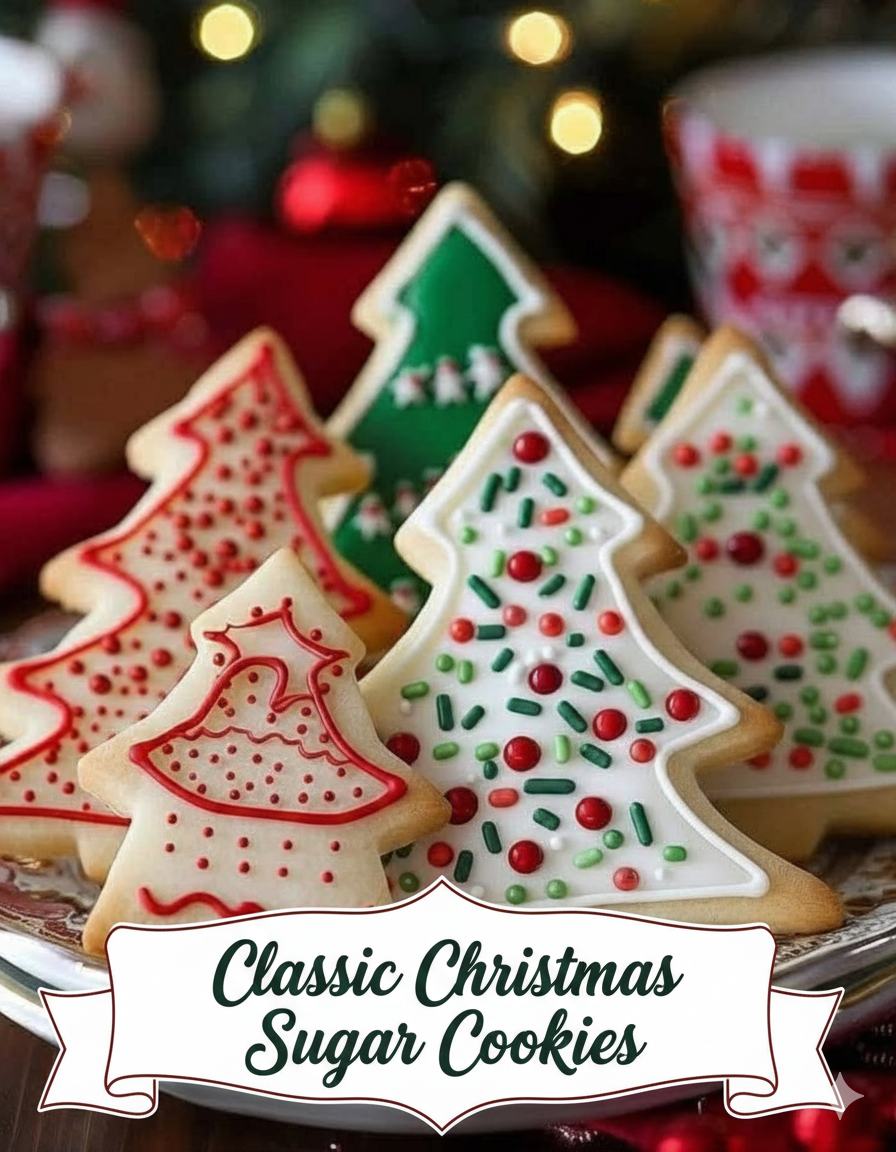
Classic Christmas Sugar Cookies are a sensory delight: golden-edged with soft, buttery centers that melt in your mouth, infused with subtle vanilla warmth. Their crisp bite gives way to tenderness, making them ideal for snacking or decorating. Visually stunning when iced in festive colors and sprinkled, they transform into edible art—trees glistening with “snow” (white icing), stars dusted in gold sugar, or ornaments piped with intricate details.
The dough’s neutral flavor profile acts as a blank canvas, enhanced by optional decorations that add crunch from sprinkles or creaminess from icing. Bite into one, and experience pure holiday joy: nostalgic, comforting, and utterly satisfying.
Nutritional Information
Classic Christmas Sugar Cookies are an indulgent treat, best enjoyed in moderation as part of holiday festivities. Nutritional values vary by size, decorations, and exact ingredients, but for a typical 3-inch undecorated cookie (about 1 oz or 28g):
- Calories: Approximately 130-150
- Total Fat: 6-8g (mostly from butter)
- Saturated Fat: 4-5g
- Carbohydrates: 18-20g
- Sugars: 10-12g
- Protein: 1-2g
- Sodium: 50-80mg
With icing and sprinkles, add 50-100 calories per cookie. They provide quick energy from carbs but limited nutrients—enjoy as occasional treats.
Conclusion
In wrapping up our exploration of Classic Christmas Sugar Cookies, it’s clear these simple delights are far more than a recipe—they are a bridge to tradition, creativity, and connection. From their medieval origins to modern-day decorations, they’ve endured as a holiday essential, bringing smiles and sweetness to countless celebrations.
Baking them reminds us to slow down amid the hustle, savoring the process as much as the result. Whether plain or elaborately adorned, they capture the magic of Christmas.
Recommendation
I highly recommend making Classic Christmas Sugar Cookies a staple in your holiday baking lineup. Start with the provided recipe for reliable results, then experiment with shapes and decorations to suit your style. Involve family for memorable moments, or bake extras for gifting—they’re always appreciated.
For best outcomes, follow chilling and baking tips closely. Pair with hot cocoa for ultimate coziness.
Embracing Healthful Indulgence
While Classic Christmas Sugar Cookies are indulgent, embracing them healthfully means balance and mindfulness. Portion control is key—savor one or two with tea rather than overindulging. Use high-quality ingredients like real butter for satisfaction in smaller bites.
For lighter versions, substitute half the butter with applesauce or use whole wheat flour for fiber. Natural sprinkles or fruit-based colorings reduce artificial additives.
Ultimately, holidays are for joy—enjoy these cookies as part of a varied diet, paired with nutritious meals. Mindful baking and sharing enhance well-being, turning indulgence into cherished, guilt-free tradition.