Introduction
There are desserts that impress with extravagance, and then there are desserts that quietly win hearts with simplicity. The Classic Vanilla Butter Cake with Buttermilk Sauce belongs firmly in the second category, offering a humble yet unforgettable experience that lingers long after the final bite. With its tender crumb, fragrant vanilla aroma, and rich buttery soak, this cake reminds us why classic recipes endure.
This cake is cloud-soft and deeply comforting, striking a balance between lightness and indulgence. Each slice absorbs a warm buttermilk sauce that seeps into every crumb, creating a moist, melt-in-your-mouth texture that feels almost luxurious. The flavor is pure and honest, relying on pantry staples rather than embellishment.
Perfect for gatherings, holidays, or quiet evenings at home, this cake adapts beautifully to its surroundings. Dress it up with berries and whipped cream or enjoy it plain with a cup of coffee. No matter how it’s served, this vanilla butter cake delivers warmth, nostalgia, and satisfaction in every bite.
Origin
Butter cakes have long been a cornerstone of American baking, evolving alongside home kitchens and family traditions. Rooted in European sponge and pound cakes, American butter cakes adapted to local ingredients, favoring butter and sugar for richness and accessibility. Over time, they became synonymous with comfort and celebration.
The addition of buttermilk to cakes emerged as a practical and flavorful innovation. Originally a byproduct of butter churning, buttermilk was widely used to tenderize baked goods and add subtle tang. Its acidity reacts with leavening agents, creating a softer crumb and enhanced rise.
The concept of soaking cakes with syrup or sauce traces back to European traditions, such as rum cakes and savarin. In American kitchens, this practice transformed into warm sugar-and-butter sauces poured over simple cakes. The buttermilk sauce in this recipe represents a beautiful fusion of these influences, blending tradition with homegrown creativity.
Cultural Significance
Classic vanilla butter cake carries deep emotional resonance across generations. It is often associated with birthdays, potlucks, Sunday dinners, and handwritten recipe cards passed down through families. Its familiar flavor makes it universally appealing, transcending age and background.
In American food culture, vanilla is more than a flavor—it is a foundation. While often understated, vanilla enhances and harmonizes other ingredients rather than overpowering them. This cake celebrates vanilla’s quiet strength, allowing its warmth to shine without distraction.
The ritual of pouring warm sauce over a freshly baked cake reflects a culture of care and generosity. It transforms a simple dessert into an act of hospitality, inviting people to slow down and savor. This cake isn’t about spectacle; it’s about comfort, connection, and the joy of sharing something homemade.
Ingredients Quantity
The beauty of this cake lies in its simplicity, relying on carefully balanced ingredients to create depth and tenderness. Each component plays a vital role, from structure to flavor to moisture. Using quality ingredients enhances the final result, especially in a recipe where flavors are pure and exposed.
For the Cake
- 3 tablespoons melted unsalted butter
- 2/3 cup granulated sugar
- 4 large eggs, room temperature
- 2 teaspoons vanilla extract or vanilla bean paste
- 3 cups all-purpose flour
- 1 teaspoon baking soda
- 1/2 teaspoon baking powder
- 1/2 teaspoon fine salt
- 1 cup buttermilk
For the Buttermilk Sauce
- 1 cup granulated sugar
- 1/4 cup unsalted butter, cubed
- 1/4 cup water
- 1/4 teaspoon vanilla extract
Together, these ingredients create a cake that is sturdy yet soft, rich without heaviness, and sweet without excess. Precision in measurement ensures consistent texture and flavor throughout the bake.
Optional Additions
While the classic version is perfect on its own, optional additions allow this cake to adapt to different tastes and occasions. Small enhancements can personalize the dessert without compromising its essence.
Citrus zest, such as lemon or orange, adds brightness and contrast to the buttery richness. A teaspoon of zest in the batter or a splash of citrus juice in the sauce introduces freshness that feels especially welcome in warmer seasons.
Spices like nutmeg or cardamom can add subtle warmth, making the cake ideal for fall and winter gatherings. For texture, toasted nuts sprinkled on top or folded gently into the batter create a pleasant crunch. These additions enhance rather than distract, allowing creativity while honoring tradition.
Tips for Success
Success with this cake depends on technique as much as ingredients. Room-temperature eggs are essential, as they emulsify smoothly with butter and sugar, creating a uniform batter. Cold eggs can cause separation, affecting texture and rise.
Mixing gently is crucial once flour is added. Overmixing develops gluten, leading to a dense or tough crumb. Stir just until the flour disappears, preserving the cake’s tender structure.
Patience during the soaking process is equally important. Allowing the cake to rest after drizzling the sauce ensures even absorption. This step transforms a good cake into an exceptional one, so resist the urge to rush.
Instructions
Begin by preheating your oven to 350°F (175°C) and greasing a 10-inch round or Bundt pan thoroughly. Proper preparation prevents sticking and ensures even baking. Set the pan aside while you prepare the batter.
In a mixing bowl, beat the melted butter with granulated sugar until light and slightly fluffy. Add eggs one at a time, beating well after each addition to incorporate air. Stir in the vanilla extract, allowing its aroma to bloom within the mixture.
In a separate bowl, whisk together flour, baking soda, baking powder, and salt. Add the dry ingredients to the wet mixture alternately with buttermilk, beginning and ending with dry ingredients. Mix gently until just combined, then spread the batter evenly in the pan.
Bake for 55 to 70 minutes, until a toothpick inserted into the center comes out clean. Let the cake cool in the pan for 10 minutes. Meanwhile, prepare the sauce by simmering sugar, butter, and water until dissolved, then stirring in vanilla.
Invert the cake onto a rack set over parchment paper. Poke holes with a skewer and drizzle warm sauce over the top. Allow the cake to rest before slicing, passing extra sauce at the table.
Description
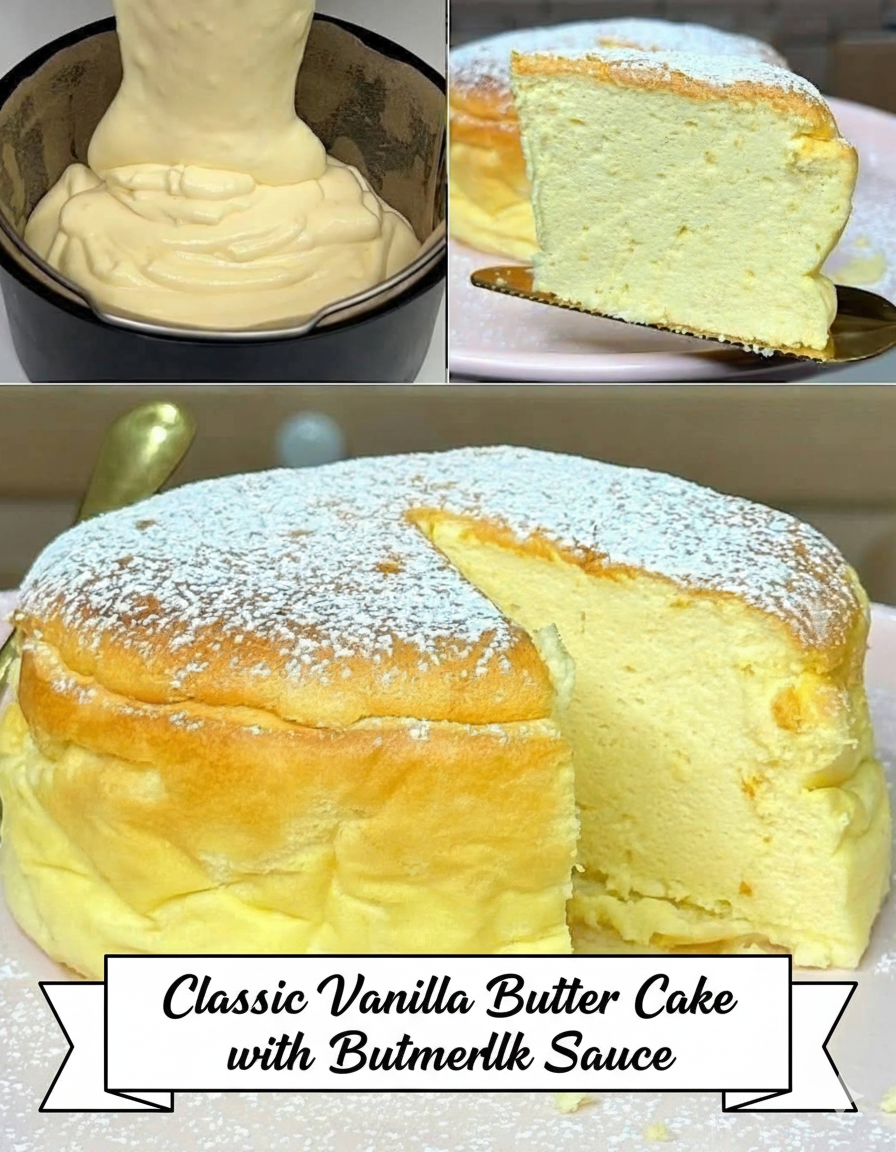
This vanilla butter cake is tender, golden, and delicately fragrant, with a crumb that feels almost weightless. The surface develops a gentle crust while the interior remains soft and absorbent, ready to drink in the warm buttermilk sauce.
The sauce itself is glossy and buttery, with a sweetness softened by the tang of buttermilk. When poured over the cake, it seeps into every crevice, creating pockets of moisture and flavor that elevate each bite.
Served warm, the cake feels comforting and indulgent. At room temperature, it becomes mellow and balanced, perfect for pairing with coffee or tea. Every slice tells a story of simplicity done right.
Nutritional Information
This cake is an indulgent dessert designed to be enjoyed mindfully. While rich, it offers satisfaction in modest portions, making it easy to savor without excess.
Approximate nutritional values per serving (based on 14 servings):
- Calories: 320–350 kcal
- Carbohydrates: 45g
- Fat: 14g
- Protein: 6g
- Sugar: 30g
Values may vary depending on portion size and optional additions. Enjoying this cake alongside fresh fruit or lighter accompaniments helps balance indulgence with nourishment.
Conclusion
The Classic Vanilla Butter Cake with Buttermilk Sauce proves that simplicity can be extraordinary. With basic ingredients and thoughtful technique, it delivers a dessert that feels timeless and deeply satisfying.
This cake is not about trends or extravagance; it is about comfort, balance, and tradition. Its flavor invites reflection, its texture encourages lingering, and its warmth brings people together.
Whether baked for a celebration or a quiet evening, this cake earns its place as a cherished recipe. It reminds us that sometimes the most memorable desserts are the ones that feel like home.
Recommendation
Serve this cake slightly warm with extra sauce on the side for an indulgent experience. Pair it with whipped cream, fresh berries, or a dusting of powdered sugar for a touch of elegance.
For make-ahead convenience, bake the cake a day in advance and allow it to rest overnight. The flavors deepen, and the texture becomes even more luxurious with time.
This recipe is ideal for bakers of all skill levels, making it a reliable choice for gifting, gatherings, or personal enjoyment. Keep it close—it’s the kind of cake you’ll return to again and again.
Embracing Healthful Indulgence
Healthful indulgence is about enjoying food fully while honoring balance, and this cake embodies that philosophy beautifully. It doesn’t rely on excess or complexity to satisfy, instead offering richness through quality and care.
By savoring smaller portions and pairing the cake with lighter elements, indulgence becomes intentional rather than overwhelming. The experience is about pleasure, comfort, and appreciation rather than restraint.
This vanilla butter cake reminds us that nourishment includes joy. In embracing desserts like this with mindfulness, we celebrate food not just as fuel, but as connection, tradition, and delight.