Introduction
Vegetable Beef Soup stands as one of the most beloved and enduring dishes across countless cultures, appreciated for its comforting warmth, hearty texture, and nourishing balance of protein and vegetables. For centuries, families have relied on soups like this to bring together simple ingredients and transform them into meals that feel both satisfying and wholesome. This recipe continues that tradition, offering an inviting blend of succulent beef, fresh vegetables, aromatic herbs, and slow-simmered broth that awakens the senses and nourishes the body.
In a world filled with fast food and quick meals, Vegetable Beef Soup reminds us of the beauty found in slowing down and allowing flavors to gradually develop in a pot of simmering goodness. Each bite becomes an experience of warmth and comfort, connecting us to memories of home, community, and shared meals. Whether enjoyed on a chilly evening, served to soothe someone feeling under the weather, or prepared as a nourishing weekend staple, this dish offers something timeless that transcends its humble ingredients.
This blog post explores the heart and history of Vegetable Beef Soup, the cultural traditions surrounding it, and the ingredients that make it such a satisfying and versatile recipe. From tips for success to nutritional details and indulgent encouragements, you’ll find everything you need to prepare a bowlful of comforting goodness. Prepare to immerse yourself in a culinary journey that celebrates not just flavor, but warmth, nourishment, and heartfelt connection.
Origin and Cultural Significance
The origins of Vegetable Beef Soup can be traced back to the earliest forms of rustic cooking when communities simmered meat and vegetables together to stretch ingredients and create hearty meals from modest resources. In many regions, soup was not merely food but a necessity, offering nourishment during harsh winters, long workdays, or times of limited abundance. This recipe captures that history, reflecting the ingenuity of cooks who transformed simple ingredients into meals capable of sustaining entire families.
Over time, cultures across the world adopted their own versions of beef-based vegetable soups, each adding ingredients based on regional produce and culinary traditions. Whether it was European households simmering root vegetables with broth, American pioneers preparing stew-like soups for warmth, or Mediterranean families adding herbs and tomatoes for depth, the essence remained the same: a hearty blend of meat, vegetables, and patience. Today, Vegetable Beef Soup continues to symbolize home-cooked comfort, tradition, and the timeless value of nourishing meals shared around the table.
In many homes, this soup is not just a dish but an expression of care. It is often the recipe prepared when loved ones visit, when cold weather arrives, or when someone needs a little extra warmth and nutrition. As a result, the soup carries emotional significance, becoming a meal associated with memory, family connection, hospitality, and the simple joy of eating something wholesome made with intention and love.
Ingredients Quantity
Here are the exact quantities used to make this hearty and flavorful Vegetable Beef Soup, allowing every ingredient to shine through with balance and depth. Each component contributes to the soup’s texture, nutrition, and savory richness, working together in harmony to produce a satisfying and comforting meal.
Main Ingredients
- 1 1/2 lbs beef stew meat, cut into bite-size pieces
- 2 1/2 Tbsp olive oil, divided
- Salt and freshly ground black pepper, to taste
- 1 3/4 cups chopped yellow onion (about 1 large onion)
- 1 1/4 cups peeled and chopped carrots (about 3 medium carrots)
- 1 cup chopped celery (about 3 medium stalks)
- 1 1/2 Tbsp minced garlic (about 4 cloves)
- 8 cups low-sodium beef broth or chicken broth
- 2 cans diced tomatoes (14 ounces each)
- 1 1/2 tsp dried basil
- 1 tsp dried oregano
- 1/2 tsp dried thyme
- 1 lb red or yellow potatoes, chopped into 3/4-inch cubes
- 1 1/2 cups chopped fresh green beans, trimmed
- 1 1/2 cups frozen corn
- 1 cup frozen peas
- 1/3 cup chopped fresh parsley
These ingredients come together to form the base of a deeply flavorful soup, with each vegetable playing a role in building the overall character of the dish. The beef adds depth and richness; the herbs contribute aroma and earthiness; the vegetables lend sweetness, texture, and essential nutrition.
Optional Additions
One of the greatest strengths of Vegetable Beef Soup lies in its flexibility, allowing cooks to modify or enhance the recipe based on preferences, dietary needs, or seasonal availability. Optional additions make this dish adaptable for countless variations without sacrificing its comforting nature.
You can add barley to introduce a hearty, chewy element that elevates the soup into a more stew-like meal. Cabbage can be stirred in for additional texture and sweetness, especially during colder months when it becomes a warming staple in many households. Some cooks enjoy incorporating zucchini, turnips, or parsnips, each offering unique layers of flavor and nutritional benefits.
For those who enjoy bolder flavors, consider adding a dash of Worcestershire sauce, smoked paprika, or a splash of red wine during simmering to deepen the broth’s character. If you prefer heat, a pinch of red pepper flakes or a spoonful of chili paste can introduce a pleasurable warmth. Finally, fresh herbs such as thyme, rosemary, or bay leaves can be included to enhance aromatic complexity and elevate the soup to new heights.
Tips for Success
The key to extraordinary Vegetable Beef Soup lies not just in ingredients but in the technique and mindful preparation that bring out the fullest flavor. The first tip involves properly browning the beef, as this step seals in juices and creates flavor-enhancing caramelization. Avoid overcrowding the pot; brown the meat in batches to achieve a golden crust rather than steaming it. This single step dramatically improves the soup’s depth and richness.
Another essential tip is allowing the soup to simmer long enough for the flavors to meld harmoniously. Low and slow cooking ensures that the beef becomes tender while the vegetables release their natural sweetness into the broth. Stirring occasionally prevents ingredients from sticking and ensures even cooking throughout the pot. Patience is the secret ingredient here, rewarding you with a well-developed and aromatic broth that tastes like it simmered all day.
Finally, remember the importance of seasoning. Salt and pepper should be added gradually and tasted throughout the process to create balance rather than overpowering intensity. Fresh herbs, added near the end, breathe life into the soup with brightness and freshness. With these tips in mind, your Vegetable Beef Soup will achieve exceptional flavor, consistency, and heartwarming appeal.
Instructions
- Heat 1 Tbsp of olive oil in a large pot over medium-high heat.
The oil should shimmer, indicating that the pot is hot enough to sear the beef properly without burning or sticking. - Dab the beef dry with paper towels, season generously with salt and pepper, then add half of the beef to the pot.
Brown for about 4 minutes, turning halfway through to develop an even sear that enhances flavor. - Transfer the browned beef to a plate, add another 1/2 Tbsp of oil to the pot, and repeat the process with the remaining beef.
Work patiently to avoid overcrowding and ensure proper caramelization. - Add 1 Tbsp oil to the now-empty pot, then stir in the onions, carrots, and celery.
Sauté for 3 minutes, allowing the vegetables to soften slightly and absorb the flavorful browned bits. - Add garlic and sauté for 1 minute longer, releasing its aroma without burning.
Garlic deepens the savory character of the soup and layers the flavor beautifully. - Pour in the broth, diced tomatoes, browned beef, and dried basil, oregano, and thyme, then season with additional salt and pepper.
Bring the mixture to a boil, reduce heat to low, cover, and simmer for 30 minutes, stirring occasionally. - Add the potatoes and simmer for 20 minutes.
You may add the green beans at this stage if you prefer a softer texture. - Stir in the green beans and continue simmering for 15 minutes more, or until all vegetables and beef are tender and flavorful.
- Pour in the corn and peas, simmering 5 minutes longer until heated through.
The frozen vegetables enhance the soup with sweetness and bright flavor. - Stir in the fresh parsley and serve the soup warm.
The parsley adds vibrant color and a fresh herbal finish to every bowl.
Description
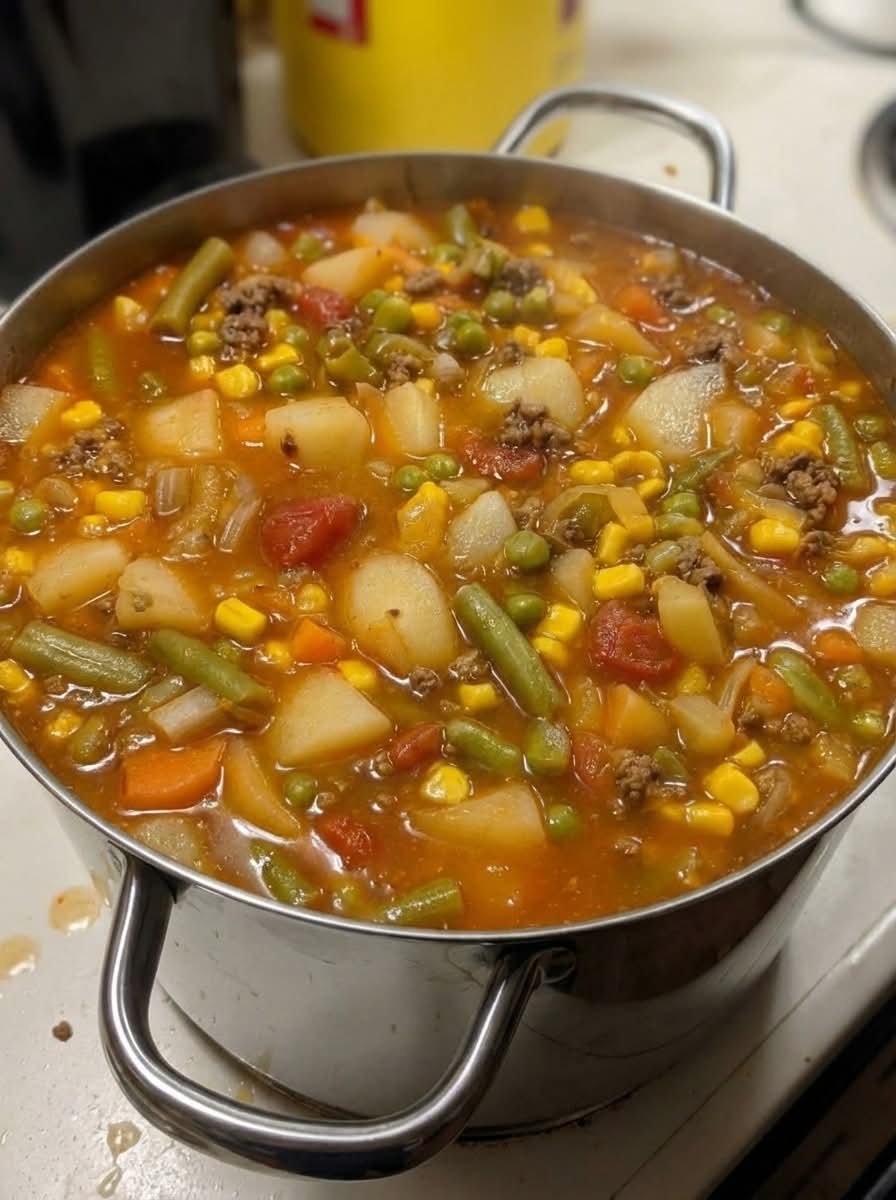
This Vegetable Beef Soup emerges from the pot as a vibrant and hearty medley of tender beef, colorful vegetables, and fragrant herbs. The broth is rich yet balanced, infused with layers of flavor created from the browned beef, sautéed aromatics, and slow-simmered tomatoes. Each spoonful offers a comforting combination of textures—from the soft potatoes to the crisp-tender green beans, sweet peas, and juicy corn—creating a nourishing and deeply satisfying eating experience.
The aroma alone signals homemade comfort, with savory herbs mingling with the natural sweetness of cooked vegetables. The beef becomes tender as it cooks, absorbing the flavors of the broth while contributing its own richness to the overall dish. The vegetables retain their individuality, each ingredient enhancing the next, making the soup both visually inviting and nutritionally diverse.
Bright flecks of fresh parsley add contrast and freshness, completing the bowl with lively color and herbal fragrance. Whether served as a main course paired with crusty bread or enjoyed as a warm, nourishing lunch, this Vegetable Beef Soup is the kind of dish that wraps you in warmth and delight from the very first spoonful.
Nutritional Information
Vegetable Beef Soup is not only delicious and comforting but also remarkably nutritious, offering a balanced combination of protein, carbohydrates, vitamins, and minerals. The beef supplies essential iron and protein, supporting muscle strength, energy, and immune function. Vegetables like carrots, celery, and potatoes provide fiber, beta-carotene, vitamin C, and complex carbohydrates, helping the body maintain steady energy throughout the day.
Green beans, peas, and corn introduce additional vitamins and antioxidants while contributing natural sweetness and color. The broth keeps the soup hydrating and low in fat, especially when low-sodium versions are used. The herbs add flavor without adding calories, making the dish suitable for a wholesome lifestyle. Overall, this soup provides long-lasting nourishment, supporting wellness while delivering comfort.
A typical serving of Vegetable Beef Soup contains moderate calories, balanced macros, and abundant micronutrients. Its high-volume, low-calorie nature makes it a wonderful option for those seeking satisfying meals that align with health goals. It is filling without being heavy, flavorful without being indulgent, and restorative without requiring complex preparation techniques.
Conclusion
Vegetable Beef Soup is far more than a simple recipe; it is a culinary reminder of warmth, nourishment, and the beauty of home-cooked meals. This dish blends hearty beef, fresh vegetables, aromatic herbs, and rich broth to create a comforting experience that brings together generations of tradition, resourcefulness, and family connection. Whether enjoyed on a cold winter evening or prepared as a wholesome lunch for the week, its versatility and heartwarming nature make it a treasured addition to any kitchen.
The slow simmering process transforms humble ingredients into an extraordinary dish that speaks of patience, care, and the timeless power of homemade food. Each bowl tells a story—one of shared meals, comforting aromas, and the universal joy of savoring something deliciously nourishing.
No matter how you adapt or customize it, this Vegetable Beef Soup remains a testament to the effectiveness of simple ingredients combined with thoughtful preparation. It is a dish that never loses its charm, always inviting people back for another warm and satisfying spoonful.
Recommendation
For the best experience, serve this Vegetable Beef Soup with crusty bread, warm biscuits, or a simple green salad to complement its hearty flavors. Allow the soup to rest for a few hours or refrigerate overnight if possible, as the flavors deepen beautifully with time. Store leftovers in airtight containers, and you’ll have a meal that tastes even better the next day.
If you enjoy freezer-friendly recipes, this soup makes an excellent choice. Freeze in individual portions for quick lunches or dinners that require nothing more than a simple reheating. Personalize the soup with your favorite vegetables, add-ins, or herbs to make it your own signature version.
This dish is perfect for family dinners, weekly meal-prep routines, or comforting meals shared with friends. Its universal appeal, ease of preparation, and robust flavor profile make it a highly recommended recipe for cooks of all levels.
Embracing Healthful Indulgence
Vegetable Beef Soup embodies what it means to indulge healthfully, offering both comfort and nourishment in every warm, aromatic bowl. It proves that wholesome eating does not require sacrificing flavor, richness, or satisfaction. Instead, it encourages a thoughtful approach to cooking—one that embraces fresh ingredients, balanced nutrition, and the mindful pleasure of savoring something made with care.
This soup allows you to indulge your senses with rich broth, tender beef, and beautifully cooked vegetables while still supporting your wellness goals. Each serving brings warmth, fullness, and comfort in a way that feels both gratifying and restorative. This balance between indulgence and nourishment is what makes Vegetable Beef Soup a timeless favorite in homes worldwide.
By preparing this dish, you are embracing an intention of well-being—choosing food that feeds your body, delights your senses, and brings comfort to your soul. It is a reminder that the best meals are not merely eaten but experienced, appreciated, and remembered long after the last spoonful has been enjoyed.