Introduction
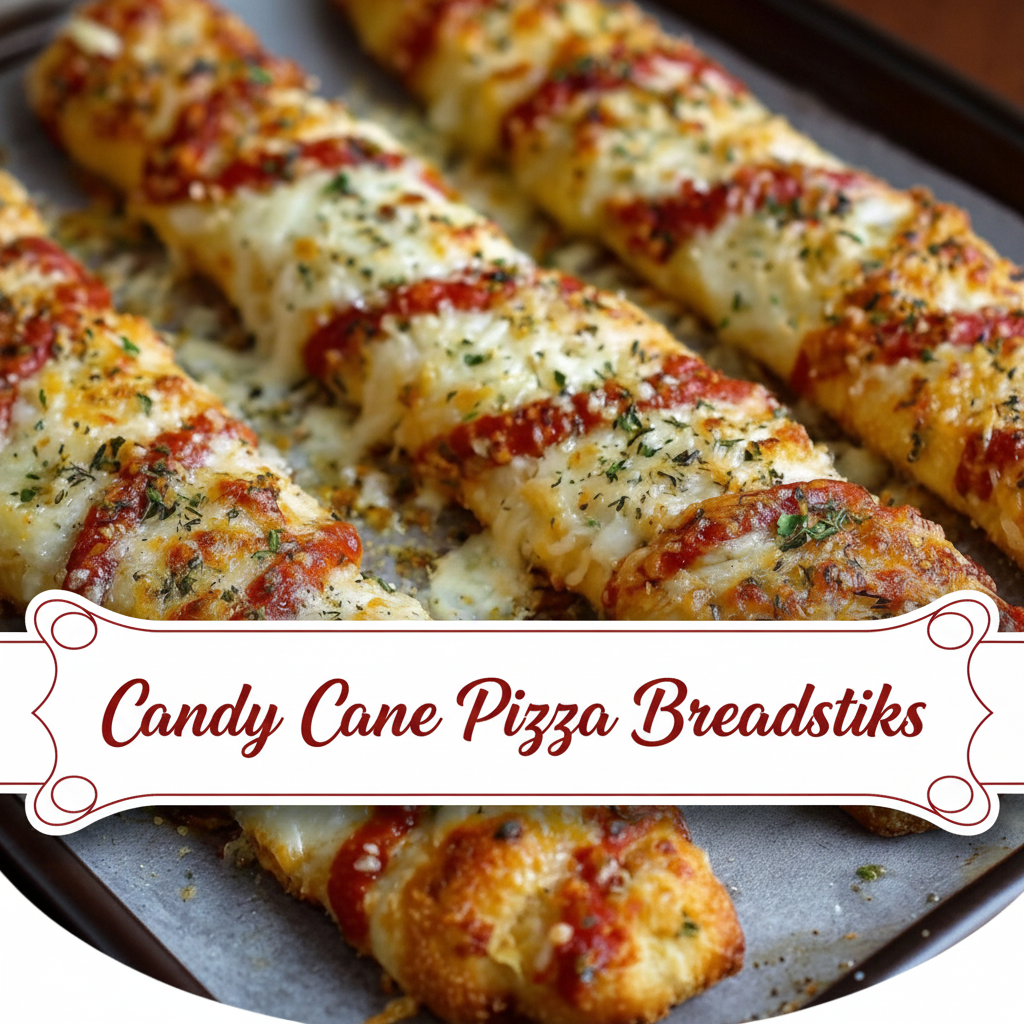
Candy Cane Pizza Breadsticks — just the name evokes a playful blending of holiday whimsy and comfort-food warmth. These aren’t your average breadsticks: they are an imaginative twist on traditional bread, combining the familiar soft chew of pizza dough with the fun, festive look of candy canes, layered with melted cheese and swirled marinara sauce. The result is a treat that sits somewhere between appetizer and edible ornament, perfect for holiday gatherings, cozy winter dinners, or any time you want something both comforting and a little cheeky.
When you serve these breadsticks hot from the oven, with cheese oozing and sauce glistening, they carry both visual charm and irresistible flavor. Whether you pull them apart to dip into extra marinara, or just savor a cheesy, doughy bite on their own, each stick feels like a warm hug on a chilly evening. They invite sharing — laughter, crumbs, and all — around a small table or over a big holiday spread.
In this blog post, I’ll take you on a journey: from the inspiration and roots of breadsticks to the step-by-step “how to” for creating your own candy cane shaped pizza breadsticks. I’ll also talk about ingredient choices, useful tips, possible variations, and even a rough guide to their nutrition. By the time you finish reading, you should have everything you need to bake, serve, and enjoy — and maybe even turn this into a seasonal tradition.
Origin and Cultural Significance
To understand how Candy Cane Pizza Breadsticks fit into culinary history, it helps to look back at the origins of the humble breadstick itself. The classic breadstick, known in Italy as grissini, has a storied past that dates back several centuries.
The most widely accepted origin story places the birth of grissini in the late 17th century in the region of Piedmont, more precisely in the city of Turin. According to tradition, a baker named Antonio Brunero created long, slender sticks of crisp bread for the court of the young Victor Amadeus II of Savoy, who suffered from digestive problems as a child and could not tolerate the rich, dense breads typical of the era.
The resulting breadsticks — thin, dry, and easy to digest — were a practical innovation. They offered a light alternative to heavy loaves and had the benefit of keeping longer without spoiling, which made them ideal not only for courtly consumption but also for storage, travel, and everyday meals. Over time, their popularity spread beyond royal kitchens, gradually reaching restaurants, households and eventually crossing national borders.
As breadsticks traveled beyond Italy, they evolved. In North America especially, “soft” breadsticks — often brushed with butter, garlic, herbs or topped with cheese — became a classic accompaniment at pizzerias and family-style restaurants.
The simple breadstick embodies resilience and versatility: a food born of necessity — lightness and digestibility — that over centuries became a culinary staple and finally a comfort-food icon across cultures.
Candy Cane Pizza Breadsticks are a modern riff on that legacy: we take the foundational ideas — dough, cheese, herbs, baking — then reimagine them with a festive twist. In doing so, we celebrate the spirit of reinvention that has always accompanied the humble breadstick.
Ingredients Quantity
For making 4 candy cane-shaped pizza breadsticks, here are the ingredients you’ll need:
- 1 can of refrigerated pizza dough or a sheet of crescent dough.
- 1 cup shredded mozzarella cheese, or thin strips of fresh mozzarella (depending on your preference for melting and texture).
- ½ cup marinara sauce or pizza sauce.
- 2 tablespoons olive oil.
- 1 teaspoon Italian seasoning — or dried oregano if that’s what you have.
- 1–2 tablespoons fresh thyme (optional; but recommended if you want a slightly herby, aromatic note).
- 1 egg (optional — only if you wish to give the breadsticks an extra glossy, golden finish via egg wash).
- Salt and pepper to taste.
These quantities are calibrated for a small batch — about four breadsticks. This makes the recipe manageable and perfect for a small dinner, a cozy snack, or a festive appetizer portion. If you want to scale up — say for a dinner-party or holiday gathering — you can simply multiply the ingredients proportionally, though you might need to rotate the baking sheet or even use two trays to ensure even baking.
Optional Additions and Tips for Success
While the base recipe is already delicious, there’s room for creativity depending on your mood, the occasion, or what you have on hand.
- Herb variations: Instead of (or in addition to) fresh thyme, you might experiment with fresh rosemary, basil leaves, or even a pinch of red pepper flakes for a slight kick. Herbs add depth, aroma, and complexity.
- Garlic infusion: A light brushing of olive oil mixed with minced garlic (or garlic powder) before baking adds a lovely savory dimension. Garlic + mozzarella + marinara is a classic trio for a reason.
- Cheese variety: While mozzarella is traditional and melty, you could also try a blend — perhaps part mozzarella, part provolone, or even a sprinkle of parmesan (added near the end of baking so it doesn’t burn). A sharper cheese offers more bite and complexity.
- Sauce styles: Marinara is reliable and familiar, but you could use a spicy arrabbiata, a roasted red pepper sauce, or even a creamy tomato-basil sauce for a twist. Each choice changes the character of the breadstick.
- Egg wash vs. oil: The olive oil brush gives a lovely sheen and slightly crisp exterior; the optional egg wash will make the dough glossy and a bit more golden-brown. If you choose egg wash, beat the egg with a tablespoon of water first and brush gently.
- Seed or seed-topping variants: For extra texture, consider sprinkling sesame seeds, poppy seeds, or even flax seeds on the dough before baking. This adds crunch and a rustic aesthetic.
- Sweet-savoury fusion: For a quirky holiday version, once baked but still warm, lightly drizzle a bit of balsamic glaze or honey-balsamic reduction over the breadsticks — the sweet-tangy contrast can be surprisingly good with cheese and dough.
Tips for success:
- Make sure your dough is rolled evenly; uneven thickness may result in under-cooked centers or very browned edges.
- Don’t overstuff with cheese or sauce — too much weight can cause dough to sag and lose its candy-cane shape.
- Keep an eye on the baking time; ovens vary. Start checking at 10 minutes if your dough tends to brown quickly, especially if you used egg wash.
- Let them rest a minute or two after they come out — too hot and cheese may burn your mouth; also, resting helps firm them up so they hold their shape when you handle them.
Instructions
Here’s a more detailed walkthrough of how to make Candy Cane Pizza Breadsticks. Watch the steps carefully — shaping and layering are key to achieving that festive look and perfect texture.
- Prepare the dough
Preheat your oven to 400 °F (200 °C). Meanwhile, line a baking sheet with parchment paper — or lightly grease it with olive oil. This helps prevent sticking and ensures easy cleanup. Roll out the dough on a lightly floured surface. Aim for an even thickness across the sheet. Use a sharp knife or pizza cutter to cut the dough into 4 long strips, each about 1.5–2 inches wide. - Shape the candy canes
Gently handle each strip: roll slightly to smooth and stretch the dough if needed, then curve the top of each strip into a hook — this becomes your candy cane “hook.” Transfer each shaped strip carefully onto the baking sheet so the curved tops stay intact. - Add the cheese
Lay the shredded or sliced mozzarella along each dough strip. Press gently so the cheese adheres to the dough slightly, but avoid pressing too hard (you don’t want the cheese squeezed out). - Add the sauce swirl
Spoon or pipe the marinara sauce in diagonal stripes across each strip, alternating with the cheese. This alternating pattern creates the “stripe” effect — the visual heartbeat of the candy-cane theme. A little overflow or drip along the edges is fine; it bakes into a delicious, slightly charred edge. - Season & finish
Brush the exposed dough with olive oil (or egg wash if you opted in). Sprinkle the Italian seasoning (or oregano), and optionally scatter fresh thyme leaves. Lightly season with salt and pepper. This is also the moment to add any optional seeds, garlic-oil blend, or extra herbs if you’re experimenting. - Bake
Put the baking sheet into the preheated oven. Bake for 12–15 minutes — but start checking around 10 minutes, especially if you used egg wash. You are looking for golden dough, melted and bubbling cheese, and clearly defined stripes. - Cool & serve
Once baked, remove from oven and let the breadsticks sit for a couple of minutes. This brief cooling helps them firm up so they hold together when you lift them off the tray. Serve warm, ideally with a side of extra marinara sauce or even a garlicky butter dip for dunking.
Description
When your Candy Cane Pizza Breadsticks come out of the oven, they’re a feast for the eyes. The dough is golden-brown and gently puffed; the curved tops stand proudly like real candy canes. Diagonal stripes of red marinara sauce swirl among the white ribbons of melted mozzarella, creating a playful illusion of holiday candy — but with the aroma, texture and flavors of a classic Italian-American treat.
On the first bite, you’ll notice the dough: soft yet slightly chewy, with a crisp exterior from the olive oil (or egg wash). Then comes the cheese, warm and gooey, stretching a bit as you pull the breadstick apart. The tangy marinara adds bursts of tomato flavor, while the Italian seasoning (and optional herbs) brings aromatic depth, subtle herbaceousness, and a savory counterbalance to the richness.
If you added optional elements — say garlic oil, sesame seeds, or herbs like thyme or rosemary — you’ll get extra layers of flavor and texture. A sprinkle of seeds adds a delicate crunch; garlic warms the flavor profile and deepens the savory notes; herbs linger in the background and make the aroma more complex. The whole experience is a cozy, comforting blend of cheese-pull, doughiness, and herbs — simple yet indulgent.
Visually, these breadsticks make for a great centerpiece at a holiday meal or casual dinner. Placed upright in a glass, arranged in a basket, or lined on a platter, they add a festive, handcrafted charm to the table. The contrast of red sauce and white cheese gives them a holiday-themed look, but the flavors remain rooted in pizza simplicity — making them versatile for any occasion beyond just December.
Nutritional Information
Estimating nutrition for homemade dishes is always approximate, but we can sketch a rough outline based on common nutritional values for dough, mozzarella, olive oil, and marinara sauce. Because this recipe makes 4 breadsticks, the values below are per breadstick (assuming roughly equal distribution).
- Calories: Likely in the ballpark of 250–320 kcal per breadstick, depending on dough type and how liberal you are with cheese, oil, and sauce.
- Carbohydrates: A good portion — the dough provides most of the carbs. Expect perhaps 25–35 grams of carbs per breadstick.
- Protein: From the cheese and dough — maybe 8–12 grams per stick.
- Fat: Olive oil + cheese contribute most fat — perhaps 10–15 grams per stick.
- Saturated fat: Some portion of the fat will be saturated (from cheese). Could be around 4–6 grams saturated fat per breadstick.
- Sodium: Depending heavily on the salt in dough, cheese, and sauce — likely moderate to high, perhaps 400–600 mg per stick, maybe more if you salt generously.
- Fiber: Rather low, unless you use whole-grain dough — maybe 1–2 grams per breadstick.
If you add optional ingredients — extra cheese, garlic oil, seeds — or dip in buttery or creamy sauces, these numbers will increase (especially fat, saturated fat, and calories). Conversely, using part-skim mozzarella, lower-sodium sauce, or whole-grain dough can improve the nutritional profile slightly.
Keep in mind: these breadsticks are indulgent by design — they’re comfort food. They deliver pleasure and warmth. But if you watch your intake, one or two breadsticks per serving (paired with a salad or vegetable-based side) is a reasonable compromise.
Tips for Success
Because the recipe is playful and a little unconventional, it helps to pay attention to some finer details — little adjustments that can make the difference between good breadsticks and great breadsticks.
- Even dough thickness is critical. Roll out the dough evenly so all strips bake uniformly; thin ends may overcook before the center is done. If you notice the edges puffing up faster, you can loosely tent them with foil mid-bake to avoid burning.
- Shape gently but confidently. When forming the candy-cane hooks, don’t twist or stretch too aggressively — gentle rounding will hold better. If the dough resists, let it rest a minute; over-stretching can cause snapping or uneven bake.
- Cheese placement matters. Too much cheese will weigh down the dough and possibly make it soggy; too little and you lose the gooey, melty joy. Aim for a thin, even layer. Also, if using fresh mozzarella strips, pat them dry slightly before layering (excess moisture can make the dough soggy).
- Sauce sparingly. Because marinara contains moisture, heavy saucing may cause the dough to become soggy or collapse. A thin, even swirl — not a drizzle — gives the best visual stripe effect without compromising shape.
- Mind the oil / egg wash. If you choose egg wash, be gentle — an overly wet brush can cause sauce or cheese to bleed. Olive oil tends to be more forgiving, giving a crisp but soft crust.
- Check oven temperature and position. Middle rack tends to work best. If your oven runs hot, rotate the tray halfway through. If cheese browns too quickly, move sheet up a notch (higher = hotter top), or cover loosely with foil for the last few minutes.
- Let them rest briefly after baking. Cheese may bubble and settle; dough firms up slightly as it cools. Removing immediately can cause slices to lose shape or cheese to slide off. Wait 2–3 minutes before serving.
By keeping these tips in mind, you can increase your chances of achieving breadsticks that are as good — if not better — than what you might get at a pizzeria or restaurant.
Conclusion
Candy Cane Pizza Breadsticks are more than just a novelty recipe. They’re a creative fusion: the old-world tradition of Italian breadsticks, the comfort and familiarity of pizza, and a playful, festive presentation that delights adults and children alike. This recipe reminds us that even the simplest staples — dough, cheese, sauce — can be reinvented, given a new shape and a new purpose.
For a small investment of time and basic ingredients, you get a warm, aromatic, visually charming dish that works for casual dinners, holiday celebrations, or cozy weekend treats. They encourage sharing, bring smiles at the table, and offer a delicious balance of savory doughiness, creamy cheese, and tomato tang.
In a culinary landscape often chasing novelty or complexity, these breadsticks represent a gentle rebellion — a return to simple pleasures, enhanced by imagination. They’re easy enough for a beginner home cook, yet satisfying and fun enough to impress guests.
Recommendation
If you decide to make Candy Cane Pizza Breadsticks, here’s how I’d suggest approaching them: start simple. Use the basic recipe with pizza dough, mozzarella, and marinara as is. Bake four breadsticks and serve them warm, maybe with a small bowl of extra marinara for dipping. Serve to a friend or family member, and watch the reaction — you’ll likely get delighted surprise at the shape, followed by happy chewing.
Once you see how the basic version turns out, experiment. Try fresh herbs, garlic oil, different cheeses, or even a sauce variation — perhaps a pesto swirl or a spicy tomato. Consider doubling or tripling the batch for a dinner party, arranging them upright in a tall glass or basket for a “candy cane forest” centerpiece.
For those who care about nutrition, you can lighten things up: choose part-skim mozzarella, go easy on the oil, serve smaller portions, accompany with a green salad or vegetable side. But if you’re leaning toward indulgence — especially around festive meals — don’t hold back. A sticky, cheesy breadstick fresh from the oven is one of life’s small but undeniable joys.
Embracing Healthful Indulgence
Indulgence often gets a bad rap — but it doesn’t have to. With Candy Cane Pizza Breadsticks, you can embrace a little decadence while keeping things balanced and thoughtful.
Imagine pairing warm breadsticks with a fresh arugula-tomato salad drizzled with a light vinaigrette. The bitterness and freshness of the greens help cut through the richness of cheese and dough; the acidity of the vinaigrette plays beautifully against the marinara. A side of roasted vegetables or a light soup can round out the meal and add fiber, vitamins, and balance.
If you bake often, consider making half-batches or freezing unbaked shaped dough for later. This way, when you’re craving comfort food, you can bake a few sticks without overindulging. Keeping portion sizes moderate — one or two sticks — and pairing with nutrient-dense sides turns a treat into a balanced meal rather than a splurge.
From time to time, treat yourself — life’s too short not to enjoy warm, cheesy breadsticks straight from the oven. But use indulgence as a choice, not a habit. Choose good ingredients, bake with love, share with others, and savor every melty, aromatic bite.