Introduction
Lebkuchen Bars are a wonderfully aromatic, warmly spiced, and deeply comforting treat that captures the heart of traditional European baking while offering a modern, easy-to-make twist suited for today’s homes. These tender, fragrant bars are inspired by the famous German Lebkuchen, a centuries-old gingerbread-like confection that has long been treasured during winter festivals, holiday gatherings, and everyday moments of indulgence. With their intoxicating blend of cinnamon, ginger, honey, citrus, and almonds, Lebkuchen Bars deliver a sensory experience that feels nostalgic and new all at once, reminding us of cherished traditions while inviting us to create our own.
The recipe for Lebkuchen Bars offers the perfect balance between rustic charm and refined elegance, making them an excellent choice for gifting, entertaining, or simply savoring with a warm mug of tea or coffee. The fusion of textures—from the tender crumb to the glossy citrus-ginger glaze—creates a harmony that is both vibrant and comforting, ensuring that each bite feels like a small celebration of flavor. Whether you’re familiar with the classic German treat or discovering it for the first time, this recipe brings the magic of holiday baking into everyday life with ease and delight.
As you read through this extensive guide, you’ll discover not just how to make these delicious bars, but also the deeper cultural significance of Lebkuchen, its historical journey, and the little secrets that make this recipe truly shine. Every element—from ingredient choices to resting techniques—plays a role in shaping the final texture and taste, making these bars a rewarding project that encourages patience, creativity, and pleasure in the process.
Origin
To understand the beauty of Lebkuchen Bars, we must travel back in history to the origins of Lebkuchen itself—a delicacy that first emerged in medieval Germany around the 13th century. Historically, monks in Franconia, particularly in the city of Nuremberg, began crafting early versions of what we now know as Lebkuchen. They used a mixture of spices, honey, nuts, and flour to create a baked good that was sturdier than cake, more aromatic than bread, and richer in flavor than anything typically found in medieval European kitchens. These early creations were heavily influenced by trade routes that brought exotic spices such as cinnamon, ginger, cloves, nutmeg, and cardamom from the East into Europe.
As the popularity of Lebkuchen grew, German towns began developing their own unique versions, each reflecting the resources, climate, and cultural preferences of the region. The most famous varieties were produced in Nuremberg and Aachen, known for their superior honey and abundant local nuts. The use of citrus—now so central to many recipes—became prominent only after global trade expanded and ingredients like oranges, lemon peel, and candied citrus became more widely available. These additions elevated Lebkuchen into a luxurious delicacy often associated with celebrations, religious events, and winter holidays.
The transition from traditional Lebkuchen to modern Lebkuchen Bars represents both accessibility and creativity within contemporary home baking. While original Lebkuchen was often molded, baked on wafers, or shaped into hearts and rounds, today’s bars offer an easy, approachable format that retains all the cherished flavors without requiring elaborate preparation. This adaptation demonstrates how culinary traditions evolve while continuing to honor the essence of their origins, allowing generations of bakers to enjoy a beloved treat in new and practical ways.
Cultural Significance
Lebkuchen holds a special place in German and central European culture, particularly during the winter holidays when Christmas markets, or Weihnachtsmärkte, fill the streets with twinkling lights, festive music, and irresistible aromas of warm spices. Among the many delights sold at these markets, Lebkuchen is an iconic favorite, often decorated with icing, heart-shaped designs, and heartfelt messages. It symbolizes hospitality, warmth, and the joy of sharing sweet treats with loved ones during the coldest season of the year.
Culturally, Lebkuchen is more than a dessert—it is an edible representation of tradition, craftsmanship, and the passage of time. Generations of bakers have passed down their recipes, often guarded as family treasures, emphasizing the importance of patience in preparation. Some original recipes required the dough to rest for weeks or even months, allowing the flavors to deepen and the texture to develop fully. Even in modern adaptations, the concept of allowing the dough to rest—whether overnight or for a few hours—remains essential because it reflects the historic respect for time-honored methods.
Today, Lebkuchen Bars continue to embody the cultural meaning of their ancestors while appealing to modern bakers who crave both convenience and authenticity. They serve as an invitation to celebrate flavor, tradition, and craftsmanship in a format that is easy to prepare yet rich in significance. When shared among friends and family, they evoke the spirit of holiday gatherings, spark nostalgia, and create new memories that carry forward the cultural heritage of this beloved delicacy.
Ingredients Quantity
Below is the complete, precise list of ingredients needed to prepare these richly aromatic Lebkuchen Bars. Each ingredient plays a purposeful role in creating the perfect balance of sweetness, spice, moisture, and texture that defines the recipe and gives it its signature character and charm.
For the Bars
- 1/2 cup brown sugar, packed
- 1/2 cup honey
- 1/3 cup granulated sugar
- 3 tablespoons unsalted butter
- 1 1/2 cups all-purpose flour
- 1 teaspoon baking soda
- 3 teaspoons ground cinnamon
- 1 teaspoon ground ginger
- 1 egg
- 2 tablespoons fresh orange juice
- 1 teaspoon fresh orange zest
- 1 1/2 teaspoons vanilla
- 1/2 cup sliced almonds
For the Icing
- 1 cup powdered sugar
- 2 tablespoons orange juice
- 1/2 teaspoon freshly grated ginger
- 1/2 teaspoon vanilla
These ingredients work in harmony to create a deliciously spiced foundation and a bright, fragrant icing that enhances the warm flavors.
Optional Additions
While the base recipe is already delightful, optional additions allow you to customize your Lebkuchen Bars to suit your preferred flavor profile or to create variations for different occasions. Many bakers love experimenting with the aromatic nature of Lebkuchen because the spices and citrus pair beautifully with several other ingredients.
For additional texture and depth, consider adding chopped candied ginger, which complements the warmth of the ground spices while adding small bursts of intense flavor. You can also fold in finely chopped dried fruits such as apricots, dates, or cherries, which add natural sweetness and a pleasant chewiness to the bars. If you enjoy more complex spice blends, a pinch of cloves, nutmeg, or cardamom can enhance the aromatic profile of the dough without overwhelming the classic gingerbread taste.
Those who prefer a richer texture may choose to incorporate melted chocolate into the icing or drizzle dark chocolate over the finished bars for an elegant finish. You can also sprinkle additional sliced almonds on top before baking for a more pronounced nutty presence. Whether kept traditional or elevated with creative twists, Lebkuchen Bars offer endless opportunities for personalization.
Tips for Success
Creating the perfect Lebkuchen Bars depends on paying close attention to method, timing, and ingredient quality. One of the most essential steps is allowing the dough to properly chill. While it may be tempting to rush the process, the 6–8 hour resting period helps the flavors develop, ensures the spices bloom, and improves the structure of the dough so the bars bake evenly. Skipping or shortening this step can result in a less cohesive texture and muted flavor, so patience truly pays off.
Another important tip is to heat the honey-sugar mixture only until it begins to simmer, making sure the sugars dissolve without allowing the mixture to boil. Overheating the mixture can affect texture and moisture balance. Equally crucial is ensuring that the mixture cools sufficiently before adding the egg—otherwise, the heat could cause the egg to scramble, compromising the batter’s consistency. Stirring carefully and sequentially ensures that each component integrates smoothly.
Finally, using parchment paper in the baking dish is key to producing clean, easily removable bars. Because the dough is naturally sticky, greasing your spatula or fingertips before spreading it will make the process significantly smoother. Take your time during baking, monitor the edges for slight browning, and allow the bars to cool fully before icing. These deliberate steps guarantee beautiful, flavorful results.
Instructions
- Begin by preparing the honey mixture.
In a medium saucepan, combine the brown sugar, honey, granulated sugar, and butter. Warm the mixture over medium heat just until it begins to simmer. Stir continuously until the sugar dissolves fully, but avoid letting the mixture boil. Once dissolved, remove from heat and allow the mixture to cool until lukewarm. - Prepare the dry ingredients.
In a large mixing bowl, sift together the flour, baking soda, ground cinnamon, and ground ginger. Mixing the dry ingredients in advance helps distribute the spices evenly, ensuring consistent flavor throughout each bar. - Combine the mixtures.
Once the honey mixture has cooled, whisk in the egg, orange juice, orange zest, vanilla, and sliced almonds. Stir gently to combine and ensure the almonds are evenly distributed. Add this wet mixture to the dry ingredients and fold together until just combined. - Chill the dough thoroughly.
Cover the dough with plastic wrap, making sure the wrap touches the surface directly to prevent drying. Refrigerate for 6–8 hours or overnight to allow the texture and flavor to fully develop. - Prepare to bake.
When ready to continue, let the chilled dough sit at room temperature for 30 minutes to soften slightly. Preheat your oven to 350°F (175°C). Line a 9×9-inch baking dish with parchment paper and lightly grease the surface. - Spread and bake the dough.
Transfer the dough to the prepared baking dish and spread it evenly using a greased spatula. Bake for 25–30 minutes or until an inserted toothpick comes out clean. - Prepare the icing.
While the bars bake, combine the powdered sugar, orange juice, grated ginger, and vanilla in a small bowl. Whisk until smooth and free of lumps. - Finish the bars.
Let the baked bars cool for about 5–10 minutes, then spread the icing evenly. Allow the bars to cool completely for the icing to set before slicing. Store them in an airtight container for best flavor development.
Description
Lebkuchen Bars are a delightful combination of tender texture, aromatic spice, and bright citrus notes, forming a treat that feels both comforting and invigorating. Each bite reveals layers of flavor that unfold gradually—the warmth of cinnamon and ginger, the gentle sweetness of honey, and the refreshing brightness of orange zest and juice. These bars strike a perfect balance between softness and heartiness, offering a satisfying chew without feeling dense or heavy.
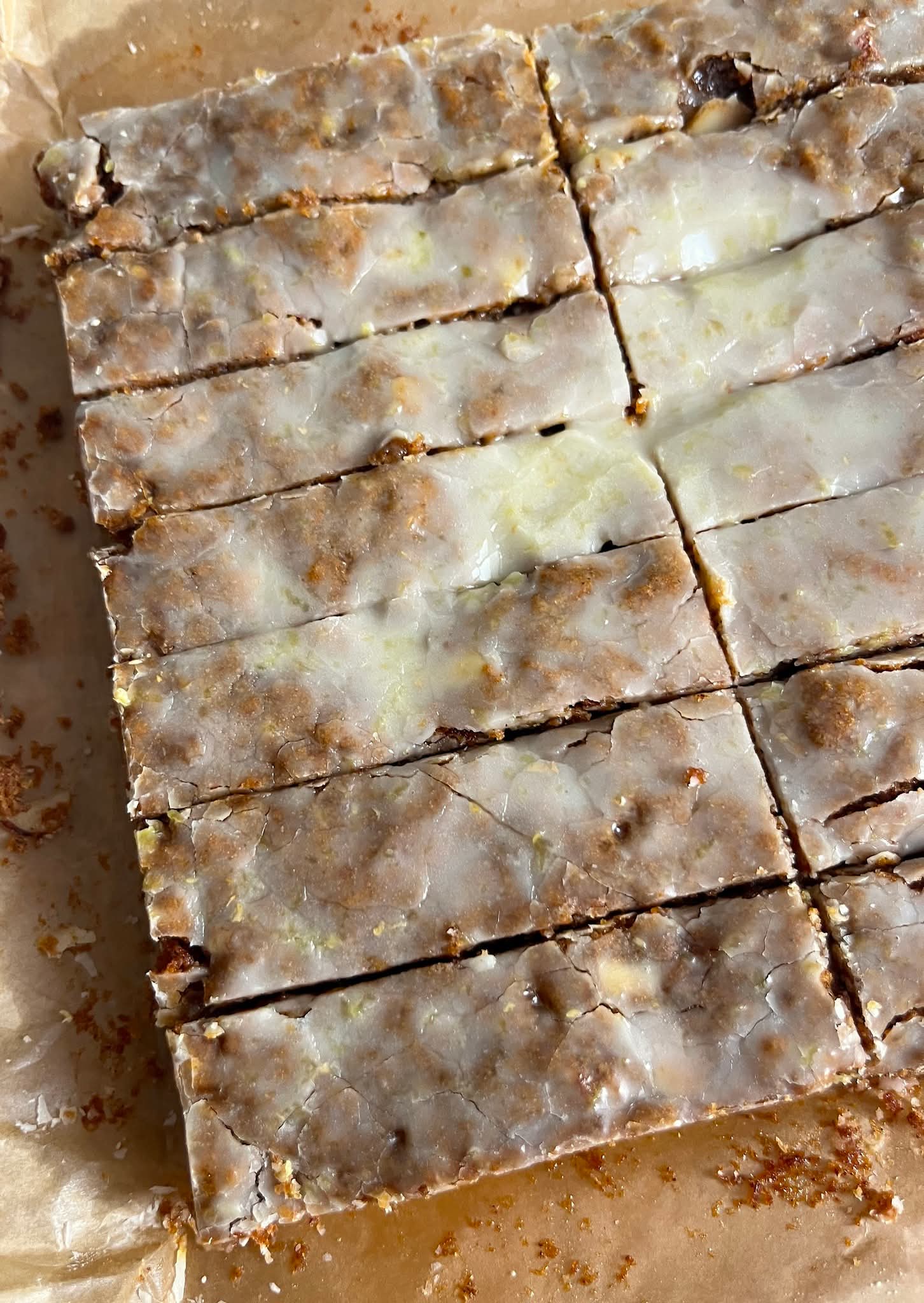
The icing adds a luminous finishing touch, not only visually but also in terms of flavor. Its glossy sheen enhances the bars’ rustic charm, and the addition of fresh ginger and orange juice provides a lively contrast to the deeper flavors of the baked base. The subtle crunch of sliced almonds harmonizes with the tender crumb, creating a multilayered experience that feels thoughtfully crafted and indulgent.
When sliced, the bars reveal a uniform, warmly tinted interior that showcases the even distribution of spices and nuts. The aroma is mesmerizing, reminiscent of holiday markets, warm kitchens, and joyful gatherings. Whether enjoyed warm or at room temperature, Lebkuchen Bars offer an experience that is deeply immersive, inviting, and memorable.
Nutritional Information
While the exact nutritional content may vary slightly depending on the specific ingredients used, the following provides a general estimate for a single Lebkuchen Bar when the batch is divided into approximately 12 servings. These values are intended to provide guidance and perspective for those who wish to enjoy the bars mindfully while still savoring their delicious flavor.
Each bar typically contains around 180–210 calories, with variations depending on thickness and icing application. The primary contributors to this calorie count include sugars, flour, honey, and almonds. Total fat content averages around 6–8 grams per bar, primarily from the butter and almonds, offering a balance of saturated and unsaturated fats. The carbohydrate content ranges from 30–36 grams per serving, largely due to the natural sweetness of honey and added sugars.
Protein levels are generally modest, at around 3–4 grams per bar, owing to the inclusion of almonds and the egg. These bars are not overly high in sodium, averaging 120–160 milligrams per serving. While certainly a treat, they provide a harmonious mix of energy, flavor, and satisfaction, making them an enjoyable part of a balanced approach to desserts.
Conclusion
Lebkuchen Bars offer a beautiful blend of tradition, flavor, and artistry, bringing centuries-old heritage into the modern kitchen with grace and deliciousness. Their warm spices, tender texture, bright citrus notes, and delicate icing create a dessert that is both nostalgic and universally appealing, suitable for celebrations or simple shared moments of joy. Whether you are preparing them for the holidays, for a gathering, or simply to enjoy with a warm drink, they bring a sense of warmth that transcends seasons and occasions.
By embracing the thoughtful preparation process—allowing the dough to rest, handling each ingredient with care, and savoring each step—you honor the culinary history that inspired this recipe while creating a treat that reflects your own style and heart. Baking Lebkuchen Bars becomes not just a task but an experience, one that brings comfort, creativity, and connection into your kitchen.
As you finish preparing your batch, you’ll find that these bars grow richer in flavor over time, rewarding your patience with enhanced aroma and depth. They truly become better with each passing day, reminding us that good things take time and that the most memorable sweets are often those infused with tradition, intention, and love.
Recommendation
If you’re looking to elevate the experience of making Lebkuchen Bars even further, consider serving them alongside complementary treats that highlight their warm spice profile. Freshly brewed herbal tea, spiced coffee, or mulled cider are excellent companions, enhancing the flavors and aromas of the bars. For gatherings, try arranging them on a dessert tray with seasonal fruits, nuts, or even chocolate-dipped items to create a visually appealing and flavorful spread.
Lebkuchen Bars also make an exceptional homemade gift, especially when wrapped in parchment or decorative tins. Their flavors continue to develop beautifully over several days, making them ideal for gifting during the holidays or as thoughtful tokens throughout the year. Including a handwritten note or ribbon adds a personal touch that recipients will surely appreciate and remember.
Finally, don’t be afraid to make this recipe entirely your own. Experiment with different spices, toppings, or glazes, or adjust the texture by adding dried fruit or chopped nuts. The versatility of the recipe means you can return to it again and again, crafting variations that suit different seasons, moods, or events. It’s a recipe that encourages exploration while consistently delivering delicious results.
Embracing Healthful Indulgence
Lebkuchen Bars are a beautiful example of how indulgence and mindful enjoyment can coexist harmoniously. Their ingredients, while sweet and flavorful, include naturally nourishing elements such as honey, nuts, and warm spices that have been enjoyed for centuries not only for their taste but also for their comforting and invigorating qualities. By savoring these bars thoughtfully, you embrace a philosophy of balance that values pleasure, tradition, and well-being.
Choosing high-quality ingredients—like pure honey, freshly grated ginger, and vibrant citrus—can further enhance both flavor and nutritional value. Enjoying these bars slowly, appreciating their aroma and texture, transforms a simple treat into a meaningful moment of pause and gratitude. Baking them can be a meditative process too, reminding us of the joy found in creating something with our hands and sharing it with others.
In embracing healthful indulgence, you give yourself permission to enjoy sweetness with intention, celebrating both the rich cultural heritage of Lebkuchen and the sensory experience it offers. This recipe invites you to approach dessert not as an excess but as an opportunity for connection, creativity, and the nourishing pleasure of savoring something truly special.