Pistachio Olive Oil Cake: A Delightful Fusion of Flavors and Traditions
Introduction
In the world of baking, few desserts capture the essence of Mediterranean elegance quite like the Pistachio Olive Oil Cake. This cake is a harmonious blend of nutty richness from pistachios and the smooth, fruity notes of olive oil, resulting in a treat that’s both indulgent and surprisingly light. Imagine slicing into a soft, moist crumb that melts in your mouth, with subtle hints of vanilla and lemon zest dancing on your palate—it’s the kind of dessert that turns an ordinary afternoon tea into a memorable occasion. As we delve into this recipe, we’ll explore not just how to make it, but why it has become a beloved staple in home kitchens around the globe, offering a healthful alternative to butter-laden cakes without sacrificing flavor or texture.
The appeal of this cake lies in its simplicity and versatility. Whether you’re a novice baker looking for an easy yet impressive dessert or a seasoned pro experimenting with flavors, the Pistachio Olive Oil Cake adapts effortlessly to various occasions—from casual family gatherings to elegant dinner parties. Its preparation time of just 45-50 minutes makes it accessible for busy lifestyles, while the use of everyday ingredients ensures it’s budget-friendly. By the end of this post, you’ll be equipped with all the knowledge to create your own version, complete with tips to elevate it to gourmet status.
What sets this cake apart is its ability to evoke a sense of nostalgia and innovation simultaneously. Drawing from ancient culinary traditions, it modernizes them for today’s health-conscious eaters. As we journey through its origins, ingredients, and preparation, you’ll discover how this cake isn’t just food—it’s a story on a plate, inviting you to savor each bite mindfully.
Origin and Cultural Significance
The roots of the Pistachio Olive Oil Cake can be traced back to the sun-drenched regions of the Mediterranean, where olive oil has been a cornerstone of cuisine for millennia. Ancient civilizations in Greece, Italy, and the Middle East revered olive oil not only for its nutritional benefits but also for its symbolic value, representing peace, prosperity, and health in myths and rituals. Pistachios, native to Central Asia and the Middle East, were prized by Persian kings and later spread along trade routes, becoming integral to desserts in Turkish, Greek, and Italian baking traditions. This cake embodies a fusion of these elements, likely evolving from simple olive oil-based breads and nut-enriched sweets that date back to Roman times.
In cultural contexts, such cakes hold deep significance during festivals and family celebrations. In Italy, olive oil cakes are a staple in Tuscan and Sicilian households, often baked for holidays like Easter or Christmas, symbolizing abundance with their golden hue and nutty crunch. Similarly, in Middle Eastern cultures, pistachios feature prominently in sweets like baklava, and incorporating them into cakes reflects a blend of Persian influences where nuts signify luxury and hospitality. The cake’s moist texture, preserved by olive oil, made it ideal for long journeys or storage in arid climates, a practical adaptation that underscores its historical role in nomadic and agrarian societies.
Today, the Pistachio Olive Oil Cake has transcended its origins to become a global phenomenon, embraced in modern wellness trends for its use of heart-healthy fats. In the United States and Europe, it’s popularized through food blogs and celebrity chefs who highlight its gluten-free potential or vegan adaptations, making it a symbol of inclusive, mindful eating. This evolution reflects broader cultural shifts toward sustainable ingredients—olive oil from ancient groves and pistachios from ethical farms—fostering a connection to heritage while appealing to contemporary palates. Its significance lies in bridging generations, as grandmothers’ recipes are reinvented for today’s tables, preserving traditions amid globalization.
Ingredients Quantity
To craft the perfect Pistachio Olive Oil Cake, precision in ingredients is key, ensuring a balanced flavor and impeccable texture. Start with 3 large eggs at room temperature, which provide structure and lightness through aeration when beaten. Next, incorporate 1 cup of granulated sugar, which not only sweetens the batter but also contributes to the cake’s tender crumb by dissolving smoothly during mixing. The star of the show is 1/2 cup of high-quality, lightly flavored olive oil, chosen for its subtle fruitiness that enhances moisture without overpowering the nuts.
Complementing the oil, add 1/2 cup of milk or yogurt, which introduces a tangy creaminess and helps in binding the ingredients for a soft, moist result. The nutty essence comes from 1 cup of finely ground pistachios, ground to a fine consistency to integrate seamlessly into the batter without creating grittiness. For the dry base, measure out 1 + 1/2 cups of all-purpose flour, sifted to prevent lumps and ensure even rising. A 10g packet of baking powder acts as the leavening agent, giving the cake its airy lift, while a packet of vanilla extract infuses a warm, aromatic depth.
Optional but recommended is the zest of 1 lemon, adding a bright citrus note that cuts through the richness. Finally, a pinch of salt balances the sweetness, enhancing all flavors subtly. These quantities are calibrated for a 22-24 cm round pan, yielding about 8-10 servings, making it ideal for sharing. Scaling up or down requires proportional adjustments to maintain the cake’s signature softness.
Optional Additions
While the core recipe delivers a sublime cake, optional additions allow for personalization, elevating it to suit diverse tastes or occasions. For a more intense pistachio flavor, consider stirring in 1-2 tablespoons of pistachio paste, which infuses a concentrated nutty essence without altering the texture significantly. This addition is particularly appealing for those who crave a bolder profile, reminiscent of Italian gelato. Alternatively, fold in a handful of chopped dried fruits like apricots or cranberries for bursts of tart sweetness that contrast beautifully with the cake’s earthiness.
To introduce a subtle spice dimension, a teaspoon of ground cardamom or cinnamon can be mixed into the dry ingredients, drawing from Middle Eastern influences and adding warmth. For a gluten-free version, substitute the flour with an equal amount of almond flour or a gluten-free blend, ensuring the cake remains inclusive for dietary needs. If aiming for a vegan adaptation, replace eggs with flax eggs (3 tablespoons flaxseed meal mixed with 9 tablespoons water) and use plant-based yogurt, maintaining the moist crumb.
Enhance the topping beyond powdered sugar and chopped pistachios by drizzling a simple glaze made from lemon juice and powdered sugar, or scattering rose petals for an exotic, Persian-inspired flair. These options not only customize the cake but also extend its shelf life or nutritional value, such as adding chia seeds for omega-3s. Experimenting with these keeps the recipe fresh, encouraging creativity in the kitchen.
Tips for Success
Achieving bakery-quality results with the Pistachio Olive Oil Cake hinges on a few expert tips that address common pitfalls. First, ensure all ingredients are at room temperature—cold eggs or milk can cause the batter to curdle when mixed with olive oil, leading to a dense texture. Beating the eggs and sugar for a full 2-3 minutes until pale and fluffy incorporates air, which is crucial for the cake’s soft rise. Use a high-quality olive oil with a mild flavor; extra virgin varieties with strong peppery notes might overpower the pistachios, so opt for lighter ones labeled as “fruity” or “delicate.”
When grinding pistachios, pulse them in a food processor to a fine meal, avoiding over-processing which could release oils and make the batter greasy. Sifting the dry ingredients together prevents clumps and ensures even distribution of baking powder for uniform leavening. If using yogurt instead of milk, choose full-fat Greek yogurt for extra richness and tang, which pairs wonderfully with the lemon zest. For baking, position the pan in the middle rack to avoid uneven browning, and always test doneness with a toothpick—it should come out clean or with a few moist crumbs.
Post-baking, let the cake cool completely in the pan before inverting to prevent breakage. Olive oil’s natural preservatives keep it moist for days, so store in an airtight container at room temperature. For enhanced flavor, prepare the batter a day ahead and refrigerate, allowing the tastes to meld. These tips transform a simple recipe into a foolproof masterpiece, boosting confidence for bakers of all levels.
Instructions
Begin by preheating your oven to 340°F (170°C) with both top and bottom heat settings activated, ensuring even baking throughout. Grease a 22-24 cm round pan thoroughly with olive oil or butter, then dust with flour, tapping out excess, or line the bottom with parchment paper for easy release. This preparation step is vital to prevent sticking and achieve a clean, professional finish on your cake.
In a large mixing bowl, combine the 3 large room-temperature eggs with 1 cup of granulated sugar. Using an electric mixer on medium speed, beat for 2-3 minutes until the mixture turns light yellow and increases in volume, creating a ribbon-like trail when the beaters are lifted. This aeration is key to the cake’s fluffy texture. Gradually pour in the 1/2 cup of olive oil and 1/2 cup of milk or yogurt, mixing on low speed just until incorporated—overmixing here can deflate the batter.
Sift together the 1 + 1/2 cups flour, 10g baking powder, vanilla extract packet, and a pinch of salt into the wet mixture. Gently fold with a spatula until no dry streaks remain, being careful not to overwork the gluten which could toughen the cake. Stir in the 1 cup finely ground pistachios and optional lemon zest until the batter is homogeneous and smooth, with a vibrant green hue from the nuts.
Pour the batter into the prepared pan, smoothing the top with the spatula for an even surface. Bake in the preheated oven for 40-45 minutes, rotating the pan halfway through if your oven has hot spots. The cake is done when the edges pull away from the sides and a toothpick inserted in the center emerges clean. Allow to cool in the pan for 10-15 minutes, then invert onto a wire rack to cool completely.
For serving, dust with powdered sugar and sprinkle chopped pistachios on top for added crunch and visual appeal. Slice and enjoy plain or with accompaniments like lemon yogurt, making each serving a delightful experience.
Description
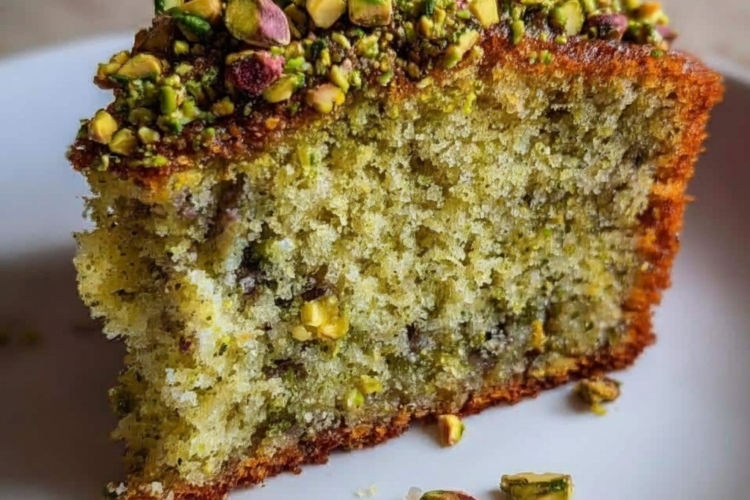
The Pistachio Olive Oil Cake presents as a golden-brown masterpiece with a subtly cracked top, dusted in snowy powdered sugar and adorned with emerald-green pistachio pieces. Upon slicing, it reveals a tender, moist crumb flecked with fine pistachio grounds, offering a soft, almost velvety texture that yields effortlessly to the fork. The aroma is intoxicating—a blend of fruity olive oil, nutty pistachios, and faint citrus from the lemon zest, evoking sunlit orchards and bustling markets.
Flavor-wise, it’s a symphony of balance: the earthy richness of pistachios tempered by the smooth, herbaceous olive oil, with vanilla providing a sweet undertone and salt enhancing every note. Each bite is light yet satisfying, without the heaviness of butter cakes, making it ideal for warm weather or as a post-meal treat. The optional toppings add layers—crunch from nuts, tartness from lemon glaze—transforming it into a versatile dessert that pairs with coffee, tea, or even a glass of dessert wine.
Visually and sensorially, this cake is a feast, its Mediterranean roots shining through in every aspect. It’s not overly sweet, appealing to those who prefer sophisticated flavors, and its moistness ensures it remains fresh for days, perfect for gifting or meal prepping.
Nutritional Information
A single serving of Pistachio Olive Oil Cake, based on 10 portions, offers a nutritious profile that aligns with healthful eating. Each slice contains approximately 280-320 calories, derived primarily from healthy fats in the olive oil and pistachios, which provide about 18-20 grams of fat per serving—mostly monounsaturated fats known for supporting heart health. Carbohydrates total around 30-35 grams, with 15-20 grams from sugars, balanced by the fiber from nuts and flour contributing 2-3 grams per slice.
Protein is moderate at 5-7 grams, boosted by eggs and pistachios, which are excellent sources of plant-based protein and essential amino acids. The cake is rich in micronutrients: pistachios deliver vitamin E, B vitamins, and minerals like magnesium and potassium, while olive oil adds antioxidants that combat inflammation. If using yogurt, it introduces probiotics for gut health, and lemon zest provides vitamin C for immune support.
Compared to traditional cakes, this version is lower in saturated fats, making it a smarter choice for those monitoring cholesterol. Gluten-free adaptations reduce allergens, and vegan options enhance accessibility. Overall, it’s an indulgent yet nutrient-dense dessert, promoting moderation in a balanced diet.
Conclusion
As we wrap up our exploration of the Pistachio Olive Oil Cake, it’s clear this dessert is more than a recipe—it’s a celebration of timeless ingredients and cultural heritage. From its humble Mediterranean origins to its modern adaptations, it offers a moist, flavorful escape that’s easy to prepare and endlessly customizable. Whether enjoyed fresh from the oven or savored days later, its softness and nutty charm leave a lasting impression.
Baking this cake invites reflection on the joy of simple pleasures, connecting us to traditions while fitting seamlessly into contemporary lifestyles. It’s a testament to how quality ingredients can create something extraordinary, encouraging home bakers to experiment and share.
In essence, the Pistachio Olive Oil Cake embodies the art of baking: transformative, delightful, and deeply satisfying.
Recommendation
I wholeheartedly recommend the Pistachio Olive Oil Cake for anyone seeking a dessert that’s both elegant and approachable. Ideal for beginners due to its straightforward steps, it also rewards experienced bakers with opportunities for creative twists. Pair it with afternoon tea for a light treat or serve at brunches for a crowd-pleaser—its versatility shines in any setting.
For health enthusiasts, its olive oil base provides a guilt-free indulgence, rich in beneficial fats. Try it during holidays or as a gift; its long-lasting freshness makes it practical. Overall, this cake is a must-bake, promising rave reviews and repeat requests.
If you’re exploring similar recipes, consider olive oil variations with almonds or citrus for variety. Dive in and discover why it’s a favorite.
Embracing Healthful Indulgence
Embracing healthful indulgence through the Pistachio Olive Oil Cake means redefining dessert as nourishing rather than decadent excess. By swapping butter for olive oil, we harness anti-inflammatory properties and heart-healthy fats, allowing enjoyment without compromise. Pistachios add antioxidants and fiber, supporting overall wellness in every slice.
This approach fosters mindful eating, where flavor and nutrition coexist. In a fast-paced world, such recipes remind us that indulgence can be sustainable, promoting balance and joy. Bake this cake as a step toward healthier habits, savoring the fusion of taste and well-being.
Ultimately, it’s about celebrating life’s sweet moments responsibly, one moist bite at a time.