Introduction
Ina Garten’s Pastitsio is a luxurious, deeply flavorful Greek-inspired baked pasta dish that combines a richly spiced meat sauce made with ground beef and lamb, tubular ziti, and a silky, nutmeg-scented béchamel enriched with Parmesan, eggs, and Greek yogurt. Often described as the Greek counterpart to Italian lasagna, this comforting casserole layers bold Mediterranean flavors—cinnamon, oregano, thyme, and a touch of cayenne—with creamy indulgence for a show-stopping main course perfect for Sunday dinners, holidays, or entertaining guests. The sauce simmers slowly to develop deep, aromatic complexity, while the béchamel creates a golden, puffed crown that bubbles and browns beautifully in the oven.
This recipe serves 8-10 generously in a large baking dish, making it ideal for family gatherings or leftovers that reheat wonderfully. What sets Ina’s version apart is her signature elegance: high-quality ingredients, thoughtful seasoning, and the clever addition of Greek yogurt in the béchamel for subtle tang and extra creaminess. The result is hearty yet refined—tender pasta enveloped in tomato-meat sauce, topped with a velvety blanket that sets into sliceable perfection after resting. Aromas of cinnamon-spiced meat and nutty cheese fill the kitchen as it bakes, promising pure comfort in every forkful.
Whether you’re a fan of Barefoot Contessa classics or discovering pastitsio for the first time, this dish delivers timeless satisfaction. As we explore further, you’ll uncover its cultural roots, precise techniques for success, and why it represents the very best of sophisticated home cooking.
This pastitsio isn’t just dinner—it’s an experience, blending tradition with Ina’s effortless sophistication for a meal that feels both nostalgic and special.
Origin and Cultural Significance
Pastitsio (παστίτσιο) is a beloved staple of Greek cuisine, widely considered the national baked pasta dish, with roots tracing back to the Italian influence on Greek cooking during periods of Venetian and later Ottoman rule. The name derives from the Italian “pasticcio,” meaning a pie or mess, reflecting layered baked dishes popular across the Mediterranean. Traditional Greek versions evolved in the 19th and 20th centuries, combining local ingredients like cinnamon-spiced meat ragù (similar to that used in moussaka) with tubular pasta and a thick béchamel topping.
In Greece, pastitsio is quintessential taverna and home cooking—served at family celebrations, Sunday lunches, and holidays. Regional variations exist, such as Cypriot versions with halloumi or mint, but the classic features bucatini or long ziti, ground beef or lamb, and a custard-like béchamel. Ina Garten popularized her refined take through her cookbooks and Food Network shows, introducing American audiences to the dish with accessible ingredients and her hallmark clarity.
Culturally, pastitsio symbolizes Greek hospitality and resourcefulness—turning simple ground meat and pantry staples into something festive. It’s often prepared in large trays for sharing, embodying community and tradition. In diaspora communities, especially in the U.S. and Australia, it remains a link to heritage, frequently appearing at Greek festivals and church events.
Today, Ina’s version bridges authentic roots with modern ease, inspiring home cooks worldwide to embrace layered baked pastas beyond lasagna. Pastitsio stands as timeless comfort food—warm, spiced, creamy—that transcends borders.
Ingredients Quantity
For Ina Garten’s luxurious Pastitsio serving 8-10:
Meat Sauce:
- 3 tablespoons olive oil
- 1 ½ cups chopped yellow onion
- 1 pound lean ground beef
- 1 pound lean ground lamb (or substitute pork)
- ½ cup dry red wine
- 3 cloves garlic, minced
- 1 tablespoon ground cinnamon
- 1 teaspoon dried oregano
- 1 teaspoon fresh thyme leaves
- ⅛ teaspoon cayenne pepper
- 1 (28-ounce) can crushed tomatoes in puree
- Kosher salt and freshly ground black pepper (about 2 teaspoons salt and 1 teaspoon pepper total)
Béchamel Sauce:
- 1 ½ cups whole milk, heated
- 1 cup heavy cream, heated
- 4 tablespoons (½ stick) unsalted butter
- ¼ cup all-purpose flour
- ¼ teaspoon freshly grated nutmeg
- Kosher salt and freshly ground black pepper
- 1 ½ cups freshly grated Parmesan cheese, divided
- 2 large eggs, beaten
- ⅔ cup Greek yogurt (full-fat recommended)
- ¾ pound ziti (or bucatini/macaroni)
These quantities ensure balanced layers and deep flavor. Use high-quality canned tomatoes and fresh spices for best results.
Tools: large pot or Dutch oven, medium saucepan, whisk, large baking dish (9×13 or similar), colander.
Optional Additions
Ina’s recipe is near-perfect, but gentle variations enhance without compromising authenticity.
For the meat sauce: add a pinch of allspice or cloves with cinnamon for deeper warmth, or include chopped carrots/celery with onions for subtle sweetness. Substitute ground turkey for lighter version, though richness diminishes.
In béchamel: some Greek cooks add kefalotyri or pecorino Romano alongside Parmesan for sharper flavor. A dash of lemon zest brightens the yogurt note.
Pasta alternatives: traditional Greek No. 2 macaroni tubes or bucatini work beautifully. For gluten-free, use corresponding pasta.
Topping ideas: sprinkle breadcrumbs mixed with Parmesan before baking for extra crunch. Garnish baked pastitsio with fresh parsley.
Vegetarian adaptation: replace meat with lentils or mushrooms, adjusting spices. These options keep the spirit while accommodating preferences.
Tips for Success
Mastering Ina Garten’s Pastitsio requires attention to timing and technique—here’s how to achieve flawless results.
Cook meat sauce low and slow after browning—45 minutes simmering develops rich flavor; stir occasionally to prevent sticking. Drain excess fat thoroughly for cleaner taste. Undercook ziti slightly (al dente minus 1-2 minutes) since it absorbs sauce and bakes further.
For béchamel: heat milk and cream first to prevent lumps; whisk constantly when adding to roux. Cook until it coats a spoon thickly. Cool slightly (10 minutes) before adding eggs/yogurt to avoid curdling.
Assemble while components are warm for even layering—toss pasta gently in meat sauce to coat without breaking. Spread béchamel smoothly; remaining Parmesan ensures golden browning.
Bake at 350°F until deeply golden and set—about 1 hour; if browning too quickly, tent loosely with foil. Rest 10-15 minutes before cutting for clean slices.
Make-ahead: assemble fully (without baking), cover, and refrigerate up to 24 hours—add 10-15 minutes baking time from chilled. Freeze baked or unbaked up to 2 months; thaw before reheating. With these steps, your pastitsio will boast perfect texture and flavor every time.
Instructions
Follow these clear steps for Ina Garten’s Pastitsio perfection.
- Prepare Meat Sauce: Heat 3 tablespoons olive oil in a large pot over medium-high. Add 1 ½ cups chopped onion; sauté 5 minutes until translucent. Add 1 pound each ground beef and lamb; cook until no longer pink, breaking up meat. Drain excess fat.
- Build Flavor: Add ½ cup red wine; scrape browned bits and cook 2 minutes. Stir in minced garlic, 1 tablespoon cinnamon, 1 teaspoon oregano, 1 teaspoon thyme, and ⅛ teaspoon cayenne; cook 5 minutes. Add crushed tomatoes, 2 teaspoons salt, and 1 teaspoon pepper. Simmer uncovered 45 minutes, stirring occasionally.
- Cook Pasta: Meanwhile, boil ¾ pound ziti in salted water until al dente (slightly underdone). Drain and set aside.
- Make Béchamel: Heat 1 ½ cups milk and 1 cup cream together. In a medium saucepan, melt 4 tablespoons butter; whisk in ¼ cup flour and cook 2 minutes. Gradually whisk in hot milk/cream; cook 5-7 minutes until thickened. Season with nutmeg, 1 teaspoon each salt and pepper. Off heat, stir in ¾ cup Parmesan, then ½ cup of the meat sauce. Cool 10 minutes. Whisk in 2 beaten eggs and ⅔ cup Greek yogurt.
- Assemble: Preheat oven to 350°F. Combine cooked ziti with meat sauce; transfer to a large baking dish. Spread béchamel evenly over top. Sprinkle with remaining ¾ cup Parmesan.
- Bake: Bake 1 hour until golden brown and bubbly. Rest 10 minutes before serving.
Enjoy warm with a simple Greek salad!
Description
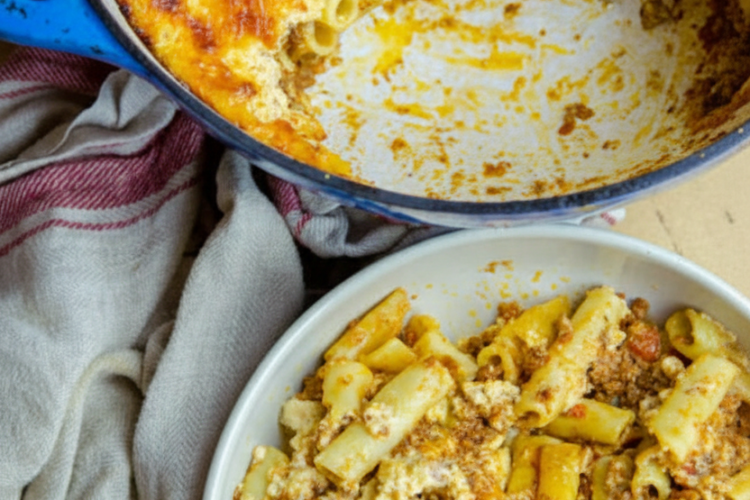
Ina Garten’s Pastitsio is a stunning layered masterpiece—deep red, cinnamon-spiced meat sauce studded with tender ziti, crowned with a puffed, golden béchamel dome freckled with melted Parmesan. Cut into squares reveals distinct layers: glossy pasta-meat base giving way to creamy white topping with subtle browning at edges.
Each bite harmonizes textures and flavors—al dente pasta coated in rich, wine-braised ragù with warm cinnamon notes, herbal brightness, and faint heat, all enveloped in velvety, nutmeg-scented custard that’s both luxurious and light thanks to yogurt tang. Aromas evoke cozy Mediterranean kitchens: spiced meat, toasted cheese, buttery cream.
Served warm, it slices neatly yet remains comfortingly soft inside—pure satisfaction that improves as flavors meld. Elegant enough for company, comforting enough for home.
Nutritional Information
Per serving (1/10th of dish, approximate): 550-650 calories. Ground meats and béchamel contribute protein (30-35g) and fats (30-40g, some saturated from butter/cream); pasta and tomatoes add carbs (45-55g).
Includes iron and B vitamins from meat, calcium from cheese/yogurt. While hearty and indulgent, balanced portions with vegetables make it nourishing. Enjoy as occasional treat.
Conclusion
Ina Garten’s Pastitsio beautifully marries Greek tradition with modern refinement—layered flavors and textures creating a dish greater than its parts. From simmering sauce to golden bake, it’s a labor of love yielding profound comfort and joy.
Recommendation
Highly recommend this pastitsio for special dinners or whenever you crave elevated comfort—it’s impressive yet approachable, always earning rave reviews. Make it once; it’ll become tradition.
Embracing Healthful Indulgence
With lean meats, aromatic spices, and dairy richness tempered by yogurt, Ina’s pastitsio offers satisfying depth from quality ingredients. Shared portions and vegetable sides keep it balanced—indulgence with intention.