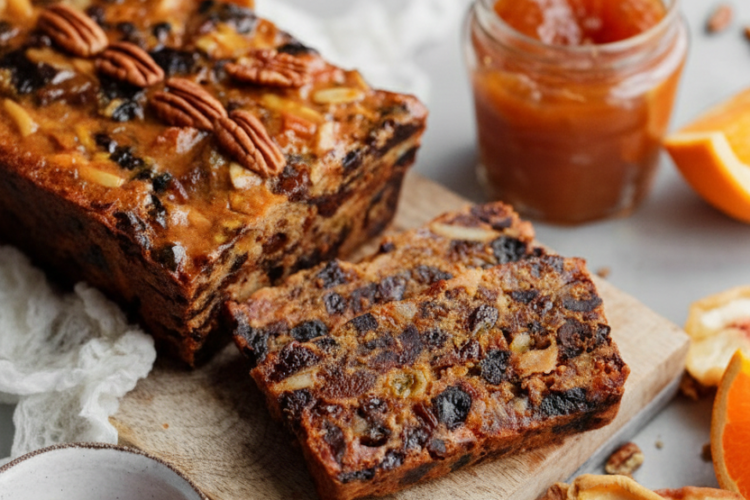
Fruit Cake That Always Turns Out Perfect
Introduction
I never imagined that fruit cake would end up in my top 10 favorite cakes of all time. Growing up, I used to avoid it—always too dry, with way too many sultanas that seemed overwhelming and unappealing. That all changed when I discovered this ultra-moist version, loaded with vibrant candied fruits, crunchy nuts, sweet dates, and tropical coconut, all bound together with the creamy richness of sweetened condensed milk. This isn’t your typical dense, boozy traditional fruitcake that sits heavy on the shelf for months; instead, it’s a delightful hybrid that’s more like a decadent candy bar crossed with a cake—irresistibly sweet, incredibly moist, and packed with texture in every bite. Tis the season for fruitcake, and this sweetened condensed milk version is more like candy than cake—and absolutely irresistible. Store it in the fridge, and it will last indefinitely, seriously, thanks to the preserving power of the condensed milk and the high sugar content from the candied ingredients. What makes this recipe a game-changer is its simplicity and reliability; it’s often called “Never Fail Fruit Cake” for a reason, requiring minimal effort yet delivering maximum flavor and nostalgia. Whether you’re a longtime fruitcake skeptic or a devoted fan looking for a fresher take, this recipe will convert you, turning holiday skepticism into pure indulgence. In this comprehensive guide, we’ll explore every aspect of this beloved treat, from its fascinating origins to detailed preparation tips, ensuring you create the perfect version every time.
This fruit cake stands out because it skips the usual soaking in alcohol and lengthy aging process, relying instead on the natural moisture from condensed milk to keep it tender and fresh-tasting. It’s a crowd-pleaser that’s perfect for holiday gifting, family gatherings, or simply enjoying a slice with coffee on a cozy winter afternoon. The combination of glossy candied cherries, juicy pineapple chunks, chewy dates, toasted pecans, and flaky coconut creates a symphony of flavors and textures that’s both festive and comforting. As we dive deeper, you’ll see why this recipe has been passed down through generations, evoking memories of Southern kitchens and mid-century holiday tables where resourcefulness met deliciousness.
Origin
The origins of this particular sweetened condensed milk fruit cake trace back to mid-20th-century America, particularly the Southern United States, where it emerged as a clever variation on traditional fruitcake during a time when ingredients needed to be shelf-stable and easy to use. Fruitcake itself has ancient roots, dating back to Roman times when soldiers carried “satura,” a dense energy bar made from pomegranate seeds, pine nuts, raisins, and barley mash mixed with honey and spices for sustenance on long campaigns. This evolved through the Middle Ages in Europe, with crusaders bringing back exotic spices and preserved fruits, leading to richer versions soaked in spirits for preservation. By the 16th century, cheap sugar from the American colonies made candied fruits abundant and affordable, popularizing fruitcakes across Europe—think Italian panettone, German stollen, and British plum pudding.
In America, fruitcake arrived with English colonists in the 17th century, becoming a holiday staple by the 19th century with the addition of local nuts like pecans. However, the specific “icebox” or no-bake/low-bake versions using sweetened condensed milk gained traction in the early to mid-1900s, coinciding with the widespread availability of canned condensed milk pioneered by brands like Borden and Eagle Brand. Recipes similar to this one appeared on condensed milk labels as promotional tools, much like how Nestle promoted tres leches cake in Latin America. This “Never Fail Fruit Cake” or baked icebox fruitcake style likely originated in the 1940s-1950s, a era of postwar ingenuity when home cooks sought simple, reliable desserts using pantry staples. Variations include fully no-bake versions bound with graham crackers or marshmallows, often packed back into the cracker box and chilled in the “icebox” (early refrigerator).
This baked version, with its short low-temperature bake, bridges the gap between traditional fruitcake and modern convenience. It’s distinctly American Southern, evoking memories of grandmothers mixing massive bowls of candied fruits and nuts during holiday prep. Unlike heavily boozy European fruitcakes aged for months, this one is ready quickly, moist from the condensed milk, and designed for refrigeration—perfect for warmer climates or busy households. Its popularity exploded through community cookbooks, family recipes, and sites like Allrecipes, where it’s hailed as a “candy-like” treat that redeems fruitcake’s bad reputation.
Cultural Significance
Fruitcake holds a unique place in global holiday traditions, often symbolizing abundance, preservation, and sharing during winter festivities when fresh produce was scarce. In America, it’s synonymous with Christmas, frequently mailed as gifts or regifted in jest, yet cherished in many families as a link to heritage. This condensed milk version amplifies that cultural role in the American South, where it’s a nostalgic emblem of mid-century home baking and resourcefulness. During the Great Depression and World War II rationing, condensed milk became a versatile sweetener and binder, allowing bakers to create rich desserts without scarce butter, eggs, or sugar. Recipes like this were shared in church cookbooks and on product labels, fostering community and comfort.
In Southern culture, icebox fruitcakes (baked or no-bake) evoke gatherings where aunts and grandmothers prepared massive batches, often spiking variations with rum or bourbon for adults. It’s a treat that transcends generations, with stories of childhood aversion turning to adult appreciation—much like the personal journey many share. Unlike the dense, alcohol-soaked British fruitcakes served at weddings or the lighter Italian panettone, this version is approachable, kid-friendly (without booze), and infinitely storable in the fridge, making it ideal for potlucks, care packages, or emergency desserts. Today, it represents redemption for fruitcake haters, proving the dessert can be moist, flavorful, and fun rather than dry and forgotten.
Culturally, it highlights American innovation: transforming Old World traditions with New World ingredients like pecans and canned goods. In a broader sense, fruitcake’s enduring presence—despite jokes—speaks to ritual and memory, binding holidays with tastes of the past.
Ingredients Quantity
This recipe yields a generous 10-inch tube pan cake, serving about 20-30 slices depending on thickness. The quantities are straightforward and scalable, but sticking close to these ensures the perfect candy-like texture.
- 1 pound (about 454g) candied cherries (red, green, or a mix for festive color)
- 1 pound (about 454g) candied pineapple (chunks or wedges)
- 1 pound (about 454g) pitted dates, chopped
- 1 pound (about 454g) chopped pecans (or a mix with walnuts for variety)
- 4 (8-ounce) packages flaked coconut (sweetened or unsweetened; sweetened enhances the candy vibe)
- 3 tablespoons all-purpose flour (just enough to coat and prevent sinking)
- 2 (14-ounce) cans sweetened condensed milk (the star binder for moisture and sweetness)
These amounts create a densely packed, fruit-forward cake where every bite bursts with variety.
Optional Additions
While the base recipe is perfect in its simplicity, customizations can elevate it. Add 1-2 cups raisins or golden sultanas for extra chew. For a nuttier profile, include walnuts or almonds alongside pecans. A splash of vanilla extract or rum flavoring (1-2 teaspoons) enhances depth without alcohol. Spices like cinnamon, nutmeg, or allspice (1 teaspoon each) add warmth. For a tropical twist, mix in dried mango or papaya. Chocolate lovers can fold in mini chocolate chips. If you prefer less sweetness, use half unsweetened coconut.
Tips for Success
Success with this cake lies in preparation and technique. Use your hands to mix thoroughly—this breaks up clumps and ensures even distribution. Coat fruits and nuts lightly in flour to prevent sinking. Pack the mixture very firmly into the pan for a dense, sliceable texture. Bake low and slow at 300°F to set without drying. Line the pan properly for easy removal. Cool slightly before demolding to avoid cracking. Store wrapped in the fridge for weeks—or indefinitely—or freeze slices. For best flavor, let it chill overnight.
Instructions
Preheat oven to 300°F (150°C). Grease a 10-inch tube pan and line bottom with greased parchment. In a large bowl, combine chopped fruits, nuts, and coconut; mix with hands. Stir in flour to coat. Add condensed milk and blend well. Pack firmly into pan. Bake 1½ hours until set. Cool slightly, then remove from pan.
Description
This fruit cake is a vibrant mosaic of jewel-toned candied cherries and pineapple, studded with chewy dates, crunchy pecans, and snowy coconut shreds, all enveloped in creamy condensed milk. Slices reveal a candy-like density that’s ultra-moist and addictive.
Nutritional Information
Per serving (1/30th of cake, approx.): Calories ~350-450, Total Fat 18-25g (mostly from nuts/coconut), Carbohydrates 45-55g (high from sugars), Protein 5-7g, plus fiber from dates/nuts and vitamins from fruits. High in energy but indulgent—enjoy moderately.
Conclusion
This sweetened condensed milk fruit cake redefines a classic, offering moisture, flavor, and ease that’s hard to beat.
Recommendation
Make this your go-to holiday treat—it’s forgiving, delicious, and sure to win over skeptics.
Embracing Healthful Indulgence
While rich, this cake offers nuts for healthy fats and fruits for natural sweetness—savor in moderation as a joyful treat that nourishes the soul.