Introduction
Raspberry Cream Pie is a delightful dessert that captures the essence of summer in every bite, blending the tartness of fresh raspberries with the smoothness of creamy filling and a crunchy graham cracker crust. This pie isn’t just a treat for the taste buds; it’s a visual masterpiece, often adorned with vibrant red berries and swirls of whipped cream that make it perfect for gatherings, holidays, or even a simple family dinner. As we delve into this blog post, we’ll explore everything from its origins to detailed preparation tips, ensuring you can recreate this indulgent yet refreshing pie in your own kitchen.
What makes Raspberry Cream Pie stand out among other fruit-based desserts is its harmonious balance of flavors and textures—the crisp crust contrasts beautifully with the velvety cream and the burst of juicy raspberries, creating a symphony that appeals to both novice bakers and seasoned chefs. In a world where desserts can sometimes feel overly complicated or heavy, this pie offers a lighter alternative without sacrificing decadence, making it an ideal choice for those warm days when you crave something sweet but not overwhelming. Whether you’re a fan of classic American pies or looking to experiment with berry-infused creations, Raspberry Cream Pie promises to become a staple in your repertoire.
The allure of this pie extends beyond its ingredients; it’s about the joy of baking, the satisfaction of sharing homemade goods, and the memories created around the table. Imagine slicing into a chilled pie on a sunny afternoon, the glaze glistening under the light, and the first forkful melting in your mouth with a perfect blend of sweet and tangy notes. This introduction sets the stage for a comprehensive guide that will not only teach you how to make it but also inspire you to appreciate its cultural roots and health benefits.
Origin and Cultural Significance
The origins of Raspberry Cream Pie can be traced back to early American baking traditions, where fruit pies were a common way to preserve and enjoy seasonal produce before modern refrigeration became widespread. In the 19th century, as European immigrants brought their pie-making techniques to the United States, recipes evolved to incorporate local fruits like raspberries, which were abundant in regions such as the Pacific Northwest and the Midwest. This pie, in particular, likely emerged as a variation of cream pies popular in the Victorian era, where custards and whipped creams were layered with fruits to create elegant desserts for tea parties and social gatherings.
Culturally, Raspberry Cream Pie holds a special place in American cuisine, often associated with summer festivals, Fourth of July celebrations, and family picnics, symbolizing abundance and the freshness of harvest seasons. In Native American traditions, raspberries were revered for their medicinal properties and used in various preparations, though the pie form we know today is more of a colonial adaptation that blended indigenous ingredients with European baking methods. Over time, it became a staple in diners and home kitchens across the country, representing comfort food that evokes nostalgia for simpler times when baking was a communal activity passed down through generations.
Beyond the U.S., similar desserts appear in other cultures; for instance, in France, tarte aux framboises features a cream base with raspberries, reflecting a shared appreciation for berry-cream combinations in patisserie. In Scandinavian countries, raspberry creams are incorporated into layered cakes and tarts, highlighting the fruit’s versatility in cooler climates where berries thrive. The cultural significance of this pie lies in its ability to adapt—whether it’s served at a British afternoon tea or an Australian backyard barbecue, it bridges culinary traditions while celebrating the universal love for fresh, vibrant flavors.
As globalization has spread recipes worldwide, Raspberry Cream Pie has found its way into fusion cuisines, such as Asian-inspired versions with matcha-infused cream or Latin American twists using tropical fruits alongside raspberries. This evolution underscores its role as a cultural ambassador, promoting the idea that desserts can tell stories of migration, adaptation, and innovation. In modern times, it’s often featured in food blogs and social media, where influencers showcase creative variations, further cementing its place in contemporary food culture as a symbol of healthful indulgence and seasonal eating.
Historically, the pie’s popularity surged in the mid-20th century with the rise of convenience foods like pre-made graham cracker crusts, making it accessible to busy homemakers. Cookbooks from that era, such as those by Betty Crocker, included similar recipes, emphasizing ease and elegance. Today, it represents a return to artisanal baking, where people seek out organic raspberries and homemade elements to reconnect with their heritage.
Ingredients Quantity
For the Graham Cracker Crust, you’ll need 1½ cups of graham cracker crumbs, which provide the foundational crunch and subtle sweetness that complements the creamy layers above. Add ⅓ cup of sugar to enhance the flavor without overpowering the natural tartness of the raspberries, ensuring a balanced base. Finally, incorporate ½ cup of melted butter to bind everything together, creating a cohesive crust that’s easy to press into the pie dish and bakes to golden perfection.
Moving to the Raspberry Cream Filling, start with 8 oz of softened cream cheese, which forms the rich, tangy core of the filling, offering a smooth texture that’s essential for the pie’s luxurious mouthfeel. Include 1 cup of powdered sugar to sweeten the mixture gently, avoiding the grittiness of granulated sugar while allowing the vanilla to shine through. Speaking of which, 1 teaspoon of vanilla extract adds a warm, aromatic depth that ties the dairy elements together seamlessly.
For the whipping component, 1½ cups of heavy whipping cream is crucial, as it whips up to stiff peaks and lightens the filling, preventing it from becoming too dense. Then, gently fold in 1½ cups of fresh raspberries that have been lightly crushed, infusing the cream with bursts of juicy fruit flavor and a beautiful pink hue. This quantity ensures the raspberries are distributed evenly without overwhelming the cream’s structure.
The Raspberry Glaze requires 1½ cups of fresh or frozen raspberries, which break down during cooking to create a thick, syrupy topping full of intense berry essence. Combine this with ⅓ cup of sugar to balance the tartness, and 1 tablespoon of lemon juice to brighten the flavors and add a citrusy zing. To thicken it properly, use 1 tablespoon of cornstarch mixed with ¼ cup of water, resulting in a glossy glaze that sets beautifully over the filling.
For the Topping, have whole fresh raspberries on hand—these can vary in quantity based on preference, but aim for about 1 cup to generously cover the glaze without overcrowding. Additionally, prepare whipped cream for swirls around the edges; this can be made from another 1 cup of heavy cream whipped with a bit of sugar, providing an elegant finish. These quantities are scaled for a standard 9-inch pie, yielding 8-10 servings depending on slice size.
Optional Additions
To elevate your Raspberry Cream Pie, consider adding a layer of white chocolate ganache between the crust and filling, made by melting 4 oz of white chocolate with ¼ cup of heavy cream—this introduces a subtle sweetness and creamy richness that pairs wonderfully with the tart raspberries. Another option is to incorporate lemon zest into the cream filling, about 1 teaspoon, which enhances the brightness and cuts through the richness for a more refreshing profile. For a nutty twist, sprinkle chopped almonds or pecans into the graham cracker crust, around ¼ cup, adding texture and a toasty flavor that complements the buttery base.
If you’re aiming for a more decadent version, fold in mini chocolate chips, say ½ cup, into the raspberry cream filling before spreading it into the crust; this creates delightful pockets of chocolate that melt slightly when chilled. For those who enjoy herbal notes, infuse the heavy cream with fresh mint leaves during whipping—steep ¼ cup of chopped mint in the cream for 30 minutes before straining and whipping, imparting a cool, aromatic essence. Alternatively, for a gluten-free adaptation, swap the graham cracker crumbs with almond flour or crushed gluten-free cookies in equal quantities, maintaining the pie’s integrity while accommodating dietary needs.
To add a tropical flair, mix in shredded coconut, about ⅓ cup, to the crust or topping, evoking a piña colada vibe when combined with the berries. For color and variety, include other berries like blueberries or blackberries in the glaze, reducing the raspberries to 1 cup and adding ½ cup of mixed berries for a more complex fruit profile. If you prefer a boozy element, drizzle 1 tablespoon of raspberry liqueur into the glaze during cooking, intensifying the berry flavor without making it overly alcoholic.
For visual appeal, consider edible flowers such as pansies or violets as a garnish on top of the whipped cream swirls, adding an elegant, garden-fresh touch. To make it vegan-friendly, substitute the cream cheese with a plant-based alternative and use coconut cream instead of heavy whipping cream, adjusting quantities slightly for consistency. These optional additions allow for personalization, turning a classic recipe into a signature dish tailored to your tastes or occasion.
Tips for Success
Achieving the perfect Raspberry Cream Pie starts with using high-quality, fresh ingredients—opt for ripe raspberries at their peak season for the best flavor, and ensure your cream cheese is fully softened to avoid lumps in the filling. When preparing the crust, press it firmly and evenly into the pie dish using the bottom of a measuring cup for a professional finish that holds up well during slicing. Always cool the crust completely before adding the filling to prevent sogginess and maintain that desirable crunch.
For the whipping cream, chill your bowl and beaters in the freezer for 10-15 minutes beforehand; this helps achieve stiff peaks faster and results in a fluffier texture that’s easier to fold into the cream cheese mixture. When folding in the crushed raspberries, do so gently with a spatula to preserve the whipped cream’s volume—overmixing can deflate it and lead to a denser pie. If your kitchen is warm, work quickly or refrigerate components intermittently to keep everything cool and prevent the filling from becoming runny.
Regarding the glaze, stir constantly while cooking to avoid scorching, and test for thickness by coating the back of a spoon; it should hold its shape when cooled slightly. If using frozen raspberries, thaw them first and drain excess liquid to prevent a watery glaze that could seep into the filling. For assembly, ensure the glaze is at room temperature before pouring to avoid melting the cream layer underneath.
To prevent the pie from cracking or separating during chilling, cover it loosely with plastic wrap, avoiding direct contact with the surface to maintain the topping’s integrity. If you’re making this ahead, it can be prepared up to 24 hours in advance, but add the whipped cream swirls just before serving for the freshest look. Experiment with pie dish materials—glass or ceramic conducts heat evenly for baking the crust, while metal might require slight adjustments in time.
Lastly, taste as you go; adjust sugar levels based on the raspberries’ natural sweetness, and don’t hesitate to add a pinch of salt to the crust for enhanced flavor contrast. With these tips, even beginners can produce a pie that’s not only delicious but also visually stunning, impressing guests every time.
Instructions
Begin by making the Graham Cracker Crust: Preheat your oven to 350°F to ensure it’s ready for baking. In a medium bowl, combine 1½ cups of graham cracker crumbs with ⅓ cup of sugar and ½ cup of melted butter, mixing until the mixture resembles wet sand and holds together when squeezed. Press this firmly into the bottom and up the sides of a 9-inch pie dish using your fingers or a flat-bottomed glass for even distribution, then bake for 8–10 minutes until lightly golden, and allow it to cool completely on a wire rack to set properly.
Next, prepare the Raspberry Cream Filling: Start by beating 8 oz of softened cream cheese in a large bowl with an electric mixer on medium speed until it’s smooth and creamy, which usually takes about 2 minutes. Gradually add 1 cup of powdered sugar and 1 teaspoon of vanilla extract, continuing to mix until fully blended and no lumps remain. In a separate chilled bowl, whip 1½ cups of heavy whipping cream on high speed until stiff peaks form, being careful not to overwhip into butter.
Gently fold the whipped cream into the cream cheese mixture using a spatula, incorporating it in thirds to maintain lightness and avoid deflating the cream. Once combined, fold in 1½ cups of gently crushed fresh raspberries until they’re evenly distributed, creating a pink-streaked filling that’s fragrant and inviting. Spread this filling evenly into the cooled graham cracker crust, smoothing the top with an offset spatula for a professional appearance.
For the Raspberry Glaze: In a medium saucepan, combine 1½ cups of fresh or frozen raspberries, ⅓ cup of sugar, 1 tablespoon of lemon juice, 1 tablespoon of cornstarch, and ¼ cup of water. Cook over medium heat, stirring constantly with a whisk to dissolve the cornstarch and prevent clumping, until the mixture thickens and becomes glossy, which should take about 5-7 minutes. Remove from heat and let it cool to room temperature, stirring occasionally to release steam and speed up the process.
To assemble the pie: Pour the cooled raspberry glaze over the cream filling, spreading it gently to cover the entire surface without disturbing the layers below. Arrange whole fresh raspberries on top, pressing them lightly into the glaze to secure them in place and create an attractive pattern. This step not only adds visual appeal but also provides fresh bursts of fruit in every slice.
Finally, chill and decorate: Refrigerate the assembled pie for at least 4 hours, or preferably overnight, to allow it to set firmly and develop flavors. Just before serving, pipe swirls of whipped cream around the edges using a pastry bag fitted with a star tip for an elegant border. Slice with a sharp knife dipped in hot water for clean cuts, and enjoy immediately for the best texture.
Description
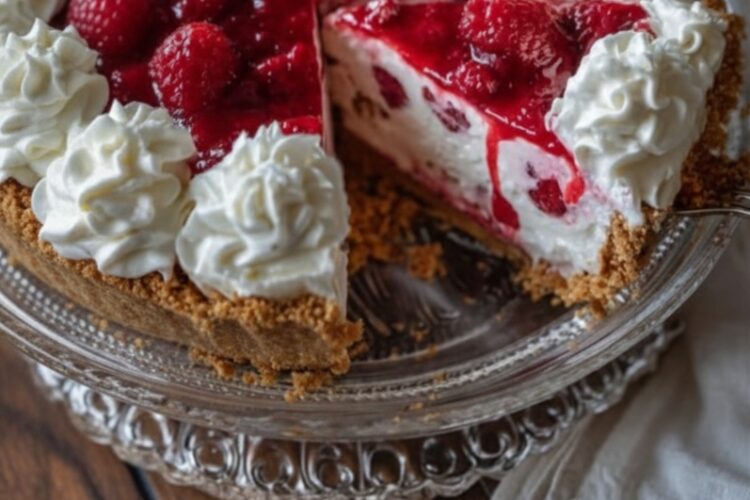
Raspberry Cream Pie is a no-bake wonder (except for the crust) that showcases layers of texture and flavor in a single, cohesive dessert. The base is a buttery graham cracker crust that’s crumbly yet sturdy, providing a satisfying snap with each bite that contrasts the softness above. Atop this sits the raspberry cream filling, a light and airy mousse-like layer infused with crushed berries, offering a creamy richness tempered by the fruit’s natural acidity.
The glaze crowns the pie with a shiny, jewel-toned layer of cooked raspberries, thick enough to hold its shape but fluid enough to mingle with the cream below, adding a concentrated berry punch. Whole raspberries dotted on top bring freshness and a pop of color, while the whipped cream swirls around the perimeter add a fluffy, decorative element that’s both functional and festive. Visually, the pie is a stunner—vibrant pinks and reds against the neutral crust, making it Instagram-worthy for any occasion.
In terms of taste, it’s a dance of sweet and tart: the cream cheese provides tanginess, the vanilla warms it up, and the raspberries deliver bright, summery notes that linger on the palate. The overall mouthfeel is luxurious yet refreshing, not overly heavy like some cream pies, thanks to the whipped cream’s aeration. This description captures a dessert that’s versatile—serve it chilled for hot days or at room temperature for cooler evenings, always evoking a sense of indulgence without guilt.
Nutritional Information
A single serving of Raspberry Cream Pie, based on 8 slices, provides approximately 450 calories, making it a moderate indulgence when enjoyed in portion control. The macronutrient breakdown includes about 30 grams of fat, primarily from the cream cheese, heavy cream, and butter, which contribute to its rich texture but also offer satiety. Carbohydrates come in at around 40 grams per slice, with sugars from the fruit, powdered sugar, and glaze accounting for much of it, while the graham crackers add a small fiber boost.
Protein is modest at about 5 grams per serving, derived mainly from the dairy components, supporting muscle repair in a dessert context. The pie is a good source of vitamin C, thanks to the raspberries, providing roughly 20% of the daily recommended intake per slice, which aids in immune function and skin health. Additionally, it offers antioxidants like ellagic acid from the berries, known for their anti-inflammatory properties and potential cancer-fighting benefits.
For those watching sodium, each slice contains about 200 mg, mostly from the cream cheese and crust, which is reasonable for a treat. The heavy cream contributes calcium for bone health, around 10% of daily needs, while the raspberries add potassium to support heart function. However, it’s worth noting the saturated fat content is higher due to dairy, so pairing with fresh fruit or a light meal can balance it out.
Allergen-wise, this pie contains dairy and gluten, but substitutions can make it friendly for various diets. Overall, while not a health food, the inclusion of fresh berries elevates its nutritional profile compared to many desserts, offering a way to enjoy sweetness with some beneficial nutrients.
Conclusion
In wrapping up this exploration of Raspberry Cream Pie, we’ve journeyed from its humble origins to the intricate details of preparation, highlighting why it remains a beloved dessert across cultures and generations. This pie embodies the joy of baking—simple yet sophisticated, allowing for creativity while delivering consistent delight. Whether you’re baking for a special occasion or just to savor the season’s bounty, it stands as a testament to the power of fresh ingredients and careful technique.
As we reflect on its cultural significance and healthful aspects, it’s clear that Raspberry Cream Pie is more than food; it’s a connector, bringing people together through shared experiences and flavors. The tips and variations shared ensure success, empowering you to make it your own. Ultimately, this dessert invites us to slow down, appreciate the artistry in the kitchen, and indulge mindfully.
Recommendation
I highly recommend trying Raspberry Cream Pie for your next gathering—its refreshing profile makes it ideal for summer barbecues, but it’s versatile enough for year-round enjoyment, perhaps with frozen berries in winter. If you’re new to baking, start with the basic recipe before experimenting with optional additions like chocolate or nuts to build confidence. Pair it with a light coffee or herbal tea to complement the creaminess without overwhelming the palate.
For those with dietary restrictions, the vegan adaptations mentioned are straightforward and yield impressive results, so don’t hesitate to modify. Share your creations on social media; the visual appeal often garners compliments and inspires others. Overall, this pie is a must-try for berry lovers, offering a balance of ease and elegance that’s hard to beat.
Embracing Healthful Indulgence
Embracing healthful indulgence with Raspberry Cream Pie means recognizing that desserts can be part of a balanced lifestyle when made with mindful choices, such as using organic raspberries to maximize antioxidants and reduce pesticide exposure. By incorporating fresh fruits, this pie transforms a traditional treat into something that contributes vitamins and fiber, promoting digestive health amid the sweetness. Opting for lower-sugar alternatives or portioning wisely allows enjoyment without derailing wellness goals, fostering a positive relationship with food.
In today’s fast-paced world, baking this pie encourages mindfulness—measuring ingredients, whipping cream, and assembling layers become meditative acts that reduce stress and enhance well-being. The natural flavors from real berries over artificial additives align with clean eating principles, making it a smarter choice for those seeking indulgence with benefits. Sharing it with loved ones amplifies the joy, turning a simple dessert into a communal experience that nourishes both body and soul.
Ultimately, healthful indulgence is about balance: savor the richness of the cream while appreciating the tart freshness that keeps it light, reminding us that treats like this can fit into a holistic approach to health. Experiment with superfood additions like chia seeds in the glaze for omega-3s, or Greek yogurt in the filling for added protein, elevating the pie’s nutritional value. By embracing this mindset, Raspberry Cream Pie becomes a symbol of enjoying life’s pleasures responsibly, one slice at a time.