Introduction
French Onion Meatloaf with Swiss Cheese is a delightful fusion of two beloved comfort foods: the hearty, satisfying American meatloaf and the rich, savory depths of classic French onion soup. This dish takes the humble meatloaf—traditionally a simple blend of ground meats, binders, and seasonings—and elevates it with the sweet, caramelized onions and nutty, melted Swiss cheese that evoke the iconic gratinéed topping of French onion soup. The result is a moist, flavorful loaf where every bite bursts with umami from the onions, tang from Worcestershire sauce, and creamy indulgence from the cheese. Perfect for family dinners, this recipe transforms everyday ingredients into something extraordinary, offering warmth and nostalgia on a plate.
What makes this French Onion Meatloaf truly special is its ability to bridge cultures and eras. Meatloaf has long been a staple of resourceful home cooking, while French onion soup carries a legacy of sophistication despite its peasant roots. By combining them, we create a modern classic that’s both approachable and gourmet. Whether you’re a meatloaf purist looking for a twist or a fan of French flavors seeking heartiness, this dish delivers layers of taste and texture that will have everyone reaching for seconds. It’s easy to prepare, bakes beautifully, and pairs wonderfully with sides like mashed potatoes or roasted vegetables.
In this comprehensive guide, we’ll explore the origins, cultural significance, precise ingredients, tips, step-by-step instructions, and more. By the end, you’ll not only have a foolproof recipe but also an appreciation for why this French Onion Meatloaf with Swiss Cheese deserves a permanent spot in your meal rotation. Let’s dive into the rich history and irresistible appeal of this comforting masterpiece.
Origin
The story of French Onion Meatloaf with Swiss Cheese is a tale of culinary evolution, blending ancient traditions with modern innovation. Meatloaf itself has deep roots dating back to ancient times, with early versions appearing in Roman cookbooks like Apicius’s De Re Coquinaria from the 5th century, where minced meats were mixed with spices, wine-soaked bread, and pine nuts to form patties or loaves. These were practical ways to use scraps and extend precious protein. Medieval Europeans continued this practice, often incorporating fruits, nuts, and seasonings into diced meat mixtures shaped into pies or disks.
In America, meatloaf as we know it emerged from German-American influences in colonial Pennsylvania, evolving from scrapple—a mixture of ground pork and cornmeal. By the late 19th century, with the advent of mechanical meat grinders, ground beef became widely available, and recipes for chopped or ground meat loaves appeared in cookbooks. The Great Depression and World War II cemented its status as economical comfort food, stretching meat with breadcrumbs, eggs, and milk. Post-war prosperity saw variations flourish, including cheese-stuffed or onion-enhanced versions.
The “French onion” twist draws directly from French onion soup, or soupe à l’oignon, which traces back to Roman times when onions were prized for their affordability and versatility. Onions were peasant fare, plentiful and easy to grow, forming simple broths for the poor. The modern gratinéed version—with caramelized onions, beef broth, crusty bread, and melted cheese like Gruyère or Swiss—solidified in 18th-19th century Paris, particularly around Les Halles market. Legends attribute refinements to figures like Stanislas Leszczynski, who reportedly inspired richer versions. It became a hangover cure and late-night staple, symbolizing resilience.
Combining these, French Onion Meatloaf likely emerged in mid-20th century American home cooking or restaurant innovation, as French cuisine gained popularity post-WWII. Adding caramelized onions and Swiss cheese to meatloaf mimics the soup’s flavors while maintaining meatloaf’s heartiness. Variations with Gruyère or provolone appear in contemporary recipes, often slow-cooked or baked for maximum moisture. This hybrid dish represents fusion cooking at its best—taking European sophistication and American practicality to create something uniquely comforting.
Today, French Onion Meatloaf variations abound, from crockpot versions with soup mix to keto adaptations using pork rinds. Its origin lies in resourceful history, but its appeal is timeless, proving how simple ingredients can evolve into beloved classics across centuries and continents.
Cultural Significance
French Onion Meatloaf with Swiss Cheese holds a unique place in culinary culture as a bridge between humble origins and indulgent comfort. Meatloaf embodies American resourcefulness, rising to prominence during economic hardships like the Depression, when families stretched ground meat with fillers to feed many. It became a symbol of home-cooked reliability, evoking mid-century family dinners and postwar abundance. In contrast, French onion soup represents French ingenuity—transforming cheap, abundant onions into a luxurious dish through slow caramelization and cheesy gratinée, once a market workers’ meal that transcended class barriers.
This meatloaf variation merges these narratives, symbolizing fusion and adaptation in modern cooking. The caramelized onions nod to French elegance and patience, while the cheesy topping echoes the soup’s iconic melt, paired with meatloaf’s hearty American base. Swiss cheese, with its nutty mildness, perfectly complements both, adding a creamy richness that feels indulgent yet accessible. Culturally, it reflects immigration and innovation: European techniques influencing American staples, much like how Italian meatballs inspired loaf forms.
In contemporary culture, this dish signifies healthful indulgence—protein-packed with flavorful vegetables, ideal for busy families seeking nourishing meals. It’s popular in home kitchens and blogs, often for cozy gatherings, evoking warmth and togetherness. During colder months, it mirrors French onion soup’s role as restorative fare, perhaps even a subtle hangover remedy with its savory depths. Nutritionally mindful versions (e.g., with lean meats) align with wellness trends, while its versatility allows personalization, celebrating individual creativity in cooking.
Ultimately, French Onion Meatloaf with Swiss Cheese captures the essence of comfort food evolution: from survival staples to celebratory dishes, reminding us that great meals often arise from blending traditions. It’s a testament to how food fosters connection, blending cultures on one flavorful plate.
Ingredients Quantity
To make this delicious French Onion Meatloaf with Swiss Cheese, serving about 6-8 people, you’ll need the following precise quantities:
- Butter: 2 tablespoons (for caramelizing onions and adding richness).
- Large onions: 2, thinly sliced (yellow or sweet varieties work best for deep caramelization).
- Granulated sugar: 1 teaspoon (helps accelerate browning and enhance sweetness).
- Ground beef: 1 1/2 pounds (preferably 80/20 for juiciness and flavor).
- Ground pork: 1/2 pound (adds tenderness and moisture; substitute with more beef if preferred).
- Breadcrumbs: 1 cup (plain or Italian-seasoned for binding and texture).
- Eggs: 2 large (act as binder to hold the loaf together).
- Milk: 1/4 cup (soaks breadcrumbs for a moist, tender crumb).
- Worcestershire sauce: 1 tablespoon (provides umami and depth).
- Salt: 1 teaspoon (season to taste; adjust if using salted butter).
- Black pepper: 1/2 teaspoon (freshly ground for best flavor).
- Dried thyme: 1 teaspoon (complements the onions with herbal notes).
- Swiss cheese: 1 cup, shredded (for melting on top; Gruyère is a luxurious substitute).
These quantities yield a balanced loaf—juicy from the meats and milk, flavorful from seasonings, and elevated by onions and cheese. Prep time is about 30 minutes, with 20 dedicated to caramelizing onions for maximum flavor.
Optional Additions
While the core recipe shines on its own, optional additions can customize your French Onion Meatloaf to suit tastes or dietary needs. For extra depth, incorporate 1/2 cup beef broth into the meat mixture, mimicking soup’s richness. Fresh herbs like parsley or chives (2 tablespoons chopped) add brightness when mixed in or garnished on top.
For a bolder twist, add 1/2 teaspoon garlic powder or minced fresh garlic to the meat. Mushrooms—sautéed with onions—bring earthiness; try 8 ounces sliced baby bellas. A packet of dry onion soup mix (about 1 ounce) intensifies the French onion profile without extra caramelizing.
Cheese lovers can stuff the loaf: layer half the mixture in the pan, add mozzarella strings or provolone slices, then top with remaining meat for ooey-gooey centers. Bacon-wrapped versions (8-10 strips) add smokiness and crisp edges.
Vegetarian adaptations use plant-based grounds and cheese. For low-carb, swap breadcrumbs with almond flour or crushed pork rinds. Spice it up with red pepper flakes or hot sauce in the mix.
Glaze options: brush with ketchup mixed with brown sugar before final baking for classic sweetness. These additions keep the dish versatile while preserving its comforting essence.
Tips for Success
Achieving the perfect French Onion Meatloaf requires attention to key details. First, master caramelizing onions: cook low and slow over medium heat for 20-30 minutes, stirring occasionally. The sugar helps, but patience yields deep golden sweetness without burning—don’t rush!
Use 80/20 ground beef for optimal juiciness; leaner cuts risk dryness. Mix gently with hands just until combined—overmixing toughens the loaf. Soak breadcrumbs in milk for a tender panade that keeps everything moist.
Bake on a sheet pan or free-form for crispy edges, rather than a loaf pan which steams it. Internal temperature should reach 160°F for safety. Rest 10-15 minutes post-bake to redistribute juices.
For cheese, add in the last 15 minutes to melt without over-browning. Use a thermometer for precision. Prep onions ahead to save time.
Common pitfalls: soggy loaf from excess moisture—drain onions well. Bland flavor? Taste mixture before baking and adjust seasonings.
These tips ensure a juicy, flavorful meatloaf every time.
Instructions
Follow these detailed steps for flawless French Onion Meatloaf with Swiss Cheese.
Step 1: Preheat the Oven. Set to 350°F (175°C). Line a baking sheet with foil or parchment for easy cleanup, or lightly grease a loaf pan.
Step 2: Caramelize the Onions. Melt 2 tablespoons butter in a large skillet over medium heat. Add 2 thinly sliced large onions and 1 teaspoon sugar. Cook 20-25 minutes, stirring occasionally, until deep golden and soft. Reserve a portion for topping; cool slightly.
Step 3: Mix the Meatloaf. In a large bowl, combine 1 1/2 pounds ground beef, 1/2 pound ground pork, 1 cup breadcrumbs (soaked in 1/4 cup milk if desired), 2 eggs, 1 tablespoon Worcestershire, 1 teaspoon salt, 1/2 teaspoon pepper, and 1 teaspoon thyme. Fold in most caramelized onions gently.
Step 4: Form the Loaf. Transfer mixture to prepared pan or shape into a loaf on the sheet. Top with reserved onions.
Step 5: Initial Bake. Bake 45 minutes until partially set.
Step 6: Add the Cheese. Sprinkle 1 cup shredded Swiss evenly over top. Bake another 15 minutes until cheese bubbles and internal temperature hits 160°F.
Step 7: Rest and Serve. Rest 10 minutes. Slice thickly; serve with sides.
This method ensures even cooking and maximum flavor infusion.
Description
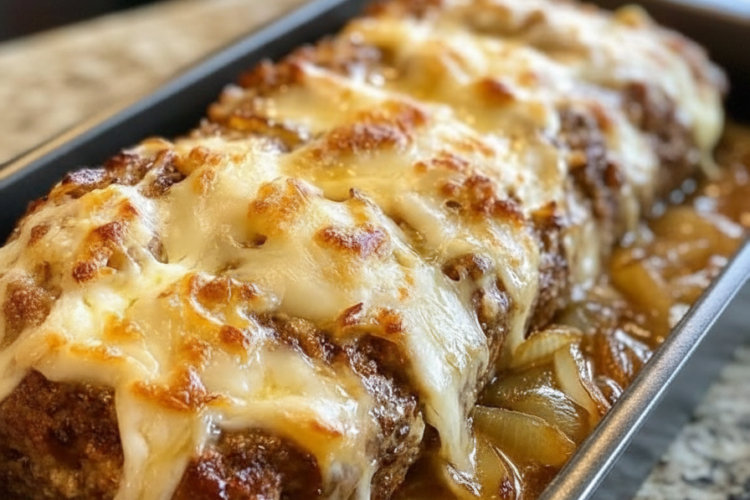
French Onion Meatloaf with Swiss Cheese is a sensory delight from the first slice. The exterior boasts a golden crust from baking, topped with bubbly, melted Swiss that’s stretchy and nutty, with hints of caramelized onions peeking through. Cutting reveals a moist, tender interior studded with sweet onion strands, the meats blending seamlessly for rich savoriness.
Flavor-wise, it’s a symphony: sweet depth from caramelized onions balances the beefy umami, enhanced by Worcestershire tang and thyme earthiness. Swiss adds creamy mildness, melting into pockets of indulgence. Texture contrasts beautifully—crisp edges yield to juicy center, binders ensuring it holds without density.
Aromas fill the kitchen with buttery onions and roasting meat, evoking cozy bistros. Served hot, it’s comforting yet elevated, perfect sliced thick with gravy-like juices. Leftovers make stellar sandwiches. This dish is hearty indulgence redefined.
Nutritional Information
Nutritional values for French Onion Meatloaf with Swiss Cheese vary by exact ingredients and portion, but approximate per serving (1/8 loaf, about 4-5 oz cooked):
- Calories: 400-500
- Protein: 30-35g (high from beef/pork and cheese)
- Carbohydrates: 15-20g (mostly from breadcrumbs and onions)
- Fat: 25-30g (saturated ~10-12g from meats and cheese)
- Fiber: 1-2g
- Sodium: 600-800mg (from seasonings and cheese)
- Key nutrients: Iron (from beef), calcium (Swiss cheese), B vitamins.
This is a protein powerhouse, moderately caloric with balanced macros. Onions add antioxidants; use leaner meats for lower fat. Estimates based on similar recipes; calculate precisely with tools for dietary needs.
Conclusion
French Onion Meatloaf with Swiss Cheese beautifully marries tradition and innovation, creating a dish greater than its parts. From ancient minced meats to Depression-era ingenuity and Parisian soup elegance, it embodies culinary resilience. The caramelized onions and melted cheese transform simple ground meat into something profoundly satisfying, offering comfort in every juicy, flavorful bite.
This recipe proves everyday ingredients can yield extraordinary results with care—like patient onion caramelization and gentle mixing. It’s versatile for weeknights or gatherings, nourishing body and soul. As we conclude, remember: great food connects us to history while inspiring creativity. This meatloaf does just that.
Recommendation
I highly recommend trying French Onion Meatloaf with Swiss Cheese soon—it’s a crowd-pleaser that’ll become a favorite. Start with the classic recipe, then experiment: try Gruyère for nuttiness or add mushrooms for earthiness. Pair with mashed potatoes, green beans, or salad for a complete meal.
For beginners, follow steps closely; seasoned cooks, freestyle additions. It’s forgiving yet rewarding. Make it for family dinner or potluck—it always impresses. Embrace this fusion; you won’t regret it.
Embracing Healthful Indulgence
French Onion Meatloaf with Swiss Cheese exemplifies healthful indulgence: protein-rich for satiety, onions providing antioxidants and fiber, all in a comforting package. Balance portions with veggies for nutrition. Use lean meats and whole-grain breadcrumbs for boosts. It’s indulgence without guilt—savor the flavors mindfully. This dish nourishes while delighting, proving healthy eating can be deeply satisfying. Enjoy every bite!