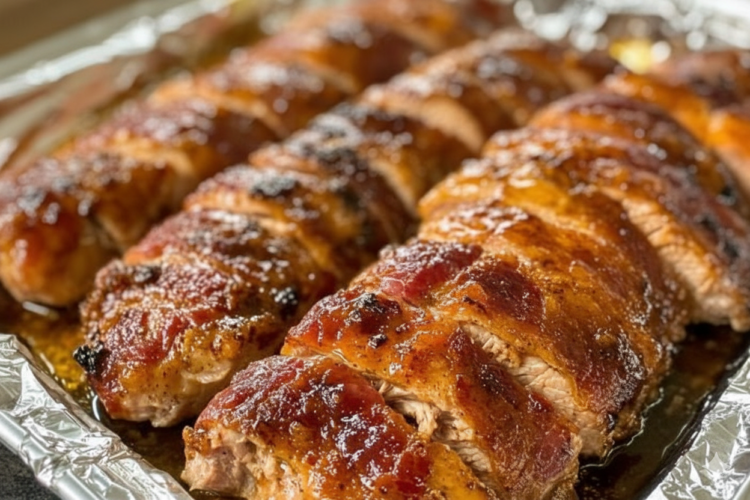
Bacon Brown Sugar Pork Tenderloin: A Savory-Sweet Delight That Captivates the Senses
Introduction
There’s an undeniable magic in the kitchen when simple ingredients come together to create something extraordinary, and this bacon brown sugar pork tenderloin is a prime example of that culinary alchemy. Imagine a tender, juicy pork loin enveloped in crispy, smoky bacon, with a caramelized glaze of brown sugar that adds just the right touch of sweetness to balance the savory notes. This dish isn’t just food; it’s an experience that evokes warmth, comfort, and the joy of sharing meals with loved ones, making it perfect for weeknight dinners or special occasions alike.
As I reflect on my own experiences with this recipe, I remember the first time I prepared it for my family gathering last holiday season, watching as everyone reached for seconds and thirds without hesitation. The aroma wafting through the house was intoxicating, drawing people from other rooms with its promise of deliciousness, and the smiles around the table confirmed that this was more than a meal—it was a memory in the making. Whether you’re a seasoned cook or a beginner, this recipe’s straightforward approach ensures success, while its flavors leave a lasting impression that will have your guests raving long after the plates are cleared.
In today’s fast-paced world, where convenience often trumps quality, recipes like this remind us of the value in taking a moment to savor homemade goodness, blending tradition with a modern twist. The combination of pork, bacon, and brown sugar has roots in classic American comfort food, yet it adapts easily to contemporary tastes, allowing for personalization that keeps it fresh and exciting. By the end of this post, you’ll not only have the tools to recreate this dish but also an appreciation for how such a simple preparation can elevate everyday dining to something truly special.
Origin and Cultural Significance
The origins of bacon-wrapped pork tenderloin can be traced back to the broader tradition of wrapping meats in bacon, a practice that has been popular in various cultures for centuries, often to enhance flavor and moisture. In European cuisine, particularly in regions like Germany and England, bacon has long been used to bard lean cuts of meat, preventing them from drying out during cooking and infusing them with rich, smoky essence. This technique likely migrated to America with immigrants, evolving into the sweet-savory profiles we see today, influenced by the abundance of pork in the New World and the introduction of sugars from colonial trade.
Culturally, pork tenderloin dishes hold significant places in family traditions, especially in the American South and Midwest, where barbecues and Sunday roasts are staples of social life, symbolizing hospitality and abundance. The addition of brown sugar reflects a Southern flair, reminiscent of glazed hams at holiday feasts, where sweetness tempers the saltiness of cured meats, creating a harmonious balance that speaks to the region’s love for bold, comforting flavors. Over time, this recipe has become a symbol of indulgence during gatherings, from Thanksgiving tables to backyard cookouts, fostering connections and creating shared stories that are passed down through generations.
In a global context, similar dishes appear in other cultures, such as the Filipino tocino, which marinates pork in sugar and spices, or the British bacon-wrapped sausages known as pigs in blankets, highlighting how bacon’s versatility transcends borders. Yet, the American version with brown sugar adds a unique twist, influenced by Native American uses of maple and the industrial rise of cane sugar, making it a melting pot of influences. This cultural fusion underscores the dish’s significance in modern cuisine, where it represents not just sustenance but a celebration of heritage, adaptability, and the universal appeal of comfort food that brings people together in joy and satisfaction.
Delving deeper into its historical roots, one can see how economic factors played a role; during times of plenty, such as post-World War II America, ingredients like bacon and sugar became more accessible, leading to creative recipes that maximized flavor with minimal effort. This bacon brown sugar pork tenderloin embodies that era’s optimism, serving as a bridge between past frugality and present-day gourmet experimentation. Its presence in cookbooks and online forums today signifies its enduring popularity, often adapted for health-conscious eaters or dietary restrictions, ensuring its cultural relevance in an ever-evolving food landscape.
Ingredients Quantity
To craft this mouthwatering bacon brown sugar pork tenderloin, you’ll need a selection of high-quality ingredients that work in perfect synergy, each contributing to the dish’s overall harmony of textures and tastes. Start with one pork tenderloin weighing about 1.5 to 2 pounds, which serves as the lean, tender base that absorbs flavors beautifully without overwhelming the palate. This cut is ideal because it’s naturally low in fat, allowing the bacon and sugar to shine while keeping the meat juicy and succulent.
Next, gather 8 to 10 slices of bacon, preferably thick-cut for that extra crunch and smokiness that elevates the dish from ordinary to extraordinary. The bacon not only wraps the tenderloin but also renders its fat during cooking, basting the pork and creating a crispy exterior that’s irresistible. Then, measure out 1/4 cup of brown sugar, which provides the caramelized glaze; light or dark varieties work, but dark adds a deeper molasses note for added complexity.
Incorporate 1 tablespoon of Dijon mustard to the mix, offering a tangy sharpness that cuts through the sweetness and richness, binding the seasonings together into a cohesive rub. Add 1 teaspoon of garlic powder for an aromatic depth that infuses every bite with savory warmth, and 1/2 teaspoon of smoked paprika to introduce a subtle smokiness that complements the bacon without overpowering it. Season with salt and pepper to taste, typically around 1/2 teaspoon each, adjusting based on your bacon’s saltiness to achieve perfect balance.
Finally, include 1 tablespoon of olive oil for searing, which helps achieve that golden crust on the bacon while preventing sticking in the skillet. These quantities are scaled for 4 to 6 servings, but they can be doubled for larger crowds, ensuring everyone gets a generous portion of this delectable creation. Sourcing fresh, organic ingredients where possible enhances the flavor profile, making the dish not just tasty but also a testament to thoughtful preparation.
Optional Additions
While the core recipe for bacon brown sugar pork tenderloin is delightfully straightforward, incorporating optional additions can transform it into a personalized masterpiece, catering to diverse tastes and occasions. For a herbaceous twist, consider adding fresh rosemary or thyme sprigs tucked under the bacon wraps, infusing the pork with earthy aromas that evoke a rustic, countryside feel. These herbs, about 2-3 sprigs each, release their oils during baking, enhancing the overall sensory experience without complicating the preparation.
To amp up the heat, a dash of cayenne pepper or chili flakes—around 1/4 teaspoon—mixed into the rub can introduce a subtle spiciness that contrasts beautifully with the sweetness of the brown sugar, appealing to those who enjoy a bit of kick in their meals. For a fruity dimension, thinly sliced apples or pears placed alongside the tenderloin in the skillet absorb the juices and caramelize, adding a natural sweetness and serving as a built-in side that pairs seamlessly with the pork.
If you’re aiming for a more gourmet flair, drizzle balsamic glaze over the finished dish, about 2 tablespoons reduced on the stove, which provides a tangy acidity to balance the richness and adds an elegant sheen. Cheese lovers might sprinkle crumbled blue cheese or feta on top just before serving, melting slightly from the residual heat and offering creamy bursts in every bite. These additions keep the recipe versatile, allowing it to adapt to seasonal ingredients or dietary preferences while maintaining its core appeal.
For those exploring international influences, a teaspoon of soy sauce in the rub can bring an umami depth inspired by Asian fusion, or a sprinkle of cinnamon for a Middle Eastern vibe that warms the soul. Remember, these optional elements should enhance rather than dominate, so start with small amounts and taste as you go, ensuring the bacon and brown sugar remain the stars of the show in this adaptable delight.
Tips for Success
Achieving perfection with your bacon brown sugar pork tenderloin starts with selecting the right cut of meat; opt for a fresh pork tenderloin that’s pinkish-red with minimal marbling, as this ensures tenderness and even cooking throughout the process. Before preparation, allow the pork to come to room temperature for about 30 minutes, which promotes uniform cooking and prevents the exterior from overcooking while the interior catches up. When trimming, remove the silver skin carefully with a sharp knife to avoid toughness, but leave a thin layer of fat for added moisture.
Mixing the rub is crucial—ensure the brown sugar is fully incorporated with the mustard and spices to create a paste that adheres well, and apply it generously, massaging it into the meat for better flavor penetration. When wrapping with bacon, overlap the slices slightly to cover the entire tenderloin, securing with toothpicks soaked in water to prevent burning, and this step not only looks impressive but also locks in juices effectively.
Searing in a hot skillet is key to crisping the bacon; use medium-high heat and turn the meat gently with tongs to avoid tearing, aiming for a golden-brown exterior that sets the stage for oven finishing. Monitor the internal temperature closely with a meat thermometer, pulling it out at 145°F to allow carryover cooking during resting, which redistributes juices for maximum succulence. If the bacon isn’t crispy enough, a quick broil at the end can achieve that without drying the pork.
Resting is non-negotiable—tent the tenderloin with foil for at least 5 minutes to let flavors meld and juices settle, resulting in slices that are moist and flavorful. For variations, experiment with wood chips in the oven for a smoky infusion if you lack a smoker, or marinate overnight for deeper taste, but always pat dry before rubbing to ensure crispiness. These tips, drawn from trial and error in my own kitchen, guarantee a dish that’s not just good but unforgettable, impressing even the pickiest eaters.
Instructions
Begin by preheating your oven to 375°F (190°C), allowing it ample time to reach the desired temperature for even baking, which is essential for achieving that perfect caramelization on the brown sugar glaze. While the oven heats, prepare your workspace by gathering all ingredients and tools, including an oven-safe skillet, mixing bowl, and meat thermometer, to streamline the process and reduce stress during cooking. This preparation step sets a calm tone, ensuring you can focus on the artistry of the dish.
Next, trim the pork tenderloin meticulously, removing any excess fat and the tough silver skin with a sharp boning knife, sliding it under the membrane and pulling it away gently to maintain the meat’s integrity. Pat the tenderloin dry with paper towels to remove moisture, which helps the rub adhere better and promotes better browning during searing. In a small bowl, combine the 1/4 cup brown sugar, 1 tablespoon Dijon mustard, 1 teaspoon garlic powder, 1/2 teaspoon smoked paprika, and salt and pepper to taste, stirring until it forms a thick, uniform paste that’s ready to coat the meat.
Rub this mixture generously over the entire surface of the pork tenderloin, using your hands to massage it in deeply for optimal flavor infusion, and let it sit for 10-15 minutes if time allows, allowing the sugars to begin dissolving and tenderizing the meat slightly. Now, wrap the bacon slices around the tenderloin, starting at one end and overlapping each slice by about half an inch to ensure full coverage, tucking the ends underneath or securing with toothpicks to hold everything in place during cooking.
Heat 1 tablespoon of olive oil in your oven-safe skillet over medium-high heat until it shimmers, then carefully add the wrapped tenderloin, searing it on all sides for 5-7 minutes total, rotating every couple of minutes to crisp the bacon evenly without burning the sugar. Once seared, transfer the skillet directly to the preheated oven and bake for 20-25 minutes, checking the internal temperature periodically to reach exactly 145°F for safe, juicy pork. Remove from the oven, tent loosely with foil, and let it rest for 5 minutes, during which the temperature will rise slightly, ensuring perfection.
Finally, slice the tenderloin into medallions about 1-inch thick, arranging them on a platter and drizzling any pan juices over the top for added moisture and flavor, then serve immediately to capture the dish at its peak. This step-by-step approach not only demystifies the process but also allows for mindful cooking, where each action builds upon the last to create a symphony of tastes and textures that’s sure to delight.
Description
This bacon brown sugar pork tenderloin is a symphony of flavors and textures that dances on the palate, starting with the crispy, salty exterior of the bacon that gives way to the tender, succulent pork beneath, all enveloped in a sticky, caramelized glaze. The first bite reveals the contrast between the crunchy bacon and the melt-in-your-mouth tenderness of the loin, with the brown sugar providing a subtle sweetness that lingers, balanced by the tangy mustard and smoky spices. Visually, it’s a stunner—golden-brown bacon wrapped tightly around the pinkish meat, with glistening specks of sugar that promise indulgence in every slice.
Aromatically, the dish fills the kitchen with an irresistible blend of smoky bacon, caramelizing sugar, and garlic, evoking the coziness of a home-cooked meal on a chilly evening. Each component plays a role: the pork offers a mild, versatile canvas, the bacon adds depth and crunch, and the rub ties it all together with layers of savory and sweet that evolve with every chew. It’s hearty yet not heavy, making it ideal for both casual dinners and elegant affairs, where it stands out as a centerpiece that’s as beautiful as it is delicious.
In terms of mouthfeel, the initial crisp snap of bacon transitions smoothly to the juicy pork, with the glaze providing a slight stickiness that enhances the eating experience without being overpowering. This dish’s appeal lies in its balance—neither too sweet nor too salty—creating a harmonious profile that’s addictive, as evidenced by my family’s insatiable appetite for it. Overall, it’s a comforting classic reimagined, offering nostalgia wrapped in modern simplicity that captivates from the first aroma to the last bite.
Nutritional Information
Understanding the nutritional profile of this bacon brown sugar pork tenderloin helps in appreciating it as part of a balanced diet, with each serving (about 4-6 ounces) providing approximately 350-400 calories, depending on the exact size and bacon thickness used. The protein content is impressive, clocking in at around 35-40 grams per serving from the lean pork and bacon, making it a satisfying option for muscle repair and satiety after a long day. Carbohydrates come primarily from the brown sugar, totaling about 15-20 grams, which includes natural sugars that contribute to the glaze without excessive added sweetness.
Fats are a key component, with 20-25 grams per serving, mostly from the bacon and olive oil, including healthy monounsaturated fats that support heart health when enjoyed in moderation. Saturated fats are present at about 8-10 grams, so portion control is advisable for those monitoring intake, but the dish’s overall nutrient density offsets this with vitamins like B12 and niacin from the pork, essential for energy metabolism. Sodium levels hover around 800-1000 mg due to the bacon and salt, suggesting pairing with low-sodium sides to balance the meal.
Micronutrients shine here too: the garlic and paprika add antioxidants, while the pork provides zinc and selenium for immune support, making this more than just indulgent—it’s nourishing. For those tracking macros, it’s keto-friendly with adjustments to sugar, or can be lightened by using turkey bacon, reducing calories to 300 per serving. Always consult a nutritionist for personalized advice, but this dish exemplifies how flavorful food can align with healthful eating when savored mindfully.
Conclusion
As we wrap up this exploration of the bacon brown sugar pork tenderloin, it’s clear that this recipe is more than a collection of ingredients—it’s a gateway to creating lasting memories around the dinner table, blending simplicity with profound flavor. From its humble origins to its place in modern kitchens, the dish embodies the joy of cooking and sharing, reminding us that great meals don’t require complexity, just quality and care. Whether it’s your first time trying it or a return to a beloved favorite, the satisfaction it brings is unmatched, leaving palates pleased and hearts full.
In reflecting on the process, from selecting ingredients to the final slice, we see how each element contributes to a whole that’s greater than its parts, encouraging experimentation and personalization. This tenderloin isn’t just food; it’s an invitation to slow down, savor, and connect, proving that sometimes the best indulgences are the ones we make ourselves. As you embark on your own culinary adventure with this recipe, may it bring as much delight to your table as it has to mine.
Recommendation
I wholeheartedly recommend this bacon brown sugar pork tenderloin for anyone seeking a crowd-pleaser that’s easy to prepare yet impressively flavorful, ideal for family dinners, potlucks, or even date nights where you want to showcase your cooking prowess. Pair it with creamy mashed potatoes to soak up the juices, or crisp green beans for a textural contrast that complements the richness beautifully. For a lighter touch, a fresh garden salad with vinaigrette cuts through the sweetness, while roasted carrots add a natural caramel note that echoes the glaze.
To elevate the experience, serve with applesauce on the side for a fruity balance, or warm crusty bread to mop up every last drop of sauce, making the meal feel complete and indulgent. Wine enthusiasts might enjoy a light Pinot Noir or Chardonnay, which pairs well with the pork’s subtle flavors without overwhelming them. Overall, this dish’s versatility makes it a staple recommendation, promising rave reviews and requests for the recipe every time.
Embracing Healthful Indulgence
Embracing healthful indulgence means recognizing that enjoyment and nutrition can coexist, and this bacon brown sugar pork tenderloin exemplifies that by offering rich flavors alongside beneficial proteins and vitamins when portioned wisely. In a world of extremes, from restrictive diets to overindulgence, this dish encourages moderation, allowing us to savor the sweetness and savoriness without guilt, focusing on quality ingredients that nourish the body and soul. By incorporating it into a varied diet with plenty of vegetables and whole grains, we can enjoy its comforts while maintaining wellness goals.
This approach shifts the narrative from denial to mindful pleasure, where treats like this become part of a balanced lifestyle rather than forbidden fruits, promoting long-term health through joy rather than restriction. Experimenting with lighter variations, such as reduced sugar or leaner bacon, further aligns it with healthful living, proving that indulgence can be smart and satisfying. Ultimately, embracing such dishes fosters a positive relationship with food, where every bite is an opportunity for gratitude and well-being.