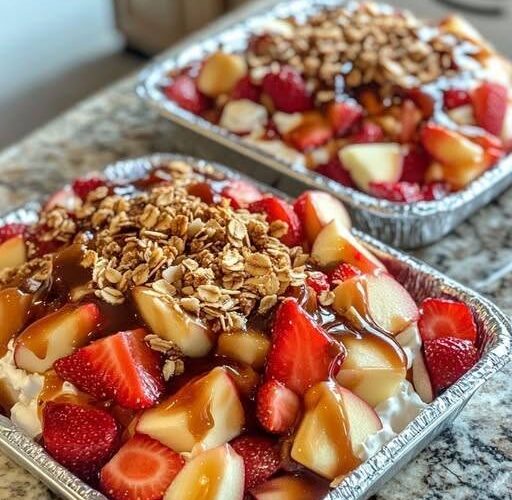
Introduction
Cheesecake fruit salad is a delightful fusion of creamy indulgence and fresh, vibrant fruits that has captured the hearts of dessert lovers around the world. This no-bake treat combines the rich, tangy essence of cheesecake with the natural sweetness and juiciness of berries, creating a dish that’s perfect for summer gatherings, potlucks, or even as a light everyday snack. Imagine a bowl brimming with sliced strawberries, plump blueberries, and tart blackberries enveloped in a velvety mixture of cream cheese, pudding, and whipped topping—it’s a symphony of textures and flavors that feels both decadent and refreshing. What makes this recipe stand out is its simplicity; it requires minimal preparation time and no oven, making it accessible for novice cooks and busy families alike. As we dive deeper into this blog post, we’ll explore everything from its origins to detailed instructions, ensuring you can recreate this masterpiece in your own kitchen. Whether you’re a seasoned baker or someone just starting out, cheesecake fruit salad offers a gateway to exploring creative dessert options that balance health and pleasure.
In today’s fast-paced world, where convenience often trumps tradition, recipes like cheesecake fruit salad shine by bridging the gap between quick assembly and gourmet appeal. This dish isn’t just about satisfying a sweet tooth; it’s about celebrating the bounty of seasonal fruits while incorporating elements of classic American desserts. The creamy base mimics the luxurious mouthfeel of a traditional cheesecake, but without the hassle of baking a crust or worrying about cracks on the surface. It’s versatile too—serve it as a side at barbecues, a topping for breakfast items, or even as a standalone dessert at dinner parties. By the end of this post, you’ll not only have a foolproof recipe but also insights into its cultural role, nutritional benefits, and tips to elevate it further. So, let’s embark on this flavorful journey, starting with the roots of this beloved creation.
The allure of cheesecake fruit salad lies in its ability to evoke nostalgia while adapting to modern dietary preferences. Many people first encounter similar fruit salads at family reunions or holiday tables, where they’re passed around as a lighter alternative to heavy cakes and pies. This recipe, in particular, amps up the indulgence factor with its cheesecake-inspired layers, making it a crowd-pleaser for all ages. As we proceed, keep in mind that experimentation is key; while we’ll stick to the core ingredients, there’s room for personalization to suit your taste or what’s available in your pantry. Get ready to transform simple ingredients into something extraordinary.
Origin and Cultural Significance
The origins of cheesecake fruit salad can be traced back to the mid-20th century in the United States, where fruit salads evolved from simple fresh fruit medleys into more elaborate, creamy concoctions influenced by the rise of convenience foods. During the post-World War II era, when instant pudding mixes and whipped toppings like Cool Whip became household staples, home cooks began experimenting with ways to combine these with fruits for quick desserts. Cheesecake, with its ancient roots in Greek and Roman cuisines—where early versions used cheese, honey, and wheat—found a new life in American kitchens through no-bake adaptations. This fruit salad variant likely emerged in the 1950s or 1960s, popularized by women’s magazines and community cookbooks that emphasized easy, make-ahead recipes for busy homemakers. It draws inspiration from ambrosia salads of the South, which featured fruits, marshmallows, and coconut in a creamy base, but substitutes the tropical elements with berries and a cheesecake twist for a more sophisticated flavor profile.
Culturally, cheesecake fruit salad holds significance as a symbol of American potluck culture, where sharing dishes fosters community and connection. In regions like the Midwest and South, it’s a staple at church suppers, family picnics, and holiday celebrations, representing abundance and hospitality. The inclusion of berries ties it to seasonal harvesting traditions; strawberries in spring, blueberries in summer, and blackberries in late summer evoke farm-to-table ideals that resonate with rural American heritage. Beyond the U.S., similar desserts appear in global cuisines—think of European fruit trifles or Asian fruit creams—but the cheesecake element adds a distinctly New York-style flair, nodding to the city’s famous dense cheesecakes. In modern times, it has gained traction on social media platforms, where visually appealing, colorful salads go viral, influencing younger generations to recreate them with healthy twists like low-fat ingredients or organic fruits.
This dish also reflects broader cultural shifts toward healthier indulgences. As awareness of nutrition grew in the late 20th century, recipes like this one allowed people to enjoy dessert-like treats without full commitment to calorie-dense baked goods. It’s often featured in diet cookbooks or wellness blogs as a “guilt-free” option, blending indulgence with the antioxidant-rich benefits of berries. In diverse communities, adaptations incorporate cultural fruits—mangoes in Latin American versions or kiwis in Australian takes—highlighting its adaptability. The cultural significance extends to holidays; for instance, the red, white, and blue berries make it ideal for Fourth of July, symbolizing patriotism through food. Overall, cheesecake fruit salad isn’t just a recipe; it’s a cultural artifact that evolves with societal tastes, promoting joy through shared meals.
Delving deeper, the evolution of this salad mirrors the democratization of gourmet cooking. Once, cheesecakes were labor-intensive, reserved for special occasions, but innovations like instant pudding democratized them. This accessibility has made it a bridge between generations, with grandparents passing down variations to grandchildren. In pop culture, it’s referenced in cookbooks by icons like Betty Crocker, reinforcing its place in American culinary lore. As globalization spreads, international fusions emerge, such as adding matcha for a Japanese twist or spices for an Indian flair, enriching its cultural tapestry.
Ingredients Quantity and Optional Additions
The core ingredients for cheesecake fruit salad are divided into layers for optimal texture and flavor integration. Starting with the cheesecake layer: you’ll need 4 ounces of softened cream cheese for that rich, tangy foundation; ¼ cup of softened unsalted butter to add smoothness and bind the mixture; ½ cup of powdered sugar to sweeten without grittiness; and 8 ounces of whipped topping like Cool Whip for a light, airy consistency. These quantities yield about 6-8 servings, ensuring a creamy base that’s not overwhelmingly dense. For the pudding layer, use one 3.4-ounce box of instant vanilla pudding mix for quick thickening; 1½ cups of cold milk to activate the pudding; and 1 teaspoon of vanilla extract to enhance the overall flavor profile. The fruit layer calls for 1 cup each of hulled and sliced strawberries, blueberries, and blackberries, providing a burst of freshness and color.
Optional additions can elevate this recipe to suit various preferences or occasions. For a tropical twist, incorporate ½ cup of diced pineapple or mango chunks, which add a juicy sweetness that complements the berries. If you prefer a nutty crunch, sprinkle in ¼ cup of chopped pecans or almonds just before serving to maintain texture. For those seeking a chocolate element, fold in ½ cup of mini chocolate chips or drizzle melted chocolate over the top. Yogurt enthusiasts might substitute half the whipped topping with Greek yogurt for a tangier, protein-packed version. Fresh herbs like mint leaves (about 2 tablespoons chopped) can add a refreshing aroma, while a splash of lemon juice (1 tablespoon) brightens the fruits and prevents browning. If catering to dietary needs, use low-fat cream cheese and sugar-free pudding mix without compromising taste.
Scaling the recipe is straightforward; double the quantities for larger crowds, but adjust fruits accordingly to avoid sogginess. Seasonal variations encourage using what’s fresh—raspberries in place of blackberries or grapes for a milder flavor. For a vegan adaptation, opt for plant-based cream cheese, butter alternatives, and non-dairy whipped topping, ensuring everyone can enjoy it. These optional elements not only customize the dish but also allow for creativity, turning a simple salad into a personalized masterpiece.
Tips for Success
To achieve the perfect cheesecake fruit salad, start by ensuring all ingredients are at the right temperature—softened cream cheese and butter blend more smoothly, preventing lumps. Use a hand mixer on low speed for the cheesecake base to incorporate air without overbeating, which could deflate the whipped topping. When folding in the pudding, do so gently with a spatula to maintain the creamy texture; rushing this step might result in a separated mixture. For the fruits, select ripe but firm berries to avoid mushiness—wash and dry them thoroughly before adding to prevent excess moisture from watering down the salad.
Timing is crucial for success; prepare the layers separately and chill them briefly before combining to allow flavors to meld without compromising structure. If making ahead, store the creamy base and fruits apart until just before serving, as berries release juices over time. Experiment with sweetness levels—taste the base after adding powdered sugar and adjust if needed, especially if your fruits are particularly tart. For presentation, layer the salad in a clear glass bowl to showcase the vibrant colors, or serve in individual cups for portion control.
Common pitfalls include overmixing, which leads to a dense rather than fluffy consistency, so always fold rather than stir vigorously. If your pudding doesn’t thicken, ensure the milk is cold and whisk for the full recommended time. For dietary tweaks, low-carb versions can use sugar substitutes like stevia, but test in small batches first. Finally, garnish thoughtfully—a sprinkle of powdered sugar or fresh mint not only enhances visuals but also adds a final flavor note.
Instructions
Begin by preparing the cheesecake base: in a large mixing bowl, beat 4 ounces of softened cream cheese and ¼ cup of softened unsalted butter together using an electric mixer on medium speed until the mixture is smooth and creamy, about 2-3 minutes. Gradually add ½ cup of powdered sugar, continuing to beat until fully incorporated and fluffy. Gently fold in 8 ounces of whipped topping with a spatula, taking care not to deflate the mixture—fold until just combined for a light texture. Cover the bowl and refrigerate this base while you prepare the next layer to allow it to firm up slightly.
Next, make the pudding layer: in a separate medium bowl, whisk together one 3.4-ounce box of instant vanilla pudding mix, 1½ cups of cold milk, and 1 teaspoon of vanilla extract. Whisk vigorously for 1-2 minutes until the mixture begins to thicken—it should reach a pudding-like consistency. Let this sit for about 5 minutes in the refrigerator to set further, ensuring it doesn’t become too runny when combined with the cheesecake base.
To combine the layers, remove both the cheesecake base and pudding from the refrigerator. Carefully fold the pudding mixture into the cheesecake base using a spatula, working in gentle, sweeping motions until the two are fully blended into a uniform, creamy concoction. Avoid overmixing to preserve the airy quality. Now, add the fruit: gently stir in 1 cup each of sliced strawberries, blueberries, and blackberries, distributing them evenly without crushing the delicate berries.
For the final step, cover the bowl with plastic wrap or transfer to an airtight container and refrigerate for at least 1 hour, or up to overnight, to let the flavors meld and the salad chill thoroughly. Before serving, garnish with additional fresh fruit, a drizzle of honey, or toasted coconut if desired. Serve chilled in bowls or as a side dish.
Description
Cheesecake fruit salad presents as a visually stunning dish with layers of creamy white interspersed with pops of red strawberries, deep blue blueberries, and dark purple blackberries, creating a patriotic or festive appearance depending on the occasion. The texture is a harmonious blend of smooth, velvety cream offset by the juicy burst of fresh berries, offering a satisfying contrast in every bite. Flavor-wise, it’s a delightful balance: the tangy cream cheese and sweet pudding base provide a cheesecake-like richness, while the fruits add natural tartness and freshness, preventing it from being overly cloying.
This salad’s aroma is subtly sweet with hints of vanilla and butter, enhanced by the fruity scents that waft up upon serving. It’s not overly heavy, making it ideal for warm weather, yet indulgent enough for dessert cravings. Variations in description come from additions; for example, nuts add crunch, while chocolate introduces decadence. Overall, it’s a versatile, crowd-pleasing treat that looks as good as it tastes.
Nutritional Information
Per serving (based on 6 servings), cheesecake fruit salad provides approximately 250-300 calories, with breakdowns including 15-20 grams of fat from the cream cheese and butter, 25-30 grams of carbohydrates mainly from sugars and fruits, and 3-5 grams of protein. The fruits contribute essential vitamins: strawberries offer vitamin C for immune support, blueberries provide antioxidants like anthocyanins for heart health, and blackberries add fiber for digestion. With about 4-6 grams of fiber per serving, it aids in satiety and gut health.
Saturated fats are present at 8-10 grams due to dairy, but using low-fat options can reduce this. Sodium is low at 150-200 mg, making it suitable for most diets. For those tracking macros, it’s a moderate-carb treat with natural sugars from fruits outweighing added ones. Allergens include dairy, so substitutions are key for intolerances. Nutritionally, it’s a step up from traditional desserts, offering fruit-based nutrients alongside indulgence.
Conclusion and Recommendation
In conclusion, cheesecake fruit salad is a timeless recipe that marries simplicity with sophistication, offering endless possibilities for enjoyment. From its creamy base to the vibrant fruits, it encapsulates the joy of homemade treats. I highly recommend trying it for your next gathering—it’s sure to impress.
Embracing Healthful Indulgence
Embracing healthful indulgence means enjoying treats like cheesecake fruit salad mindfully, balancing pleasure with nutrition. By choosing fresh, organic fruits and lighter ingredients, you can savor the decadence without guilt. This approach fosters a positive relationship with food, where desserts enhance well-being rather than detract from it. Incorporate it into a varied diet for sustained energy and happiness.