Introduction
Ring-a-ling Sweet Rolls are a delightful and timeless baked treat that combines the soft, pillowy texture of yeast dough with a subtle, nutty almond filling and a bright, tangy orange glaze. These swirled pastries offer a perfect balance of sweetness, citrus zest, and warm spices, making them an ideal choice for breakfast, brunch, or an afternoon snack with coffee or tea. Unlike heavily iced cinnamon rolls that can sometimes feel overpowering, Ring-a-ling Sweet Rolls stand out for their lighter, more refined flavor profile, where the orange essence shines through without overwhelming the senses. The name “Ring-a-ling” evokes the playful, coiled shape of each roll, resembling little rings or swirls that “ring” with festive charm, especially during holiday seasons.
This recipe has captured the hearts of bakers for decades, offering a sophisticated twist on traditional sweet rolls. The dough is enriched with milk, butter, and egg for tenderness, while the filling features ground almonds blended with powdered sugar, butter, cinnamon, and nutmeg for a fragrant, nutty interior. The final touch—a simple glaze of powdered sugar and fresh orange juice—adds a glossy finish and a burst of citrus that ties everything together beautifully. Whether you’re an experienced baker or trying yeast dough for the first time, these rolls are rewarding to make and even more enjoyable to share. In this comprehensive guide, we’ll explore their fascinating history, ingredients, preparation tips, and more, to help you create perfect Ring-a-ling Sweet Rolls every time.
Origin
The story of Ring-a-ling Sweet Rolls begins in the mid-20th century, specifically tied to one of America’s most iconic baking competitions: the Pillsbury Bake-Off. This contest, launched in 1949, encouraged home cooks to submit innovative recipes using Pillsbury flour, and it quickly became a cultural phenomenon, awarding grand prizes that could change lives. In 1955, during the 7th annual Pillsbury Bake-Off, a homemaker from Portland, Oregon named Bertha Jorgensen submitted her creation: Ring-a-Lings. Her recipe won the grand prize, earning her acclaim and cementing the rolls as a mid-century classic.
Jorgensen’s innovation lay in both the flavor combination and the unique shaping method. She incorporated grated orange peel into the dough for a subtle citrus note and used ground nuts in the filling—originally filberts (hazelnuts) to represent Oregon’s famous hazelnut industry, though later adaptations often used almonds or pecans. The “ring-a-ling” name comes from the distinctive shaping: strips of filled dough are twisted and coiled into individual swirls, creating ring-like forms that were praised by judges for their “eating quality and innovative shaping.” This no-knead approach (relying on mixing and rising rather than extensive kneading) made it accessible for busy home bakers of the era.
The recipe was widely published in Pillsbury cookbooks and on flour sacks, spreading rapidly across American kitchens. Families adopted it as a holiday tradition, with many recalling their mothers freezing batches for quick treats. Over the years, slight variations emerged—some using pecans for a Southern twist or almonds for broader appeal—but the core remains true to Jorgensen’s 1955 winner. Today, it’s celebrated as a vintage gem, often recreated by bloggers and bakers nostalgic for post-war American home cooking.
Cultural Significance
While not tied to ancient rituals or specific ethnic traditions like Swedish tea rings or Italian panettone, Ring-a-ling Sweet Rolls hold a unique place in American culinary culture as a symbol of mid-century innovation and family baking. Emerging from the Pillsbury Bake-Off during the 1950s—a time of post-war prosperity, suburban growth, and the rise of convenience foods—these rolls represent the era’s blend of homemade effort with clever shortcuts (like no-knead dough).
They became a staple for holiday brunches, church potlucks, and family gatherings, often evoking warm memories of childhood. Many people share stories of their mothers or grandmothers making these rolls from recipes clipped from Pillsbury packaging, freezing extras for unexpected guests. The citrus-nut combination offers a lighter alternative to heavier cinnamon rolls, making them popular for morning occasions or as a “not-too-sweet” dessert. In some families, they’ve been passed down for generations, becoming a personal tradition rather than a broad cultural one.
The rolls also highlight regional pride: Bertha Jorgensen’s use of hazelnuts nodded to Oregon’s nut industry, and adaptations with almonds or pecans reflect broader American preferences. In today’s baking revival, they’re appreciated for bridging vintage charm with modern tastes, often featured in nostalgic recipe collections or holiday spreads. They embody the joy of sharing baked goods—simple yet elegant, inviting everyone to “ring” in moments of togetherness.
Ingredients Quantity
To make approximately 20-22 Ring-a-ling Sweet Rolls, you’ll need the following precise quantities. This recipe yields tender, flavorful rolls with just the right balance of sweetness and citrus.
For the dough:
- 4 to 4½ cups all-purpose flour, divided (start with 4 cups and add more as needed for a stiff dough)
- ½ cup sugar, divided (⅓ cup for the dry mixture, the remaining for subtle sweetness)
- 2 teaspoons salt
- 2 teaspoons grated orange peel (fresh zest from 1-2 medium oranges; avoid the bitter white pith)
- 2 packets (about 4½ teaspoons) dry active yeast
- 1 cup whole milk
- ⅓ cup butter (unsalted recommended for control over saltiness)
- 1 large egg
For the filling:
- 1 cup powdered sugar
- ⅓ cup butter, softened to room temperature for easy spreading
- 1 cup almonds, finely ground (use a food processor; blanched almonds yield a smoother texture)
- ½ teaspoon ground cinnamon
- ¼ teaspoon ground nutmeg (freshly grated for best flavor)
For the glaze:
- 3 tablespoons powdered sugar
- ¼ cup fresh orange juice (from the zested oranges for maximum brightness)
These quantities are faithful to the classic recipe, ensuring about 20-22 rolls depending on how thinly you cut the strips. Using fresh oranges is key—the zest infuses the dough, and the juice makes a vibrant glaze.
Optional Additions
While the original Ring-a-ling recipe is perfect in its simplicity, bakers often add personal touches to enhance flavor or texture. Here are some popular optional additions that complement the orange-almond profile without overpowering it.
For the filling, consider mixing in ¼ cup finely chopped toasted pecans or hazelnuts alongside the almonds for extra crunch and depth—echoing Bertha Jorgensen’s original hazelnut version. A teaspoon of almond extract stirred into the filling can intensify the nutty notes. For a festive twist, add ¼ cup dried cranberries or raisins for bursts of tart-sweet fruit that pair beautifully with orange.
In the dough, some bakers incorporate ½ teaspoon of cardamom for a warm, Scandinavian-inspired spice that elevates the citrus. For the glaze, boost it with ½ teaspoon vanilla extract or a pinch of orange blossom water for floral complexity. If you prefer a creamier finish, blend in 2 ounces softened cream cheese to the glaze for a tangy icing.
Toppings offer more creativity: sprinkle sliced almonds or coarse sugar over the glazed rolls before the final bake for added texture. For chocolate lovers, a drizzle of melted dark chocolate post-baking adds indulgence. These additions keep the rolls versatile—holiday-ready with cranberries, or everyday with extra nuts.
Tips for Success
Baking with yeast can seem intimidating, but with these tips, your Ring-a-ling Sweet Rolls will turn out fluffy and flawless every time. Success starts with active yeast: always proof it in warm (not hot) milk around 105-110°F—if it doesn’t foam after 5-10 minutes, start over with fresh yeast.
Use room-temperature ingredients, especially the egg and butter, for even incorporation and better rise. When mixing the dough, add flour gradually; it should be stiff but still slightly tacky—over-flouring leads to dense rolls. During rising, place the dough in a warm, draft-free spot (like an oven with the light on); cover with a damp cloth to prevent drying.
For shaping, roll the dough evenly to the specified 22×12-inch rectangle on a lightly floured surface to prevent sticking. When spreading filling, leave a small border to avoid leakage. Twisting the strips gently (4-5 times each) incorporates air for lighter texture; if filling falls out, tuck it into the centers.
Bake on parchment-lined sheets for easy cleanup, and watch closely—the initial bake sets the structure, while the glaze-and-return step creates golden browning. Cool on wire racks to prevent sogginess. Make-ahead tip: refrigerate shaped rolls overnight for the second rise, then bake fresh in the morning.
Instructions
Follow these detailed step-by-step instructions for perfect Ring-a-ling Sweet Rolls. Total time: about 3-4 hours, including rises.
First, prepare the dough: In a large bowl, combine 2 cups flour, ⅓ cup sugar, salt, orange zest, and yeast. In a saucepan, heat milk and ⅓ cup butter over low until warm (butter nearly melted). Add to dry ingredients with the egg; beat with an electric mixer 2-3 minutes. Gradually stir in remaining flour until a stiff dough forms.
Turn dough onto a floured surface; knead briefly if needed until smooth (or rely on the no-knead rise). Cover and let rise in a warm place 35-50 minutes until doubled.
While rising, make the filling: Cream together powdered sugar, softened butter, ground almonds, cinnamon, and nutmeg until spreadable.
Punch down risen dough. Roll into a 22×12-inch rectangle. Spread filling lengthwise over half the dough. Fold unfilled half over filling; seal edges. Cut crosswise into 20-22 one-inch strips.
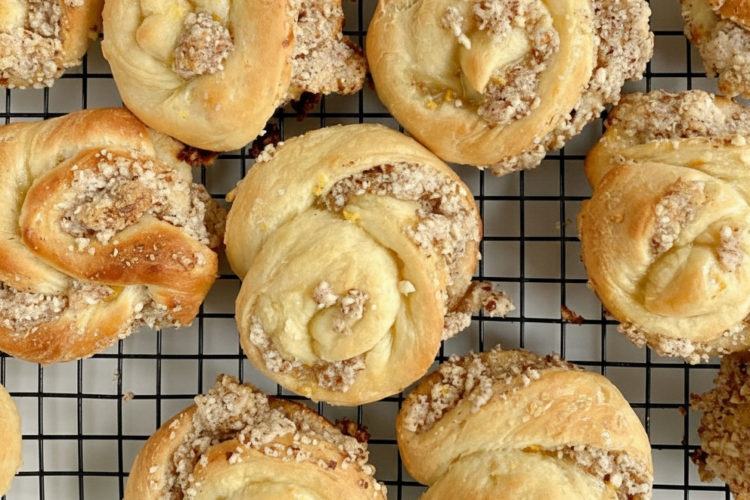
Twist each strip 4-5 times, then coil into a swirl (hold one end down as the center and wrap around). Place on parchment-lined baking sheets. Cover and rise 30-45 minutes until puffy. Preheat oven to 375°F.
Bake uncovered 9-12 minutes until lightly golden. Meanwhile, mix glaze: powdered sugar and orange juice. Brush rolls with glaze; return to oven 3-5 minutes for deeper browning. Cool slightly on racks before serving warm.
Description
Ring-a-ling Sweet Rolls are visually stunning and sensorially delightful. Each roll is a compact swirl, golden-brown on the outside with a glossy orange glaze that catches the light. The twisting creates layers that pull apart easily, revealing a tender, yeasted interior flecked with orange zest.
Bite into one, and the soft dough yields to a creamy, nutty filling—ground almonds provide subtle crunch and richness, warmed by cinnamon and nutmeg. The orange glaze adds a bright, juicy tang that cuts through the sweetness, leaving a fresh citrus finish. Warm from the oven, they’re heavenly: aromatic with orange and spice, comforting yet elegant. Served with coffee, they evoke cozy mornings; at brunch, they steal the show. The texture is pillowy yet structured, the flavor balanced—not cloyingly sweet, but indulgent enough for special occasions.
Nutritional Information
Nutritional values can vary based on exact ingredients and portion size, but for one Ring-a-ling Sweet Roll (assuming 22 rolls per batch), approximate estimates are: 220-250 calories, with about 10-12g fat (mostly from butter and almonds), 30-35g carbohydrates (from flour and sugars), 4-5g protein (from milk, egg, and nuts), and 1-2g fiber.
The rolls provide moderate energy from carbs, healthy fats from almonds (including vitamin E and monounsaturated fats), and a touch of vitamin C from orange juice/zest. They’re indulgent due to butter and sugar, so enjoy in moderation as part of a balanced diet. For lighter versions, some reduce butter or use part whole-wheat flour, but this affects texture.
Conclusion
Ring-a-ling Sweet Rolls are more than a recipe—they’re a slice of baking history that continues to delight with their elegant simplicity and joyful flavors. From Bertha Jorgensen’s prize-winning creation to your own kitchen, these rolls bring warmth, nostalgia, and pure pleasure to the table. Mastering them rewards you with soft, swirled treats that impress without complexity.
Whether baked for holidays, weekends, or just because, they remind us of the magic in homemade yeast baking. The citrus-nut harmony, the satisfying shaping process, the aroma filling your home—all contribute to an experience worth savoring.
Recommendation
I highly recommend trying Ring-a-ling Sweet Rolls for your next baking adventure, especially if you love citrus-forward treats or vintage recipes. They’re perfect for holiday mornings, brunch gatherings, or gifting to neighbors. Pair with fresh coffee or tea for an elevated experience.
For beginners, start on a relaxed day to enjoy the rising process; experienced bakers will appreciate the no-knead ease and customization potential. Freeze baked rolls (unglazed) for up to a month—thaw and glaze fresh for convenience.
Embracing Healthful Indulgence
In a world of quick treats, Ring-a-ling Sweet Rolls invite us to embrace healthful indulgence: mindful baking with quality ingredients like fresh oranges and nuts, which offer natural nutrients alongside comfort. They’re not everyday fare, but as an occasional treat, they nourish the soul as much as the body—promoting joy, sharing, and the satisfaction of creating something beautiful from scratch. Balance them with wholesome meals, and savor the indulgence guilt-free. Baking these rolls is self-care, a reminder that sweetness in life comes in many forms.