Introduction
The Lemon Cream Cheese Cake is a delightful dessert that captures the essence of sunshine in every bite, combining a moist, tender cake base with bursts of tangy lemon curd hidden within and a luxurious cream cheese frosting swirled on top. This poke cake variation stands out for its perfect balance of sweet and tart flavors, making it an irresistible treat for lemon lovers everywhere. Originating from clever American home baking traditions, it elevates a simple boxed cake mix into something extraordinary with the addition of fresh lemon zest, rich buttermilk, and that signature lemon curd filling that seeps into poked holes for ultimate moisture and flavor infusion. Whether served at a summer picnic, spring brunch, or holiday gathering, this cake brings a refreshing citrus brightness that feels both nostalgic and sophisticated. The creamy frosting, enriched with more lemon zest, complements the curd’s intensity, creating layers of texture and taste that keep you coming back for more. It’s not just a cake; it’s a celebration of lemon’s vibrant personality, wrapped in velvety cream cheese indulgence.
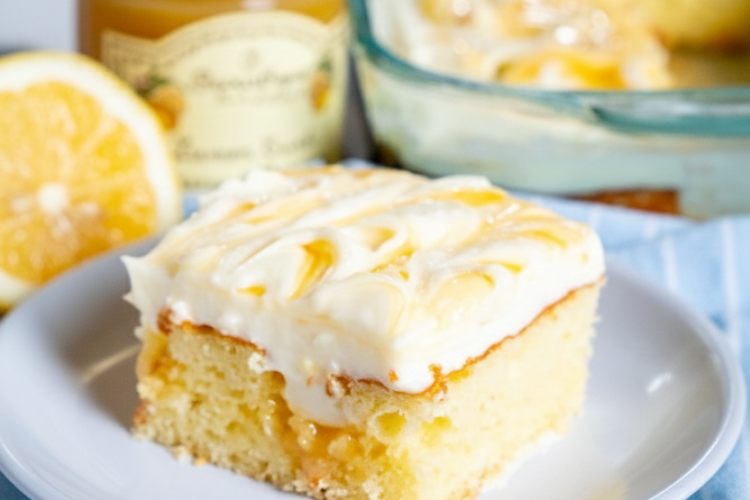
From the first forkful, you’ll experience the soft crumb giving way to pockets of silky lemon curd, all crowned with a marbled swirl that looks as beautiful as it tastes. This recipe yields a generous 9×13-inch cake, perfect for feeding a crowd or enjoying leftovers over several days as the flavors continue to meld and intensify in the fridge.
Origin and Cultural Significance
The story of poke cakes like this Lemon Cream Cheese Cake begins in mid-20th-century America, where innovative marketing and home baking converged to create a dessert phenomenon. Poke cakes were popularized in the 1970s by Jell-O as a clever way to boost gelatin sales, involving baking a simple sheet cake, poking holes in it, and pouring flavored gelatin over the top to create colorful, moist stripes. Early versions often featured vibrant Jell-O in flavors like strawberry or lime, topped with Cool Whip for an easy, crowd-pleasing treat that became a staple at potlucks, church socials, and family barbecues. This technique drew from older soaking methods, such as European trifles or even medieval sopped cakes, but the modern poke cake was distinctly American in its convenience and fun presentation.
Lemon variations emerged naturally, building on the long love affair with citrus in desserts. Lemons themselves have a rich global history, originating in Asia and spreading through Arab trade to the Mediterranean, where they became symbols of luxury and health in ancient Rome and Renaissance Europe. In British cuisine, lemon drizzle cakes evolved from pound cakes in the 20th century, using fresh lemon for a tangy glaze poured over poked holes—a direct precursor to today’s poke styles. Lemon curd, a key element in this cake, traces back to 19th-century England as a spreadable preserve, often served at afternoon tea to showcase refinement and the bright flavor that cut through richness.
Culturally, lemon desserts signify refreshment, renewal, and joy across many traditions—from French tarte au citron as an elegant patisserie classic to Italian limoncello-infused treats celebrating the Amalfi Coast’s bountiful harvests. In American baking, lemon poke cakes represent comforting nostalgia, evoking childhood memories of grandmother’s kitchen or retro recipe cards. The addition of cream cheese frosting nods to Southern influences, where tangy cream cheese pairings balance sweetness in red velvet or carrot cakes. Today, this Lemon Cream Cheese Cake embodies healthful indulgence in modern wellness trends, offering vitamin C from fresh lemons while satisfying sweet cravings. Its marbled lemon curd swirl adds visual appeal, making it a symbol of creative home baking that bridges generations.
Ingredients Quantity
To create this stunning Lemon Cream Cheese Cake, gather the following ingredients precisely for optimal results. The recipe serves 12-15 generous portions in a 9×13-inch pan.
For the cake base:
- 1 (14.25 oz) box white cake mix (choose a high-quality brand for best texture)
- 1 cup buttermilk, at room temperature (this adds tang and moisture superior to regular milk)
- 3 large eggs, also at room temperature for better emulsion
- ½ cup unsalted butter, melted and slightly cooled
- 3 tablespoons fresh lemon zest (from about 3-4 large lemons; avoid the bitter white pith)
For the cream cheese frosting:
- ¾ cup unsalted butter, softened to room temperature
- 12 oz full-fat cream cheese, softened (brick-style, not spreadable)
- 1 teaspoon pure vanilla extract
- 3 to 3½ cups powdered sugar, sifted for smoothness
- 1½ tablespoons fresh lemon zest
Additional essential:
- 1 (12 oz) jar high-quality lemon curd (or homemade for extra freshness; about 1½ cups total needed)
These quantities ensure a balanced flavor profile where lemon shines without overwhelming, and the cake remains moist yet structured.
Optional Additions
While the core recipe is perfection, customization allows you to tailor this Lemon Cream Cheese Cake to preferences or occasions. For added texture, fold ½ cup fresh blueberries or raspberries into the batter before baking—they burst beautifully alongside the curd. A handful of toasted coconut flakes sprinkled on top evokes tropical vibes, or white chocolate shavings for subtle sweetness.
To amplify lemon intensity, incorporate 2 tablespoons fresh lemon juice into the cake batter or frosting. For a boozy twist suitable for adults, brush the cooled cake with limoncello before poking holes. Garnish options include candied lemon slices, edible flowers, or mint leaves for elegance.
If dietary needs arise, use gluten-free cake mix, plant-based butter and cream cheese for vegan adaptation, or sugar substitutes in frosting (though test for consistency). Berries on top not only enhance visuals but add natural antioxidants.
These additions keep the cake versatile without compromising its signature tangy creaminess.
Tips for Success
Achieving a flawless Lemon Cream Cheese Cake requires attention to key details that elevate it from good to extraordinary. Start with room-temperature ingredients—buttermilk, eggs, butter, and cream cheese—to ensure smooth mixing and even baking; cold items can lead to lumpy batter or frosting. Zest lemons finely using a microplane, capturing only the yellow outer layer for maximum aromatic oils without bitterness.
When poking holes, use the handle of a wooden spoon for ideally sized pockets that hold curd without collapsing the cake—space them about 1 inch apart, avoiding over-poking to prevent sogginess. Fill holes while the cake is fully cooled to allow curd to set properly rather than absorb too quickly.
For frosting, beat butter and cream cheese until fluffy before adding powdered sugar gradually; this prevents graininess. If frosting seems too soft, chill briefly. Use a piping bag or zip-top bag with corner snipped for precise curd filling in holes.
Bake at exact 350°F, testing doneness with a toothpick that comes out clean but with moist crumbs. Chill the assembled cake at least 4 hours (overnight best) for flavors to meld and easy slicing.
Finally, source fresh lemons and good lemon curd—homemade if possible—for vibrant taste.
These tips guarantee a professional-looking, delicious result every time.
Instructions
Follow these detailed steps to bake your Lemon Cream Cheese Cake with confidence.
First, preheat your oven to 350°F and generously grease a 9×13-inch baking dish with butter or non-stick spray, lining with parchment if desired for easy removal.
In a large mixing bowl, combine the melted butter, room temperature buttermilk, and eggs. Beat on medium speed until light, fluffy, and well emulsified, about 2 minutes—this creates a tender crumb. Gradually add the white cake mix, mixing on low until just incorporated to avoid overbeating and toughness. Gently fold in the 3 tablespoons lemon zest for even distribution of citrus oils.
Pour the batter into the prepared pan, smoothing the top. Bake for 25-30 minutes, or until the edges are golden and a toothpick inserted in the center emerges clean. Do not overbake; slight underdoneness ensures moisture.
Allow the cake to cool completely in the pan on a wire rack, at least 2 hours.
Meanwhile, prepare the frosting: In a stand mixer or with hand beaters, cream the softened butter and cream cheese until smooth and pale. Add vanilla, then powdered sugar 1 cup at a time on low speed, increasing to medium until fluffy. Fold in the 1½ tablespoons lemon zest. Adjust sugar for desired stiffness.
Once cooled, poke holes across the cake surface using a wooden spoon handle, spacing evenly.
Transfer most lemon curd to a piping bag or zip-top with corner cut; pipe into each hole until filled but not overflowing. Reserve about ½ cup curd.
Spread the cream cheese frosting evenly over the cake. Dollop remaining curd on top, then gently swirl with a knife for a marbled effect—avoid overmixing to preserve distinct ribbons.
Chill uncovered initially to set frosting, then cover and refrigerate at least 4 hours before serving.
Slice with a sharp knife wiped clean between cuts for neat portions.
Description
Imagine slicing into this Lemon Cream Cheese Cake: the knife glides through creamy frosting revealing a snowy white crumb dotted with golden lemon curd pockets that ooze tangy sunshine. The top boasts elegant swirls of pale yellow curd marbled into rich frosting, garnished perhaps with fresh lemon slices or zest curls for vibrant contrast.
Each bite delivers layered sensations—the soft, moist cake infused with subtle lemon zest yields to bursts of silky, tart curd, tempered by velvety cream cheese frosting that’s tangy yet sweet. The buttermilk lends a faint richness, while melted butter ensures tenderness without density.
Visually stunning in its simplicity, the cake’s bright flavors evoke spring meadows or coastal breezes, making it as refreshing chilled as on a warm day. Cross-sections reveal those hidden curd-filled tunnels, adding surprise and delight.
Aroma-wise, fresh lemon zest perfumes the air during baking and serving, inviting anticipation. Texture contrasts abound: fluffy cake, smooth filling, creamy top—all harmonizing into addictive harmony.
This dessert transcends ordinary sheet cakes, offering sophistication in ease.
Nutritional Information
Nutritional values for this Lemon Cream Cheese Cake are approximate per serving (based on 15 servings), as exact figures vary by brands and portions. A typical slice provides around 450-550 calories, primarily from fats and carbohydrates.
Breakdown: Carbohydrates 60-70g (mostly from cake mix, powdered sugar, and curd sugars); Total Fat 25-30g (saturated 15g from butter and cream cheese); Protein 5-7g; Sugars 45-55g.
It offers small benefits like vitamin C from lemons (about 10-15% daily value per slice) and calcium from dairy. However, it’s indulgent with high sugar and fat, best enjoyed moderately.
For lighter versions, reduce sugar or use low-fat cream cheese, though texture may change. Always consult specific labels for accuracy.
Conclusion and Recommendation
In conclusion, the Lemon Cream Cheese Cake is more than a dessert—it’s a testament to how simple ingredients can create profound joy through bright flavors and thoughtful technique. From its poke cake roots to the luxurious curd and frosting, it delivers consistent delight that’s easy yet impressive.
I wholeheartedly recommend this recipe for any occasion needing a touch of elegance and refreshment. It’s forgiving for beginners yet customizable for experts, always earning rave reviews.
Bake it soon—you’ll find yourself craving that perfect lemon balance again and again.
Embracing Healthful Indulgence
While richly decadent, this Lemon Cream Cheese Cake invites healthful indulgence by celebrating real ingredients like fresh lemons packed with vitamin C, antioxidants, and immune support. Mindful portions allow enjoyment without guilt, pairing tartness that satisfies sweetly naturally.
Use organic lemons for zest to maximize benefits, or add berries for fiber. Chilled serving aids digestion, making it a smarter treat.
Ultimately, desserts like this remind us balance includes pleasure—savoring a slice mindfully nourishes body and soul alike.