Introduction
The Oatmeal Cake with its signature broiled coconut topping stands as a timeless classic in American home baking, evoking memories of grandmothers’ kitchens and cozy family gatherings. This moist, spiced cake combines the hearty texture of old-fashioned rolled oats with warm notes of cinnamon and nutmeg, creating a base that is both comforting and subtly nutritious. What truly elevates it to legendary status is the irresistible topping—a luscious blend of melted butter, brown sugar, milk, vanilla, shredded coconut, and optional nuts—that is spread over the warm cake and quickly broiled to achieve a caramelized, crunchy crown.
Often referred to as Lazy Daisy Oatmeal Cake, this dessert bridges the gap between indulgent treat and wholesome snack, making it versatile enough for breakfast, afternoon tea, or evening dessert. Its unpretentious appearance belies a depth of flavor that surprises and delights with every bite—the tender crumb soaked in oat-infused moisture contrasts beautifully with the toasty, nutty topping. In an era of elaborate layered cakes and trendy desserts, Oatmeal Cake reminds us of the beauty in simplicity, using pantry staples to create something profoundly satisfying.
This recipe, yielding a generous 9×13-inch pan, serves 12 to 15 people and has endured for generations because it delivers consistent results with minimal fuss. Whether you’re a seasoned baker or a novice, this cake offers forgiveness in its method and reward in its taste.
Origin
The story of Oatmeal Cake begins with its predecessor, the Lazy Daisy Cake, which emerged in the early 1920s through clever marketing by the Snowdrift shortening company. Advertisements in newspapers featured a simple vanilla sponge cake topped with a broiled mixture of brown sugar and coconut, earning the name “Lazy Daisy” for its effortless preparation—no fancy frosting required, just a quick spread and broil.
This economical, one-bowl wonder gained traction during the 1930s and 1940s, particularly amid the Great Depression and World War II rationing, when bakers sought recipes that stretched ingredients without sacrificing delight. Community cookbooks and newspaper columns proliferated variations, highlighting its quick assembly and use of basic staples.
The oatmeal version arrived in the 1950s, courtesy of Quaker Oats, who adapted the Lazy Daisy by incorporating rolled oats soaked in hot water. This addition not only promoted their product but transformed the cake into a heartier, more textured treat with a subtle nutty flavor. Quaker’s advertisements in magazines positioned it as a wholesome yet decadent option, appealing to postwar families embracing convenience and nutrition.
Roots also trace to Amish and Southern baking traditions, where similar spiced oatmeal cakes with broiled coconut-pecan toppings appeared in family recipe boxes. Some historians link its broiled icing to German chocolate cake influences, though the oatmeal base sets it apart as distinctly American. By the 1960s and beyond, it became a staple in Midwestern potlucks and church suppers, passed down as “Grandma’s Oatmeal Cake.”
Today, it endures as a vintage favorite, cherished for its nostalgic charm and adaptability.
Cultural Significance
Oatmeal Cake holds a special place in American culinary culture as a symbol of resourceful home baking and intergenerational comfort food. Emerging during times of economic hardship, it exemplified “making do” with pantry essentials—oats for sustenance, sugar and coconut for luxury—turning scarcity into sweetness.
In Midwestern and Southern communities, it became a fixture at potlucks, church socials, and family reunions, where its sheet-pan format fed crowds easily and its broiled topping provided a show-stopping finish without extra effort. Amish versions emphasize its wholesome, old-fashioned appeal, often served plain or with minimal embellishment.
The cake also reflects mid-20th-century marketing ingenuity, with Quaker Oats elevating oats from breakfast porridge to dessert star, promoting health alongside indulgence. This duality—nutritious yet decadent—resonates today in wellness trends, where “better-for-you” treats incorporate whole grains.
Culturally, it evokes nostalgia for simpler times: grandma’s recipe cards, Depression-era ingenuity, and postwar abundance. Modern bakers revive it for its unpretentious deliciousness, proving that classics like this endure because they comfort the soul as much as they satisfy the palate. In a world of fleeting food fads, Oatmeal Cake stands as enduring proof that heartfelt baking transcends trends.
Ingredients Quantity
To prepare this classic Oatmeal Cake in a 9×13-inch pan, you’ll need the following precise quantities. Using weight measurements where possible ensures accuracy, but volume works well too.
For the Cake:
- 1 1/2 cups (135g) old-fashioned rolled oats (do not use quick or instant oats for best texture)
- 1 1/4 cups (300ml) boiling water
- 1 1/2 cups (190g) all-purpose flour
- 1 1/2 teaspoons ground cinnamon
- 1 teaspoon baking soda
- 1/2 teaspoon fine salt
- 1/4 teaspoon ground nutmeg
- 3/4 cup (150g) granulated sugar
- 3/4 cup (165g) packed light brown sugar
- 1/2 cup (115g) unsalted butter, softened to room temperature
- 3 large eggs, at room temperature
- 1 teaspoon pure vanilla extract
For the Broiled Topping:
- 6 tablespoons (85g) unsalted butter, melted
- 2/3 cup (145g) packed light brown sugar
- 1/4 cup (60ml) milk (whole milk preferred for richness)
- 1 teaspoon pure vanilla extract
- 1 1/2 cups (120g) sweetened shredded coconut
- 1/2 cup (60g) chopped nuts, such as pecans or walnuts (optional, but recommended for crunch)
These quantities yield a moist, flavorful cake with a generous topping that serves 12-15 generously.
Optional Additions
While the classic recipe shines in its simplicity, optional additions can personalize your Oatmeal Cake and add exciting layers of flavor and texture. Here are some popular variations drawn from generations of bakers:
In the cake batter, fold in 3/4 cup raisins, dried cranberries, or chopped dates after adding the oat mixture—these plump up beautifully during baking, adding bursts of sweetness. For a chocolate twist, stir in 1/2 to 1 cup semi-sweet chocolate chips. Fresh or dried apples (about 1 cup shredded or diced) complement the spices wonderfully, evoking apple crisp vibes.
Amp up the warmth by adding 1/4 teaspoon ground ginger, cloves, or cardamom alongside the cinnamon and nutmeg. For nut lovers, incorporate 1/2 cup chopped nuts directly into the batter for distributed crunch.
In the topping, experiment with different nuts—almonds, hazelnuts, or macadamias offer unique profiles. If coconut isn’t your favorite, reduce it and increase nuts, or omit entirely for a pure caramel-nut broil. A pinch of sea salt sprinkled on top before broiling enhances the caramel notes.
For a modern health boost, substitute half the butter with applesauce in the cake (though it may alter moisture slightly). These additions keep the cake’s spirit intact while making it your own—experimentation is part of its charming legacy.
Tips for Success
Achieving the perfect Oatmeal Cake requires attention to a few key details, especially the unique soaking and broiling steps. First, use old-fashioned rolled oats exclusively—quick oats become mushy, while steel-cut are too coarse.
Soak the oats in boiling water for the full 15-20 minutes; this softens them properly, ensuring a moist crumb without grittiness. Allow the mixture to cool slightly before adding to the batter to prevent curdling the eggs.
When creaming the butter and sugars, beat for the full 4-5 minutes until truly light and fluffy—this incorporates air for a tender texture. Add eggs one at a time, beating well after each, and scrape the bowl frequently.
For the topping, prepare it just as the cake finishes baking so it’s spreadable. Spread evenly over the hot cake—the warmth helps it seep in slightly for extra moisture. When broiling, watch constantly: position the rack 4-6 inches from the heat, and broil only 1-2 minutes until edges brown and bubble. It can burn in seconds, so stay vigilant.
Use a metal pan for broiling (glass may crack under direct heat). Test doneness with a toothpick—it should emerge with moist crumbs, not wet batter. Finally, let the cake cool at least 30 minutes before slicing; flavors meld beautifully overnight. These tips ensure a flawless, crowd-pleasing result every time.
Instructions
Follow these detailed step-by-step instructions for foolproof results.
Preheat your oven to 350°F (175°C). Grease a 9×13-inch baking pan thoroughly with nonstick spray or butter, and set aside.
In a medium heatproof bowl, combine 1 1/2 cups old-fashioned rolled oats with 1 1/4 cups boiling water. Stir briefly, then let soak for 15-20 minutes until softened and most liquid is absorbed.
In another bowl, whisk together 1 1/2 cups all-purpose flour, 1 1/2 teaspoons cinnamon, 1 teaspoon baking soda, 1/2 teaspoon salt, and 1/4 teaspoon nutmeg until evenly combined.
In a large mixing bowl, beat 1/2 cup softened unsalted butter with 3/4 cup granulated sugar and 3/4 cup packed brown sugar on medium speed for 4-5 minutes until pale and fluffy. Scrape down the sides as needed.
Add 3 large eggs one at a time, beating well after each addition. Mix in 1 teaspoon vanilla extract.
Gradually add the dry ingredients to the butter mixture on low speed, mixing just until incorporated. Fold in the soaked oat mixture until fully combined—batter will be thick.
Spread the batter evenly into the prepared pan. Bake for 25-30 minutes, or until a toothpick inserted in the center comes out with a few moist crumbs.
As the cake bakes, prepare the topping: In a bowl, whisk 6 tablespoons melted butter, 2/3 cup packed brown sugar, 1/4 cup milk, and 1 teaspoon vanilla. Stir in 1 1/2 cups shredded coconut and 1/2 cup chopped nuts if using.
Remove the cake from the oven and switch to broil (high). Immediately spread the topping evenly over the hot cake.
Place under the broiler for 1-2 minutes, watching closely until coconut edges brown and topping bubbles. Rotate if needed for even toasting.
Cool the cake in the pan for at least 30 minutes before slicing and serving. Enjoy warm or at room temperature.
Description
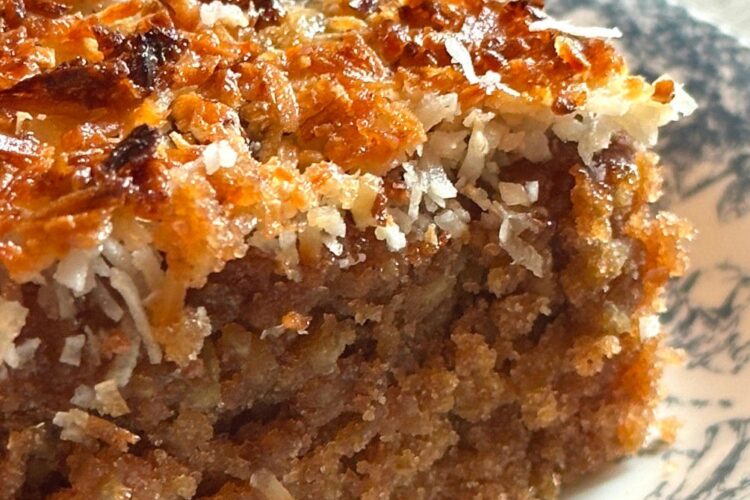
Imagine slicing into a cake that perfectly balances comfort and indulgence: the Oatmeal Cake reveals a dense yet tender crumb, golden-brown and fragrant with cinnamon and nutmeg. Each bite yields a moist, almost pudding-like texture from the soaked oats, subtly chewy and hearty without being heavy.
The real magic unfolds in the topping—a glossy, caramelized layer of toasted coconut and nuts that crackles gently under your fork, giving way to gooey sweetness infused with brown sugar and vanilla. The contrast is sublime: soft, spiced base meeting crunchy, nutty crown, with coconut lending tropical flair and optional pecans or walnuts adding earthy depth.
Served warm, the topping melts slightly, creating pockets of caramel that seep into the cake. At room temperature, it sets into a delightful crisp shell. Aromas of baked oats, warm spices, and toasted coconut fill the kitchen, evoking autumn gatherings or lazy weekend brunches.
Visually humble—often baked in a simple sheet pan—this cake surprises with its depth, proving beauty lies in flavor harmony. It’s the dessert that disappears fastest at potlucks, leaving guests asking for the recipe.
Nutritional Information
Nutritional values for Oatmeal Cake vary slightly based on exact ingredients and portion size, but here’s an approximate breakdown per serving (assuming 15 servings from a 9×13 pan, with pecans included):
- Calories: 380-410 kcal
- Total Fat: 19-22g (Saturated Fat: 11-12g)
- Cholesterol: 55-70mg
- Sodium: 200-250mg
- Total Carbohydrates: 48-55g (Dietary Fiber: 2-3g, Sugars: 35-42g)
- Protein: 4-6g
The oats contribute beneficial fiber and complex carbs for sustained energy, while eggs and butter provide protein and richness. Coconut adds healthy fats, and nuts offer additional protein and nutrients like vitamin E.
Compared to many cakes, this one includes whole grains, making it somewhat more nutrient-dense, though it’s still a treat due to sugar and butter content. For lighter versions, reduce sugar slightly or use half whole wheat flour. Always enjoy in moderation as part of a balanced diet.
Conclusion
In wrapping up our journey through the world of Oatmeal Cake, it’s clear why this humble dessert has captivated bakers for nearly a century. From its resourceful origins as a Lazy Daisy variation to its enduring presence on family tables, it embodies the best of home baking: simplicity, flavor, and heart.
The soaked oats create unparalleled moisture, the spices warm the soul, and that broiled coconut topping delivers an unforgettable crunch that’s both nostalgic and innovative. Whether shared at a gathering or savored quietly with coffee, each slice tells a story of comfort and tradition.
This cake proves that extraordinary results often come from ordinary ingredients, reminding us to cherish the recipes passed down through generations. As you bake and enjoy it, you’re not just making dessert—you’re continuing a delicious legacy.
Recommendation
I wholeheartedly recommend adding Oatmeal Cake to your regular rotation—it’s ideal for potlucks, brunches, holidays, or anytime you crave something comforting yet impressive. Make it a day ahead; flavors deepen beautifully.
Pair with vanilla ice cream for decadence or whipped cream for lightness. Serve alongside fresh fruit to balance richness. For gifting, it travels well and freezes excellently (topping may soften slightly upon thawing).
If you love spiced cakes like carrot or zucchini, this will become a favorite. Try it once, and you’ll understand why grandmas everywhere kept this recipe close—it’s pure, unadulterated joy in every bite.
Embracing Healthful Indulgence
In today’s wellness-focused world, Oatmeal Cake offers a beautiful example of healthful indulgence—treats that nourish body and spirit without deprivation. The rolled oats provide beta-glucan fiber known to support heart health and steady blood sugar, while delivering satisfying chew.
Spices like cinnamon may aid metabolism and anti-inflammation, and nuts contribute healthy fats and protein. Compared to ultra-processed desserts, this homemade version uses real ingredients, allowing control over quality and portions.
Enjoying it mindfully—perhaps as breakfast with yogurt or an afternoon pick-me-up—reframes dessert as balanced pleasure. It teaches that indulgence and health coexist: a slice savored slowly brings more joy than guilt-free alternatives lacking soul.
By embracing recipes like this, we honor traditions while nurturing ourselves, proving that true wellness includes the occasional (or regular) heartfelt treat. Bake this cake, share it generously, and indulge healthfully—you deserve it.