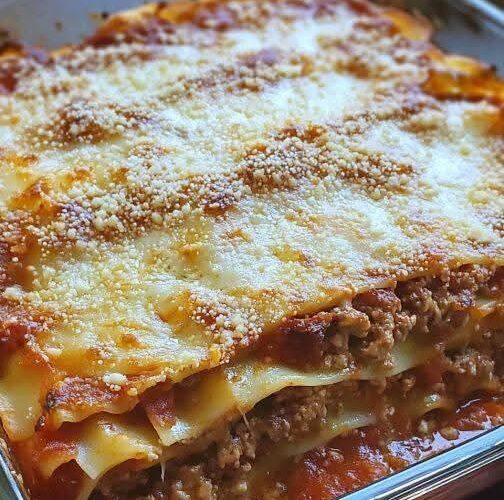
Traditional Beef Lasagna: A Timeless Italian Comfort Classic
Introduction
Traditional beef lasagna stands as one of the most beloved and iconic dishes in Italian cuisine, a layered masterpiece that combines tender pasta sheets, rich meat sauce, creamy cheeses, and bubbling toppings into a symphony of flavors and textures. This hearty baked pasta dish has warmed the hearts and filled the bellies of families for generations, evoking memories of Sunday dinners, holiday gatherings, and cozy evenings at home. What makes traditional beef lasagna so enduringly popular is its perfect balance of savory ground beef simmered in tomato sauce, the smoothness of ricotta cheese blended with egg, the melt-in-your-mouth quality of mozzarella, and the sharp tang of Parmesan crowning the top. It is a dish that transcends simple nourishment, becoming a symbol of comfort, indulgence, and shared joy around the table.
The version we explore here is rooted in the Italian-American tradition, which often features a robust beef ragù paired with ricotta cheese, differing slightly from the northern Italian styles that incorporate béchamel sauce. Yet, at its core, lasagna represents the ingenuity of Italian cooking—transforming basic ingredients into something extraordinary through careful layering and slow baking. Whether you’re a seasoned home cook or preparing this for the first time, traditional beef lasagna offers a rewarding culinary experience. The aroma filling your kitchen as it bakes, with cheese bubbling and edges crisping to golden perfection, is unmatched. This comprehensive guide will walk you through every aspect, from its fascinating origins to precise ingredients, expert tips, step-by-step instructions, sensory descriptions, nutritional insights, and more, ensuring your lasagna turns out flawless every time.
In a world of quick meals and fleeting trends, traditional beef lasagna reminds us of the value of slow-cooked, heartfelt food. It serves a crowd effortlessly, reheats beautifully for leftovers, and freezes well for future indulgence. As we delve deeper, you’ll discover why this dish has captivated palates worldwide and how you can master it in your own kitchen, creating memories that linger long after the last bite.
Origin
The origins of lasagna trace back to ancient times, with roots deeply embedded in Mediterranean history, evolving over centuries into the beloved dish we know today. The name “lasagna” derives from the Greek word “laganon,” referring to flat sheets of dough cut into strips—the earliest form of pasta, dating as far back as the 4th century BC in Etruscan tombs near Rome, where frescoes depict tools for making thin pasta sheets and banquet scenes featuring layered dishes. Ancient Romans adopted this concept, describing a similar preparation in the 1st-century cookbook “De Re Coquinaria” by Apicius, where layers of dough alternated with meats, sauces, and spices in a vessel called “lasanum,” meaning pot or container. This early version was more like a pasta casserole, often spiced with exotic ingredients and even sweetened in some medieval adaptations.
By the Middle Ages, lasagna appeared in written records across Italy, with one of the oldest references in a 1282 Bolognese ballad and a 1284 chronicle mentioning “lagana cum caseo”—lasagna with cheese. The 14th-century “Liber de Coquina” included recipes for boiled flattened dough sprinkled with cheese and spices, reflecting the dish’s growing popularity despite pasta being a luxury item. Regional variations emerged early: in northern Italy, particularly Emilia-Romagna, lasagna incorporated ragù (a slow-cooked meat sauce) and béchamel, while southern versions leaned toward ricotta and mozzarella. Tomatoes, now essential, didn’t appear until the late 19th century after their introduction from the Americas, transforming the dish with vibrant red sauce.
The modern baked lasagna al forno solidified in the 19th and 20th centuries, with Bologna claiming the “official” green spinach pasta version registered by the Accademia Italiana della Cucina. Neapolitan lasagna di Carnevale added meatballs and eggs for festive flair. Italian immigrants brought these traditions to America in the late 1800s, adapting them with accessible ingredients like ground beef and jarred sauce, popularizing the ricotta-heavy beef lasagna we often enjoy today. Despite occasional claims from Britain or elsewhere based on similar medieval recipes, lasagna’s true heritage is undeniably Italian, a testament to the country’s rich culinary evolution from ancient grains to layered perfection.
This historical journey highlights lasagna’s adaptability, surviving conquests, migrations, and ingredient discoveries while remaining a staple of Italian identity. Understanding its origins adds depth to every forkful, connecting us to centuries of cooks who layered love into this enduring classic.
Cultural Significance
Lasagna holds profound cultural significance in Italian cuisine, embodying the essence of family, tradition, and regional pride that defines Italy’s gastronomic heritage. Often reserved for Sundays, holidays like Christmas Eve or Carnival, and special gatherings, it symbolizes abundance and togetherness, with Nonna or family matriarchs passing down recipes through generations. In Bologna, the green spinach-infused pasta with ragù and béchamel represents Emilia-Romagna’s rich dairy and meat traditions, while Naples’ lavish Carnevale version loaded with sausages and eggs celebrates indulgence before Lent. These regional differences underscore Italy’s diverse culinary landscape, where lasagna adapts yet retains its layered soul.
Beyond Italy, lasagna became a cornerstone of Italian-American culture, introduced by immigrants and evolving into a comfort food icon in homes and restaurants worldwide. It represents immigrant resilience—simple, affordable ingredients stretched to feed large families—while evoking nostalgia for the old country. In popular culture, lasagna appears in films, books, and memes as the ultimate home-cooked meal, often tied to themes of love and community. Chefs like Massimo Bottura reinterpret it artistically, honoring tradition while innovating.
Culturally, lasagna teaches patience and care: the slow simmering of sauce, precise layering, and resting time mirror life’s rewarding rhythms. It’s a dish that brings people together, fostering conversation and connection over shared slices. In a fast-paced world, preparing lasagna reaffirms the importance of mindful cooking and communal eating, making it more than food—it’s a cultural ritual celebrating heritage, hospitality, and heartfelt indulgence.
Ingredients Quantity
For a traditional beef lasagna serving 8-12 people in a 9×13-inch baking dish, precise quantities ensure balanced layers and flavors. Here’s the detailed list based on the classic recipe:
- Lasagna noodles – 9 sheets (standard dry variety; enough for three layers)
- Ground beef – 1 lb (preferably 80/20 for juiciness and flavor)
- Small onion, finely chopped – 1 (about 1 cup chopped)
- Garlic, minced – 2 cloves (approximately 2 teaspoons)
- Marinara sauce – 1 jar (24 oz; choose a high-quality brand or homemade for best taste)
- Ricotta cheese – 1 container (15 oz; whole milk for creaminess)
- Egg – 1 large (to bind the ricotta mixture)
- Shredded mozzarella cheese – 2 cups (divided for layers and topping; low-moisture recommended)
- Grated Parmesan cheese – ½ cup (freshly grated for superior flavor)
- Olive oil – 1 tablespoon (for sautéing)
- Salt and black pepper – to taste (start with 1 teaspoon salt and ½ teaspoon pepper, adjust as needed)
These quantities yield a lasagna with three noodle layers, generous meat sauce, and cheesy richness without overwhelming the dish. The ground beef provides hearty protein, while the cheeses create that signature creamy, melty texture. Using fresh ingredients elevates the final result immensely.
Optional Additions
While the core recipe shines in its simplicity, optional additions can personalize your traditional beef lasagna, adding depth, nutrition, or flair without straying too far from tradition. Common enhancements include incorporating Italian sausage (½ lb mixed with the beef) for extra spice and richness, or sautéed vegetables like spinach (10 oz thawed and drained), mushrooms (8 oz sliced and cooked), or bell peppers for earthy notes and added moisture control. Fresh herbs such as basil (¼ cup chopped) or parsley stirred into the ricotta elevate freshness, while a dash of red pepper flakes or fennel seeds in the meat sauce introduces subtle heat.
For a more authentic northern twist, substitute or add a layer of béchamel sauce made from butter, flour, milk, and nutmeg. Some cooks include hard-boiled eggs (sliced) in Neapolitan style or small meatballs for textural variety. A splash of red wine (½ cup) deglazed into the beef sauce deepens flavor. These additions allow creativity while honoring the dish’s versatility—experiment to suit your taste, but start small to maintain balance.
Tips for Success
Achieving perfect traditional beef lasagna requires attention to detail, but these tips ensure success every time. First, cook noodles al dente and lay them flat on parchment or oiled foil to prevent sticking; alternatively, use no-boil noodles with extra sauce for ease. Brown the beef thoroughly, draining excess fat to avoid greasiness, and simmer the sauce longer (20-30 minutes) for concentrated flavors. Season generously at each step—taste the meat sauce and ricotta mixture before assembling.
Layer thoughtfully: start with a thin sauce base to prevent sticking, overlap noodles slightly, and distribute fillings evenly for uniform slices. Use whole-milk cheeses for better melt and creaminess; freshly grate Parmesan for superior taste. Cover with foil initially to steam, then uncover for a golden, bubbly top—watch closely to avoid burning. Crucially, rest the baked lasagna for 10-20 minutes; this sets the layers, making cutting cleaner and flavors meld deeper.
Make ahead by assembling and refrigerating overnight—flavors improve—or freeze unbaked for up to 3 months. Use a deep dish to accommodate layers, and quality marinara saves time without sacrificing taste. These strategies transform good lasagna into extraordinary.
Instructions
Follow these detailed steps for flawless traditional beef lasagna.
Step 1: Prepare the oven and noodles. Preheat your oven to 375°F (190°C) to ensure even baking. Bring a large pot of salted water to a boil and cook the 9 lasagna noodles according to package directions until al dente—typically 8-10 minutes. Drain carefully, rinse briefly with cool water to stop cooking, and lay them flat on parchment paper or lightly oiled foil to prevent sticking and tearing. This step is crucial for easy assembly.
Step 2: Cook the onion, garlic, and beef. In a large skillet, heat 1 tablespoon olive oil over medium heat. Add the finely chopped onion and cook for 4-5 minutes until soft and translucent, stirring occasionally. Stir in the 2 minced garlic cloves and sauté for 1 minute until fragrant, avoiding burning. Add the 1 lb ground beef, breaking it up with a spoon, and cook until fully browned—about 8-10 minutes. Drain any excess grease to keep the sauce from becoming oily.
Step 3: Simmer the sauce. Pour the 24 oz jar of marinara sauce into the skillet with the beef mixture. Stir well to combine, reduce heat to low, and simmer for 10-15 minutes, allowing flavors to meld. Season generously with salt and black pepper to taste—start with 1 teaspoon salt and adjust. For deeper flavor, simmer longer or add herbs like oregano.
Step 4: Mix the ricotta filling. In a medium bowl, combine the 15 oz ricotta cheese with 1 beaten egg. Whisk until smooth and creamy; this binds the filling and prevents graininess. Season lightly with salt and pepper if desired.
Step 5: Assemble the lasagna. In a 9×13-inch baking dish, spread a thin layer of meat sauce (about 1 cup) on the bottom to prevent sticking. Place 3 noodles lengthwise over the sauce. Spread half the ricotta mixture evenly, then sprinkle ⅔ cup mozzarella. Add another layer of meat sauce (about 1½ cups). Repeat: 3 noodles, remaining ricotta, ⅔ cup mozzarella, more meat sauce. Top with final 3 noodles and remaining meat sauce.
Step 6: Add cheese and bake. Sprinkle the remaining mozzarella (about ⅔ cup) and ½ cup Parmesan evenly over the top. Cover tightly with aluminum foil (spray foil with oil to avoid sticking) and bake for 25 minutes.
Step 7: Brown the top. Remove foil and bake an additional 15-20 minutes until cheese is melted, bubbly, and lightly golden—broil briefly if needed for extra crisp.
Step 8: Rest and serve. Remove from oven and let rest 10-15 minutes minimum (20 is ideal) for clean slices. Garnish with fresh basil if desired and serve hot.
These steps yield a beautifully structured lasagna with defined layers and irresistible appeal.
Description
Traditional beef lasagna is a visual and sensory delight, a rectangular masterpiece emerging from the oven with a golden, bubbly cheese topping speckled with browned spots and crisp edges that promise crunch. Cutting into it reveals distinct layers: tender pasta sheets alternating with rich, reddish-brown meat sauce flecked with onions and beef crumbles, creamy white ricotta pockets, and stretches of melted mozzarella pulling apart in gooey strings. The aroma is intoxicating—savory beef mingled with garlic, tomato tang, and toasted cheese wafting through the air, drawing everyone to the table.
Each bite offers textural harmony: al dente noodles yielding to juicy, flavorful beef sauce with subtle sweetness from onions and depth from garlic. The ricotta adds cool creaminess, mozzarella brings melty indulgence, and Parmesan lends nutty sharpness. It’s hearty yet balanced, comforting without heaviness when rested properly. Served steaming, it pairs beautifully with garlic bread, salad, or wine, leaving diners satisfied and reminiscing about home-cooked perfection.
Nutritional Information
Traditional beef lasagna is indulgent yet provides substantial nutrition. Per serving (based on 12 servings from a 9×13 dish, approximately 300-400g):
- Calories: 400-550
- Protein: 25-35g (from beef and cheeses)
- Carbohydrates: 35-50g (mainly from noodles and sauce)
- Fat: 20-35g (saturated from cheeses and beef)
- Fiber: 3-5g
- Key nutrients: Calcium (from cheeses), iron and zinc (from beef), vitamins from tomato sauce (lycopene, vitamin C).
Values vary by exact ingredients and portion; using lean beef or part-skim cheese reduces calories/fat. It’s a balanced meal with protein, carbs, and veggies in sauce, but best enjoyed in moderation as part of a varied diet.
Conclusion
Traditional beef lasagna encapsulates the magic of Italian cooking—simple components transformed through care into an unforgettable dish. From ancient roots to modern tables, it endures as a beacon of comfort, tradition, and joy. Mastering this recipe connects you to culinary history while creating new memories with loved ones. Whether for a quiet dinner or grand celebration, lasagna delivers satisfaction that’s hard to match.
Recommendation
I wholeheartedly recommend making this traditional beef lasagna your go-to for gatherings or meal prep—it’s crowd-pleasing, versatile, and improves with time. Pair with a crisp green salad, crusty bread, and red wine for an authentic Italian feast. Experiment confidently, but cherish the classic—it’s timeless for a reason.
Embracing Healthful Indulgence
While richly satisfying, traditional beef lasagna can embrace healthful indulgence with mindful tweaks: opt for lean ground beef or turkey, whole wheat noodles for fiber, reduced-fat cheeses, and extra veggies in the sauce. Portion control and balanced sides keep it nourishing. Ultimately, lasagna teaches that true indulgence lies in quality ingredients, shared moments, and occasional treats—savor it guilt-free as part of a joyful, balanced life.