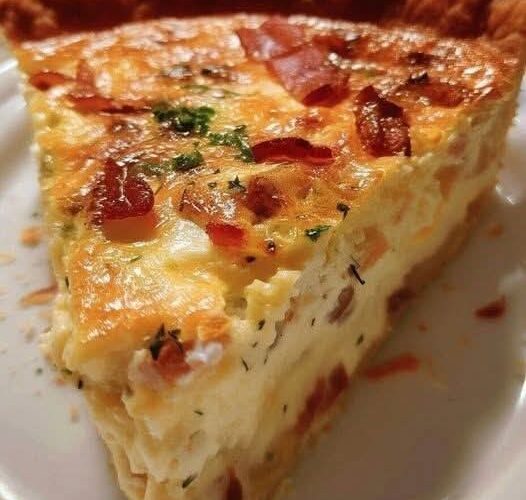
Three Cheese Quiche: A Creamy, Elegant Classic
Introduction
Three Cheese Quiche is a luxurious and versatile dish that showcases the perfect harmony of a flaky, buttery crust filled with a silky custard enriched by the bold flavors of Gruyere, Swiss, and Cheddar cheeses. This recipe elevates the traditional quiche by blending three distinct cheeses, each contributing unique notes—Gruyere’s nutty sophistication, Swiss’s mild creaminess, and Cheddar’s sharp tang—resulting in a rich, melt-in-your-mouth experience. Ideal for brunch, lunch, or a light dinner, it pairs beautifully with fresh salads or fruits, making it a crowd-pleaser for gatherings or quiet meals alike. The custard, made from eggs, heavy cream, and whole milk, is delicately seasoned with salt, pepper, and a hint of nutmeg, which adds warmth and depth without overpowering the cheeses. What sets this quiche apart is its simplicity in preparation combined with gourmet results; even with a store-bought crust, it feels homemade and indulgent. Blind-baking the crust ensures it remains crisp, preventing sogginess, while the baking process creates a golden, puffed top that defies its humble ingredients. This dish embodies comfort food with a touch of elegance, inviting cooks of all levels to create something truly special.
The appeal of Three Cheese Quiche lies in its adaptability and timeless charm, ready in about an hour with minimal active time. It offers a satisfying balance of textures—crisp crust contrasting with creamy filling—and flavors that develop beautifully as it cools slightly, allowing the cheeses to shine. In a world of quick meals, this quiche encourages slowing down to enjoy the baking aroma that fills the home, evoking French cafés and family brunches. As we delve into its history, cultural role, and preparation details, you’ll see why Three Cheese Quiche remains a beloved staple, blending tradition with modern convenience.
Origin and Cultural Significance
The origins of quiche trace back to the medieval kingdom of Lothringen, in what is now the Lorraine region of France, under German rule at the time—the name “quiche” derives from the German “kuchen,” meaning cake. The earliest version, Quiche Lorraine, was a simple open pie with a custard of eggs and cream baked in a bread dough crust, often including smoked bacon or lardons. By the 16th century, it evolved with the addition of cheese, though traditionalists argue that true Quiche Lorraine contains no cheese, reserving that for variations. The dish gained widespread popularity in France during the 19th and 20th centuries, becoming a staple in Alsace-Lorraine cuisine, where it was served as a hearty, economical meal using pantry staples.
Culturally, quiche symbolizes French provincial cooking—rustic yet refined—with Quiche Lorraine achieving protected status in Europe for its authentic preparation. It crossed the Atlantic in the mid-20th century, booming in popularity in the United States during the 1970s and 1980s as part of the brunch craze, though it briefly suffered from the infamous “Real men don’t eat quiche” stereotype in the 1980s book of the same name, which poked fun at changing gender norms. Today, quiche has reclaimed its status as inclusive and versatile, featured in cafés worldwide. The three-cheese variation reflects modern adaptations, drawing from French cheese traditions where Gruyere and Swiss (Emmental) are Alpine staples, prized for melting qualities, combined with Cheddar’s British-American sharpness for broader appeal.
In global contexts, quiche represents adaptability: in Britain, it’s akin to egg tarts; in Italy, similar to torta pasqualina; and in Latin America, pastel de choclo shares custard elements. Socially, it’s associated with elegance—perfect for Mother’s Day brunches, baby showers, or Easter—and promotes communal dining, as one quiche serves many. This Three Cheese Quiche honors its Lorraine roots while embracing cheese-forward innovations, celebrating the fusion of cultures through food.
Ingredients Quantity
Three Cheese Quiche relies on a short list of high-quality ingredients to create its signature richness, serving 6-8 people. For the crust: one 9-inch pie crust, either store-bought for convenience or homemade for superior flakiness. The filling starts with 3 eggs, providing structure and richness to the custard. Combine 1/2 cup heavy cream and 1/2 cup whole milk for a creamy yet light texture—using all cream would be too heavy, while all milk might lack decadence. Seasonings include 1/2 teaspoon salt, 1/4 teaspoon black pepper, and 1/4 teaspoon nutmeg, the latter adding a subtle, traditional warmth that enhances the cheeses without dominating.
The stars are the cheeses: 1/2 cup grated Gruyere for nutty depth, 1/2 cup grated Swiss (preferably Emmental) for mild sweetness and excellent melt, and 1/2 cup grated Cheddar for sharp contrast and golden color. These quantities—1.5 cups total—ensure cheesy goodness in every bite without overwhelming the delicate custard. Freshly grated cheese is recommended for better melting and flavor over pre-shredded varieties.
These precise amounts balance flavors and textures perfectly, creating a quiche that’s luxurious but not overly dense.
Optional Additions
The basic Three Cheese Quiche is sublime on its own, but optional additions can elevate it further. Sautéed vegetables like spinach, mushrooms, onions, or leeks add earthiness and nutrition—about 1 cup cooked and drained to avoid excess moisture. For a nod to classic Quiche Lorraine, include 1/2 cup cooked bacon or ham. Herbs such as chives, thyme, or parsley (1-2 tablespoons fresh) brighten the filling.
For variety, try caramelized onions for sweetness or broccoli florets for texture. A dash of hot sauce or cayenne in the custard adds subtle heat. Top with extra cheese or tomatoes before baking for visual appeal. These options keep the dish vegetarian-friendly while allowing personalization.
Tips for Success
Mastering Three Cheese Quiche involves techniques to ensure a crisp crust and set filling. Blind-bake the crust thoroughly—10 minutes with weights, then 5 without—to prevent sogginess; under-baking leads to a gummy base. Use room-temperature ingredients for smoother custard whisking and even baking. Grate cheeses fresh for optimal melt and flavor.
Whisk the custard gently to avoid incorporating too much air, which can cause bubbling or cracking. Bake on the lower oven rack for even browning, and check doneness with a knife—it should emerge clean. If the top browns too quickly, tent with foil. Let the quiche rest 10-15 minutes post-baking; this sets the filling for clean slices.
For make-ahead, assemble and refrigerate unbaked, then bake fresh. Freeze baked slices for quick reheats. These tips guarantee professional results every time.
Instructions
Achieve perfect Three Cheese Quiche with these step-by-step instructions.
- Prepare the Crust: Preheat oven to 375°F (190°C). Fit the 9-inch pie crust into a dish, crimping edges if desired. Line with parchment and fill with pie weights or beans. Bake 10 minutes, remove weights and parchment, then bake 5 more minutes until lightly golden. Cool slightly.
- Make the Filling: In a bowl, whisk 3 eggs, 1/2 cup heavy cream, and 1/2 cup whole milk until smooth. Add 1/2 teaspoon salt, 1/4 teaspoon black pepper, and 1/4 teaspoon nutmeg; whisk to combine.
- Assemble and Bake: Sprinkle 1/2 cup each grated Gruyere, Swiss, and Cheddar evenly over the crust. Pour the custard mixture over the cheese gently. Bake 35-40 minutes until set and golden; the center should jiggle slightly but a knife inserted comes out clean.
- Serve: Cool 10 minutes on a rack. Slice into wedges and serve warm with salad or vegetables.
Follow precisely for flawless texture and flavor.
Description
Three Cheese Quiche is a visual and sensory masterpiece: a golden-brown crust encasing a puffed, creamy filling dotted with melted cheese pockets. As it bakes, the kitchen fills with the comforting aroma of custard and nutty cheeses, with nutmeg’s subtle spice wafting through. The top develops a beautifully blistered, appetizing hue from the Cheddar.
Sliced, it reveals a silky, velvety interior—firm yet tender—with layers of cheese creating gooey surprises. Flavor-wise, it’s harmonious: creamy custard base with Gruyere’s sophisticated nuttiness, Swiss’s gentle melt, and Cheddar’s bold sharpness, all accented by pepper and nutmeg. Texturally, the flaky crust contrasts the smooth filling perfectly.
Served warm, it’s comforting and elegant, ideal with crisp greens for balance.
Nutritional Information
Three Cheese Quiche is indulgent yet provides balanced nutrition per slice (1/8 of quiche): approximately 300-350 calories, with high-quality protein from eggs and cheese. Protein: 12-15 grams, aiding satiety. Fats: 20-25 grams (mostly saturated from cream and cheese), offering energy but best in moderation. Carbohydrates: 15-20 grams, primarily from the crust.
It delivers calcium, vitamin A, and B vitamins for bone health and energy. Nutmeg adds trace antioxidants. While rich, portion control and vegetable pairings make it part of a healthful diet.
Conclusion and Recommendation
Three Cheese Quiche beautifully merges tradition and taste, delivering creamy elegance in every bite. From Lorraine origins to modern tables, it remains a versatile favorite.
Highly recommend for any occasion—impress guests or treat yourself.
Embracing Healthful Indulgence
Three Cheese Quiche exemplifies mindful enjoyment: nutrient-dense eggs and cheeses provide protein and calcium, while controlled portions allow savoring richness. Pair with greens for fiber and vitamins, turning indulgence into balanced nourishment—proof that delicious can be wholesome.