Introduction
Lemon Chicken Soup, widely recognized in its Greek form as Avgolemono, stands as a beacon of comfort food across Mediterranean cultures, offering a unique blend of tangy brightness and creamy richness that sets it apart from more familiar chicken soups around the world. This dish masterfully combines the soothing warmth of chicken broth with the invigorating zest of fresh lemon juice, thickened to a velvety consistency through the ingenious use of eggs, creating a soup that feels both nourishing and refreshingly light on the palate. Often hailed as “Greek penicillin” for its restorative qualities, Avgolemono has earned a place in kitchens not just for its flavor but for its ability to uplift the spirit on dreary days or soothe during times of illness.
At its core, this soup embodies the essence of Mediterranean cuisine: simple, high-quality ingredients transformed into something extraordinary through thoughtful technique. The addition of orzo or rice provides heartiness, while shredded chicken adds protein and substance, making it a complete meal in a bowl. Fresh herbs like dill bring an aromatic freshness that complements the lemon’s acidity perfectly. Unlike heavier cream-based soups, Avgolemono achieves its silkiness without dairy, relying instead on the emulsion of eggs and lemon—a method that highlights the region’s preference for clean, vibrant flavors.
This recipe draws from traditional Greek preparations but incorporates accessible modern twists, such as using pre-cooked chicken or store-bought broth for convenience without sacrificing authenticity. Whether you’re a seasoned cook exploring Mediterranean classics or a beginner seeking a forgiving yet impressive dish, Lemon Chicken Soup promises satisfaction. It’s versatile enough for weeknight dinners, elegant for entertaining, and therapeutic when comfort is needed most. In the sections ahead, we’ll delve deep into its fascinating history, precise ingredients, expert tips, and more, guiding you to create a pot that rivals any taverna’s offering.
Origin
The origins of Lemon Chicken Soup, or Avgolemono, trace back far beyond modern Greece, revealing a rich tapestry of cultural exchanges across the Mediterranean and beyond. While today it’s iconic in Greek cuisine, food historians largely agree that its roots lie in Sephardic Jewish cooking, specifically a sauce known as agristada or salsa blanca, developed in Iberia before the 1492 expulsion of Jews from Spain. This precursor used eggs and an acidic component—initially verjuice, pomegranate juice, or bitter oranges—to create a tangy, thickening emulsion served with fish, vegetables, or meats.
As Sephardic Jews dispersed throughout the Ottoman Empire following the Inquisition, they carried agristada to regions including modern-day Turkey, the Balkans, Italy, and Greece. In these new homes, the sauce adapted to local tastes and ingredients, with lemon becoming the preferred acid as citrus spread across the Mediterranean. Ottoman cuisine, already fond of sour flavors from plums and pomegranates, embraced this technique, leading to variants like Turkish terbiye. Over centuries, it evolved into the Greek avgolemono—literally “egg-lemon”—a versatile preparation used not just as a sauce but as the foundation for soups and stews.
In Greece, Avgolemono soup emerged as a beloved staple, often starting with homemade chicken broth enriched with rice or orzo, then finished with the signature egg-lemon mixture for creaminess. Variations appear across the region: in Turkey for thickening meats, in Italy influencing similar egg-lemon sauces, and even persisting in Sephardic communities today as a Yom Kippur fast-breaker due to its gentle, restorative nature. Some accounts link it to ancient sour sauces, but most evidence points to this post-medieval migration.
By the 19th and 20th centuries, Avgolemono had firmly embedded itself in Greek identity, appearing in family meals, festive occasions like Easter (in magiritsa, a lamb offal version), and everyday comfort food. Greek immigrants brought it to America, where it’s now a diner staple, though often adapted. This journey from Iberian Jewish kitchens to global tables illustrates how food travels with people, adapting yet retaining its core magic—a testament to cultural resilience and culinary innovation.
Cultural Significance
Lemon Chicken Soup holds profound cultural significance in Greek and broader Mediterranean societies, transcending mere sustenance to become a symbol of hospitality, healing, and tradition. In Greece, Avgolemono is more than a dish; it’s woven into the fabric of daily life and rituals, often prepared by grandmothers (yiayias) as a remedy for colds, fatigue, or emotional lows—earning its nickname as nature’s cure-all. Its light yet nourishing profile aligns with Orthodox fasting practices, where dairy-free versions fit Lenten restrictions, while egg-inclusive ones mark celebratory breaks.
Culturally, it represents the Greek ethos of philoxenia—warm welcoming of guests—with a steaming bowl offered to visitors as a gesture of care. At Easter, a variant called magiritsa uses lamb innards in avgolemono broth to gently reintroduce rich foods after Lent’s austerity. Weddings, baptisms, and family gatherings frequently feature it, evoking nostalgia and connection across generations. In Sephardic Jewish tradition, its ancestor agristada remains a cornerstone, used to break fasts delicately due to its soothing qualities.
Beyond Greece, similar egg-lemon preparations underscore shared Mediterranean heritage: Turkish terbiye thickens dishes, reflecting Ottoman influences, while Italian versions appear in artisanal cooking. In modern contexts, Avgolemono embodies healthful indulgence, aligning with the Mediterranean diet’s emphasis on fresh ingredients, balance, and longevity—proven to support heart health and immunity.
In diaspora communities, it preserves identity; Greek-Americans cherish it as a taste of home, while its popularity in restaurants introduces others to Hellenic warmth. Ultimately, this soup signifies resilience—born from migration, adapted through history—reminding us that food fosters community, heals body and soul, and carries stories through time.
Ingredients Quantity
To prepare a flavorful Lemon Chicken Soup (Avgolemono) serving 6-8 people, gather these precise ingredients, scaled for a hearty pot. Using high-quality, fresh components ensures the best results—opt for organic chicken and freshly squeezed lemons whenever possible.
For the base soup:
- 2 tablespoons extra-virgin olive oil, for sautéing aromatics and adding Mediterranean richness.
- 1 medium yellow onion, finely chopped (about 1 cup), providing foundational sweetness and depth.
- 2 celery stalks, diced (about 1 cup), contributing subtle crunch and herbal notes.
- 2 medium carrots, diced (optional traditional addition, about 1 cup), for natural sweetness and color.
- 3 cloves garlic, minced, infusing aromatic warmth without overpowering.
- 1 teaspoon dried oregano, releasing earthy, herbal essence during cooking.
- ½ teaspoon ground turmeric (optional), imparting golden hue and subtle anti-inflammatory earthiness.
- 8 cups (2 quarts) low-sodium chicken broth, preferably homemade for superior flavor, or high-quality store-bought.
- 3 cups cooked shredded chicken (from a rotisserie chicken or poached breasts/thighs), offering tender protein.
- 1 cup uncooked orzo pasta (or substitute with Arborio rice for classic texture), absorbing broth and adding heartiness.
- Salt and freshly ground black pepper, to taste, for final seasoning balance.
For the Avgolemono sauce (the star thickener):
- 3 large eggs, at room temperature, essential for silky emulsion.
- Juice of 3 large lemons (about ½-¾ cup freshly squeezed), delivering bright tang—adjust to preference.
- Fresh dill, chopped (¼ cup for garnish, plus more if desired), bringing fresh, anise-like brightness.
- Lemon wedges, for serving, allowing diners to customize acidity.
These quantities yield a balanced soup: brothy yet substantial, tangy but not overwhelming. Scaling up or down is straightforward—maintain ratios for consistency.
Optional Additions
While the classic recipe shines in simplicity, optional additions allow personalization without straying from tradition. Consider these enhancements to suit tastes, dietary needs, or seasonal availability.
Vegetables for extra nutrition: Add 1 cup diced carrots during sautéing for sweetness, or incorporate spinach/kale in the final minutes for greens’ earthiness and vitamins. Peas or zucchini offer lightness.
Herbs and spices: Beyond dill, fresh parsley substitutes well, or add thyme/bay leaves to broth for depth. A pinch of red pepper flakes introduces gentle heat.
Grain alternatives: Swap orzo for short-grain rice (traditional in many Greek homes), farro for nuttiness, or quinoa for gluten-free protein boost.
Protein variations: For vegetarian, replace chicken with chickpeas/tofu and vegetable broth. Seafood versions use fish stock and shrimp.
Creamier texture: A splash of heavy cream post-tempering adds indulgence, though purists avoid dairy.
Flavor boosters: Zest from lemons grated into broth heightens citrus aroma. A dash of white wine during sautéing deglazes for complexity.
These options keep the soup versatile—spicy for adventure, veggie-packed for health, or minimalist for authenticity.
Tips for Success
Mastering Lemon Chicken Soup hinges on technique, particularly the delicate avgolemono sauce. Follow these expert tips to avoid common pitfalls and achieve restaurant-quality results every time.
Temper eggs properly: Whisk eggs and lemon vigorously until frothy, then slowly drizzle in 1-2 cups hot broth while whisking constantly—this raises temperature gradually, preventing curdling into scrambled bits.
Use fresh ingredients: Freshly squeezed lemon juice is non-negotiable for vibrant flavor; bottled lacks punch. Room-temperature eggs emulsify better.
Control heat: After adding egg mixture, warm gently over low heat—never boil, as high temperatures break emulsion, turning soup watery or grainy.
Whisk relentlessly: During tempering and incorporation, constant whisking ensures smoothness. A damp towel under bowl stabilizes for one-handed pouring.
Start with quality broth: Homemade from chicken bones yields richest taste; if using store-bought, low-sodium allows seasoning control.
Adjust lemon gradually: Taste before finalizing—start conservative, add more juice if needed for tang.
Cook pasta separately if reheating: Orzo absorbs liquid over time; cooking al dente in broth is ideal fresh, but separate prevents mushiness in leftovers.
Garnish generously: Fresh dill and lemon wedges elevate presentation and flavor—encourage guests to squeeze extra.
With practice, these steps become intuitive, yielding consistently silky, bright soup.
Instructions
Follow this detailed step-by-step guide to create perfect Lemon Chicken Soup. Preparation takes about 45 minutes, ideal for beginners yet rewarding for experts.
Begin by preparing ingredients: Finely chop onion, dice celery (and carrots if using), mince garlic, juice lemons (strain seeds), and shred chicken if not pre-cooked. Have eggs at room temperature.
Heat 2 tablespoons olive oil in large Dutch oven or pot over medium heat. Add onion, celery, and carrots; sauté 5-7 minutes until softened and translucent, stirring occasionally to prevent browning.
Add minced garlic, dried oregano, and optional turmeric; cook 1-2 minutes until fragrant, releasing essential oils without burning garlic.
Pour in 8 cups chicken broth and add shredded chicken. Increase heat to bring gentle simmer—avoid rapid boil for clear broth.
Stir in 1 cup orzo (or rice). Reduce heat to medium-low; cook 8-12 minutes until pasta tender, stirring occasionally to prevent sticking. Taste broth; season with salt and pepper.
While orzo cooks, prepare avgolemono: In medium bowl, whisk 3 eggs vigorously until pale and frothy, about 2 minutes. Gradually whisk in lemon juice until smooth and combined.
Temper mixture: Ladle 1-2 cups hot broth slowly into egg-lemon bowl, whisking constantly to prevent curdling. Repeat with another ladle if needed until mixture warm.
Remove pot from heat briefly. Slowly pour tempered egg mixture back into soup pot, stirring gently in one direction for even distribution.
Return to very low heat; cook 3-5 minutes, stirring frequently, until soup thickens slightly to silky consistency—do not boil.
Taste and adjust: Add more lemon juice for tang, salt/pepper as needed. Stir in half chopped dill.
Serve immediately: Ladle into bowls, garnish with remaining dill and lemon wedges. Enjoy with crusty bread or salad.
This method ensures foolproof creaminess and bold flavor.
Description
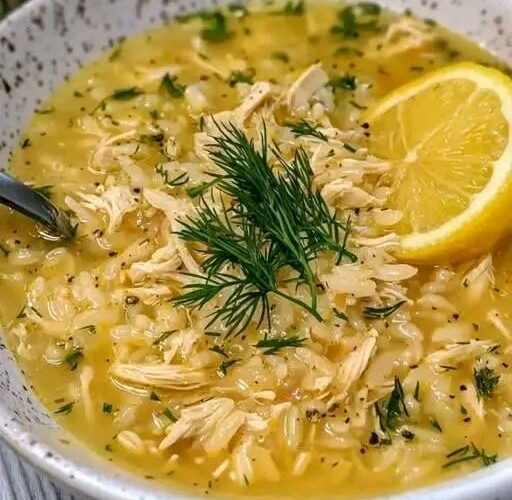
Lemon Chicken Soup captivates with its multifaceted sensory appeal: visually golden and inviting, texturally velvety yet studded with tender elements, and flavor-wise a harmonious dance of contrasts. The broth gleams with sunny hue from turmeric and lemon, thickened to luxurious silkiness that coats the spoon without heaviness.
Each spoonful delivers bright, tangy lemon cutting through rich chicken savoriness, balanced by subtle herbal notes from dill and oregano. Shredded chicken provides satisfying bites, while orzo (or rice) adds comforting chew and absorbs flavors deeply.
Aromatically, fresh dill wafts anise-like freshness, mingling with citrus zest and gentle garlic undertones. Temperature-wise, served piping hot, it warms from within, steam carrying invigorating scents.
Unlike bland chicken soups, this version feels alive—refreshing yet substantial, elegant yet homey. The egg-lemon emulsion creates magical creaminess sans dairy, leaving clean, lingering finish that beckons another bowl.
Overall, it’s a symphony: comforting base elevated by Mediterranean vibrancy, perfect for evoking sun-drenched coasts in any kitchen.
Nutritional Information
Lemon Chicken Soup offers impressive nutrition, aligning with healthful Mediterranean principles while delivering comfort. Per 1.5-2 cup serving (based on recipe variations):
Approximately 200-300 calories, primarily from protein and moderate carbs. High-quality protein: 20-35 grams from chicken and eggs, supporting muscle repair, satiety, and immunity.
Carbohydrates: 20-35 grams, mostly from orzo/rice, providing sustained energy; opt for whole grains to boost fiber (3-5 grams per serving).
Fats: Low at 5-10 grams, mainly healthy monounsaturates from olive oil and eggs, with minimal saturated.
Key micronutrients: Abundant vitamin C from lemons (up to 50% daily value), bolstering immune function and collagen. Eggs contribute vitamin D, B12, and choline for brain health.
Chicken broth supplies collagen, gelatin for joint/gut support, plus minerals like zinc. Dill adds antioxidants; overall anti-inflammatory from turmeric (if used).
Low sodium if homemade broth; gluten-free with rice/quinoa swaps. This balanced profile—high protein, moderate carbs, low fat—makes it ideal for weight management, recovery, or daily wellness, embodying “healthful indulgence.”
Conclusion
Lemon Chicken Soup, in its glorious Avgolemono form, encapsulates timeless appeal: a dish that nourishes body, evokes heritage, and delights senses with effortless elegance. From Sephardic origins to Greek icon status, it has journeyed through history, adapting yet retaining soul-soothing essence.
This vibrant twist on classic chicken soup—silky egg-lemon broth enveloping tender chicken, hearty orzo, and fresh herbs—offers comfort without compromise, brightness amid warmth. Whether savored on chilly evenings, shared at gatherings, or sipped for restoration, it delivers profound satisfaction.
Mastering this recipe connects you to generations of cooks who found joy in simple transformations. In a fast-paced world, Avgolemono reminds us of food’s power to heal, unite, and inspire—a true culinary treasure worth cherishing.
Recommendation
I wholeheartedly recommend incorporating Lemon Chicken Soup into your regular rotation—it’s versatile, forgiving, and profoundly rewarding. Start with this recipe for authentic results, then experiment with variations to make it your own.
Pair with warm pita, Greek salad, or crusty bread for complete meal. Ideal for meal prep (reheat gently), potlucks, or impressing guests. For ultimate experience, use homemade broth and abundant fresh lemon.
If seeking comfort classics, this surpasses expectations—try it soon; one bowl may spark lifelong love.
Embracing Healthful Indulgence
Lemon Chicken Soup exemplifies healthful indulgence: decadent creaminess from natural emulsion, bold flavors from wholesome ingredients, all supporting wellness without deprivation. In Mediterranean tradition, food nourishes holistically—body through nutrients, spirit through joy.
This soup’s vitamin C boost, protein richness, and anti-inflammatory elements promote immunity, digestion, and vitality, while its lightness avoids guilt. Embrace it as permission to savor richly yet responsibly, celebrating balance that sustains long, vibrant life.
In every steaming bowl lies invitation to slow down, appreciate simplicity’s depth, and indulge mindfully—a philosophy worth adopting daily.