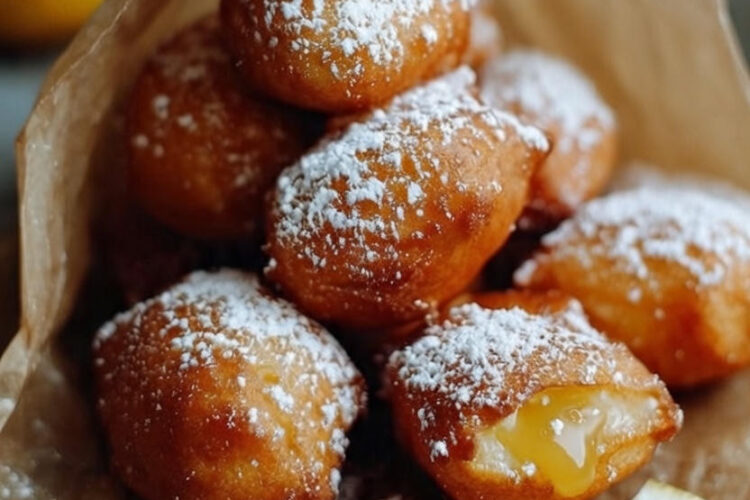
Lemon Curd Beignets: A Delightful Twist on a Classic Treat
Introduction
Lemon curd beignets represent a delightful fusion of two beloved culinary traditions, combining the airy, pillowy texture of classic New Orleans-style beignets with the bright, tangy burst of lemon curd filling. These golden-fried pastries, dusted generously with powdered sugar, offer a perfect balance of sweetness and citrus zest that elevates the humble beignet into something truly special. While traditional beignets are enjoyed plain or simply topped with sugar, filling them with creamy lemon curd adds a layer of indulgence that makes each bite an explosion of flavor. Imagine sinking your teeth into a warm, fluffy dough that gives way to a silky, tart lemon center—it’s a sensory experience that transports you to sunny mornings or festive celebrations.
This recipe draws inspiration from the iconic beignets of Café du Monde in New Orleans, where piles of powdered sugar-covered squares have been a staple since the 19th century, but infuses them with a modern twist using lemon curd. Whether you’re a seasoned baker or a novice in the kitchen, making lemon curd beignets at home is an achievable joy that rewards you with irresistible results. The process involves activating yeast for a light dough, frying to golden perfection, and piping in the vibrant filling. Served warm, these treats are ideal for brunch, dessert, or anytime you crave something comforting yet refreshing.
What makes lemon curd beignets so appealing is their versatility and crowd-pleasing nature. They bridge the gap between rich, fried dough and the lightness of citrus, making them less heavy than chocolate-filled versions while still satisfying that sweet tooth. In a world of endless dessert options, these stand out for their elegant simplicity and homemade charm.
The allure of lemon curd beignets lies not only in their taste but also in the ritual of making them. From the yeasty aroma during rising to the sizzle in hot oil and the final dusting of sugar, every step builds anticipation. This blog post will guide you through every aspect, from history to detailed instructions, ensuring your beignets turn out perfectly every time.
Origin
The story of beignets begins far from the bustling streets of New Orleans, tracing back to ancient fried dough traditions across cultures. Variations of deep-fried pastries have existed since Roman times, with early versions like scriblita—dough fried in fat and drizzled with honey. These evolved through medieval Europe, influenced by Islamic fritters and French refinements. The term “beignet” itself comes from the French word meaning “bump,” referring to the puffed shape after frying.
In France, beignets were made from choux pastry or yeasted dough, often enjoyed during Mardi Gras or as street food. French colonists brought these treats to North America in the 18th century, first to Acadia (now Nova Scotia) and later to Louisiana after the Acadian expulsion by the British. The Acadians, or Cajuns, settled in the bayous, blending their recipes with local Creole influences—African, Spanish, Native American, and Caribbean elements creating a unique Louisiana cuisine.
New Orleans embraced beignets wholeheartedly, transforming them into square, yeast-leavened pillows distinct from European versions. By the 19th century, coffee stands in the French Market served them alongside chicory-laced café au lait. Café du Monde, opening in 1862, popularized the modern beignet: three per order, buried in powdered sugar. Originally called “French Market doughnuts,” they were rebranded as beignets in the mid-20th century to highlight their heritage.
Filled beignets, like our lemon curd version, represent a creative evolution. While traditional New Orleans beignets remain unfilled, variations with jams, creams, or curds have emerged in home kitchens and modern cafes. Lemon curd, a British classic made from lemons, butter, sugar, and eggs, pairs beautifully with the neutral dough, adding a zesty contrast that feels both innovative and timeless.
Cultural Significance
Beignets are more than a pastry in Louisiana—they’re a cultural icon embodying the spirit of New Orleans. Named the official state doughnut in 1986, they symbolize resilience, celebration, and community. In a city shaped by diverse immigrants, beignets reflect the melting pot: French roots adapted by Cajuns and Creoles into everyday comfort food.
At Café du Monde, open 24/7 (except Christmas), locals and tourists alike queue for plates of hot beignets, fostering a sense of shared experience. They’re synonymous with jazz brunches, late-night snacks after revelry, and recovery mornings post-Mardi Gras. The generous powdered sugar dusting evokes snow in a subtropical climate, adding whimsy to the ritual.
Beignets play roles in festivals, from Mardi Gras to the annual Beignet Festival, celebrating variations while honoring tradition. They represent hospitality—offered to guests as a warm welcome. In broader American culture, they’ve become emblematic of Southern indulgence, featured in films, books, and travel guides as a must-try in the Big Easy.
Introducing lemon curd filling honors this adaptability, showing how classic recipes evolve while retaining soul. It brings brightness to the richness, making them suitable for spring brunches or summer gatherings, extending their appeal beyond winter comforts.
Ingredients Quantity
For the Beignet Dough:
- ¾ cup warm milk (110°F) – This activates the yeast perfectly without killing it.
- 2¼ tsp active dry yeast (1 packet) – Provides the lift for airy texture.
- ¼ cup granulated sugar – Sweetens the dough subtly and feeds the yeast.
- 1 large egg – Adds richness and structure.
- 3 Tbsp unsalted butter, melted – Contributes tenderness and flavor.
- 1 tsp vanilla extract – Enhances the overall aroma.
- ½ tsp salt – Balances sweetness.
- 3½ cups all-purpose flour – Forms the base; more may be needed for kneading.
For Frying:
- Vegetable oil – Enough for 3-4 inches in your pot, about 2-3 quarts depending on size.
For Filling & Topping:
- 1–1½ cups lemon curd (store-bought for convenience or homemade for superior taste) – The star filling; use more for generous portions.
- Powdered sugar – At least 2 cups for generous dusting.
These quantities yield about 20-24 beignets, depending on size. The dough is forgiving, allowing adjustments for humidity or altitude.
Homemade lemon curd elevates the recipe: Whisk 4 egg yolks, ⅔ cup sugar, ⅓ cup lemon juice, zest of 2 lemons, and a pinch of salt over low heat until thickened, then stir in 6 Tbsp butter. Chill before using.
Optional Additions
Elevate your lemon curd beignets with these twists to suit tastes or occasions. Add lemon zest (from 1-2 lemons) directly to the dough for an extra citrus pop that infuses every bite with fragrance. This complements the filling without overpowering.
For topping alternatives, drizzle with honey for floral sweetness or a lemon glaze (powdered sugar mixed with lemon juice) for tangy shine instead of plain dusting. A lighter center can be achieved by mixing lemon curd with whipped cream—fold equal parts for airy texture.
Other ideas include incorporating berries: Serve with fresh strawberries or raspberries on the side for natural contrast. For decadence, add a chocolate drizzle post-filling. Or experiment with herbs like thyme in the dough for sophisticated notes.
These options keep the recipe versatile, allowing personalization while staying true to the lemon theme.
Tips for Success
Achieving perfect lemon curd beignets requires attention to key details, starting with yeast activation: Ensure milk is warm (110°F)—too hot kills yeast, too cool delays rising. Wait for foamy proof, about 5-10 minutes.
Knead thoroughly (5-7 minutes) for smooth, elastic dough that yields tender results. Don’t skimp on rising time; let double in a warm spot for optimal airiness.
When rolling, aim for ¼-½ inch thickness—too thin prevents puffing, too thick makes dense beignets. Cut into even squares for uniform cooking.
Oil temperature is crucial: Maintain 350-370°F. Use a thermometer; too low yields greasy beignets, too high burns exteriors before interiors cook. Fry in batches to avoid crowding, which drops temperature.
Fill when slightly cooled to prevent curd melting out. Use a piping bag with small tip for clean injection. Dust sugar immediately before serving for best adhesion.
Safety first: Handle hot oil carefully, use a deep pot, and have a lid nearby for flares.
Instructions
Follow these steps meticulously for flawless lemon curd beignets.
- Activate Yeast: In a large bowl, combine warm milk, yeast, and sugar. Stir gently and let sit 5–10 minutes until foamy and bubbly. This confirms active yeast.
- Make Dough: Add egg, melted butter, vanilla, and salt. Stir until incorporated. Gradually add flour, mixing until a soft dough forms. It should be slightly sticky.
- Knead & Rise: Turn onto floured surface and knead 5–7 minutes until smooth and elastic. Place in greased bowl, cover with plastic or towel, and rise in warm spot 1–1½ hours until doubled.
- Shape Beignets: Punch down dough. Roll to ¼–½ inch thick on floured surface. Cut into 2–3 inch squares using knife or pizza cutter. Cover loosely while heating oil.
- Fry: Heat oil to 350°F in deep pot or Dutch oven. Fry batches, 3-5 squares at a time, turning once, 1–2 minutes per side until golden brown. They puff dramatically.
- Drain and Cool Slightly: Remove with slotted spoon to paper towels. Let cool 5-10 minutes—warm but handleable.
- Fill: Fit piping bag with small tip, fill with lemon curd. Insert into side of each beignet and squeeze gently until filled (feels heavier).
- Finish: Dust generously with powdered sugar. Serve warm for best texture and flavor.
These steps ensure professional results at home.
Description
Lemon curd beignets are a symphony of textures and flavors: The exterior is crisp and golden from frying, giving way to an impossibly light, airy interior dotted with tiny air pockets from proper rising. The lemon curd filling oozes slightly with each bite, delivering a creamy, tangy burst that cuts through the subtle sweetness of the dough.
Visually stunning, they’re blanketed in snowy powdered sugar, often creating a delightful mess—part of the charm. The aroma is intoxicating: yeasty warmth mingled with bright lemon notes. Taste-wise, the balance is exquisite—the neutral, buttery dough acts as a canvas for the vibrant curd, while sugar adds crunch and sweetness.
Compared to plain beignets, the filling adds surprise and sophistication, making them feel gourmet yet approachable. Warm, they’re heavenly; the contrast of hot pastry and cool curd is irresistible.
Nutritional Information
Lemon curd beignets are an indulgent treat, best enjoyed occasionally. A single plain beignet (about 50-60g) typically contains 200-300 calories, with 10-15g fat (mostly from frying), 30-40g carbohydrates (including sugars), and 4-6g protein.
Adding 1-2 Tbsp lemon curd per beignet increases calories by 70-100, adding 10-15g sugar and 2-4g fat. Total per filled beignet: Approximately 300-450 calories, 15-20g fat, 45-60g carbs (25-40g sugars), 5-8g protein.
They’re high in refined carbs and fats, low in fiber or vitamins beyond small amounts from eggs and milk. Lemon curd adds vitamin C from lemons. Moderation is key; pair with coffee or tea for a satisfying but calorie-dense snack.
Conclusion
Lemon curd beignets encapsulate joy in pastry form—a creative homage to tradition with a refreshing twist. From their historical roots to your kitchen table, they’ve journeyed far, delighting generations. Mastering this recipe brings a piece of New Orleans magic home, infused with citrus sunshine.
Whether for holidays, brunches, or simple indulgence, they create memories. The effort yields profound rewards: warm, filled pillows that vanish quickly amid smiles.
Recommendation
I highly recommend trying lemon curd beignets soon—perhaps for a weekend treat or special gathering. Start with store-bought curd for ease, then graduate to homemade. Pair with café au lait for authenticity.
Share with loved ones; the messier, the better. Experiment confidently—these are forgiving and fun.
Embracing Healthful Indulgence
While rich, lemon curd beignets can fit a balanced lifestyle as occasional treats. The citrus adds brightness, and homemade control portions. Savor mindfully, appreciating craftsmanship. Indulgence, when thoughtful, enhances life—embrace these as celebration of flavor and tradition.