Introduction
Baked Mac and Cheese stands as one of the most beloved comfort foods in modern cuisine, evoking memories of family gatherings, holiday feasts, and simple weeknight dinners that warm the soul. This dish combines tender elbow macaroni with a rich, creamy cheese sauce, topped with a golden, bubbly layer of melted cheese that creates an irresistible contrast of textures—from the soft, saucy interior to the crispy edges and top. What makes baked mac and cheese so special is its versatility and universal appeal; it can be a humble side dish or the star of the meal, satisfying both children and adults with its indulgent flavors. In this comprehensive guide, we’ll explore the classic recipe you provided, delving into its historical roots, cultural importance, precise ingredients with quantities, creative optional additions, essential tips for achieving perfection, step-by-step instructions, a vivid description of the final dish, nutritional insights, and why it deserves a place in your regular rotation. Whether you’re preparing it for a cozy evening or a festive occasion, this baked mac and cheese promises to deliver pure satisfaction in every bite.
The beauty of this recipe lies in its simplicity yet profound depth of flavor, achieved through a careful balance of sharp cheddar for tang, Monterey Jack or mozzarella for meltability, and Parmesan for nutty sophistication. Baking elevates it beyond stovetop versions by creating that coveted crusty top while keeping the interior luxuriously creamy. As we journey through this blog post, you’ll gain not only the tools to recreate this masterpiece but also an appreciation for why baked mac and cheese has endured as a timeless favorite across generations.
Origin
The origins of macaroni and cheese trace back far beyond its modern American incarnation, with roots in ancient pasta and cheese combinations that evolved over centuries across Europe. Historical records suggest that cheese and pasta casseroles appeared in medieval England and Italy as early as the 13th or 14th century, with one of the earliest written recipes found in the 14th-century Italian cookbook “Liber de Coquina,” describing a layered dish called “de lasanis” made with lasagna-like sheets, cheese, and spices. Similar preparations emerged in England, such as the 1769 recipe in Elizabeth Raffald’s “The Experienced English Housekeeper,” which featured macaroni boiled and mixed with a cream sauce, topped with Parmesan, and baked until golden—a clear precursor to today’s baked versions.
By the 18th and 19th centuries, the dish gained prominence in Britain and France, often using béchamel or Mornay sauce enriched with cheese. It was in this era that macaroni and cheese crossed the Atlantic to America, largely through the influence of Thomas Jefferson. While popular myths credit Jefferson himself with inventing the dish, the true story involves his enslaved chef, James Hemings, who trained in French cuisine during Jefferson’s time as minister to France in the 1780s. Hemings mastered sophisticated pasta dishes, including versions with cheese sauce, and brought these techniques back to Monticello. Jefferson’s handwritten recipe for “nouilly à maccaroni” and records of serving “macaroni pie” at state dinners in 1802 helped popularize it among the American elite, though similar casseroles were already appearing in colonial cookbooks.
The dish’s widespread adoption in America came later, with Mary Randolph’s 1824 cookbook “The Virginia House-Wife” featuring a simple layered and baked version using macaroni, cheese, and butter. Throughout the 19th century, it transitioned from an upper-class novelty to a more accessible family meal, aided by improved pasta production. The 20th century solidified its status: Kraft introduced boxed macaroni and cheese in 1937 during the Great Depression, making it affordable and convenient, with millions of boxes sold amid wartime rationing. This innovation transformed it into a household staple, though homemade baked versions remained cherished for their superior flavor and texture.
Today, the baked form we know—creamy sauce, al dente pasta, and a cheesy topping—blends these European and American influences, refined over time into the ultimate comfort food.
Cultural Significance
Baked mac and cheese holds a profound place in American culture, symbolizing comfort, nostalgia, and communal sharing like few other dishes. Often dubbed the ultimate comfort food, it evokes childhood memories, family traditions, and a sense of home, appearing at potlucks, church suppers, holiday tables—especially Thanksgiving and Christmas—and backyard barbecues. Its creamy richness provides emotional solace during tough times, from the Great Depression when affordable versions sustained families to modern days when it offers a hug in edible form.
In African American cuisine, particularly Southern soul food, baked mac and cheese is iconic, often elevated with multiple cheeses, eggs for custard-like texture, and bold seasonings. Enslaved cooks like James Hemings played a pivotal role in its American adaptation, and Black women cooks throughout history refined it into the rich, layered casseroles central to family gatherings, Juneteenth celebrations, and holiday spreads. This version contrasts with simpler stovetop styles, highlighting cultural divergences where mac and cheese reflects heritage, resilience, and joy.
Globally, while America claims it as a national treasure—boosted by Kraft’s boxed version becoming a pantry essential—it has inspired variations worldwide, from British “macaroni cheese” to creative fusions. Yet in the U.S., it transcends class and region, uniting people across divides as a dish that’s indulgent yet approachable, celebratory yet everyday. Its enduring popularity underscores America’s love for hearty, cheesy abundance.
Ingredients Quantity
To create this classic baked mac and cheese that serves about 8-10 as a side dish or 6 as a main, you’ll need the following precise quantities:
- 1 lb (16 oz) elbow macaroni – the traditional shape that holds sauce perfectly.
- 4 tablespoons unsalted butter – for the roux base, adding richness.
- 4 tablespoons all-purpose flour – to thicken the sauce into a velvety béchamel.
- 3 cups whole milk – provides creaminess; whole milk ensures the best texture, though 2% can substitute in a pinch.
- 2 cups shredded sharp cheddar cheese – for bold, tangy flavor in the sauce.
- 1 cup shredded Monterey Jack or mozzarella cheese – adds stretchy meltability.
- 1/2 cup grated Parmesan cheese – brings nutty, umami depth.
- 1 teaspoon garlic powder – enhances savory notes without overpowering.
- 1/2 teaspoon onion powder – subtle aromatic backbone.
- 1/2 teaspoon salt, or to taste – essential for balancing flavors.
- 1/2 teaspoon black pepper – for a mild kick.
For the topping:
- 1 cup shredded cheddar cheese or a blend – creates that golden, bubbly crust.
These quantities yield a generously saucy dish that bakes beautifully without drying out.
Optional Additions
One of the joys of baked mac and cheese is its adaptability; optional additions can transform it into new creations while preserving the core comfort. Popular enhancements include cooked crispy bacon bits or diced ham for smoky, meaty depth—about 1 cup stirred into the sauce. Vegetables like steamed broccoli florets, sautéed spinach, or roasted cauliflower (1-2 cups) add nutrition and color, making it a balanced one-dish meal.
For heat, incorporate diced jalapeños, a dash of cayenne, or hot sauce into the sauce. Lobster chunks or shredded chicken elevate it to gourmet status, while breadcrumbs mixed with butter (1 cup panko) on top provide extra crunch. Experiment with cheeses like Gruyère for nuttiness, Gouda for smokiness, or pepper Jack for spice. Herbs such as fresh thyme or smoked paprika can infuse subtle complexity. These additions allow personalization, from kid-friendly mild versions to adult sophisticated twists.
Tips for Success
Achieving perfect baked mac and cheese requires attention to key techniques that prevent common pitfalls like grainy sauce or dry pasta. First, always shred your own cheese from blocks—pre-shredded varieties contain anti-caking agents that hinder smooth melting, resulting in inferior texture. Cook the macaroni to al dente (firm to the bite), about 1 minute less than package directions, as it will continue absorbing sauce during baking.
For the roux, cook the butter and flour mixture for 1-2 minutes until golden but not browned, whisking constantly to eliminate raw flour taste. Add milk gradually while whisking vigorously to avoid lumps, and cook until the sauce thickly coats a spoon. Remove from heat before adding cheeses to prevent separation; stir until fully melted for ultimate creaminess.
Season generously—cheese needs salt to shine—and taste the sauce before combining with pasta. Use a greased 9×13-inch dish for even baking, and don’t skimp on the topping cheese for that bubbly, golden finish. Bake at 375°F until edges crisp and center bubbles, then rest 5-10 minutes to set. For make-ahead, assemble without baking, refrigerate up to 24 hours, and add extra time in the oven. These tips ensure a creamy, flavorful result every time.
Instructions
Follow these detailed steps for flawless baked mac and cheese:
- Preheat your oven to 375°F (190°C). Grease a 9×13-inch baking dish thoroughly with butter or cooking spray to prevent sticking and enhance flavor.
- Bring a large pot of salted water to a boil. Add the 1 lb elbow macaroni and cook until al dente, following package instructions minus 1 minute. Drain well, rinse briefly with cool water if needed to stop cooking, and set aside.
- In a large pot or Dutch oven over medium heat, melt the 4 tablespoons butter. Once foaming, whisk in the 4 tablespoons flour to form a smooth roux. Cook for 1-2 minutes, stirring constantly, until lightly golden and fragrant.
- Gradually pour in the 3 cups whole milk, whisking continuously to incorporate and prevent lumps. Cook for 5-7 minutes, stirring often, until the sauce thickens enough to coat the back of a spoon.
- Remove from heat. Stir in the 2 cups sharp cheddar, 1 cup Monterey Jack or mozzarella, and 1/2 cup Parmesan until fully melted and smooth. Add the garlic powder, onion powder, salt, and black pepper; taste and adjust seasoning.
- Add the cooked macaroni to the cheese sauce. Gently fold until every noodle is generously coated.
- Transfer the mixture to the prepared baking dish, spreading evenly. Sprinkle the remaining 1 cup shredded cheddar or blend over the top.
- Bake for 20-25 minutes, or until the top is golden brown, bubbly, and edges are crispy. For extra browning, broil for 1-2 minutes, watching closely.
- Remove from oven and let rest 5-10 minutes—this allows the sauce to set for easier serving and intensified flavors.
Serve warm and enjoy the magic unfold.
Description
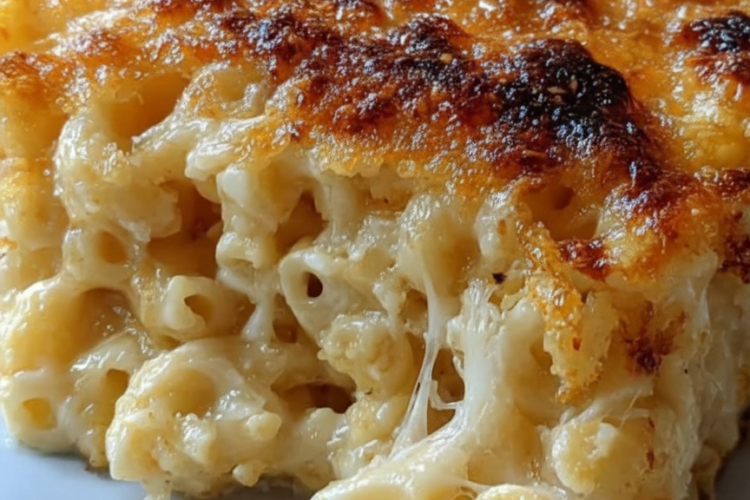
The finished baked mac and cheese is a sight to behold: a large casserole dish brimming with golden-brown, bubbly cheese that stretches invitingly when scooped, revealing a creamy, saucy interior studded with tender elbow macaroni. The top layer forms a crisp, caramelized crust from the extra cheddar, contrasting beautifully with the velvety sauce below—rich with sharp tang from cheddar, smooth melt from Monterey Jack, and subtle nuttiness from Parmesan.
Aromas of toasted cheese and subtle garlic fill the air as it’s served, drawing everyone to the table. Each forkful delivers perfectly coated pasta in a luscious, homemade sauce that’s neither too thick nor runny, with edges offering delightful crispiness. It’s indulgent yet balanced, comforting in its familiarity while elevated by thoughtful seasoning and baking. Paired with a green salad or roasted vegetables, it becomes a complete meal; as a side, it complements everything from grilled meats to holiday turkeys.
This dish isn’t just food—it’s an experience of warmth and satisfaction that lingers long after the last bite.
Nutritional Information
Baked mac and cheese is undeniably indulgent, providing energy and satisfaction through its carbohydrate, fat, and protein balance. For a typical serving (about 1 cup or 1/8 of the recipe), expect approximately 400-500 calories, depending on exact cheese types and milk fat content. Breakdown includes around 40-50g carbohydrates from pasta, 20-30g fat primarily from cheese and butter (much saturated), and 15-20g protein from dairy.
It offers notable calcium (30-40% daily value per serving) for bone health, plus B vitamins from milk and some iron. However, it’s high in sodium (600-1000mg per serving) and saturated fat, so moderation is key. To lighten: use low-fat milk, reduced-fat cheeses, or add vegetables for fiber. Overall, its nutritional profile suits occasional enjoyment as a comforting treat rather than daily staple.
Conclusion
In wrapping up this exploration of baked mac and cheese, it’s clear why this dish has captured hearts worldwide—its humble ingredients transform into something extraordinarily comforting and delicious through careful preparation. From ancient European roots to its iconic American status, it embodies culinary evolution, cultural fusion, and the simple joy of shared meals. The recipe provided delivers a perfect balance of creamy sauce, tender pasta, and crispy topping that exemplifies why homemade versions surpass any boxed alternative.
Whether recreating family traditions or starting new ones, this baked mac and cheese offers reliable indulgence that brings people together. Its versatility ensures endless enjoyment, proving that sometimes the greatest pleasures come from classic, well-executed comfort food.
Recommendation
I wholeheartedly recommend making this baked mac and cheese your go-to recipe for any occasion needing warmth and flavor. It’s ideal for holiday sides, potluck contributions, or cozy family dinners, consistently earning rave reviews for its creamy texture and golden crust. Pair it with roasted chicken, barbecue ribs, or a fresh salad for balanced meals. For variations, try adding bacon or broccoli to suit tastes. Once tried, it’ll become a staple—simple to prepare yet impressively delicious.
Embracing Healthful Indulgence
While baked mac and cheese celebrates indulgence, embrace it mindfully as part of a varied diet. Enjoy generous portions on special days, balanced with lighter meals featuring vegetables, lean proteins, and whole grains. Opt for whole milk and real cheeses for better flavor and nutrients over processed alternatives. Add veggies or use whole-wheat pasta to boost fiber without sacrificing comfort. Ultimately, food like this nourishes the spirit as much as the body—savor it guilt-free, share with loved ones, and let it remind you that healthful living includes joyful indulgence.