Introduction
Homemade egg noodles represent the pinnacle of simple, satisfying pasta-making—rich, tender strands crafted from just five pantry staples that elevate any dish to comforting perfection. This classic recipe yields silky, golden noodles with a subtle eggy flavor and delightful chew, far superior to store-bought versions. The extra yolks contribute luxurious richness and vibrant color, while the resting step ensures easy rolling and cutting.
Perfect for soups like chicken noodle, buttered sides, casseroles, or sauced entrees, these noodles cook in minutes and absorb flavors beautifully. The hands-on process—mixing, kneading, rolling—is therapeutic and rewarding, connecting you to generations of home cooks. With minimal equipment (no pasta machine required), it’s accessible for beginners yet customizable for experts.
In this comprehensive guide, we’ll delve into egg noodles’ fascinating history and cultural roles, provide precise ingredient quantities, explore optional additions for variations, share essential tips for flawless texture, offer detailed step-by-step instructions, vividly describe the preparation and enjoyment, discuss nutrition, and conclude with recommendations and healthful indulgence ideas. Master these timeless noodles and transform everyday meals.
Origin and Cultural Significance
Egg noodles trace roots to ancient China (around 2000 BC), where wheat-based pasta emerged, enriched with eggs for nutrition and texture. They spread via trade routes to Europe, evolving into distinct traditions—German spätzle (dropped batter), Italian tagliatelle (rolled sheets), and Eastern European kluski.
In America, egg noodles became staples through German and Jewish immigrants in the 19th-20th centuries, featured in kugel, chicken soup, and beef stroganoff. Pennsylvania Dutch and Amish communities preserved hand-rolled techniques, emphasizing farm-fresh eggs. Mid-century convenience foods popularized dried versions, but homemade remains prized for superior taste.
Culturally, egg noodles symbolize nourishment and heritage—comfort in Jewish penicillin (chicken soup), hearty sustenance in German casseroles, or simple pleasure in buttered noodles. Globally, similar enriched pastas appear in Asian chow mein or Hungarian nokedli. Today, they embody slow food values—mindful making amid fast-paced life—celebrating thrift (using basic ingredients) and family traditions passed down.
Ingredients Quantity
This recipe yields about 1 pound fresh noodles, serving 4 generously (or 6 as side).
- 1 large whole egg (room temperature; about 50g without shell).
- 2 large egg yolks (room temperature; adds richness and color).
- 3 tablespoons cold water (45ml; adjusts hydration).
- 1 teaspoon salt (fine sea salt; about 6g; enhances flavor).
- 2 cups all-purpose flour (about 240-250g; spooned and leveled; plus extra for dusting).
These proportions create firm yet tender dough—scalable easily (maintain ratio).
Optional Additions
Enhance flavor or texture while keeping simplicity.
Dough variations: Add 1 tablespoon olive oil for softer noodles, or herbs (parsley, chives) for flecked green.
Flavor twists: Incorporate black pepper, garlic powder, or cheese (Parmesan) into dough.
Whole grain: Substitute half flour with whole wheat for nuttier, healthier version.
Colored noodles: Spinach puree or beet juice for green/pink hues.
Gluten-free: Specialized blends (though texture differs).
Serving ideas: Butter and poppy seeds, Alfredo sauce, or Asian stir-fry.
These allow personalization without complexity.
Tips for Success
Achieve silky, non-sticky noodles with these practices.
Room temperature eggs: Incorporate smoothly; prevents tough dough.
Gradual flour addition: Start with 1½ cups—add more as needed for non-sticky dough.
Knead properly: 8-10 minutes develops gluten for elasticity; dough should be smooth, slightly tacky.
Rest fully: 30 minutes relaxes gluten—easier rolling, better texture.
Roll thin evenly: Aim 1/16-1/8 inch; thicker for chewier, thinner for delicate.
Prevent sticking: Generous flour dusting; toss cut noodles lightly.
Dry appropriately: 15-20 minutes firms them—skip for softer.
Fresh cooking: Boil in salted water; test early—overcooking toughens.
Storage: Uncooked—fridge 2-3 days (dusted flour) or freeze (portion bags) up to 3 months.
These ensure professional results every time.
Instructions
Follow for about 48 minutes total (mostly hands-on and resting).
Mix Wet: In medium bowl, whisk 1 whole egg, 2 yolks, 3 tbsp cold water until frothy and uniform.
Incorporate Dry: Stir in 1 tsp salt. Gradually add flour (start 1½ cups), mixing with fork/spoon until shaggy dough forms.
Knead: Turn onto lightly floured surface. Knead 8-10 minutes, adding flour sparingly if sticky, until smooth, elastic ball (passes windowpane test—stretch thin without tearing).
Rest: Wrap tightly in plastic. Rest room temperature 30 minutes (or fridge up to 1 day).
Roll & Cut: Divide dough in half. On floured surface, roll one portion to 1/8-inch thick rectangle (or thinner). Dust lightly; fold loosely if needed for easier cutting. Slice into desired widths (¼-inch fettuccine, wider pappardelle) with sharp knife, pizza cutter, or pasta machine.
Dry (Optional): Spread noodles on floured tray or hang on rack 15-20 minutes.
Cook: Boil large pot salted water. Add noodles; stir gently. Cook 2-3 minutes until al dente (tender but firm). Drain; rinse briefly if saucing later.
Serve immediately tossed in butter/sauce.
Description
Mixing yields bright yellow wet blend incorporating into flour for crumbly start, then cohesive dough under hands.
Kneading transforms sticky mass into satiny, springy ball—therapeutic rhythm releasing subtle wheat aroma.
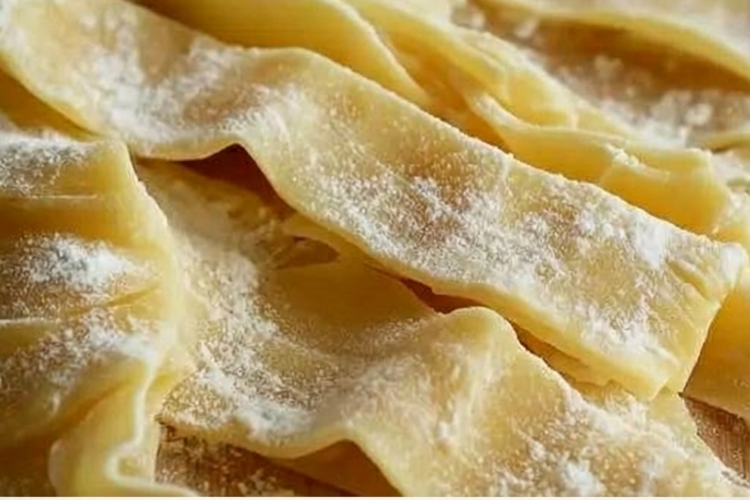
Resting softens dough noticeably. Rolling reveals thin, translucent sheets dusted white, cutting produces satisfying slices—strands curling gently.
Optional drying mattes surface slightly. Boiling sends noodles dancing in bubbles, releasing starchy steam.
Drained, they glisten golden, steaming tenderly. Sauced or buttered, strands twirl elegantly—each bite silky smooth with gentle chew, rich egg flavor shining through.
Nutritional Information
Homemade egg noodles are wholesome—moderate carbs with protein boost. Approximate per serving (¼ recipe, cooked):
- Calories: 250-300 kcal.
- Protein: 10-12g (excellent from eggs).
- Fat: 5-8g (healthy from yolks).
- Carbohydrates: 45-50g (mostly flour).
- Key Nutrients: Iron, selenium, B vitamins (folate, riboflavin); choline from eggs for brain health.
Lower glycemic than refined pasta; pair with veggies/protein for balance. Portion mindful.
Conclusion
Homemade egg noodles embody culinary joy—few ingredients yielding profound texture and taste. This recipe connects past traditions to present tables, delivering comfort in every tender strand.
From kneading therapy to shared meals, it celebrates handmade goodness. A skill worth mastering.
Recommendation
Prepare on relaxed afternoons—double for freezing. Use in soups, stroganoff, or simple butter-Parmesan.
Invest in pasta rack for ease. Gift dried bundles.
Start basic; experiment once confident.
Embracing Healthful Indulgence
Rich yet nourishing—eggs provide quality protein/fats, flour sustained energy. Homemade controls portions/quality.
Savor slowly with vegetables/sauce for balance. Occasional fresh pasta reminds indulgence and wellness coexist beautifully.