Introduction
Braised oxtail is one of those timeless dishes that evokes a sense of deep comfort and satisfaction with every bite. This rich, gelatinous cut of meat, slow-cooked until it falls effortlessly off the bone, transforms into a luxurious meal that feels both indulgent and nourishing. The recipe we’re exploring today combines classic braising techniques with flavorful aromatics, creating a sauce that’s deeply savory, slightly tangy, and utterly irresistible. Whether you’re new to cooking oxtail or a seasoned enthusiast, this dish rewards patience with layers of complexity that build over hours of gentle simmering.
At its core, braised oxtail celebrates resourcefulness in the kitchen. Once considered a humble, inexpensive cut often overlooked or discarded, oxtail has risen to gourmet status in modern cuisine due to its incredible depth of flavor and silky texture when properly prepared. The collagen-rich tail pieces release gelatin during the long braise, naturally thickening the sauce into a glossy gravy that clings beautifully to the meat. Served over mashed potatoes, polenta, rice, or even simple bread, it becomes a complete meal that’s perfect for cold evenings, family gatherings, or special occasions.
This particular recipe draws from a fusion of influences, incorporating soy sauce for umami, red wine for richness, and warm spices like allspice for a subtle Caribbean nod, while staying rooted in European braising traditions. It’s versatile enough to adapt to your tastes, yet straightforward in execution. What makes braised oxtail so special is not just the end result, but the process—the aromas that fill your home as onions caramelize, garlic and ginger release their fragrance, and the pot simmers away, promising something extraordinary.
In the sections ahead, we’ll delve into the fascinating history and cultural importance of this dish, break down the ingredients with precise quantities, explore optional additions for personalization, share essential tips for achieving perfect tenderness, provide detailed step-by-step instructions, offer vivid descriptions of the cooking process and final presentation, discuss nutritional aspects, and wrap up with thoughtful conclusions, recommendations, and ways to embrace this as a healthful indulgence. By the end, you’ll be equipped to create a braised oxtail masterpiece that’s sure to impress.
Origin and Cultural Significance
The story of braised oxtail is a remarkable tale of transformation—from a discarded byproduct to a beloved delicacy across continents. Historically, oxtail literally referred to the tail of an ox, but today it comes from any cattle, typically beef cows. This cut was long seen as undesirable because of its toughness and abundance of bone, cartilage, and connective tissue. Butchers often threw it away or sold it cheaply, which led resourceful cooks in various cultures to discover its potential through slow cooking methods like braising or stewing.
In Europe, references to oxtail dishes date back centuries. Roman cuisine featured early versions, and by the Middle Ages, oxtail soup was popular in Britain and France for its hearty, supposed medicinal qualities. In Spain, particularly Córdoba, rabo de toro (bull’s tail stew) emerged in the 19th century from bullfighting traditions, where tails from fought bulls were stewed with wine and vegetables into a celebrated dish. Italian Roman cuisine boasts coda alla vaccinara, a classic oxtail stew with tomatoes, celery, and pine nuts, reflecting the city’s quinto quarto (fifth quarter) tradition of using offal.
Across the Atlantic, oxtail took on profound significance in African diaspora communities. During the era of slavery in the Americas, prime cuts were reserved for enslavers, leaving offal like oxtail for the enslaved. Through ingenuity, these cooks turned it into soul-satisfying meals, braising it slowly to extract maximum flavor. This became foundational to soul food in the American South and Caribbean cuisines. In Jamaica, oxtail stew is iconic—spiced with thyme, allspice (pimento), Scotch bonnet peppers, and often butter beans—served with rice and peas as a Sunday staple symbolizing resilience and community.
Similar stories unfold globally. In Korea, kkori-gomtang is a clear oxtail soup prized for nourishment. Chinese braised oxtail often features soy sauce and star anise for sticky, umami-rich results. In the Philippines, kare-kare uses oxtail in a peanut stew, while South African potjiekos slow-cooks it over open fire with vegetables. These variations highlight oxtail’s universal appeal: a tough cut made tender through time and care, often tied to themes of thrift, survival, and celebration.
Culturally, oxtail represents nose-to-tail eating, minimizing waste and honoring the animal. In many Black and Caribbean communities, it’s a symbol of heritage and pride—once “throwaway” food elevated to delicacy. Today, its popularity has driven prices up, but its significance endures as comfort food that brings people together, evoking stories of history, migration, and culinary creativity.
Ingredients Quantity
To serve 4-6 people generously, you’ll need the following precise quantities for this braised oxtail recipe. These measurements ensure balanced flavors and enough sauce to coat the meat richly.
- 3 pounds oxtail, trimmed of excess fat (ask your butcher to cut into 2-3 inch pieces for even cooking).
- 2 tablespoons vegetable oil (neutral oil like canola or grapeseed works best for high-heat browning).
- 1 large onion, chopped (about 2 cups; yellow or Spanish onion for sweetness).
- 3 cloves garlic, minced (fresh is essential for pungent aroma).
- 1 tablespoon fresh ginger, finely chopped or grated (adds a bright, warming note).
- 2 tablespoons tomato paste (concentrated for depth without excess liquid).
- 4 tablespoons soy sauce (low-sodium preferred to control saltiness; tamari for gluten-free).
- 2 cups beef broth (homemade or low-sodium store-bought; add more as needed during braising).
- 1 cup red wine (dry varieties like Cabernet Sauvignon or Merlot for acidity and richness).
- 2 tablespoons brown sugar (or honey; balances acidity and enhances caramelization).
- 1-2 tablespoons Worcestershire sauce (for umami and tang).
- 3-4 sprigs fresh thyme (or 1 teaspoon dried if fresh unavailable).
- 2-3 bay leaves (imparts subtle herbal depth).
- 1 tablespoon all-purpose flour (for thickening the sauce at the end, if desired).
- 1 teaspoon ground allspice (optional but recommended for a warm, Jamaican-inspired touch).
- Salt and black pepper, to taste (season generously at each stage).
- 1-2 carrots, sliced (optional; about 1 cup for natural sweetness).
- 2 stalks celery, chopped (optional; about 1 cup for aromatic base).
- 1 tablespoon vinegar (apple cider or red wine; optional for brightness and balance).
These quantities yield a pot full of tender meat in about 4-5 cups of sauce, perfect for hearty portions.
Optional Additions
One of the joys of braised oxtail is its adaptability—small tweaks can shift the flavor profile toward different cultural influences while keeping the core technique intact.
For a Jamaican twist, add 1-2 Scotch bonnet peppers (whole or pierced for heat), 1 can butter beans (drained, added in the last 30 minutes), and extra allspice berries. Some versions include broad beans or spinners (flour dumplings) for heartiness.
To lean Italian (like coda alla vaccinara), incorporate 1 can crushed tomatoes, celery root, pine nuts, raisins, and finish with cocoa powder for subtle bitterness.
Asian-inspired variations might include star anise, cinnamon sticks, orange peel, or hoisin sauce for sweetness. Chinese styles often reduce the sauce to a sticky glaze.
Vegetable boosts: Mushrooms for earthiness, parsnips or turnips for sweetness, potatoes for starchiness (add midway to avoid mushiness), or leeks for milder onion flavor.
For depth: A splash of cola (as in some Southern recipes) for caramel notes, or browning sauce for darker color.
Herb alternatives: Rosemary or sage for Mediterranean flair.
These additions allow personalization without overwhelming the dish—start small and taste as you go.
Tips for Success
Achieving fall-off-the-bone tender oxtail requires attention to a few key principles, as this cut is rich in collagen that needs time to break down.
First, brown thoroughly: Pat oxtail dry and sear in batches over high heat. This Maillard reaction builds foundational flavor—don’t rush or crowd the pot.
Low and slow is essential: Braise at a gentle simmer (around 300-325°F in oven or low stovetop). Expect 3-4 hours minimum; check for fork-tenderness, adding liquid if needed to prevent drying.
Use a heavy Dutch oven for even heat distribution and retention.
Deglaze properly: After sautéing aromatics, scrape up browned bits—they’re flavor gold.
Rest overnight if possible: Refrigerate the finished dish; fat solidifies for easy removal, and flavors meld beautifully. Reheat gently.
Thicken wisely: Natural gelatin often suffices, but slurry flour or cornstarch if you prefer thicker gravy.
Trim excess fat beforehand to reduce greasiness, or skim post-cooking.
Don’t boil vigorously—it toughens meat. A bare simmer is ideal.
Finally, taste and adjust seasoning at the end; salt concentrates as liquid reduces.
With these tips, your oxtail will be succulent every time.
Instructions
Follow these detailed steps for flawless braised oxtail. Total time: about 4-5 hours active and passive.
Prepare the Oxtail: Heat 1 tablespoon vegetable oil in a large heavy-bottomed pot or Dutch oven over medium-high heat. Season the 3 pounds oxtail generously with salt and pepper. Brown the pieces on all sides in batches, about 6-8 minutes per batch, until deeply caramelized. Remove and set aside on a plate.
Sauté the Aromatics: In the same pot, add the remaining 1 tablespoon oil if needed. Add the chopped large onion and cook for 4-5 minutes until softened and golden. Stir in the 3 minced garlic cloves and 1 tablespoon chopped ginger; cook 1-2 minutes until fragrant but not burned.
Build the Sauce: Add 2 tablespoons tomato paste and cook for 2 minutes, stirring to caramelize. Pour in 1 cup red wine (if using), scraping the bottom to deglaze. Let reduce slightly, about 3 minutes. Stir in 4 tablespoons soy sauce, 2 cups beef broth (plus more as needed), 2 tablespoons brown sugar, 1-2 tablespoons Worcestershire sauce, and 1 teaspoon ground allspice (if using). Mix well.
Braise the Oxtail: Return the browned oxtail to the pot, nestling pieces into the sauce. Add 3-4 thyme sprigs, 2-3 bay leaves, optional sliced carrots and chopped celery, and 1 tablespoon vinegar if desired. Bring to a simmer. Cover tightly and reduce heat to low, or transfer to a 325°F oven.
Cook for 3-4 hours, checking occasionally. Turn pieces halfway if possible, and add broth if sauce reduces too much. The oxtail is done when meat is fork-tender and pulls easily from the bone.
Finish and Thicken: Remove oxtail to a platter. Discard thyme sprigs and bay leaves. For thicker sauce, skim fat, then whisk in 1 tablespoon flour slurry (flour mixed with water) and simmer uncovered 10-15 minutes. Adjust seasoning.
Serve hot with desired sides.
Description
As you begin browning the oxtail, the kitchen fills with the sizzle and aroma of searing meat—a deep, beefy scent that’s instantly appetizing. The pieces turn mahogany brown, developing a crust that promises complexity.
When aromatics hit the pot, onions soften to sweetness, garlic and ginger release sharp, invigorating notes that mingle with tomato paste’s concentrated tang. Adding wine brings a fruity acidity, lifting fond from the pan into a fragrant steam.
The braise settles into a quiet rhythm: occasional bubbles, herbal whispers from thyme and bay, subtle warmth from allspice. Over hours, the sauce darkens to a glossy, rich mahogany, thickened by released gelatin that coats the spoon silkily.
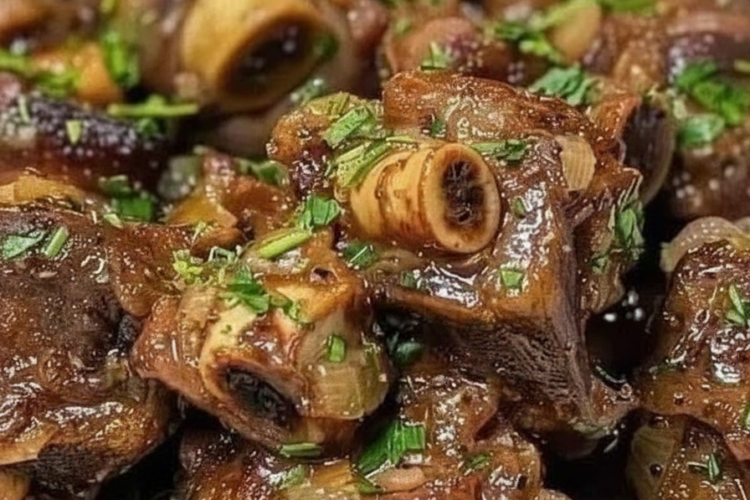
Finally, the oxtail emerges—meat succulent and shreddable, bones clean, gravy velvety and clinging. Each bite yields tender beef with savory depth, balanced sweetness, and gentle spice—a harmonious indulgence that’s rustic yet refined.
Nutritional Information
Braised oxtail is nutrient-dense but calorie-rich due to its fat content and braising method. Approximate per serving (based on 6 servings, including sauce; values vary by exact ingredients and trimming):
- Calories: 600-800 kcal (higher with wine and full fat).
- Protein: 50-70g (excellent source from beef; supports muscle repair).
- Fat: 35-50g (mostly saturated from marrow; provides energy but moderate intake advised).
- Carbohydrates: 10-20g (low, mainly from vegetables and sugar).
- Key Nutrients: High in collagen (for joint health), iron (20-30% DV), zinc (100%+ DV), vitamin B12 (100%+ DV), selenium, and phosphorus.
It’s rich in gelatin from bones, beneficial for gut and skin health. However, it’s high in cholesterol and purines (gout caution). Balance with vegetables and whole grains for a healthful meal.
Conclusion
Braised oxtail stands as a testament to culinary patience and ingenuity—a dish that turns challenge into triumph. From its humble origins as offal to its place on tables worldwide, it embodies comfort, heritage, and flavor depth unmatched by quicker cuts.
This recipe captures that essence: tender meat in a sauce that’s profoundly satisfying. Whether evoking family traditions or exploring new tastes, braised oxtail delivers an experience that’s more than food—it’s a warm embrace on a plate.
Recommendation
I highly recommend trying this braised oxtail on a weekend when you have time to savor the process. Pair with creamy mashed potatoes, polenta, or rice and peas for soaking up gravy. A robust red wine complements perfectly.
For first-timers, source quality oxtail from a trusted butcher. Leftovers (if any) improve next day—shred for tacos or pasta.
Embracing Healthful Indulgence
While rich, braised oxtail can fit a balanced lifestyle. Its collagen supports joints and skin; protein satiates long-term. Enjoy mindfully—portion with greens or salad, trim fat, use low-sodium ingredients.
This dish reminds us indulgence and health coexist: nourishing body and soul through thoughtful preparation. Savor slowly, share with loved ones, and celebrate the joy of real food.