Introduction
Baked Pineapple, also known as Pineapple Bake or Pineapple Casserole, is a beloved dish that perfectly captures the sweet-savory magic of Southern American comfort food, blending tropical pineapple with rich butter, eggs, and soft bread cubes into a golden, custardy delight. This simple yet indulgent recipe transforms everyday pantry staples into a versatile treat that can serve as a side dish alongside glazed ham, a cozy brunch casserole, or even a warm dessert topped with ice cream. What sets it apart is its nostalgic appeal: a bubbly, caramelized top with a soft, fruity interior that evokes family gatherings, holiday feasts, and potluck tables across the South.
At its heart, Pineapple Bake embodies resourcefulness and warmth, using canned pineapple—a mid-20th-century convenience staple—to create something far greater than the sum of its parts. The undrained crushed pineapple brings natural sweetness and moisture, while melted butter and beaten eggs add richness, and cubed bread soaks it all up for a texture reminiscent of bread pudding with a tropical twist. In an era of elaborate recipes, this dish reminds us of the joy in simplicity, delivering comfort with every spoonful. This detailed guide explores its history, preparation, variations, and more, inviting you to rediscover why Pineapple Bake remains a cherished, generational favorite that bridges sweet and savory worlds effortlessly.
Whether you’re hosting a holiday dinner, seeking a unique brunch item, or craving a heartfelt dessert, mastering Pineapple Bake offers rewarding satisfaction. Its adaptability shines in modern kitchens, from classic servings to creative twists, proving that timeless recipes endure for good reason. Join us as we dive into the flavorful story and science behind this Southern gem.
Origin
The origins of Pineapple Bake trace back to mid-20th-century Southern United States, emerging during a time when canned goods revolutionized home cooking and casseroles became household staples. While many pineapple casseroles from this era feature cheese and cracker toppings, this bread-based version—often called Pineapple Bread Pudding or simply Pineapple Bake—shares roots in the same inventive spirit, utilizing canned crushed pineapple, which became widely available and affordable after World War II. Canned pineapple allowed cooks to enjoy tropical flavors year-round, turning exotic fruit into everyday indulgence without the hassle of fresh preparation.
Recipes similar to this appeared in community cookbooks and family collections from the 1950s onward, passed down through generations as a way to stretch ingredients into comforting dishes. The use of white bread cubes echoes traditional bread puddings, a frugal dessert born from avoiding waste, while incorporating pineapple reflects the growing popularity of Hawaiian-inspired flavors in American cuisine during that period—think pineapple upside-down cake’s rise to fame. Some trace bread-inclusive versions to church suppers and potlucks in states like South Carolina, Georgia, and Tennessee, where resourceful homemakers combined sweetness with substance for crowd-pleasing sides.
Unlike its cheesier cousins popularized by figures like Paula Deen, this egg-rich, bread-soaked variant leans more toward dessert territory, akin to old-fashioned fruit casseroles that blurred lines between sweet and savory. Its exact birthplace remains elusive, typical of folk recipes evolved orally and regionally, but its enduring presence in Southern kitchens speaks to practicality and pleasure. Today, it continues as a testament to post-war innovation, when convenience met creativity to produce lasting family traditions.
Cultural Significance
Pineapple Bake holds a special place in Southern American food culture, symbolizing hospitality, nostalgia, and the art of making something extraordinary from simple ingredients. Often featured at holiday tables—Easter, Thanksgiving, Christmas—and family reunions, it represents abundance and warmth, much like the pineapple itself, long a symbol of welcome in Southern homes. This dish thrives in potluck and church supper traditions, where casseroles reign supreme, offering a unique sweet counterpart to savory mains like baked ham or fried chicken.
Its cultural weight lies in evoking memories: grandmothers’ recipes scribbled on index cards, shared across generations, fostering bonds through shared meals. In the broader Southern casserole canon, Pineapple Bake stands out for its versatility—served as a side to balance rich proteins or as a dessert for indulgent endings—highlighting the region’s love for sweet-savory contrasts, seen in dishes like sweet potato casserole with marshmallows. It embodies resilience too, born from eras of making do with canned goods yet elevated to beloved status.
Beyond the South, it has spread through migrations and media, appearing in brunch menus and retro revivals, reminding us of comfort food’s power to unite. Debates over categorization—side or dessert?—add playful charm, while its ease encourages passing traditions forward. In a fast-modern world, Pineapple Bake celebrates slow, heartfelt cooking that nourishes both body and spirit.
Ingredients Quantity
The charm of Pineapple Bake lies in its straightforward, pantry-friendly ingredients, creating a moist, flavorful casserole that serves 6-8 as a side or 4-6 as a dessert in an 8×8-inch dish.
- 1 can (20 oz / 560 g) crushed pineapple, undrained: Provides the base sweetness, moisture, and tropical flavor essential for the custardy texture.
- ½ cup (115 g) unsalted butter, melted: Adds richness and helps bind the mixture for a golden finish.
- 1 cup (200 g) granulated sugar: Enhances the pineapple’s natural sweetness without overpowering.
- 4 large eggs, beaten: Create lift, creaminess, and structure, turning the bake into a pudding-like delight.
- 5 slices white bread, cubed (about 2½ cups): Absorbs the liquid for a soft, bread pudding consistency; day-old bread works best to prevent sogginess.
- 1 teaspoon vanilla extract: Rounds out flavors with warm, aromatic notes.
These measurements yield a balanced, not-too-sweet result; scale up for larger crowds using a 9×13-inch dish.
Optional Additions
Purists cherish the classic recipe’s simplicity, but optional additions can customize Pineapple Bake while maintaining its essence. Incorporate sparingly to avoid altering texture.
Popular enhancements include a pinch of ground cinnamon or nutmeg folded into the mixture for subtle warmth that complements the pineapple. Chopped pecans or walnuts stirred in or sprinkled on top add nutty crunch, evoking holiday vibes. For extra indulgence, mix in miniature marshmallows before baking for gooey pockets.
Fruit variations like drained maraschino cherries or a handful of raisins introduce color and tang. Some top with a streusel of brown sugar and butter for caramelized crispness. For a tropical boost, add shredded coconut.
Always test additions in small batches, as excess can make the bake too dense or sweet.
Tips for Success
Perfecting Pineapple Bake relies on technique for the ideal golden top and set center. Use room-temperature eggs for smoother mixing and better incorporation—beat them well for lightness.
Don’t drain the pineapple; its juice is key to moisture and flavor. Cube bread uniformly and gently fold to coat without mashing. Grease the dish generously to prevent sticking.
Bake in the middle rack for even browning; check at 30 minutes—a toothpick should come out clean from the center. Let rest 5-10 minutes post-bake for easier serving as it firms up.
For deeper flavor, prepare the mixture ahead and refrigerate overnight before baking. Avoid overbaking to prevent dryness.
Common fixes: too runny? Add extra bread cubes; too dry? Increase butter slightly next time.
Instructions
Pineapple Bake comes together quickly with minimal fuss—ideal for busy cooks seeking impressive results.
Preheat oven to 350°F (175°C) and grease an 8×8-inch baking dish thoroughly. In a large bowl, mix undrained crushed pineapple, melted butter, granulated sugar, beaten eggs, and vanilla extract until smooth and fully combined—no lumps from eggs.
Gently fold in cubed white bread until every piece is coated and the mixture looks uniform. Pour into the prepared dish, spreading evenly.
Bake 30-35 minutes until the top is golden brown and the center sets firmly when jiggled lightly. Remove from oven and rest 5 minutes to allow settling.
Serve warm for best texture and flavor.
For larger batches, use a bigger dish and extend bake time by 10-15 minutes.
Description
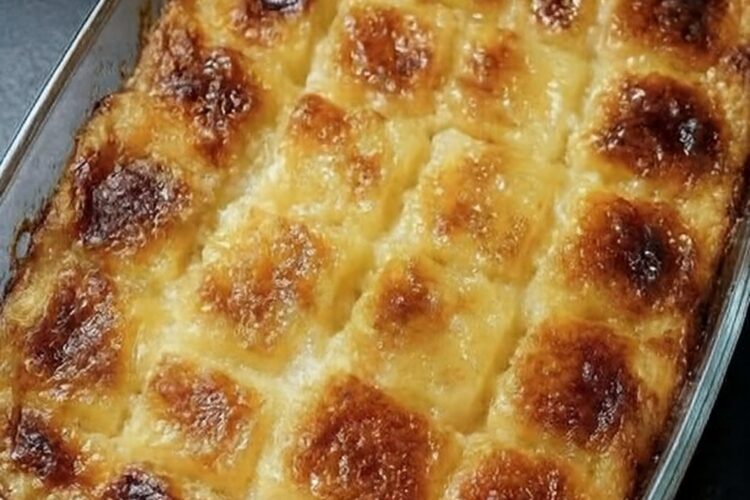
Pineapple Bake emerges from the oven as a vision of comfort: a beautifully golden, slightly domed top with bubbly edges and a fragrance of sweet pineapple mingled with buttery vanilla. The surface caramelizes lightly, offering subtle crunch, while the interior reveals a soft, custardy pudding studded with tender bread cubes soaked in fruity essence.
Flavor profile is sweetly tropical—pineapple’s bright tang balanced by sugar and eggs—with rich undertones from butter and hints of vanilla warmth. Texture contrasts delight: crisp top yielding to moist, almost bread pudding-like body that melts on the tongue.
Served warm, it pairs exquisitely with savory ham, cutting through richness, or shines as brunch with coffee, or dessert crowned in whipped cream or ice cream for creamy contrast. Each bite evokes nostalgia, harmonious and satisfying.
Nutritional Information
Per serving (based on 8 servings, using standard ingredients): approximately 350-400 calories. Breakdown: Carbohydrates ~50-55g (primarily from pineapple and sugar, with bread contributing), Protein ~6-8g (from eggs and bread), Fat ~15-20g (mostly from butter and eggs), with natural sugars around 40g and minimal fiber ~2g.
It’s a source of vitamin C from pineapple, some B vitamins from eggs, but higher in added sugars and fats—indulgent rather than everyday. Portion control enhances enjoyment; pair with protein for balance.
Variations like reduced sugar or less butter adjust accordingly.
Conclusion
Pineapple Bake distills the soul of Southern comfort cooking: uncomplicated ingredients yielding profound pleasure, rooted in tradition yet timelessly appealing. From its mid-century origins to modern tables, it endures as a bridge of flavors and memories, proving simplicity’s power in creating joy.
Pulling this golden treasure from the oven delivers pure triumph—a dish that warms hearts as much as bellies.
Recommendation
I highly recommend trying Pineapple Bake first as a holiday side with baked ham for classic harmony, then exploring brunch or dessert roles. Beginners: stick to the recipe; seasoned cooks: experiment with nuts or spices.
Serve warm with vanilla ice cream for ultimate bliss.
Embracing Healthful Indulgence
Though richly satisfying, Pineapple Bake fits mindful eating in moderation—opt for reduced sugar, less butter, or whole-grain bread for added nutrients. Celebrate it as an occasional treat, savoring how thoughtful indulgence nourishes both body and cherished traditions.