Introduction
The holiday season, particularly Christmas, is a time filled with traditions, family gatherings, and the aroma of delicious home-cooked meals wafting through the house, creating memories that last a lifetime. However, amidst the excitement of decorating, gift-giving, and hosting, the pressure of preparing a flawless Christmas dinner can sometimes feel overwhelming, especially when plans go awry or unexpected guests arrive. This is precisely where the 4-Ingredient French Onion Chicken Casserole emerges as an indispensable “Christmas Dinner Backup” – a remarkably simple yet profoundly flavorful dish that requires minimal effort and ingredients while delivering the rich, comforting taste reminiscent of a high-end French bistro. With just boneless chicken, condensed cream of chicken soup, condensed French onion soup, and shredded Swiss or Gruyere cheese, this casserole transforms basic pantry staples into a hearty, crowd-pleasing main course that’s perfect served over fluffy rice or creamy mashed potatoes.
The allure of this recipe lies in its unparalleled simplicity during a season that often demands elaborate preparations. There’s no need for intricate techniques, hours of chopping vegetables, or sourcing rare ingredients that might be scarce during holiday rushes. Instead, it relies on the magic of condensed soups to infuse deep, savory onion flavors and create a luscious gravy that envelops tender chicken pieces, all crowned with a blanket of bubbly, golden melted cheese. Many home cooks swear by this dish as their annual go-to when the traditional turkey takes too long, the ham dries out, or extra family members show up unannounced. It’s forgiving, scalable, and consistently delicious, turning potential kitchen crises into triumphant, satisfying meals that bring everyone together around the table.
Beyond its practicality, this casserole evokes a sense of warmth and nostalgia, blending the soul-soothing elements of classic comfort food with a touch of elegance from its French-inspired roots. As we explore its origins, cultural impact, precise preparation, and more, you’ll understand why this unassuming recipe has become a beloved holiday essential for countless families, offering not just a backup plan but a delightful centerpiece that embodies the spirit of festive indulgence without the stress. In a world where holiday cooking can become competitive and exhausting, this dish reminds us that true culinary magic often lies in restraint and reliability, allowing hosts to focus on what truly matters: sharing laughter, stories, and love with those around them.
Origin
The story of the 4-Ingredient French Onion Chicken Casserole begins with the iconic French onion soup, a dish whose history stretches back thousands of years to the humble beginnings of onion-based broths in ancient civilizations. Onions, being abundant, affordable, and versatile, have been a staple in soups since Roman times, where they formed the basis of simple, nourishing meals for the masses. However, the sophisticated version we associate with France today, known as “soupe à l’oignon,” truly took shape in the 18th century amid the vibrant food markets of Paris, particularly Les Halles, the city’s central marketplace teeming with fresh produce and bustling energy that influenced countless culinary innovations.
Numerous legends surround its creation: one credits King Louis XV, who supposedly invented a rudimentary version using onions, butter, and champagne while on a hunting trip with limited supplies; another points to Stanislas Leszczyński, the deposed Polish king and duke of Lorraine, who encountered a similar dish in an inn and introduced it to the French court through his daughter, Queen Marie, wife of Louis XV. Regardless of the exact origin, by the 19th century, French onion soup had become a fixture in Parisian bistros, evolving from peasant food into a refined classic through the slow caramelization of onions in rich beef stock, topped with thick slices of crusty bread and gratinéed with melted Gruyère or Comté cheeses for that signature bubbly, golden crust that defines its appeal.
Its popularity exploded internationally in the 20th century, especially in America during the 1960s when French cuisine experienced a renaissance, thanks in part to influential figures like Julia Child who demystified Gallic cooking for home audiences. The casserole adaptation reflects mid-20th-century American innovation, coinciding with the rise of convenience foods that transformed domestic kitchens forever. The introduction of canned condensed soups by companies like Campbell’s revolutionized home cooking, allowing busy households to achieve complex, layered flavors quickly without extensive preparation. Cream of chicken and French onion soups became indispensable kitchen heroes, inspiring countless one-dish wonders during the golden age of casseroles in the 1950s and 1960s, a period when American families embraced efficient, oven-baked meals that could feed many with little oversight.
This specific 4-ingredient chicken version likely originated in American home kitchens, church cookbooks, or magazine columns aimed at time-strapped homemakers, simplifying the labor-intensive caramelization process of traditional soup by harnessing the ready-made depth and sweetness of condensed French onion soup. It gained traction as a reliable, budget-friendly meal that could feed families effortlessly on weeknights, eventually earning its cherished holiday backup status due to its quick assembly, universal crowd appeal, and ability to stretch ingredients during festive gatherings. Over the decades, variations have been shared in community recipe exchanges, family notebooks, and more recently online forums, evolving slightly but always retaining the core simplicity that makes it enduring. Today, it represents a beautiful fusion of ancient European traditions with modern American practicality, passed down through generations as a symbol of resourceful, comforting cuisine that bridges cultures and eras seamlessly.
Cultural Significance
In American culture, casseroles hold a special place as symbols of communal eating, potlucks, church suppers, and resourceful family dinners, particularly in the Midwest and South where large gatherings demand efficient, hearty dishes that can be prepared ahead and served to crowds without fuss. The French Onion Chicken Casserole fits seamlessly into this tradition, elevating everyday ingredients into something that feels special and sophisticated, thanks to its nod to French bistro fare while remaining deeply rooted in home-style accessibility. During Christmas, when tables are laden with traditional roasts, stuffing, pies, and an array of sides passed down through generations, this dish serves as a versatile alternative or complement, bringing a touch of European elegance without overshadowing classics like roast turkey, glazed ham, or prime rib.
Culturally, it embodies the holiday ethos of inclusivity and adaptability – ready to accommodate last-minute dietary preferences, unexpected plan changes, or significantly larger crowds with minimal adjustments. In many households, it’s associated with heartwarming tales of holiday heroism: the year the oven malfunctioned midway through cooking the main bird, or when travel delays meant a simpler yet equally satisfying menu was needed to keep spirits high. Its rich, oniony gravy and generous melted cheese topping evoke the deep winter comfort of traditional French onion soup, which in France is often enjoyed as a restorative late-night remedy after celebrations or in the chilly early hours, tying it to themes of nourishment and recovery during festive excesses.
Globally, as cuisines intersect more than ever in our connected world, this casserole highlights the American talent for democratizing “fancy” foods, making bistro-style flavors accessible to all socioeconomic levels and skill sets in the kitchen. It promotes togetherness by design, as its ease allows hosts precious extra time with loved ones rather than being tethered to complicated recipes requiring constant attention. In a broader sense, it reflects enduring themes of resilience, joy in simplicity, and celebration of imperfection that define modern holiday gatherings, where the pressure for Instagram-perfect spreads gives way to meaningful connections forged over shared, unpretentious meals that warm both body and soul.
Furthermore, in an era of culinary trends favoring farm-to-table and scratch cooking, this recipe stands as a gentle reminder that convenience foods, when used thoughtfully, can produce results rivaling more elaborate efforts, encouraging a balanced approach to tradition and innovation. It has become part of the cultural fabric for many, evoking nostalgia for simpler times while adapting effortlessly to contemporary needs, ensuring its place at holiday tables for years to come.
Ingredients Quantity
At the heart of this recipe’s enduring charm is its remarkable brevity – only four essential ingredients needed to create a substantial dish that comfortably serves 6 to 8 people, making it ideal for intimate family Christmas dinners or larger extended gatherings. The exact quantities, carefully balanced for optimal flavor and texture, are as follows:
- Boneless, skinless chicken breasts or thighs: 1 1/2 to 2 pounds (approximately 4 to 6 pieces depending on individual sizes; chicken thighs recommended for superior juiciness and forgiveness in cooking, while breasts offer a leaner, lighter alternative).
- Condensed cream of chicken soup: 1 standard can (10 1/2 ounces; use undiluted to provide the necessary creaminess and binding without requiring additional milk or water).
- Condensed French onion soup: 1 standard can (10 1/2 ounces; this is the flavor powerhouse, delivering instant caramelized onion depth and savory richness that mimics hours of slow cooking).
- Shredded Swiss or Gruyere cheese: 1 1/2 cups (Swiss cheese for a milder, approachable nuttiness that’s family-friendly; Gruyere for a more authentic, complex, and slightly sharper profile that elevates the dish to true bistro levels).
These precise measurements ensure a harmonious balance between tender protein, thick enveloping gravy, and indulgent cheesy topping, resulting in generous portions with plenty of sauce for soaking into accompanying sides. Scaling the recipe for bigger holiday crowds is straightforward and intuitive – simply multiply all quantities proportionally and opt for a larger baking vessel to maintain even cooking.
Optional Additions
While the core four-ingredient recipe thrives brilliantly in its pure, unadorned form, thoughtful and restrained optional additions can customize and enhance it further without compromising the signature ease that defines it. Fresh herbs such as several sprigs of thyme or rosemary tucked around the chicken during baking introduce subtle aromatic layers that beautifully echo the herbal notes often found in traditional French onion soup preparations. A modest splash of dry sherry, dry white wine, or even Worcestershire sauce whisked vigorously into the soup mixture before pouring adds welcome depth, acidity, and umami complexity that brightens the overall profile.
For nutritional boosts and textural variety, consider layering in vegetables like sliced fresh mushrooms for earthiness, thinly sliced additional onions for extra sweetness and crunch, frozen or fresh broccoli florets for color and vitamins, or even pearl onions for a nod to classic presentations. Crispy toppings such as a handful of store-bought French-fried onions scattered over the cheese in the final baking minutes provide delightful contrast against the creamy elements. For those seeking a more substantial one-pan complete meal, uncooked long-grain rice, egg noodles, or even diced potatoes can be spread across the bottom of the dish before adding the chicken and sauce, allowing them to absorb the flavorful gravy as everything bakes together harmoniously.
Seasonings like a pinch of garlic powder, black pepper, or smoked paprika stirred into the soups offer subtle customization, while a light dusting of Parmesan mixed with the Swiss adds extra savory punch. These options preserve the recipe’s fundamental simplicity and quick preparation time while allowing personal creativity and adaptation to available ingredients or preferences, ensuring it remains versatile across countless holiday scenarios.
Tips for Success
Mastering this deceptively simple casserole is remarkably straightforward, but incorporating a few key tips and techniques will guarantee exceptional, restaurant-quality results every single time, even for novice cooks under holiday pressure. Always begin by thoroughly patting the chicken pieces completely dry with paper towels before placement – this crucial step promotes better sauce adhesion, prevents excess moisture from diluting the gravy, and encourages subtle browning during the initial covered bake. Investing in an instant-read meat thermometer is highly recommended; target precisely 165°F internal temperature in the thickest part to ensure food safety while avoiding dry, overcooked meat that could detract from the dish’s tenderness.
Grease the baking dish generously and evenly with cooking spray, butter, or oil, paying special attention to corners and edges where sticking is most likely to occur. When combining the condensed soups, whisk them vigorously and thoroughly in a separate bowl until perfectly smooth and uniform – no additional liquids are necessary, as the soups will release moisture and form a luxurious, thick gravy naturally during the baking process. Secure the aluminum foil cover tightly during the first phase to create a steaming environment that cooks the chicken gently and evenly; removing it for the cheese addition allows perfect melting, bubbling, and desirable light golden browning on top.
Allowing the finished casserole to rest undisturbed for the full 5 to 10 minutes after removing from the oven is essential, as this brief period permits the sauce to thicken slightly and the flavors to meld fully. For advance preparation – a huge advantage during busy holidays – the dish can be fully assembled up to 24 hours ahead, covered, and refrigerated; simply add 10 to 15 minutes to the initial covered baking time when ready. If the cheese browns too quickly in the final stage, loosely tent with foil; conversely, a quick broil for the last 1-2 minutes intensifies color and crispness. Opting for low-sodium versions of the condensed soups provides better control over salt levels, especially important when serving varied palates. Following these insights transforms the recipe from merely reliable to consistently outstanding and fail-proof.
Instructions
Here is the complete, detailed step-by-step guidance for flawless preparation and execution, designed to be followed easily even amidst holiday chaos:
Step 1: Prep Oven and Dish. Begin by preheating your oven to 375°F (190°C) to ensure even temperature distribution. Select a 9×13-inch glass or ceramic baking dish (or equivalent size oven-safe casserole) and lightly but thoroughly grease it with cooking spray, butter, or oil to facilitate easy serving and cleanup.
Step 2: Prepare the Chicken. Take 1 1/2 to 2 pounds of boneless, skinless chicken breasts or thighs, pat each piece meticulously dry with paper towels to remove surface moisture, and trim away any visible excess fat or connective tissue. Arrange the chicken in a single, even layer in the prepared baking dish, ensuring pieces do not overlap for uniform cooking.
Step 3: Mix the Sauce. In a medium-sized mixing bowl, combine one full 10 1/2-ounce can of condensed cream of chicken soup with one full 10 1/2-ounce can of condensed French onion soup. Whisk the two together vigorously until the mixture is completely smooth, blended, and free of lumps – this creates the flavorful, creamy base without needing any dilution.
Step 4: Coat the Chicken. Pour the prepared soup mixture slowly and evenly over the arranged chicken, using a spatula if necessary to spread it thoroughly and ensure every piece is fully coated while the sauce reaches all corners and crevices of the dish for maximum flavor infusion.
Step 5: First Bake. Cover the dish tightly and securely with aluminum foil to trap steam and promote tender cooking. Place in the preheated oven and bake for 25 to 30 minutes, or until the chicken reaches an internal temperature of 165°F when tested with a thermometer in the thickest portion.
Step 6: Add the Cheese. Carefully remove the foil (watching for hot steam), then sprinkle the 1 1/2 cups of shredded Swiss or Gruyere cheese evenly across the entire surface, covering the chicken and sauce completely. Return the uncovered dish to the oven and continue baking for an additional 10 to 15 minutes, until the cheese is fully melted, irresistibly bubbly, and lightly golden brown in spots.
Step 7: Rest and Serve. Remove the finished casserole from the oven and let it rest undisturbed for 5 to 10 minutes – this important step allows the sauce to thicken slightly and settle. Serve warm directly from the dish or plated, generously spooning the rich, onion-infused gravy over each portion alongside preferred sides such as steamed rice, creamy mashed potatoes, or crusty bread for soaking up every drop.
Description
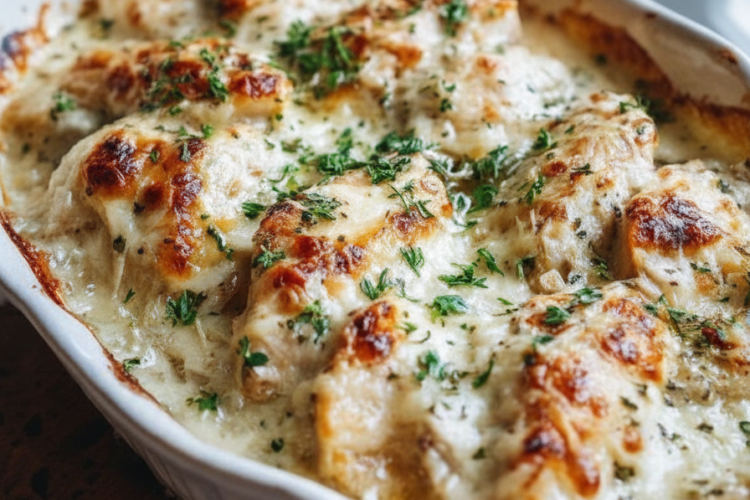
Emerging triumphantly from the oven, this 4-Ingredient French Onion Chicken Casserole is a true visual and sensory masterpiece: succulent pieces of tender chicken partially submerged in a glossy, deep mahogany-colored gravy that gleams with the concentrated essence of caramelized onions and creamy richness, all crowned by a lavish, expansive layer of stretched and gooey melted cheese exhibiting perfect bubbly texture and appealing spots of golden-brown caramelization. The aroma that fills the kitchen and dining area is utterly captivating and appetite-awakening – layers of sweet-savory onions intertwining with nutty, toasted cheese notes and subtle underlying creaminess, evoking immediate associations with cozy French bistros on chilly winter evenings.
Texturally, the dish delivers pure satisfaction in every forkful: the chicken remains remarkably juicy and fork-tender thanks to the gentle steaming method, yielding easily while absorbing the profound flavors of the surrounding sauce; the gravy itself is velvety thick and clings beautifully to each bite, offering that signature French onion soup depth without requiring hours of preparation; the cheese topping provides creamy, stretchy contrast with occasional crisp edges for delightful variety. When served over fluffy rice, buttery mashed potatoes, or even noodles, the abundant sauce transforms simple accompaniments into something extraordinary, creating complete, balanced plates that feel both indulgent and comforting.
Overall, the casserole presents as elegantly rustic – impressive enough to garner enthusiastic compliments from guests yet revealing its humble, effortless origins only to those who prepared it. It’s the kind of dish that invites second helpings, sparks conversations about family recipe traditions, and leaves everyone feeling warmly satisfied, making it an ideal centerpiece or reliable supporter in any Christmas dinner lineup.
Nutritional Information
Nutritional values provided here are approximate per serving, calculated based on dividing the casserole into 6 generous portions using boneless skinless chicken breasts and Swiss cheese (actual values may vary depending on specific brands, exact portion sizes, and any optional additions):
- Calories: 380 to 480 per serving, delivering substantial yet manageable energy suitable for active holiday days filled with festivities.
- Protein: 38 to 45 grams, sourced primarily from the lean chicken and dairy cheese, making it an excellent high-protein option that promotes lasting satiety and muscle maintenance.
- Carbohydrates: 12 to 18 grams total, predominantly from the condensed soups, resulting in a relatively low-carb profile that appeals to various dietary preferences.
- Total Fat: 18 to 28 grams (including approximately 9 to 12 grams saturated fat from the cheese and cream-based soups), contributing to the dish’s signature richness and mouthfeel.
- Sodium: 900 to 1200 milligrams (notably elevated due to the concentrated nature of canned condensed soups; selecting low-sodium or reduced-sodium varieties can significantly lower this to 600-800 mg range).
- Additional micronutrients: Provides a good source of calcium (20-30% daily value) and phosphorus from the cheese topping; moderate amounts of vitamin A and B vitamins from the soups and chicken; potential for increased fiber, vitamins, and minerals if vegetable additions are incorporated.
Overall, while undeniably indulgent and comfort-oriented, the casserole offers solid nutritional benefits through high-quality protein and calcium, fitting well into balanced holiday eating when portioned mindfully and paired with fresh vegetable sides, salads, or whole grains. Healthier variations – such as reduced-fat soups, extra vegetables, or serving over cauliflower rice – can further lighten the profile without compromising the beloved flavors.
Conclusion
In conclusion, the 4-Ingredient French Onion Chicken Casserole stands as a shining testament to the profound power of simplicity in crafting extraordinary, memorable meals, particularly invaluable during the joyful yet demanding Christmas season. From its ancient roots in humble onion broths through centuries of French refinement to its clever mid-century American adaptation utilizing modern convenience, this dish has evolved into a modern classic that perfectly balances rich tradition with contemporary practicality. It delivers consistent reliability, impressive depth of flavor, and genuine heartfelt satisfaction in every warm, cheesy, oniony bite, whether serving as emergency backup or intentional star of the holiday table.
By requiring minimal ingredients, time, and skill while producing results that rival far more complex recipes, it alleviates kitchen stress and grants hosts the gift of presence with family and friends – arguably the most precious commodity during festive gatherings. As holidays continue to blend old customs with new realities, this casserole endures as a bridge, reminding us that the most cherished dishes often emerge not from elaborate effort but from thoughtful restraint and time-tested wisdom.
Recommendation
I wholeheartedly and enthusiastically recommend keeping these exact four ingredients perpetually stocked in your pantry and freezer throughout the holiday season – they represent ultimate peace of mind and a guaranteed delicious solution for any unforeseen dinner challenges. Whether preparing it as a quick standalone main, complement to traditional roasts, or scalable feast for surprise guests, serve alongside classic accompaniments like garlic mashed potatoes, steamed green beans with almonds, fresh cranberry sauce, warm dinner rolls, or a crisp garden salad for a complete, memorable Christmas meal that rivals labor-intensive alternatives in taste while surpassing them in ease. It’s a recipe worthy of becoming your own family tradition, one that future generations will thank you for introducing.
Embracing Healthful Indulgence
Although inherently decadent with its creamy condensed soup base and generous blanket of melted cheese, this casserole lends itself beautifully to healthful modifications that preserve its comforting essence while aligning with wellness goals amid holiday abundance. Opt for low-fat or fat-free versions of the condensed soups to reduce calories and saturated fat substantially; incorporate abundant vegetables like mushrooms, spinach, bell peppers, or zucchini for added fiber, vitamins, and volume without density; choose skinless chicken breasts for lean protein or balance with thighs used sparingly. Serving over nutrient-dense bases such as quinoa, brown rice, or mashed cauliflower further enhances nutritional profile while maintaining satisfaction.
These thoughtful adjustments demonstrate that true indulgence need not conflict with mindful eating – the deep, satisfying flavors of French onion inspiration remain intact, allowing guilt-free enjoyment of bistro-style richness during a season often marked by treats. Ultimately, this dish exemplifies harmonious balance: hearty enough to feel celebratory, adaptable enough to support varied health priorities, and delicious enough to bring joy without regret. In embracing such healthful indulgence, we honor both body and tradition, savoring the holidays more fully through choices that nourish holistically.