Introduction
A Big Pot of Chili is the ultimate comfort food—a hearty, simmering stew brimming with tender ground beef, vibrant vegetables, rich tomatoes, and a bold blend of spices that fills the kitchen with irresistible aromas of warmth and depth. This classic American dish delivers layers of flavor: smoky from paprika, earthy from cumin, and a gentle heat from chili powder, all melded together in a thick, satisfying broth that’s perfect for scooping with cornbread or topping with cheese and sour cream. Whether made with beans for added heartiness or kept bean-free in true Texas style, this versatile recipe feeds a crowd, making it ideal for game days, potlucks, family dinners, or cozy winter evenings when you crave something substantial and soul-warming. The beauty lies in its simplicity: one pot, straightforward ingredients, and time on the stove to develop incredible richness.
This chili embodies fall and winter gatherings, evoking tailgates, chili cook-offs, and holiday buffets where a steaming bowl brings people together. Customizable for mild or spicy palates, it’s forgiving for beginners yet rewarding for seasoned cooks who tweak spices to perfection. As it simmers, flavors intensify, turning basic components into something greater than the sum of its parts. In a fast-paced world, a big pot of chili reminds us of slow-cooked traditions, offering nourishment and nostalgia in every spoonful.
Beyond its taste, this dish carries stories of regional pride and culinary debates, inviting us to explore its fascinating history and enduring appeal as we ladle out generous portions.
Origin
The origins of chili trace back to the American Southwest in the 19th century, with roots in Texas where cowboys and pioneers cooked “chili con carne”—literally “chili with meat”—using dried beef, suet, dried chilies, and salt, simmered over campfires into a portable, preservative-free stew. Early versions appeared in San Antonio around the 1860s, sold by “chili queens” who served it from street carts to locals and soldiers, blending Mexican influences like chilies and cumin with available frontier ingredients. By the 1880s, chili stands proliferated at the San Antonio World’s Fair, spreading its fame nationwide.
The modern ground beef chili evolved in the early 20th century as home cooks adapted it with fresh meat, canned tomatoes, and onions for convenience. Beans entered the picture in some regions for economy and heartiness, though purists—especially in Texas—insist on no beans, leading to the famous “chili with beans vs. no beans” debate. In 1977, Texas declared chili con carne the official state dish, emphasizing meat-centric recipes. The International Chili Society and cook-offs further popularized variations, from Cincinnati’s spiced chili over spaghetti to vegetarian takes.
This big pot recipe draws from classic Texas red chili while incorporating optional beans and vegetables for broader appeal, reflecting home-style adaptations popularized in mid-20th-century cookbooks and family traditions. Today, it’s a staple across America, endlessly remixed but always tied to its rugged Southwestern heritage.
Cultural Significance
Chili holds iconic status in American culture, symbolizing rugged individualism in Texas—where beanless versions reign supreme—and communal sharing elsewhere. It’s central to chili cook-offs, like the world championships in Terlingua, Texas, fostering friendly rivalries and community events. In the Midwest, styles like Cincinnati chili (spiced with cinnamon and served over pasta) reflect immigrant influences, while Midwest bean-heavy versions emphasize practicality.
Culturally, chili represents comfort during cold weather, football season, and holidays, often featured at Super Bowl parties or Halloween gatherings. Its versatility suits diverse diets, from meat-lover’s feasts to vegan adaptations. Debates over authenticity—beans or no beans, tomatoes or not—highlight regional pride, with Texans famously protective of their “bowl of red.”
In broader terms, chili embodies immigrant and frontier fusion cuisine, blending Indigenous, Mexican, and European elements into a uniquely American dish. It’s celebrated in festivals, songs, and literature, underscoring food’s role in identity and tradition. A big pot simmering on the stove evokes hospitality, drawing families and friends to the table for seconds and stories.
Ingredients Quantity
This recipe makes a generous pot serving 8-10 people, with quantities balanced for robust flavor and hearty texture.
- 2 lbs (900 g) ground beef (80/20 lean-to-fat ratio for best flavor and moisture)
- 1 large onion, diced (yellow or white for sweetness)
- 1 red bell pepper, diced (adds color and mild sweetness; green works too)
- 3 cloves garlic, minced (fresh for pungent depth)
- 2 cans (14.5 oz each) diced tomatoes (with juices for richness)
- 1 can (15 oz) tomato sauce (smooth base)
- 1 can (15 oz) kidney beans, drained and rinsed (optional)
- 1 can (15 oz) pinto beans, drained and rinsed (optional)
- 3 tablespoons chili powder (adjust for heat preference)
- 2 teaspoons ground cumin (essential earthy note)
- 1 teaspoon smoked paprika (for subtle smokiness)
- 1 teaspoon dried oregano (herbal brightness)
- ½ teaspoon black pepper (freshly ground preferred)
- 1 teaspoon salt (start here; adjust later)
- 1–2 cups beef broth or water (controls thickness)
These amounts create a thick, meaty chili; scale spices cautiously as they intensify during simmering.
Optional Additions
Customization elevates this chili endlessly. For heat: chopped jalapeños (fresh or pickled), hot sauce, or cayenne pepper. Balance acidity with a pinch of sugar or dark chocolate. Add corn kernels for sweetness or beer instead of broth for malty depth.
Other ideas: diced green chiles, masa harina for thickening and corn flavor, or cocoa powder for complexity. Toppings like shredded cheese, sour cream, avocado, cilantro, or green onions transform bowls into feasts.
These options adapt to tastes while preserving the core.
Tips for Success
Mastery comes from technique. Use a heavy-bottomed Dutch oven for even heat and to prevent scorching. Brown beef thoroughly for flavor—don’t crowd the pot; do in batches if needed. Drain excess fat but leave some for richness.
Bloom spices by adding them after vegetables, stirring 1-2 minutes to release oils. Simmer low and slow—longer than 60 minutes deepens flavors; even overnight in a slow cooker works wonders. Stir occasionally to avoid sticking.
Taste midway and adjust—chili evolves. For thicker texture, uncover last 30 minutes; for thinner, add more broth. Leftovers improve next day as flavors meld. Freeze portions for quick meals.
Use quality chili powder blend; homemade (ancho, guajillo) elevates immensely.
Instructions
Follow these steps for perfect chili every time. In a large pot over medium heat, cook 2 lbs ground beef, breaking it up until fully browned and crumbly. Drain excess fat if desired, leaving about 2 tablespoons for flavor.
Add 1 diced large onion, 1 diced red bell pepper, and 3 minced garlic cloves. Sauté 3-4 minutes until softened and fragrant.
Stir in 3 tablespoons chili powder, 2 teaspoons cumin, 1 teaspoon smoked paprika, 1 teaspoon oregano, ½ teaspoon black pepper, and 1 teaspoon salt. Cook 1-2 minutes to toast spices.
Pour in 2 cans diced tomatoes (with juices), 1 can tomato sauce, and optional drained kidney and pinto beans. Mix thoroughly.
Add 1-2 cups beef broth or water to reach desired consistency—start with 1 cup for thicker chili.
Bring to a boil, then reduce to low simmer. Cover and cook 45-60 minutes (or longer for better flavor), stirring occasionally.
Taste and adjust seasonings, adding heat or salt as needed. Serve hot with desired toppings.
Description
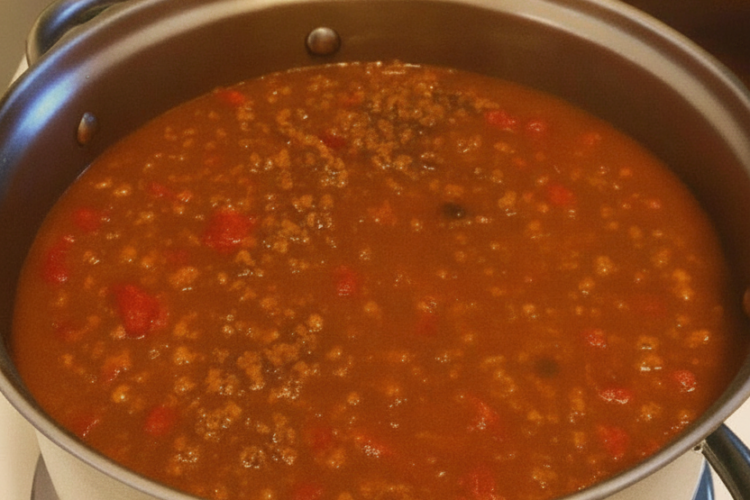
A Big Pot of Chili is a visual and sensory masterpiece: deep red broth bubbling gently, studded with tender beef crumbles, vibrant bell pepper flecks, and optional beans peeking through. The aroma is intoxicating—smoky spices mingling with savory beef and tangy tomatoes, drawing everyone to the kitchen.
Ladled into bowls, it’s thick and hearty, clinging to the spoon with rich texture. Flavor layers unfold: initial warmth from spices, meaty depth, subtle sweetness from vegetables, and lingering gentle heat. Topped with cheese (melting creamily), sour cream (cool contrast), or onions (crunch), each bite is comforting perfection.
Simmering evokes homey magic; leftovers thicken beautifully. This chili satisfies deeply, warming body and spirit.
Nutritional Information
This hearty chili is nutritious yet indulgent. Approximate per serving (based on 10 servings with beans, from similar recipes and data):
- Calories: 350-450
- Total Fat: 18-25g (Saturated Fat: 7-10g)
- Carbohydrates: 25-35g (Sugars: 8-12g; Fiber: 8-10g from beans/veggies)
- Protein: 25-30g (from beef and beans)
- Sodium: 800-1200mg (varies with salt/broth; reduce for lower)
Rich in iron, vitamin C, and protein; beans add fiber for digestion. Moderation suits balanced diets.
Conclusion
A Big Pot of Chili captures comfort food essence: simple ingredients transformed into flavorful, crowd-pleasing magic rooted in American frontier spirit yet adaptable today.
Simmering it builds anticipation and memories, rewarding patience with depth. It’s more than meal—it’s tradition, warmth, and satisfaction in one pot.
Recommendation
I strongly recommend making this Big Pot of Chili soon—perfect for gatherings or meal prep. Double for freezing; it reheats beautifully.
Experiment with heat levels or toppings. Pair with cornbread for classic bliss.
Embracing Healthful Indulgence
Chili fits healthful eating mindfully. Lean beef provides protein and iron; vegetables and optional beans offer fiber, vitamins, and antioxidants supporting heart health and satiety.
Portion control allows enjoyment without excess calories or sodium. Balance with salads or whole grains.
Indulgence here means nourishing body while delighting senses—savor this chili as flavorful fuel for active life.