Introduction
Aunt Betty’s Homestyle German Rocks are a delightful embodiment of simple, heartfelt baking that transports us back to cozy kitchens filled with the aroma of fresh cookies cooling on wire racks. These charming little cookies, with their crisp edges, tender centers, and generous dusting of confectioners’ sugar, resemble snowy rocks—hence the whimsical name that has endeared them to generations of bakers. Though the provided recipe yields a buttery shortbread-like cookie enriched with chopped walnuts and a hint of vanilla, the name “German Rocks” evokes a broader family of holiday treats often associated with European-inspired American baking traditions. This particular version stands out for its minimal ingredients and effortless preparation, making it ideal for both novice bakers and seasoned ones seeking a quick yet satisfying indulgence. In an era where elaborate desserts dominate holiday spreads, Aunt Betty’s German Rocks remind us that true comfort often lies in uncomplicated pleasures—a handful of pantry staples transformed into golden, nutty morsels that melt in your mouth.
These cookies are more than just a recipe; they represent a bridge between past and present, evoking memories of family gatherings, holiday cookie exchanges, and the quiet joy of sharing homemade treats. Whether enjoyed with a cup of hot cocoa on a winter evening or packaged as thoughtful gifts, they capture the essence of homestyle baking at its finest. The beauty of this recipe lies in its versatility and forgiveness; it requires no fancy equipment, no chilling time, and delivers consistent results every time. As we delve deeper into their origins, significance, and preparation, you’ll discover why Aunt Betty’s German Rocks deserve a permanent spot in your baking repertoire. This blog post will guide you through every aspect, from historical context to practical tips, ensuring you can recreate these treasures with confidence and perhaps even add your own family twist.
Origin
The name “German Rocks” conjures images of hearty, rugged cookies rooted in European heritage, but the story behind them is a fascinating blend of immigration, adaptation, and American innovation. While traditional German holiday baking is renowned for spiced treats like Lebkuchen, Pfeffernusse, and Springerle—often featuring anise, cinnamon, cloves, and intricate molds—the “Rocks” family of cookies emerged more prominently in North America, particularly among communities with German roots. Many variations of “German Rocks” or “Rock Cookies” trace back to the early 20th century, popularized in places like Frankenmuth, Michigan—a town famous for its Bavarian-themed celebrations and the Bavarian Inn, where a denser version packed with dates, raisins, spices, and nuts became a signature holiday offering.
However, Aunt Betty’s Homestyle version diverges from these fruit-heavy recipes, focusing instead on a simpler, butter-rich dough reminiscent of classic shortbread or snowball cookies. This lighter take may draw inspiration from walnut crescents or Mexican wedding cookies, which share the powdered sugar dusting and nutty crunch, but with a nod to German-American homestyle baking. The “Aunt Betty” moniker suggests a personal, family-handed-down recipe, evoking the countless “Aunt So-and-So” treats that populated mid-century American cookbooks and community recipe exchanges. Names like this often signified trusted, no-fail recipes shared among neighbors, church groups, and extended families, much like the iconic Betty Crocker recipes that influenced home bakers across the United States.
The “rocks” descriptor likely stems from the cookies’ irregular, bumpy appearance created by chopped nuts protruding from the dough, giving them a rocky texture once baked and dusted. In some regional lore, similar cookies were called “Michigan Rocks” or “Christmas Rocks,” highlighting their popularity during the holiday season in the Midwest. Immigrant families from Germany and surrounding areas brought baking traditions that emphasized durability—cookies that stored well for winter months or travel—leading to sturdy, nut-filled drops that “rocked” with flavor. Over time, recipes evolved; some retained spices and dried fruits for a festive punch, while others, like this one, streamlined to highlight pure buttery goodness and walnuts. Aunt Betty’s version feels like a modern homage to those roots, perhaps refined over years in a family kitchen to suit contemporary tastes for less sweetness and more elegance.
This evolution reflects broader trends in American baking history, where European influences met local ingredients and preferences. By the mid-20th century, as home baking boomed with the rise of electric mixers and widespread cookbook distribution, simplified recipes like this became staples. Today, Aunt Betty’s German Rocks stand as a testament to that legacy—a recipe that honors tradition while embracing ease, proving that the best origins stories are those baked into every bite.
Cultural Significance
In the tapestry of global cookie culture, German-inspired treats hold a special place, particularly during the holiday season, symbolizing warmth, generosity, and community. Traditional German Christmas markets brim with spiced cookies that trace back centuries, fostering a sense of Gemütlichkeit—cozy togetherness—that has influenced baking worldwide. While Aunt Betty’s German Rocks lack the heavy spicing of classics like Pfeffernusse (pepper nuts) or Lebkuchen (gingerbread), their name and nutty profile connect them to this rich heritage, representing an American adaptation that celebrates simplicity amid festive abundance.
Culturally, “rock” cookies often signify resilience and sustenance; their dense, portable nature made them ideal for holiday travel, gift-giving, or stocking stuffers in immigrant households facing harsh winters. In German-American communities, such as those in Pennsylvania Dutch country or Michigan’s Bavarian enclaves, these cookies became part of annual baking marathons, where families produced dozens of varieties to share. The act of baking and exchanging cookies reinforced bonds, much like the Scandinavian “syv slags kaker” (seven kinds of cookies) tradition or Italian biscotti swaps. Aunt Betty’s version, with its optional sugar dusting evoking fresh snow, fits perfectly into this narrative, offering a blank canvas for personalization while evoking nostalgia.
Beyond holidays, these cookies embody healthful indulgence in moderation—nuts providing protein and healthy fats, butter offering richness without overwhelming sweetness. In today’s wellness-focused world, they align with mindful eating, reminding us that treats can nourish both body and soul. Their cultural significance lies in democratizing baking: no need for rare spices or tools, just quality ingredients and love. Passed down as “Aunt Betty’s,” they highlight how recipes become family lore, preserving stories across generations. In a fast-paced society, baking German Rocks slows us down, inviting reflection on heritage and the simple joys that transcend trends.
Ultimately, Aunt Betty’s Homestyle German Rocks signify enduring comfort—a cultural touchstone that bridges old-world roots with new-world simplicity, inviting everyone to the table.
Ingredients Quantity
The beauty of Aunt Betty’s Homestyle German Rocks lies in their straightforward ingredient list, requiring just a few high-quality staples to yield approximately 36-48 cookies, depending on size. Precise measurements ensure consistent texture and flavor:
- All-purpose flour: 2 cups (about 250 grams)—provides structure and tenderness without heaviness.
- Unsalted butter, softened: 1 cup (2 sticks or 226 grams)—the star for richness and flakiness; softening to room temperature is key for easy creaming.
- Granulated sugar: 1/2 cup (100 grams)—adds subtle sweetness without overpowering the nuts and vanilla.
- Salt: 1/4 teaspoon—enhances flavors and balances the butter’s creaminess.
- Vanilla extract: 1 teaspoon—infuses warm, aromatic depth; use pure extract for best results.
- Walnuts, chopped: 1/2 cup (about 60 grams)—delivers crunchy texture and nutty earthiness; toast lightly for amplified flavor if desired.
- Confectioners’ sugar: For dusting (optional, about 1/2 cup or as needed)—creates the signature snowy appearance and a melt-in-your-mouth finish.
These quantities scale easily; double for larger batches, but bake in rotations to maintain even heat. Using weight measurements alongside volume ensures precision, especially with flour, which can compact variably.
Optional Additions
While the core recipe shines in its purity, optional additions allow customization to suit tastes or occasions, transforming these rocks into personalized gems. Consider incorporating 1/4 teaspoon of almond extract alongside vanilla for a marzipan-like nuance, evoking European influences. For a festive twist, add 1/4 cup of finely chopped dried cranberries or cherries, introducing tart bursts that complement the walnuts beautifully.
Chocolate lovers might fold in 1/4 cup mini chocolate chips or drizzle cooled cookies with melted dark chocolate. A pinch of cinnamon or nutmeg (1/8 teaspoon each) nods to spiced German traditions without overwhelming the delicate base. For texture variety, substitute half the walnuts with pecans or hazelnuts, or add a handful of rolled oats for subtle chew. Lemon or orange zest (1 teaspoon) brightens the dough, perfect for springtime variations.
Vegan adaptations swap butter for plant-based alternatives and use maple syrup in place of some sugar. Gluten-free bakers can replace flour with a 1:1 blend. These additions keep the recipe versatile, encouraging experimentation while honoring its homestyle roots.
Tips for Success
Achieving perfect Aunt Betty’s German Rocks relies on technique as much as ingredients. Start with room-temperature butter for proper creaming—beat until truly pale and fluffy (3-5 minutes) to incorporate air for lighter texture. Avoid overmixing once flour is added; stir just until combined to prevent toughness.
Chop walnuts uniformly for even distribution and bite. If dough feels too soft, chill briefly (10-15 minutes) before shaping. Roll balls consistently (1-inch diameter) for uniform baking; slight flattening promotes even golden edges.
Preheat oven fully and use parchment for easy release and cleanup. Bake until edges are lightly golden—overbaking yields dryness. Cool on sheet initially to set structure, then transfer to rack. Dust with confectioners’ sugar while slightly warm for better adhesion, or twice for thicker coating.
Store in airtight containers up to two weeks; flavors mellow beautifully. Freeze unbaked balls for fresh-baked convenience. These tips ensure foolproof results every time.
Instructions
Follow these detailed steps for flawless Aunt Betty’s Homestyle German Rocks:
Step 1: Prepare the Oven and Pan. Preheat to 350°F (175°C). Line a large baking sheet with parchment paper for non-stick, even baking and easy cleanup.
Step 2: Cream the Butter and Sugar. In a medium bowl, use an electric mixer to beat softened butter and granulated sugar until pale, light, and fluffy—about 3-5 minutes. This step builds tenderness.
Step 3: Form the Dough. Incorporate vanilla extract. Gradually add flour and salt, mixing on low until a soft, cohesive dough forms with no dry streaks. Overmixing toughens cookies.
Step 4: Add the Walnuts. Gently fold in chopped walnuts by hand for even distribution without crushing.
Step 5: Shape the Cookies. Roll dough into 1-inch balls (about 1 tablespoon each). Place on sheet 2 inches apart to allow spreading.
Step 6: Bake and Cool. Bake 12-15 minutes until edges turn lightly golden. Rest on sheet 5 minutes for setting, then cool fully on wire rack.
Step 7: Finish with Sugar. Once completely cool, generously dust with confectioners’ sugar, tossing in a bag for even coverage if desired.
Yield: 36-48 cookies. Enjoy fresh or stored.
Description
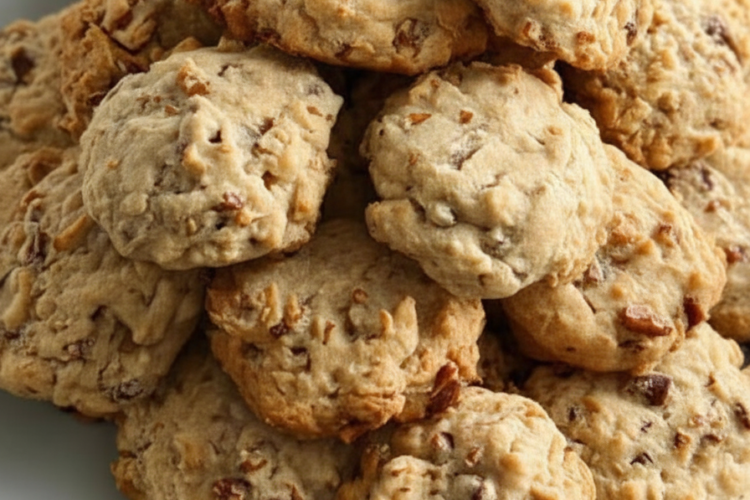
Aunt Betty’s Homestyle German Rocks are petite orbs of buttery bliss, with crisp exteriors yielding to tender, crumbly interiors studded with crunchy walnut pieces. The subtle vanilla aroma mingles with toasted nut fragrance, while optional powdered sugar cloaks them in ethereal sweetness, mimicking fresh-fallen snow on rugged terrain.
Bite into one, and experience layered textures: initial snap, followed by melt-away softness and walnut bursts. Not overly sweet, they balance richness with restraint, making them addictive yet refined. Visually appealing in irregular shapes, dusted white against golden bases, they evoke rustic charm—perfect for platters or jars.
Flavor profile: Buttery foreground, nutty depth, vanilla whisper. Ideal alongside coffee, tea, or milk, they shine as after-dinner treats or midday picks. Their description defies mere words; baking reveals true magic.
Nutritional Information
Per cookie (based on 48 yield, without optional dusting; values approximate using standard calculators):
- Calories: 85-90
- Total Fat: 6g (Saturated: 3.5g)
- Cholesterol: 15mg
- Sodium: 20mg
- Total Carbohydrates: 8g (Sugars: 2g)
- Protein: 1g
Walnuts contribute healthy fats, vitamin E, and antioxidants. Butter provides energy and fat-soluble vitamins. Moderate portions fit balanced diets; nuts add satiety. With dusting, add 10-15 calories/sugars per cookie. Compared to fruit-spice versions, this is lighter, lower-sugar.
Conclusion
Aunt Betty’s Homestyle German Rocks encapsulate baking’s enduring appeal—simple ingredients yielding profound satisfaction. From potential European echoes to American family tables, they’ve endured for their ease, flavor, and versatility. This exploration—from origins to execution—highlights their timelessness in a complex world.
Baking them fosters connection, whether solo or with loved ones. As they cool and dust, anticipate shared joy. These rocks ground us in tradition while inviting innovation.
Recommendation
I wholeheartedly recommend Aunt Betty’s Homestyle German Rocks for holiday baking, gift-giving, or everyday treats. Their quick prep and crowd-pleasing nature make them essential. Try soon—you’ll wonder how such simplicity delivers such delight. Double batches; they vanish fast!
Embracing Healthful Indulgence
In mindful eating eras, Aunt Betty’s German Rocks exemplify balance—rich yet portion-controlled, nut-boosted for nutrition. Walnuts offer omega-3s, heart support; moderation allows guilt-free enjoyment. Pair with fruit or tea for wholesome snacks.
They teach indulgence’s joy without excess, celebrating life’s sweet moments. Embrace them as healthful treats nourishing body and spirit.