Introduction
Philly Cheesesteak Egg Rolls represent a brilliant fusion of two beloved culinary traditions: the iconic Philadelphia cheesesteak sandwich and the crispy, golden-fried egg roll wrapper commonly associated with Asian-inspired appetizers. This inventive dish takes the hearty, savory filling of thinly sliced beef, melted cheese, onions, and peppers from the classic Philly cheesesteak and encases it in a delicate wrapper before deep-frying it to perfection. The result is an irresistible handheld snack that combines juicy, cheesy goodness with an audacious crunch, making it a favorite at parties, game days, and casual gatherings. Emerging as a modern twist on Philadelphia’s street food legacy, these egg rolls have gained widespread popularity across the United States, appearing on menus from casual diners to upscale restaurants and even chain establishments like The Cheesecake Factory.
What makes Philly Cheesesteak Egg Rolls so appealing is their perfect balance of textures and flavors—the tender beef mingles with gooey cheese, softened vegetables add subtle sweetness and bite, all enveloped in a shatteringly crisp exterior that gives way with each satisfying bite. They offer the comfort of a cheesesteak without the mess of a dripping sandwich, allowing for easy dipping in sauces like ketchup, cheese whiz, or ranch. This dish embodies American culinary creativity, blending regional pride with innovative flair, and it’s remarkably straightforward to prepare at home using everyday ingredients. Whether you’re a die-hard Philly native or simply a fan of bold, indulgent foods, these egg rolls deliver an explosion of taste that bridges cultures and satisfies cravings in one compact package.
Beyond their deliciousness, Philly Cheesesteak Egg Rolls highlight how food evolves through cultural exchange and experimentation. The cheesesteak itself is a symbol of Philadelphia’s working-class roots, while the egg roll format nods to the influence of immigrant communities in American cuisine. Together, they create something entirely new yet deeply familiar, proving that great food often arises from unexpected combinations. In this comprehensive guide, we’ll explore the origins, significance, ingredients, preparation tips, step-by-step instructions, sensory descriptions, nutrition, and more, empowering you to master this crowd-pleasing recipe in your own kitchen.
Origin
The story of Philly Cheesesteak Egg Rolls begins with the legendary Philadelphia cheesesteak, invented in the 1930s by Pat Olivieri, a hot dog vendor in South Philadelphia. Tired of eating the same hot dogs day after day, Pat grilled some thinly sliced beef scraps with onions on his stand one afternoon in 1930. The aromatic sizzling meat caught the attention of a passing taxi driver, who insisted on trying it instead of his usual hot dog. Pat placed the beef and onions in a rolled bun, and the cheesesteak was born—initially without cheese. Word spread quickly, and Pat and his brother Harry soon opened Pat’s King of Steaks, still a landmark today. Cheese entered the picture later, with provolone added in the 1940s and Cheez Whiz becoming popular in the 1950s, sparking ongoing debates among purists.
This humble street food quickly became synonymous with Philadelphia, embodying the city’s blue-collar ethos, immigrant influences, and no-frills attitude. Rival spots like Geno’s Steaks emerged in the 1960s, creating the famous crossroads rivalry at 9th Street and Passyunk Avenue. The cheesesteak’s fame extended nationally through tourism, sports events, and media, solidifying its status as an American icon. However, the egg roll variation is a much more recent innovation, tracing its roots to the mid-1990s in Philadelphia itself.
Accounts vary on the exact inventor, but multiple sources point to creative chefs repurposing leftovers or experimenting with fusion concepts. One popular origin story credits the former Four Seasons hotel in downtown Philly, where banquet cooks reportedly wrapped leftover cheesesteak filling in egg roll wrappers and fried them after an event. Similar claims come from restaurants like Davio’s and Stephen Starr’s The Continental, as well as corner Chinese takeout spots in Philly and South Jersey adapting the idea. This timing aligns with a broader trend in American cuisine toward playful fusions, blending the hearty cheesesteak with the crispy egg roll format popularized by Asian-American eateries. By the early 2000s, cheesesteak egg rolls had become a staple appetizer in Philadelphia, spreading nationwide and even inspiring commercial frozen versions.
The dish’s emergence reflects Philadelphia’s diverse food scene, influenced by Italian, Jewish, and Asian communities. It also showcases how iconic foods adapt over time—much like how the original cheesesteak evolved from a plain steak sandwich. Today, Philly Cheesesteak Egg Rolls stand as a testament to culinary ingenuity, transforming a regional sandwich into a portable, fryable delight that’s beloved far beyond Pennsylvania’s borders.
Cultural Significance
Philly Cheesesteak Egg Rolls hold a unique place in modern American food culture as a symbol of fusion cuisine and regional pride reinvented for contemporary palates. The original cheesesteak is deeply woven into Philadelphia’s identity, representing resilience, community, and straightforward satisfaction—often enjoyed late at night, at sporting events like Eagles or Phillies games, or as a quick lunch for workers. It’s a food that transcends class, uniting locals and visitors in heated debates over “wit” or “witout” onions, Provolone versus Whiz, and the best spot to get one. Politicians have even campaigned with cheesesteaks, attempting (sometimes awkwardly) to connect with voters through this edible emblem of authenticity.
By wrapping that same filling in an egg roll and frying it, the egg roll version adds layers of cultural blending and innovation. It emerged during a period when American diners were embracing cross-cultural dishes, influenced by immigration and globalization. The egg roll wrapper, derived from Chinese spring rolls but adapted in American-Chinese restaurants, provides a crispy vehicle that makes the cheesesteak more portable and shareable—perfect for appetizers at bars, parties, or food trucks. In Philadelphia, it became a menu staple at fusion spots and takeouts, bridging neighborhoods and appealing to younger generations seeking novel twists on classics.
Culturally, these egg rolls signify evolution without abandonment of roots. Purists may scoff at deviations from the traditional hoagie roll, but the variation honors the cheesesteak’s spirit while making it accessible in new forms. They’ve appeared in national chains, food blogs, and even vegan adaptations, demonstrating the cheesesteak’s enduring appeal. In a broader sense, Philly Cheesesteak Egg Rolls celebrate America’s melting pot: Italian-American origins of the cheesesteak meet Asian-inspired frying techniques, resulting in something distinctly American. They’re a reminder that food culture thrives on adaptation, turning comfort classics into exciting, indulgent experiences that bring people together over shared bites.
This dish also highlights Philadelphia’s ongoing influence on national cuisine. Just as the original cheesesteak inspired countless imitations worldwide, the egg roll version has proliferated, appearing at festivals, sports venues, and home kitchens. It embodies joyful indulgence—crispy, cheesy, meaty perfection that’s hard to resist—while nodding to the city’s history of innovation born from necessity and creativity.
Ingredients Quantity
The foundation of authentic Philly Cheesesteak Egg Rolls lies in simple, high-quality ingredients that capture the essence of the classic sandwich. This recipe yields approximately 24 egg rolls, making it ideal for parties or meal prep. Here’s the precise list with quantities:
- Ground beef: 1 pound (preferably 80/20 for juiciness; alternatively, thinly sliced ribeye for a more traditional texture).
- Worcestershire sauce: 1 tablespoon (adds umami depth and tang).
- Salt: 1/2 teaspoon (enhances overall flavor; adjust to taste).
- Ground black pepper: 1/2 teaspoon (provides a subtle kick).
- Butter: 2 tablespoons (for sautéing vegetables, adding richness).
- Yellow onion, chopped: 1 medium (about 1 cup; brings sweetness when caramelized).
- Green bell pepper, chopped: 1/2 medium (about 3/4 cup; classic “wit peppers” addition for crunch and mild bitterness).
- Egg roll wrappers: 24 (standard square wrappers, found in the refrigerated produce section).
- American cheese, sliced: 12 slices (halved for easy melting; provolone or Cheez Whiz can substitute for variety).
- Vegetable oil: 3/4 cup or more as needed for frying (neutral oil like canola works best for high-heat frying).
These quantities ensure a balanced filling that’s flavorful without overwhelming the wrapper. Using fresh ingredients elevates the dish—opt for good-quality beef and crisp vegetables for the best results.
Optional Additions
While the core recipe stays true to Philly traditions, optional additions allow customization to suit preferences or add complexity. Common variations include:
- Mushrooms: 8 ounces sliced (sautéed with onions and peppers for earthy depth; a popular “pizza steak” influence).
- Red or yellow bell peppers: Substitute or add alongside green for sweeter notes and vibrant color.
- Jalapeños or banana peppers: 1-2 diced (for heat; deseed for milder spice).
- Provolone or mozzarella cheese: Replace American for sharper or stretchier melts.
- Garlic: 2-3 cloves minced (sautéed with vegetables for aromatic boost).
- Herbs like oregano or Italian seasoning: 1 teaspoon (evokes Italian-American roots).
- Hot sauce or cayenne: Dash in the beef for subtle spice.
These add-ins bulk up the filling slightly, so adjust quantities or use extra wrappers. For lighter versions, incorporate diced tomatoes post-cooking or serve with fresh toppings.
Tips for Success
Achieving perfect Philly Cheesesteak Egg Rolls requires attention to detail, especially in rolling and frying. Here are essential tips gathered from experienced cooks:
First, prepare the filling ahead and let it cool completely—hot filling can soften wrappers and cause tears. Drain excess grease from the beef thoroughly to prevent soggy rolls. When assembling, work with one wrapper at a time, keeping others covered with a damp towel to avoid drying out. Moisten edges generously with water (or egg wash for extra seal) before folding to ensure tight closure and prevent bursting during frying.
For rolling technique: Place filling in the center, fold bottom corner over, tuck sides in snugly, then roll tightly like a burrito—practice makes perfect, and imperfect rolls still taste great. Don’t overfill; about 3 tablespoons per roll is ideal for even cooking.
Frying is key for crispiness: Use a deep skillet or pot with at least 1 inch of oil heated to 350-375°F (test with a wrapper scrap—it should sizzle immediately). Fry in small batches (3-4 at a time) to maintain temperature, turning halfway for even browning, about 3-4 minutes total. Drain on a wire rack over paper towels for maximum crunch—paper towels alone can steam and soften.
Alternatives: Bake at 400°F for 15-20 minutes, brushing with oil and flipping halfway, or air fry at 375°F for 10-12 minutes. For make-ahead, assemble and refrigerate up to a day or freeze uncooked rolls for months—fry from frozen, adding time.
Finally, serve immediately for peak texture, and experiment with dips like cheese sauce, ranch, or sriracha mayo to elevate the experience.
Instructions
Follow these detailed steps to create flawless Philly Cheesesteak Egg Rolls:
Step 1: Cook the Beef. In a large skillet over medium heat, add the 1 pound ground beef. Break it apart minimally to keep pea-sized chunks for texture, cooking until browned (5-7 minutes). Drain excess grease carefully. Stir in 1 tablespoon Worcestershire sauce, 1/2 teaspoon salt, and 1/2 teaspoon pepper. Mix gently, then remove from heat and set aside.
Step 2: Sauté Vegetables. In the same skillet, melt 2 tablespoons butter over medium heat. Add the chopped yellow onion and 1/2 chopped green bell pepper. Cook, stirring occasionally, until softened and lightly caramelized (5-7 minutes). Return the beef mixture to the skillet, combine thoroughly, and allow to cool slightly (or fully for best rolling).
Step 3: Assemble the Egg Rolls. Lay out egg roll wrappers on a clean surface. Place half a slice of American cheese in the center of each. Spoon about 3 tablespoons of cooled filling atop the cheese. Fold the bottom corner over the filling, tuck in side corners (moistening edges with water), and roll tightly upward, sealing the top edge with more water. Repeat for all 24.
Step 4: Fry. Heat vegetable oil (at least 1 inch deep) in a deep skillet or saucepan to 350-375°F. Fry 3-4 egg rolls at a time, avoiding overcrowding, for 3-4 minutes until golden and crispy, flipping once. Maintain oil temperature between batches.
Step 5: Serve. Drain on a rack or paper towels. Serve warm with ketchup, cheese sauce, or your favorite dip.
These steps yield consistently delicious results with practice.
Description
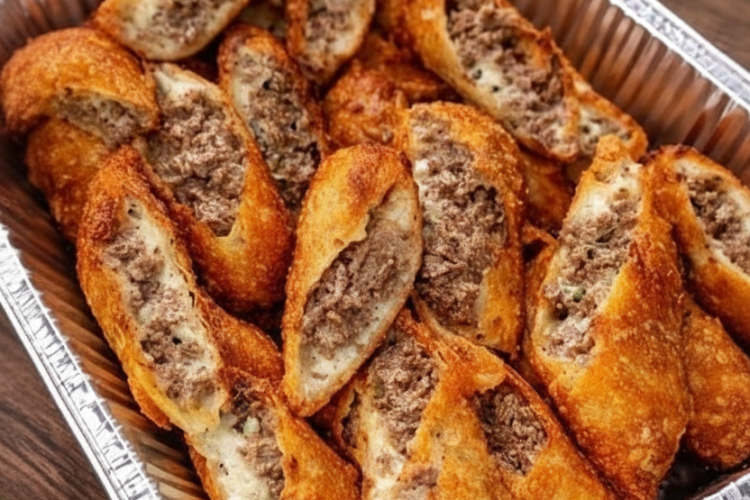
Biting into a Philly Cheesesteak Egg Roll is a multi-sensory delight that starts with the audible crunch of the golden-brown wrapper giving way to reveal steaming, juicy filling. The exterior is shatteringly crisp, fried to perfection with bubbly edges and a satisfying resistance before yielding. Inside, tender chunks of seasoned beef mingle with softened onions and peppers, their sweetness balancing the savory Worcestershire tang and black pepper bite.
Melted American cheese oozes generously, coating every bite in creamy richness that pulls in long strings—evoking the classic cheesesteak “drip” but contained. The flavors harmonize beautifully: beefy umami from the meat, subtle vegetal notes from peppers, caramelized depth from onions, all enveloped in that fried wrapper’s neutral canvas. Hot from the fryer, they’re piping with steam, best enjoyed immediately when the contrast of crisp shell and molten interior is at its peak. Dipped in tangy ketchup or creamy cheese sauce, each roll delivers bold, comforting indulgence in portable form—addictively moreish, often leading to reaching for another before the first is finished.
Visually appealing with their uniform golden hue and occasional cheese peeks, these egg rolls are as photogenic as they are flavorful, making them stars at any table.
Nutritional Information
Philly Cheesesteak Egg Rolls are undeniably indulgent, with nutrition varying by preparation and portion. Based on the provided recipe yielding 24 rolls (using ground beef and frying):
Per egg roll (approximate): 150-250 calories (higher end for fried; baked/air-fried lower at ~120-180). Breakdown: Carbohydrates ~15-20g (mostly from wrapper), Protein ~8-12g (from beef and cheese), Fat ~10-18g (from beef, cheese, and frying oil; saturated ~4-7g). Sodium ~400-600mg (from cheese, seasoning, wrappers).
Full batch: ~4000-6000 calories total. Key nutrients include iron and B vitamins from beef, calcium from cheese, but high in saturated fat and sodium—best as occasional treat. Restaurant versions often exceed 200-300 calories per roll, with some appetizers (3-4 rolls) reaching 900+ calories.
For healthier tweaks: Bake or air fry to reduce fat by 50%, use lean beef or turkey, or add veggies. Always enjoy in moderation as part of balanced diet.
Conclusion
Philly Cheesesteak Egg Rolls encapsulate the joy of culinary fusion, transforming a Philadelphia classic into an innovative, crave-worthy appetizer that’s captured hearts nationwide. From humble 1930s origins to 1990s inventive twist, this dish honors tradition while embracing creativity, delivering bold flavors and textures in every bite. Easy to make yet impressively delicious, it’s perfect for sharing and celebrating food’s power to evolve and delight.
Whether recreating Philly vibes at home or introducing friends to this hybrid wonder, these egg rolls promise satisfaction and smiles. They’ve proven that great ideas—like wrapping cheesesteak in crispy dough—can become new icons, reminding us why we love cooking: for those moments of pure, unadulterated enjoyment.
Recommendation
I highly recommend trying Philly Cheesesteak Egg Rolls for your next gathering, game day, or family dinner—they’re guaranteed crowd-pleasers that disappear fast. Start with the classic recipe, then experiment with additions like mushrooms or spice for personal flair. Pair with cold beers, dips, and sides like fries for ultimate indulgence.
For authenticity, source quality beef and fresh wrappers. If frying intimidates, air fry for nearly identical crunch with less oil. This versatile dish freezes beautifully, making it convenient for quick snacks. Dive in—you won’t regret adding this fusion favorite to your repertoire.
Embracing Healthful Indulgence
While Philly Cheesesteak Egg Rolls lean indulgent, they can fit into a mindful eating lifestyle through balance and modifications. Enjoy them occasionally as a treat, savoring the rich flavors without guilt—food joy is part of wellness. Opt for baking/air frying to cut calories and fat significantly, use lean ground sirloin or turkey, load up on veggies, or portion smaller rolls.
Pair with fresh salads or veggies for nutrient boost. Ultimately, healthful indulgence means appreciating delicious foods like these in moderation, celebrating cultural fusions that nourish body and soul alike. Treat yourself to these egg rolls; they’re worth every crispy, cheesy bite when embraced thoughtfully.