Introduction
The perfect baked potato stands as one of the simplest yet most satisfying dishes in culinary history, offering a delightful contrast between a crispy, golden exterior and a light, fluffy interior that practically melts in your mouth. This humble tuber, when prepared with care, transforms into a canvas for endless creativity, whether enjoyed plain with a pat of butter or loaded with an array of toppings that turn it into a hearty meal. At its core, the perfect baked potato relies on just a few key ingredients—large russet potatoes, olive oil, and coarse salt—yet the results can be extraordinary, evoking feelings of warmth and comfort that have made it a staple in homes around the world.
What makes a baked potato “perfect” is the magical balance of textures and flavors achieved through proper technique: the skin becomes shatteringly crisp from the salt and oil, while the inside steams to perfection, creating that signature fluffiness that begs to be fluffed with a fork. This dish is not only delicious but also incredibly versatile, adaptable to dietary preferences, seasons, and occasions—from a quick weeknight side to an impressive component of a holiday spread. In an era where complex recipes dominate, the baked potato reminds us of the beauty in simplicity, proving that with the right method, everyday ingredients can yield restaurant-quality results.
Beyond its taste, the baked potato holds a special place in our collective food memory, often associated with cozy family dinners, backyard barbecues, or even street food vendors in bustling cities. Its appeal lies in its accessibility; anyone with an oven can master it, and the rewards are immediate and profound. As we delve into this comprehensive guide, we’ll explore everything from its ancient origins to modern variations, ensuring you have all the knowledge to create your own perfect baked potato every time.
Origin
The story of the baked potato begins thousands of years ago in the high Andes mountains of South America, where the potato was first domesticated by ancient civilizations around 8000 to 5000 BC in what is now modern-day Peru and Bolivia. The Inca Indians recognized the potato’s incredible resilience, cultivating it in harsh altitudes where few other crops could thrive, and they developed early methods of cooking it, including baking in earth ovens known as huatia—underground pits lined with hot stones that slowly roasted the tubers to perfection. These early baked potatoes were simple, often enjoyed with local herbs or minimal seasonings, highlighting the natural earthy sweetness of the vegetable.
When Spanish conquistadors arrived in the 16th century, they encountered this versatile crop and brought it back to Europe, where it initially faced suspicion as a strange New World plant but eventually revolutionized agriculture. Potatoes spread rapidly across the continent, providing a reliable, calorie-dense food source that helped sustain growing populations. In Europe, baking potatoes became a common practice, especially in regions like Britain, where they were roasted in the embers of fires or in bakers’ ovens after bread baking was done, giving rise to the term “jacket potato” for those cooked in their skins.
The modern oven-baked potato as we know it gained prominence in the United States in the early 20th century, particularly tied to the development of Idaho’s russet potatoes. Large, starchy russets were initially considered unsuitable for market due to their size, but in 1908, railway dining car operators discovered that slow-baking these oversized potatoes yielded incredibly fluffy interiors and crispy skins, turning a surplus crop into a sensation served to passengers on the Northern Pacific Railway. This innovation popularized the “great big baked potato,” cementing its status in American cuisine and inspiring the loaded versions we enjoy today.
Throughout history, the baked potato has evolved from a survival food in ancient Andes to a beloved comfort dish worldwide, reflecting migrations, innovations, and cultural exchanges that have carried the potato across oceans and generations.
Cultural Significance
The baked potato transcends mere sustenance, embodying cultural identity and social traditions in numerous societies around the globe. In its native Peru, the potato remains a symbol of national pride, with thousands of varieties celebrated in festivals and cuisine, where baked versions filled with native ingredients like aji peppers pay homage to Inca roots. This deep connection underscores the potato’s role in sustaining ancient empires and its continued importance in Andean diets.
In Britain, the “jacket potato” is an iconic street food and pub staple, often sold by vendors in the 19th century as affordable, portable meals that doubled as hand warmers in cold weather. Topped with classics like baked beans, cheese, or tuna mayo, it represents hearty, no-fuss British comfort food, evoking nostalgia for simpler times and appearing at events from Bonfire Night to casual lunches.
Across the Atlantic, the loaded baked potato became a hallmark of American diner and steakhouse culture, especially in the Midwest and West, where Idaho’s promotion of massive russets turned it into a symbol of abundance and generosity. Railroad workers in the early 1900s customized their baked potatoes with various toppings, fostering a tradition of personalization that mirrors America’s melting pot ethos.
Globally, the baked potato adapts to local tastes—spiced in India, served with curry in Japan, or incorporated into Russian salads—illustrating its universal appeal as a blank canvas for cultural expression. It has fed families through hardships, like during Europe’s famines when potatoes provided vital calories, and today stands as a comforting reminder of home in diverse diaspora communities.
In contemporary culture, the baked potato often signifies healthful indulgence: nutritious yet satisfying, simple yet sophisticated, bridging generations and borders with its enduring warmth.
Ingredients Quantity
For the classic perfect baked potato serving four people, the ingredients are straightforward and minimal, allowing the natural flavors of the potato to shine through while enhancing texture with a crispy, salted skin. Here is the precise quantity breakdown:
- Large russet potatoes: 4 (select ones that are roughly uniform in size, about 8-12 ounces each, for even cooking)
- Olive oil: 2 tablespoons (extra-virgin for the best flavor, though any neutral oil works in a pinch)
- Coarse salt: 1 tablespoon (kosher or sea salt preferred for its crunchy texture; avoid fine table salt as it dissolves too quickly)
These quantities ensure each potato is generously coated, promoting that signature crisp skin without overwhelming the dish. Russets are essential due to their high starch content, which creates the fluffy interior, while the oil conducts heat evenly and the salt draws out moisture for crunch.
Scaling is simple: for two potatoes, halve the oil and salt; for eight, double them. Always prioritize quality—fresh, firm potatoes without green spots or sprouts yield the best results.
Optional Additions
While the base recipe shines in its simplicity, optional additions can elevate the perfect baked potato into a customized masterpiece, adding layers of flavor, creaminess, or crunch. Classic toppings include butter (salted or unsalted for richness), sour cream or Greek yogurt (for tangy coolness), shredded cheddar or other cheeses (melted for gooey indulgence), chopped chives or green onions (for fresh, sharp bite), and crispy bacon bits (for smoky saltiness).
For more adventurous variations, consider broccoli and cheese for a vegetarian twist, chili con carne for a hearty meal, or tuna mixed with mayonnaise and corn for a British-inspired filling. Healthier options might include avocado slices, salsa, and black beans for a Tex-Mex vibe, or pesto with cannellini beans for an Italian flair.
Herb-infused compound butters—mixed with garlic, lemon zest, or dill—add sophistication, while spices like paprika, black pepper, or everything bagel seasoning can be sprinkled pre-baking for extra zest. Vegan alternatives such as nutritional yeast for cheesiness or plant-based sour cream keep it inclusive.
The beauty of optional additions lies in their flexibility; start simple and experiment to suit your mood or dietary needs.
Tips for Success
Achieving the perfect baked potato requires attention to a few key details that make all the difference between good and exceptional. First, always choose russet potatoes for their high starch and thick skins, which ensure fluffiness inside and crispness outside—avoid waxy varieties like red or fingerling, as they tend to stay dense.
Preheat your oven thoroughly to 400°F (200°C) for even cooking, and never wrap in foil, as it steams rather than bakes, resulting in soggy skin. Instead, place potatoes directly on the middle rack with a baking sheet below to catch drips, allowing air circulation for maximum crispiness.
Poking holes with a fork is crucial to release steam and prevent explosions, while rubbing with oil and generously salting creates a flavorful, crunchy crust—use coarse salt for the best texture. Select similar-sized potatoes for uniform doneness, and test by piercing with a fork; it should glide in easily when ready, typically after 50-60 minutes.
For extra crisp skin, increase the temperature to 425°F or finish under the broiler briefly. If baking multiple batches, rotate for even heat exposure. Store leftovers in the fridge and re-crisp in the oven rather than microwaving to preserve texture.
These tips, drawn from generations of home cooks and professionals, guarantee success every time.
Instructions
Follow these step-by-step instructions for foolproof perfect baked potatoes:
Step 1: Preheat the Oven – Begin by preheating your oven to 400°F (200°C), positioning the middle rack accordingly and placing a baking sheet on the lower rack to catch any oil drips. This ensures consistent heat distribution right from the start.
Step 2: Prepare the Potatoes – Thoroughly scrub the four large russet potatoes under cold running water to remove all dirt and debris, then pat them completely dry with a paper towel—moisture is the enemy of crispy skin. Use a fork to poke 8-10 holes all over each potato, allowing steam to escape and preventing any risk of bursting during baking.
Step 3: Season the Potatoes – Drizzle or brush the 2 tablespoons of olive oil evenly over each potato, rubbing it in with your hands to coat every surface thoroughly. Then, sprinkle the 1 tablespoon of coarse salt generously over all sides, gently pressing it into the oiled skin for adhesion and maximum flavor infusion.
Step 4: Bake the Potatoes – Place the prepared potatoes directly on the middle oven rack, spacing them apart for air flow. Bake for 50-60 minutes, depending on size—check doneness by inserting a fork; it should meet no resistance in the center. For larger potatoes, add 10-15 minutes as needed.
Step 5: Serve – Remove from the oven and let rest for 5 minutes to allow steam to settle. Slice each potato open lengthwise with a sharp knife, gently squeeze the ends to open it up, and fluff the interior with a fork for that light, airy texture. Add desired toppings immediately while hot for the best melt and integration.
This method yields consistently perfect results with minimal effort.
Description
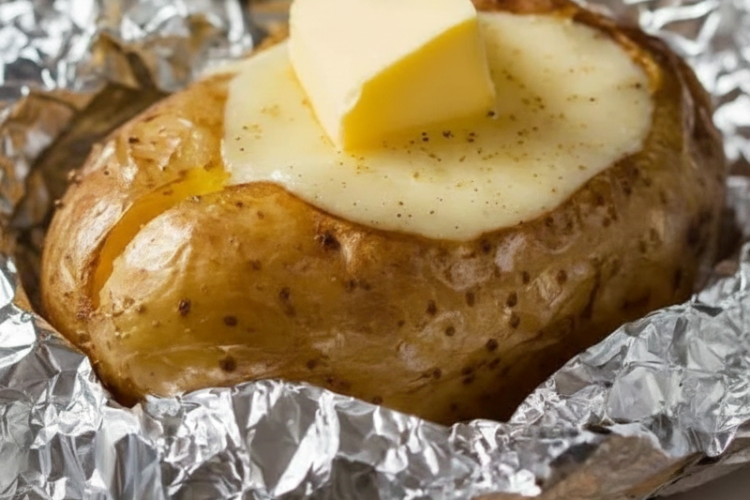
The perfect baked potato is a sensory delight: visually, it boasts a rugged, golden-brown skin speckled with salt crystals that promise crunch, split open to reveal a steaming, snow-white interior that’s pillowy and inviting. The aroma is earthy and comforting, with hints of roasted starch mingling with the subtle nuttiness from the olive oil.
Texturally, it’s unparalleled—the skin shatters with a satisfying snap under your fork, giving way to an impossibly fluffy flesh that practically dissolves on the tongue, light yet substantial. Flavor-wise, it’s subtly sweet and starchy at its core, enhanced by the salty crust that seasons every bite without needing extras, though toppings amplify its versatility.
Whether plain or loaded, it offers warmth and fullness, a harmonious balance of crisp and soft that feels indulgent yet wholesome. This description captures why it’s beloved: unpretentious perfection in every forkful.
Nutritional Information
A single medium baked russet potato with skin (about 5-6 ounces or 150g) provides approximately 110-160 calories, making it a low-calorie yet filling option. It’s naturally fat-free (0g fat without additions), cholesterol-free, and low in sodium if minimally salted.
Carbohydrates dominate at around 25-37g per serving, primarily complex starches for sustained energy, with 2-4g of dietary fiber—mostly in the skin—for digestive health. Protein clocks in at 3-5g, respectable for a vegetable.
Key micronutrients abound: one potato delivers 30% of daily vitamin C for immunity, 15-25% of potassium (more than a banana) for heart health and blood pressure, plus significant vitamin B6, iron, and magnesium. Eating the skin maximizes benefits, adding antioxidants and fiber.
With toppings, nutrition varies—sour cream adds creaminess and calories, while veggies boost vitamins. Overall, it’s a nutrient-dense food supporting balanced diets.
Conclusion
In wrapping up our exploration of the perfect baked potato, we see it as more than a dish—it’s a testament to timeless simplicity yielding profound satisfaction. From ancient Andean origins to modern tables, its journey reflects resilience and adaptability, offering comfort in every crispy-skinned bite.
Mastering this recipe empowers home cooks to create reliable deliciousness with minimal ingredients, fostering creativity through toppings while honoring nutritional wholeness. Whether as a side or star, it embodies healthful indulgence.
Ultimately, the perfect baked potato invites us to slow down, appreciate quality basics, and share warmth with loved ones—a classic worth cherishing.
Recommendation
I highly recommend making perfect baked potatoes a regular in your meal rotation, starting with the classic recipe and experimenting with toppings to discover personal favorites. Pair with grilled proteins for dinners, or load with veggies for meatless mains.
For gatherings, set up a toppings bar—it’s interactive and crowd-pleasing. Try variations like twice-baked or air-fried for crunch.
Embrace russets seasonally, and always eat the skin for full nutrition. This dish is forgiving, affordable, and elevating—perfect for beginners and experts alike.
Embracing Healthful Indulgence
The perfect baked potato exemplifies healthful indulgence: nutrient-packed yet decadently satisfying, allowing guilt-free enjoyment of comfort food. Its natural goodness—fiber, vitamins, minerals—supports wellness, while the fluffy texture and crispy skin provide sensory pleasure without excess.
By choosing quality ingredients and mindful toppings, it fits diverse lifestyles, from low-carb (plain) to balanced meals. Indulge in its warmth, knowing you’re nourishing body and soul—a reminder that true delight often lies in wholesome simplicity.