Introduction
Crispy Fish Fry is one of those timeless dishes that evokes immediate comfort, nostalgia, and satisfaction with every golden, crunchy bite. This classic preparation transforms simple white fish fillets into a masterpiece of texture and flavor—a shatteringly crisp exterior giving way to tender, flaky fish within. The recipe provided, using a light batter made with flour, cornstarch, baking powder, spices, and cold soda water, exemplifies the perfect balance for achieving that coveted restaurant-quality crispiness at home. Whether served as a standalone meal with lemon wedges and tartar sauce, paired with thick-cut chips for an authentic fish and chips experience, or enjoyed as part of a larger spread, Crispy Fish Fry has universal appeal across cultures and generations. It’s quick to prepare, adaptable to various tastes, and delivers an indulgent yet straightforward dining pleasure that feels both familiar and exciting. In this comprehensive guide, we’ll explore its rich history, cultural importance, precise ingredients and techniques, nutritional profile, and ways to embrace it healthfully—proving why this dish deserves a permanent spot in your culinary repertoire.
The allure of Crispy Fish Fry lies not just in its taste but in its versatility and accessibility. Using affordable ingredients and basic kitchen tools, anyone can recreate the magic of a seaside chippy or a family fish fry gathering. The use of cold carbonated liquid in the batter creates steam during frying, puffing up the coating for an airy lightness that avoids heaviness. Spices like paprika, garlic powder, and black pepper add subtle warmth without overpowering the delicate fish. This method, rooted in centuries-old traditions yet refined for modern home cooking, ensures consistent results: fish that’s moist inside, audibly crunchy outside, and irresistibly aromatic. As we delve deeper, you’ll discover how this simple recipe connects to global culinary stories, from immigrant innovations in 19th-century Britain to community traditions worldwide.
Origin
The origins of Crispy Fish Fry, particularly in its battered and deep-fried form, are deeply intertwined with the history of fish and chips, a dish often hailed as Britain’s national treasure despite its multicultural roots. Fried fish itself traces back centuries, with Sephardic Jews from Portugal and Spain introducing the technique of coating fish in flour and frying it—known as “pescado frito”—as early as the 16th century. Fleeing the Inquisition, these communities settled in places like England, bringing recipes that preserved fish without refrigeration and made it suitable for kosher diets by using oil instead of lard. By the 19th century, street vendors in London’s East End were selling this fried fish, which was affordable, nutritious, and filling for the working class during the Industrial Revolution.
The addition of chipped potatoes, or “chips,” completed the iconic pairing. Potatoes, native to South America, arrived in Europe in the late 16th century, but fried versions likely emerged in Belgium or France in the 17th century as a substitute for fish during harsh winters when rivers froze. Immigrants, including Jewish refugees like Joseph Malin—who is credited with opening the first fish and chip shop in London around 1860—combined these elements. Others point to John Lees in northern England selling from a hut in 1863. Regardless, the dish exploded in popularity, with thousands of “chippies” springing up by the early 20th century. It sustained Britons through two world wars, remaining unrationed and dubbed “the good companions” by Winston Churchill for boosting morale.
This battered style, using a light flour-based coating aerated with carbonation or leavening, evolved from these foundations. The provided recipe’s use of cornstarch for extra crispiness and soda water for lift reflects modern refinements, but the core—deep-frying white fish like cod or haddock—honors those immigrant innovations. Today, variations exist globally, from American fish fries to Asian-inspired versions, but the crispy battered fish remains a testament to culinary fusion born of necessity and migration.
Cultural Significance
Crispy battered fried fish holds profound cultural significance across the world, symbolizing community, resilience, and shared joy. In Britain, fish and chips is more than food—it’s a cultural icon evoking seaside holidays, pub gatherings, and national identity. Wrapped traditionally in newspaper (now plain paper for hygiene), it’s a democratic dish enjoyed by all classes, from factory workers to royalty. During wartime, it provided comfort and normalcy, never rationed to maintain public spirit. Coastal towns celebrate it as a link to fishing heritage, while “National Fish and Chips Day” underscores its enduring popularity.
Beyond Britain, fried fish traditions reflect diverse histories. In the American South and Midwest, fish fries are communal events, often church-hosted on Fridays during Lent, rooted in Catholic abstinence from meat and influenced by African American and immigrant communities post-slavery. These gatherings foster bonding with music, sides like coleslaw, and crispy catfish or cod. In Portugal and Spain, “pescado frito” remains a tapas staple, highlighting Mediterranean seafood culture. Globally, adaptations appear in Caribbean escovitch fish or Japanese tempura-inspired versions, showing how frying preserves and elevates humble ingredients.
The dish’s appeal lies in its sensory delight—the sizzle of batter hitting hot oil, the crunch, the steam releasing flaky fish—and its role in bringing people together. It’s nostalgic yet adaptable, a bridge between tradition and innovation, and a reminder of how food migrates and evolves with people.
Ingredients Quantity
To prepare this Crispy Fish Fry for approximately 4 servings, gather the following precise quantities:
- 500g white fish fillets (such as cod, haddock, or basa)—choose fresh or thawed frozen for best texture.
- 1 cup (about 125g) all-purpose flour—the base for structure in the batter.
- 1/2 cup (about 64g) cornstarch—essential for ultra-crispy results by inhibiting gluten formation.
- 1 teaspoon baking powder—to create lift and airiness in the coating.
- 1 teaspoon garlic powder—for savory depth.
- 1 teaspoon paprika—for mild smokiness and color.
- 1/2 teaspoon black pepper—for subtle heat.
- 1 teaspoon salt—to enhance all flavors.
- 1 cup cold soda water or sparkling water—the carbonation is key for a light, bubbly batter.
- Oil for deep frying (neutral high-smoke-point oil like vegetable, canola, or peanut)—enough to submerge fish, about 2-3 liters depending on pan.
- Fresh parsley for garnish—to add bright herbal notes.
- Lemon wedges for serving—the acidity cuts richness perfectly.
These measurements yield a batter that’s neither too thick nor thin, coating the fish evenly for optimal crispiness.
Optional Additions
While the core recipe shines in simplicity, optional additions can customize your Crispy Fish Fry to suit preferences or elevate flavors. For the batter, consider incorporating 1/2 teaspoon of cayenne pepper or chili powder for a spicy kick, or Old Bay seasoning for a classic seafood blend with celery salt and herbs. A pinch of onion powder complements the garlic, adding sweetness. For an herby twist, mix in finely chopped fresh dill or dried herbs like thyme.
Beer can replace soda water for a malty depth and extra puffiness—use a light lager, cold for best results. Some add a teaspoon of sugar to the dry mix for subtle caramelization. For serving, tartar sauce (mayo with pickles and capers), malt vinegar (traditional British style), or mushy peas provide authentic accompaniments. Sides like coleslaw, fries, or hushpuppies round out the meal. Experiment with fish varieties—tilapia for mildness or salmon for richness—ensuring adjustments for cooking time.
These additions allow personalization while preserving the dish’s crispy essence.
Tips for Success
Achieving perfect Crispy Fish Fry requires attention to key techniques. First, pat the fish thoroughly dry with paper towels—moisture causes soggy batter and oil splatters. Cut fillets into uniform pieces for even cooking. Keep all batter ingredients cold; chill the dry mix and use ice-cold soda water to create steam for maximum puff and crispiness.
Maintain oil temperature at exactly 180°C (350°F)—use a thermometer. Too low results in greasy fish; too high burns the exterior before the inside cooks. Fry in small batches to avoid dropping the temperature. Let excess batter drip off before frying to prevent clumps. Drain on a wire rack over paper towels, not directly on towels, to retain crunch.
Don’t overmix the batter—lumps are fine for tenderness. For extra adhesion, lightly dust fish in flour before dipping. Fresh oil yields cleaner flavor; reuse only if strained. These tips ensure golden, shatteringly crisp results every time.
Instructions
Follow these detailed steps for flawless Crispy Fish Fry:
- Prepare the Fish: Begin by patting the 500g fish fillets completely dry with paper towels to remove excess moisture. This step is crucial for batter adhesion and crispiness. Cut into desired portions—strips for tacos or larger pieces for plating—ensuring even sizes for uniform cooking.
- Make the Batter: In a large mixing bowl, combine 1 cup all-purpose flour, 1/2 cup cornstarch, 1 teaspoon baking powder, 1 teaspoon garlic powder, 1 teaspoon paprika, 1/2 teaspoon black pepper, and 1 teaspoon salt. Whisk thoroughly to distribute spices evenly. Gradually pour in 1 cup cold soda water while whisking gently until smooth and lump-free, resembling thin pancake batter. Avoid overwhisking to keep it light. Rest briefly if possible for better texture.
- Heat the Oil: Fill a deep, heavy-bottomed pan or Dutch oven with oil to at least 3 inches deep. Heat over medium-high until it reaches 180°C (350°F). Test readiness by dropping a bit of batter—it should sizzle vigorously and rise.
- Coat the Fish: Dip each prepared fillet into the batter, allowing excess to drip back into the bowl for a thin, even coating.
- Fry the Fish: Carefully lower battered pieces into the hot oil, frying 2-3 at a time to maintain temperature. Cook 4-5 minutes, turning once, until deep golden brown and crispy. Internal temperature should reach 63°C (145°F) for doneness.
- Drain & Serve: Remove with a slotted spoon to a wire rack or paper towels. Season lightly with salt while hot.
- Garnish & Enjoy: Sprinkle with chopped fresh parsley and serve immediately with lemon wedges squeezed over top.
These steps, followed precisely, deliver professional results.
Description
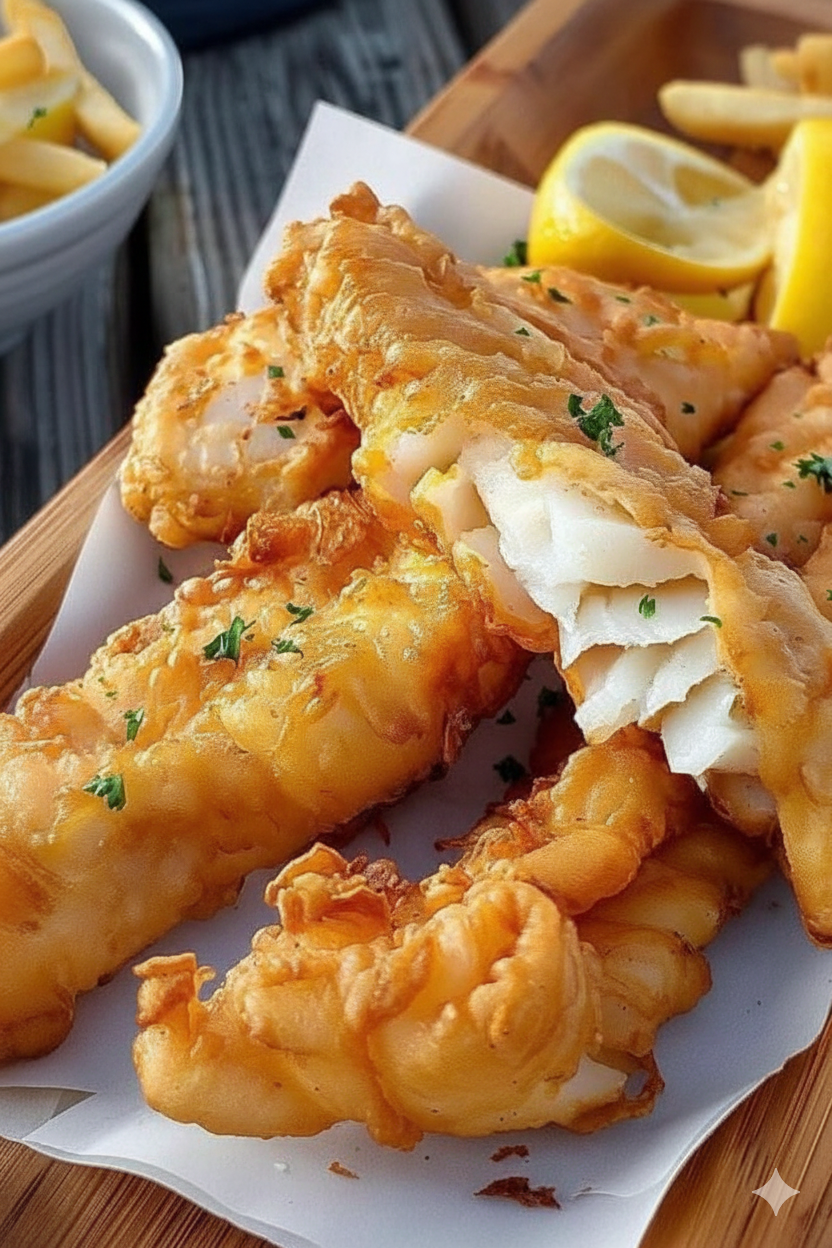
The sensory experience of Crispy Fish Fry is unparalleled. Visually, the fillets emerge from the oil a gleaming golden brown, the batter puffed and textured with tiny bubbles from the carbonation. The exterior shatters with an audible crunch upon first bite, yielding to steaming-hot, snow-white fish that’s moist, flaky, and delicately flavored. Aromas of warm spices—garlic, paprika—and fried dough mingle with the clean ocean scent of the fish.
Taste-wise, the batter provides savory crispness with hints of peppery warmth, balanced by the mild sweetness of the fish. Lemon juice adds bright acidity, cutting through richness, while parsley offers fresh herbal contrast. Texturally, it’s a symphony: crunchy shell, tender interior, perhaps paired with soft chips absorbing vinegar. This dish is indulgent yet light, satisfying cravings for fried comfort without overwhelming heaviness—a perfect harmony of simplicity and decadence.
Nutritional Information
Per serving (approximately 125g battered fried fish, based on typical analyses):
- Calories: Around 250-350, varying by oil absorption and exact portion.
- Protein: 20-25g from the fish, supporting muscle repair and satiety.
- Fat: 15-20g, mostly from frying oil, including some healthy omega-3s from fish.
- Carbohydrates: 20-30g, primarily from flour and cornstarch in batter.
- Other nutrients: Good source of selenium, vitamin B12, and phosphorus; moderate sodium from seasoning.
While deliciously indulgent due to deep-frying, the lean fish provides high-quality protein and essential fatty acids. Moderation balances enjoyment with health.
Conclusion
Crispy Fish Fry encapsulates the beauty of home cooking: transforming everyday ingredients into something extraordinary. From its immigrant origins to its role in cultural gatherings, this dish connects us to history while delighting modern palates. The provided recipe, with its fizzy batter and simple spices, delivers consistent perfection—crisp, flavorful, and satisfying. Whether recreating childhood memories or introducing it to new generations, it remains a testament to food’s power to comfort and unite.
Recommendation
I wholeheartedly recommend making this Crispy Fish Fry soon—perhaps for a weekend treat or casual gathering. Pair with homemade chips, a crisp salad, and cold beverages for an unforgettable meal. Experiment with additions like beer batter or spices to make it your own. It’s approachable for beginners yet rewarding for seasoned cooks.
Embracing Healthful Indulgence
While traditional deep-frying is indulgent, embrace healthier versions without sacrificing crispiness. Air-fry battered fish at 200°C for 10-15 minutes, spraying lightly with oil. Oven-bake on a wire rack at 220°C, flipping halfway. Pan-fry in minimal oil for a lighter sear. Use whole-grain flour or add herbs for nutrition. These adaptations allow frequent enjoyment, balancing pleasure with wellness—proving Crispy Fish Fry can be both decadent and mindful.