Introduction
Creamy Seafood Salad with Imitation Crab is a delightful, versatile dish that captures the essence of coastal flavors without the premium price tag of real crab. This refreshing salad combines flaky imitation crab meat—also known as surimi—with crisp vegetables, fresh herbs, and a tangy, creamy dressing that brings everything together in perfect harmony. It’s incredibly quick to prepare, often ready in under 30 minutes, making it an ideal choice for busy weeknights, picnic spreads, or elegant lunch gatherings. Whether served as a light standalone meal, stuffed into sandwiches, scooped onto crackers, or nestled in lettuce cups, this salad offers a satisfying blend of textures and tastes that appeals to seafood lovers and budget-conscious cooks alike. Its popularity stems from its accessibility; imitation crab allows anyone to enjoy a “seafood” experience that’s affordable and widely available year-round. Beyond its convenience, this dish evokes summertime vibes with its chilled, creamy profile, reminiscent of deli classics but elevated with homemade freshness. In this comprehensive guide, we’ll explore every facet of this beloved recipe, from its historical roots to precise preparation techniques, ensuring you can create a version that’s not only delicious but also tailored to your preferences. As we delve deeper, you’ll discover why this salad has become a staple in modern American kitchens, offering a healthful indulgence that balances flavor, nutrition, and ease.
Origin
The origins of creamy seafood salad with imitation crab trace back to a fascinating intersection of ancient preservation techniques and modern culinary innovation. Imitation crab, or surimi, has roots in Japan dating back over a thousand years, when fishermen developed fish paste as a method to preserve surplus catches. This paste, made from minced white fish like pollock, was seasoned, shaped, and steamed into various forms, including early versions of crab-like sticks known as kanikama. By the 1970s, Japanese companies like Sugiyo perfected the crab stick form, patenting flake and stick varieties that mimicked the texture and appearance of snow or king crab legs. This innovation quickly spread internationally, with companies in the United States partnering to introduce it in the late 1970s, making it a staple in American grocery stores and restaurants. The creamy salad style itself draws from broader seafood salad traditions in American cuisine, evolving from early 20th-century crab salads like Crab Louie, which originated on the West Coast around 1910-1914 in places like San Francisco or Seattle. These early salads featured real crab mixed with mayonnaise-based dressings and vegetables, often served as a luxurious yet simple dish. As real crab became expensive and less accessible for everyday meals, imitation crab provided an economical alternative, transforming these classics into budget-friendly delights. In Japanese-American fusion, dishes like Kani Salad emerged, incorporating surimi with mayonnaise and vegetables, further popularizing the creamy format. Today, creamy imitation crab salad is a quintessential American deli item, reflecting immigrant influences, postwar convenience food trends, and the desire for seafood flavors without the cost or effort of fresh catches.
Cultural Significance
Creamy Seafood Salad with Imitation Crab holds a unique place in contemporary American food culture, symbolizing accessibility, nostalgia, and fusion. In the United States, seafood salads have long been associated with coastal regions and summer gatherings, evoking picnics, beach outings, and family barbecues where chilled dishes provide relief from the heat. The use of imitation crab democratized these salads, allowing inland families and those on tighter budgets to enjoy “crab” dishes that were once reserved for special occasions or affluent diners. This salad often appears in deli counters across the country, evoking childhood memories of grocery store seafood sections or potluck contributions. Culturally, it represents the melting pot of influences: Japanese surimi technology blended with Western mayonnaise-based salads, similar to how tuna or chicken salads became household staples. In multicultural communities, variations incorporate elements from Latin American ensaladas or Italian insalata di mare, though the creamy imitation crab version is distinctly American in its convenience-driven appeal. It’s a dish that bridges generations, often passed down as a quick, crowd-pleasing recipe for holidays, parties, or light meals. During warmer months, it embodies healthful indulgence—light yet satisfying—while its versatility in sandwiches or wraps makes it a go-to for lunchboxes and quick dinners. In broader terms, this salad highlights how processed foods like surimi have integrated into everyday eating, offering a sustainable alternative to overfished crab species and promoting seafood consumption in landlocked areas.
Ingredients Quantity
To create a delicious Creamy Seafood Salad with Imitation Crab that serves 4-6 people as a main dish or 8 as a side, you’ll need precise quantities for balanced flavors and textures. Start with 16 ounces (about 1 pound) of imitation crab meat, flaked or chopped into bite-sized pieces—this forms the hearty base. Add 1/2 cup of finely diced celery (around 2-3 stalks) for essential crunch and mild freshness. Include 1/4 cup of diced red onion (about half a small onion) for a subtle sharpness that complements the sweetness of the crab. For the creamy dressing, combine 1/2 cup of mayonnaise as the rich foundation, 1/4 cup of sour cream to add tang and lightness, 2 tablespoons of fresh lemon juice for brightness, 1 teaspoon of garlic powder, 1 teaspoon of onion powder, 1-2 teaspoons of Old Bay seasoning (adjust to taste for that classic seafood kick), 1/2 teaspoon of salt, and 1/4 teaspoon of black pepper. Finish with 2-3 tablespoons of chopped fresh dill for herbaceous notes. Optional additions include 1/2 cup of thawed frozen peas or corn kernels for pops of sweetness and color. These quantities yield about 4-5 cups of salad, ensuring generous portions while allowing the dressing to coat everything evenly without overwhelming the ingredients.
Optional Additions
While the core recipe shines in its simplicity, optional additions can elevate your Creamy Seafood Salad with Imitation Crab to new heights, customizing it to seasonal availability or personal tastes. Consider incorporating 1/2 cup of diced cucumber for extra hydration and crispness, mimicking Japanese Kani Salad styles. Diced bell peppers—red or green—add vibrant color and a mild sweetness, using about 1/4 cup. For a protein boost, mix in cooked shrimp or real crab meat alongside the imitation variety. Hard-boiled eggs, chopped (2-3 eggs), lend creaminess and heartiness, reminiscent of classic deli salads. Avocado chunks (from 1 ripe avocado) provide buttery richness and healthy fats. For a spicy twist, add a dash of hot sauce or diced jalapeños. Green onions or chives can substitute or supplement red onion for a milder allium flavor. Sweet elements like diced apple or grapes introduce contrast, though use sparingly to maintain the savory profile. Pasta (8 ounces cooked short shapes like elbows) transforms it into a hearty pasta salad. These additions keep the dish versatile, allowing you to adapt based on what’s in your pantry or fridge.
Tips for Success
Achieving the perfect Creamy Seafood Salad with Imitation Crab relies on a few key tips that enhance flavor, texture, and overall appeal. First, flake the imitation crab by hand along its natural grain rather than chopping uniformly—this preserves flaky strands that mimic real crab better. Use high-quality mayonnaise and fresh lemon juice; the acidity balances richness and prevents heaviness. Mix the dressing separately before combining to ensure even distribution and easy adjustments. Gently fold ingredients together to avoid mushiness; overmixing can break down the crab. Taste and season progressively—Old Bay can be potent, so start low. Chill the salad for at least 30 minutes (ideally 1-2 hours or overnight) to meld flavors; this step is crucial for depth. If the salad seems dry after chilling, stir in a spoonful of mayo or yogurt. For freshness, add delicate herbs like dill just before serving. Store in an airtight container for up to 2-3 days, stirring before reusing. Avoid freezing, as the dressing separates upon thawing. These tips ensure a professional-quality salad every time.
Instructions
Preparing Creamy Seafood Salad with Imitation Crab is straightforward and rewarding, requiring no cooking beyond optional thawing. Begin by preparing your ingredients: flake or chop 16 ounces of imitation crab into bite-sized pieces, dice 1/2 cup celery and 1/4 cup red onion finely, and chop 2-3 tablespoons fresh dill. If using, thaw and drain 1/2 cup peas or corn. In a small bowl, whisk together 1/2 cup mayonnaise, 1/4 cup sour cream, 2 tablespoons lemon juice, 1 teaspoon garlic powder, 1 teaspoon onion powder, 1-2 teaspoons Old Bay, 1/2 teaspoon salt, and 1/4 teaspoon pepper until smooth and creamy. In a large mixing bowl, combine the crab, celery, onion, and optional vegetables. Pour the dressing over the mixture and gently fold until everything is evenly coated, taking care not to overmix. Stir in the fresh dill last for maximum brightness. Taste and adjust seasonings as needed. Cover and refrigerate for at least 30 minutes to allow flavors to develop. Serve chilled in your preferred way—on lettuce, in sandwiches, or with crackers.
Description
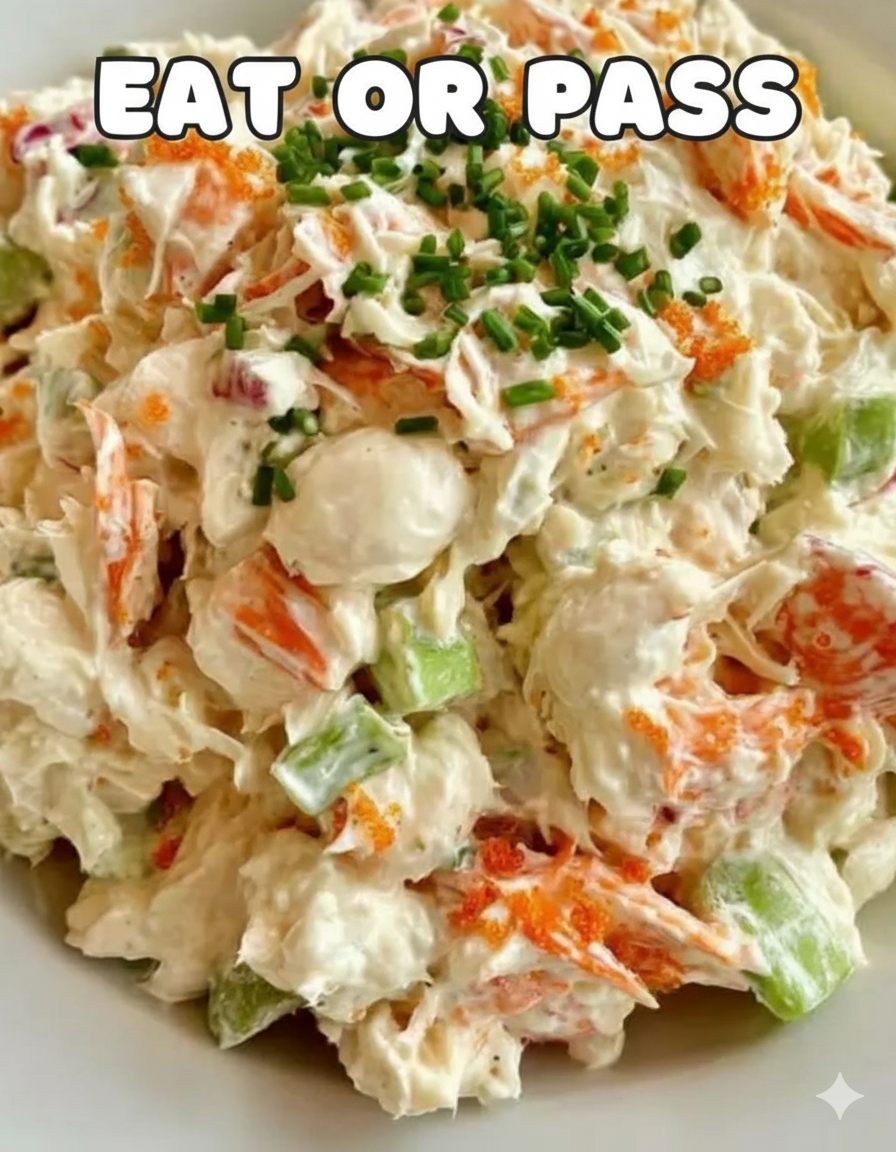
Creamy Seafood Salad with Imitation Crab is a symphony of textures and flavors: tender, flaky surimi pieces that absorb the dressing beautifully, interspersed with crunchy celery and onion for contrast. The dressing—a luscious blend of mayonnaise and sour cream—offers tangy richness brightened by lemon juice and aromatic spices like Old Bay, garlic, and onion powders. Fresh dill weaves through, adding an herby lift that evokes garden freshness. Optional peas or corn contribute subtle sweetness and pops of color, making each bite vibrant. Visually appealing with pinkish crab flakes against green herbs and pale dressing, it’s as pleasing to the eye as the palate. Served cold, it provides a cooling, satisfying experience ideal for warm days or as a counterpoint to heavier meals. The overall profile is mildly sweet from the crab, savory from seasonings, and creamy without being overpowering—a true crowd-pleaser.
Nutritional Information
Creamy Seafood Salad with Imitation Crab offers a balanced, moderate-calorie option with protein from the surimi and healthy fats from the dressing. Per serving (about 1 cup, based on 6 servings): approximately 250-350 calories, depending on exact mayo usage. Protein: 8-12g, primarily from imitation crab (made from pollock fish). Carbohydrates: 15-25g, including some from crab starch and vegetables. Fats: 15-25g, mostly from mayonnaise and sour cream. It provides minimal fiber (1-3g) but benefits from celery and optional veggies. Imitation crab is low in fat and calories compared to real crab but higher in sodium (400-800mg per serving) and processed additives. Lemon juice adds vitamin C, while dill offers antioxidants. Overall, it’s lighter than many creamy salads, suitable for low-carb diets if portions are controlled, but watch sodium for heart health. Using light mayo or yogurt reduces calories significantly.
Conclusion
In wrapping up our exploration of Creamy Seafood Salad with Imitation Crab, it’s clear this dish is more than a simple recipe—it’s a testament to culinary ingenuity, blending tradition with modern convenience for a result that’s endlessly enjoyable. From its ancient surimi origins to its place as an American favorite, this salad delivers flavor, versatility, and ease in every bite. Whether you’ve followed the classic preparation or experimented with additions, the outcome is a refreshing, creamy delight that satisfies cravings without complexity. As we conclude, remember that food like this brings people together, evoking shared meals and joyful moments.
Recommendation
I highly recommend trying Creamy Seafood Salad with Imitation Crab for your next meal—it’s perfect for beginners and seasoned cooks alike. Start with the base recipe for authenticity, then personalize with your favorite tweaks. Pair it with fresh bread for sandwiches or crisp greens for a lighter option. It’s an excellent choice for meal prep, potlucks, or quick family dinners.
Embracing Healthful Indulgence
Embracing healthful indulgence means enjoying dishes like Creamy Seafood Salad with Imitation Crab mindfully—savoring its creamy richness while appreciating its lighter profile compared to heavier seafood options. By choosing quality ingredients and portion control, this salad becomes a guilt-free pleasure, offering protein and veggies in a flavorful package. It encourages balance: indulge in the creaminess, but pair with fresh elements for nutrition. Ultimately, this recipe reminds us that delicious food can nourish both body and soul, promoting a lifestyle where enjoyment and well-being coexist harmoniously.