INTRODUCTION
Milk brioche rolls are one of those rare baked delights that manage to feel both luxurious and comforting at the same time. These rolls are tender, buttery, lightly sweet, and delicately enriched with milk and eggs, giving them a richness that feels almost decadent while remaining incredibly approachable. With their golden exterior, soft crumb, and pillowy interior, these rolls strike a beautiful balance between elegance and homestyle warmth, creating a bread that satisfies cravings while elevating even the simplest meal. Whether enjoyed warm with butter, paired with a cup of coffee, or used to accompany savory dishes, milk brioche rolls have an irresistible charm that delights bakers and eaters alike.
What makes milk brioche rolls particularly special is how they transform everyday ingredients into something extraordinary. A basic combination of flour, milk, eggs, sugar, and butter—ingredients found in most kitchens—are kneaded and patiently risen into a dough that promises softness and depth. When baked, the rolls develop a subtle sweetness, a fragrant aroma, and an airy crumb that feels silky with every bite. The first experience of pulling apart a warm brioche roll, steam rising gently into the air, is pure culinary comfort, reminding us of the beauty found in freshly baked bread.
This guide explores every detail behind making perfect milk brioche rolls, from the dough’s humble beginnings to the final golden-brown finish. You will learn not only how to assemble and bake the rolls, but also why each ingredient matters, how the dough behaves, and what techniques help achieve optimal softness and flavor. With patience, practice, and a love for homemade bread, these rolls can become a cherished part of your kitchen tradition—a recipe you return to whenever you want to offer something comforting, beautiful, and delicious.
ORIGIN AND CULTURAL SIGNIFICANCE
The concept of brioche originates in France, where enriched breads—those made with butter, eggs, and milk—have long been celebrated for their indulgent softness and delicate texture. Brioche itself dates back centuries, evolving into a symbol of refined baking and culinary artistry. Traditionally, brioche was considered a special-occasion bread, reserved for holidays, festive gatherings, and moments of celebration due to the richness of its ingredients. Its buttery aroma and tender crumb made it a luxury item that signified care, craftsmanship, and a deep appreciation for exceptional bread.
Over time, brioche spread beyond its French roots and became beloved worldwide. Its ability to be shaped into rolls, loaves, buns, and even pastries contributed to its popularity, as did its versatility. Brioche is used today in countless ways—from breakfast pastries to sandwich buns to intricate desserts—and its soft, slightly sweet character adapts beautifully to both savory and sweet applications. The milk brioche roll variation emphasizes softness and moisture even more, producing a pillowy bread that appeals to modern preferences for tender, easy-to-eat baked goods.
Milk brioche rolls have also found a place in home baking traditions because they symbolize warmth and hospitality. Serving freshly baked rolls is often associated with nurturing and celebration, whether at family dinners, holiday gatherings, or weekend brunches. Their aroma fills the home in a way that evokes comfort and togetherness, making them a sentimental favorite. In many cultures, enriched breads represent abundance and care, and milk brioche rolls fit seamlessly into this tradition. Baking them at home offers a satisfying connection to culinary heritage, while also creating new traditions for future generations to enjoy.
INGREDIENTS QUANTITY
Below is the full ingredient list for milk brioche rolls, presented with expanded explanations to help you understand the science and purpose behind each component. This knowledge will not only improve your results but also empower you to make informed adjustments in future baking sessions.
• 4 cups all-purpose flour
Flour is the backbone of the dough, providing structure and forming gluten strands that give the rolls strength and elasticity. All-purpose flour works beautifully because it has just the right protein content to create a tender yet resilient crumb. Measuring flour accurately is essential—too much flour yields dense rolls, while too little makes the dough sticky and weak. Scooping and leveling ensures reliability and consistency throughout the recipe.
• 1/3 cup granulated sugar
Sugar contributes sweetness while feeding the yeast to encourage a strong rise. It also tenderizes the dough by interfering with gluten formation, resulting in a softer roll. Sugar plays a crucial role in the final browning of the crust as well, as caramelization creates a golden, glossy finish that makes brioche so visually appealing.
• 1 teaspoon salt
Salt strengthens gluten, enhances flavor, and regulates yeast activity. Without proper salt levels, the dough may rise too quickly or taste bland. Salt ensures balanced structure and a well-rounded flavor profile, preventing the rolls from becoming overly sweet and keeping the dough manageable.
• 2 1/4 teaspoons active dry yeast (1 packet)
Yeast is the driving force behind the bread’s lightness, contributing to the airy structure through fermentation. Active dry yeast requires activation in warm water, allowing it to wake up and begin feeding on sugars. Properly activated yeast creates carbon dioxide bubbles that expand the dough during proofing, eventually producing the soft, fluffy interior characteristic of brioche.
• 1/4 cup warm water (110°F)
Warm water activates the yeast and encourages fermentation. The temperature is crucial: too cold and the yeast remains dormant, too hot and the yeast can die. Water around 110°F creates the ideal environment for yeast to thrive, ensuring a strong rise and a well-developed dough.
• 2/3 cup whole milk, warmed
Milk enriches the dough, adding fat, protein, and natural sugars that contribute to softness, tenderness, and enhanced flavor. Whole milk is preferred because the extra fat creates a creamier crumb and a richer overall result. Warming the milk ensures it blends seamlessly with the yeast mixture and helps maintain optimal dough temperature.
• 3 large eggs, at room temperature
Eggs add richness, color, structure, and elasticity to the dough. They contribute to the signature softness of brioche and help the rolls achieve their golden hue. Room-temperature eggs incorporate more easily into the dough and prevent the butter from firming prematurely, resulting in a smoother, more cohesive mixture.
• 1 stick (1/2 cup) unsalted butter, softened
Butter is the heart of brioche, lending its unmistakable richness, moisture, and soft texture. The butter should be soft, allowing it to integrate slowly into the dough during kneading. Gradual incorporation ensures the dough absorbs the fat evenly, which helps create the silky, tender crumb brioche is known for. Using unsalted butter allows you to control the dough’s salt content precisely.
• 1 egg, beaten (for egg wash)
The egg wash is brushed onto the rolls before baking, creating a glossy, golden finish that enhances the rolls’ beauty and highlights the delicate layers created during shaping. It also adds a slight crispness to the crust, contrasting beautifully with the soft interior.
OPTIONAL ADDITIONS
Enhancing milk brioche rolls with optional add-ins allows you to personalize the flavor, texture, or presentation while keeping the base recipe intact. These variations can transform the rolls into savory dinner accompaniments, sweet breakfast treats, or festive holiday staples.
One popular addition is vanilla extract, which adds warmth and aromatic sweetness to the dough. Vanilla complements the brioche’s natural richness and deepens the flavor without making the rolls overly sweet. It’s a simple addition that elevates the entire experience, especially if the rolls will be served with butter or jam.
Another option is citrus zest, such as lemon or orange. Zest brightens the dough with a subtle floral note, making the rolls especially appealing for spring and summer occasions. Citrus pairs beautifully with butter and honey, creating a fresh, fragrant profile that feels both light and luxurious.
For savory applications, consider herbs like rosemary, thyme, or chives. Adding finely chopped herbs introduces an aromatic quality that complements soups, roasted meats, and cheese boards. Savory brioche rolls are perfect for dinner tables and elevate ordinary meals into something memorable.
Other creative additions include mini chocolate chips, dried fruit, honey, or cinnamon sugar. These ingredients transform the brioche into a sweet treat suitable for breakfast or dessert. Whether you choose to keep the rolls classic or personalize them with bold flavors, optional additions allow you to tailor the recipe to any occasion and taste preference.
TIPS FOR SUCCESS
Ensuring perfect milk brioche rolls requires attention to simple but essential details throughout the process. While the recipe itself is straightforward, brioche dough benefits greatly from proper handling, patience, and understanding of the ingredients.
One of the most important factors is proper kneading, as enriched doughs require time to develop gluten. A well-kneaded brioche dough becomes smooth, elastic, and slightly tacky without being overly sticky. This elasticity allows the dough to trap air during proofing, resulting in the signature airy crumb. Using a stand mixer simplifies the process, but hand-kneading is equally effective with persistence.
Another key tip is to monitor dough temperature, ensuring the butter doesn’t melt while incorporating. Melted butter can disrupt gluten structure, causing the dough to become greasy rather than silky. Soft butter that blends slowly into the dough yields a better texture and a cohesive, strong dough that rises beautifully.
Finally, proper proofing is essential. Brioche dough rises best in a warm, draft-free environment. Allowing sufficient rise time creates lighter, fluffier rolls, while rushing the process results in dense bread. Watch the dough, not the clock, and wait until it visibly doubles in volume during both the first and second rises.
INSTRUCTIONS
Here is the full step-by-step process for making milk brioche rolls, expanded with helpful details and descriptive cues to ensure success at every stage.
1. Activate the Yeast
In a small bowl, dissolve the active dry yeast in the warm water, adding a pinch of sugar to help feed the yeast. Allow the mixture to sit undisturbed for 5–10 minutes, or until it becomes foamy and bubbly on the surface. This foam signals that the yeast is alive and ready to leaven the dough, contributing to the soft, fluffy texture brioche is known for. If no foam develops, the yeast may be old or the water too hot or cold, and it’s best to start this step again.
2. Make the Dough
In a large mixing bowl or the bowl of a stand mixer, whisk together the all-purpose flour, granulated sugar, and salt until well combined. Add the foamy yeast mixture, the warm milk, and the room-temperature eggs to the dry ingredients. Begin mixing slowly until the dough comes together in a shaggy, sticky mass. This initial mix hydrates the flour and forms the foundation of the dough, preparing it for butter incorporation and further kneading.
3. Add the Butter
Gradually add the softened butter—one small piece at a time—while kneading on medium speed or by hand. Allow each piece to blend fully before adding the next to prevent greasiness. Continue kneading for about 7 minutes in a stand mixer or 10 minutes by hand, until the dough becomes smooth, elastic, and slightly tacky. The dough should stretch without tearing and pull gently away from the bowl, forming a cohesive, supple ball ready for rising.
4. First Rise
Place the dough in a lightly greased bowl, cover it with a clean towel or plastic wrap, and let it rise in a warm, draft-free area. Allow the dough to rise for 1–2 hours, or until it doubles in size. The warmth encourages yeast activity, expanding the dough and developing flavor. A fully risen dough will feel airy and slightly jiggly when the bowl is gently shaken.
5. Shape the Rolls
Punch down the dough to release excess gas, then transfer it to a lightly floured surface. Divide the dough into 12–15 equal pieces, depending on the size rolls you prefer. Shape each piece into a tight ball or small log, smoothing the surface to create even rolls that bake consistently. Place the shaped rolls on a parchment-lined baking sheet, leaving space for expansion during the final rise.
6. Second Rise
Cover the rolls loosely with a towel and allow them to rise again for 45–60 minutes, or until noticeably puffy. This second rise contributes to the final texture, ensuring the rolls bake up light and airy. Patience during this step yields the softest brioche rolls with a delicate crumb.
7. Bake
Preheat the oven to 375°F (190°C). Brush the tops of the risen rolls with the beaten egg wash, coating them evenly to promote a deep golden shine. Bake for 18–22 minutes, or until the tops are richly golden and the rolls produce a hollow sound when gently tapped. Avoid overbaking, as brioche dries out quickly due to its tender crumb.
8. Cool & Serve
Allow the rolls to cool slightly on a wire rack before serving. Enjoy them warm with butter, jam, honey, or alongside your favorite meals. Their softness, aroma, and beautifully enriched flavor make them irresistible fresh out of the oven.
DESCRIPTION
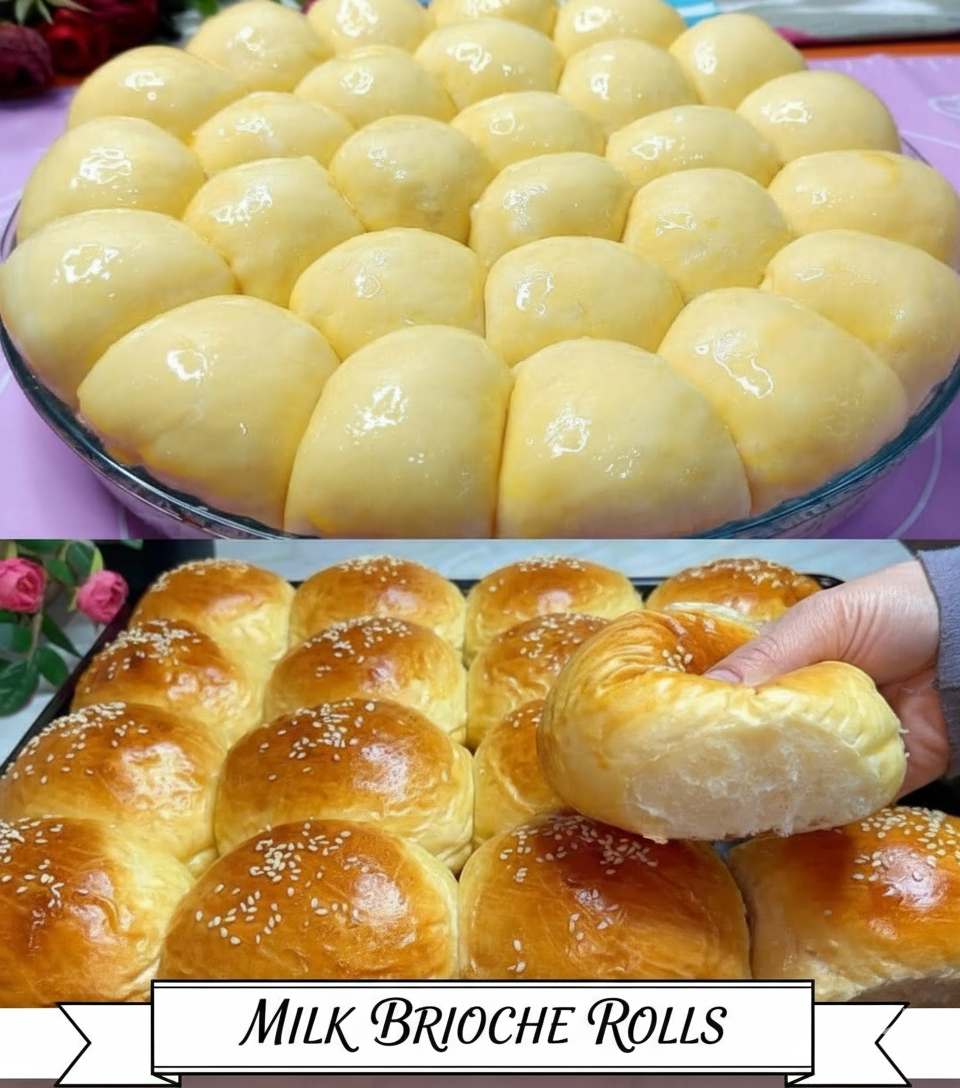
Milk brioche rolls present an appearance that captures the heart even before the first bite. Their glossy, golden tops glisten under the egg wash, catching the light in a way that feels luxurious and inviting. When pulled apart, the rolls reveal a tender, feathery crumb with delicate strands of soft dough stretching elegantly before separating. Their interior is pale, moist, and buttery, offering both visual beauty and textural delight.
The aroma that escapes from freshly baked milk brioche rolls is equally enchanting. Warm notes of butter blend with subtle sweetness and the comforting scent of baked bread, creating a sensory experience that fills the kitchen with irresistible warmth. This aroma signals the perfect balance of richness and softness—a promise confirmed by the roll’s silky texture and melt-in-your-mouth feel.
In taste, the rolls deliver gentle sweetness complemented by creamy undertones from milk and butter. They are rich without being heavy, making them suitable for both sweet pairings like fruit jam or honey and savory accompaniments like soup, roasted chicken, or cheese. Their versatility and delicate flavor make them a true staple, bringing elegance and comfort together in every bite.
NUTRITIONAL INFORMATION
Milk brioche rolls are an enriched bread, meaning they contain higher levels of fat and protein than standard bread recipes. These ingredients contribute to their soft texture, rich flavor, and beautiful color, but they also increase caloric density. However, their nutritional profile remains balanced when enjoyed mindfully and paired with nutrient-rich dishes.
Each roll provides carbohydrates from flour, protein from eggs and milk, and fats from butter and eggs. These elements work together to offer sustained energy and satisfy hunger more effectively than lean breads. Milk contributes additional vitamins, including vitamin D and calcium, while eggs add essential amino acids and nutrients like choline.
Although brioche is more indulgent than basic breads, portion control and balanced meals allow it to fit comfortably into a wholesome diet. Serving the rolls alongside vegetables, lean proteins, or fresh fruit enhances nutritional balance while allowing you to savor their luxurious softness without guilt. Like all enriched baked goods, milk brioche rolls are best enjoyed as part of a mindful, varied eating pattern.
CONCLUSION
Milk brioche rolls embody the perfect blend of simple ingredients, thoughtful technique, and luxurious results. Their tender crumb, buttery aroma, and delicate sweetness make them a cherished addition to any table, whether served for breakfast, dinner, or special gatherings. Baking these rolls at home offers not only delicious rewards but also the joyful satisfaction of creating something meaningful and comforting from scratch.
With patience, practice, and attention to detail, anyone can master the art of crafting soft, golden brioche rolls. The process becomes a meditative ritual—mixing, kneading, shaping, rising—each step building anticipation for the final warm, fragrant result. The finished rolls feel timeless, offering both elegance and heartwarming simplicity in every bite.
Whether you enjoy them plain, dressed with spreads, or served alongside meals, milk brioche rolls bring comfort, tradition, and flavor into your kitchen. Once you experience their softness and versatility, they may quickly become one of your most cherished homemade breads.
RECOMMENDATION
If you are baking milk brioche rolls for the first time, take your time and enjoy the process. Enriched doughs reward patience and care, and each step contributes to the final texture. For best results, use fresh ingredients, measure precisely, and allow the dough to rise fully during both proofing stages. These small considerations will significantly elevate your rolls.
To expand your brioche baking journey, consider experimenting with different shapes—knots, braids, twists—or filling variations such as chocolate, fruit, or savory herbs. Each variation offers a fresh way to enjoy the brioche dough while keeping its beloved softness and richness.
Finally, serve the rolls warm whenever possible. Brioche is at its most enchanting when enjoyed fresh from the oven, and even a gentle reheat restores much of its original pillowy texture. With thoughtful pairing and presentation, milk brioche rolls can enhance meals, brighten gatherings, and add a touch of luxury to everyday dining.
EMBRACING HEALTHFUL INDULGENCE
Indulgence doesn’t have to conflict with wellness, and milk brioche rolls are a beautiful example of balanced enjoyment. While these rolls contain enriching ingredients like butter and eggs, they also offer satisfaction that prevents overeating and encourages mindful savoring. Every bite feels intentional and rewarding, allowing you to appreciate the craftsmanship behind homemade bread.
Healthful indulgence means embracing foods that bring comfort and joy while practicing moderation and mindful pairing. Enjoying a warm brioche roll with nourishing sides like fresh fruit, yogurt, lean proteins, or vegetables creates balance while highlighting the roll’s delightful flavor and texture. It invites a harmonious relationship with food—one that values pleasure alongside nourishment.
By baking brioche rolls at home, you maintain control over ingredients, freshness, and portion sizes, fostering healthier habits without sacrificing flavor. Homemade bread encourages connection: to the process, to tradition, and to those you share it with. As you embrace healthful indulgence, milk brioche rolls become not just a recipe, but an experience that enriches your meals, your kitchen, and your well-being.