Introduction
Garbage Bread may have an unusual name, but the moment you slice through its warm, golden crust, you discover that this dish is anything but ordinary. It represents the best of comfort cooking—resourceful, hearty, versatile, and packed with flavor in every bite. At its core, Garbage Bread is a celebration of creativity in the kitchen, combining whatever ingredients you have on hand into a rolled, baked loaf of irresistible deliciousness. It is the kind of recipe that turns leftovers, pantry staples, and classic burger flavors into an experience far greater than the sum of its parts.
With its origins tied to busy households, creative cooks, and the universal desire for simple meals that still feel special, Garbage Bread has become a beloved staple for families everywhere. It works beautifully as a weeknight dinner, but also shines as a game-day appetizer, party snack, potluck favorite, or after-school meal. The beauty of this recipe is that it welcomes improvisation—whether you’re craving cheeseburger flavors, pizza vibes, taco fillings, or loaded sandwich combinations, Garbage Bread adapts effortlessly to your tastes.
What makes Garbage Bread particularly irresistible is its contrast of textures: the crisp exterior, the soft interior, the oozy melted cheese, the savory meats, the tangy condiments, and the crunch of optional add-ins like pickles or bacon. It is warm, filling, comforting, and visually striking once sliced, with each spiral showcasing layers of flavorful ingredients. This blog post explores everything you need to know: the origins of this clever dish, its cultural relevance, detailed instructions, ingredient breakdowns, creative variations, nutritional perspective, and thoughtful reflections on enjoying indulgent food in a balanced way.
Origin and Cultural Significance
Despite its humorous name, Garbage Bread’s origin story reflects ingenuity rather than wastefulness. While its exact birthplace is difficult to pinpoint, many food historians and home cooks trace its roots to American kitchens where resourcefulness has always played a central role. Just like casseroles, pot pies, and skillet meals, Garbage Bread is part of a long tradition of transforming simple ingredients into comforting, filling, and crowd-pleasing dishes. Its rise coincided with a cultural shift toward convenient cooking, especially for busy families seeking meals that were quick to assemble without sacrificing flavor.
One of the earliest inspirations for Garbage Bread is the classic stromboli—an Italian-American rolled bread filled with cheese, meats, and seasonings. Over time, cooks adapted the stromboli method to include nontraditional ingredients such as ground beef, condiments, vegetables, and pickles, resulting in a dish that became lovingly nicknamed “Garbage Bread.” This wasn’t because the dish used garbage, but because it collected a bit of everything—whatever you had available—into one flexible, comforting roll. As family lifestyles evolved, this name stuck, reflecting both humor and practicality.
Culturally, Garbage Bread has become a symbol of home-style innovation. It encourages cooks to break free from rigid recipes, inviting creativity and personalization in the kitchen. It is also tied to communal gatherings, casual meals, and shared enjoyment—moments when families or friends come together to enjoy hearty, satisfying food. Today, Garbage Bread frequently appears at tailgate parties, potlucks, family celebrations, movie nights, and busy evenings when something comforting is needed. Its continued popularity underscores the enduring appeal of comfort food that is simple in technique yet rich in flavor and tradition.
Ingredients Quantity
Below is the complete list of ingredients from your recipe, along with explanations of their roles and importance. Each ingredient contributes to the flavor, structure, and overall success of the dish, making Garbage Bread delightfully savory, cheesy, and satisfying in every slice.
Ingredients:
- 1 pound ground beef – Adds protein, heartiness, and the classic cheeseburger flavor base.
- ½ cup diced onion – Enhances aroma and provides sweetness and depth when sautéed with the beef.
- ¼ teaspoon salt – Essential for seasoning the meat and balancing the flavors.
- ¼ teaspoon pepper – Adds mild heat and rounds out the seasoning profile.
- 1 (11-ounce) tube refrigerated French bread dough – Forms the structure of the bread and provides a golden exterior with a soft, airy interior.
- ⅓ cup ketchup – Adds sweetness, tanginess, and moisture; ties the flavors together like a cheeseburger sauce.
- 3 tablespoons mustard – Offers sharp, tangy contrast to the richness of the meat and cheese.
- 6 slices cooked and crumbled bacon or store-bought bacon pieces – Adds crunch, smokiness, and salty depth that elevates the filling.
- 2 dill pickle spears, chopped – Introduces zing and brightness while enhancing the cheeseburger theme.
- 8 slices American cheese – Meltability and classic flavor make it perfect for achieving gooey, cohesive layers.
- 1 large egg, beaten – Brushed on top to create shine and help sesame seeds adhere.
- 1 tablespoon sesame seeds – Adds texture and visual appeal, echoing a classic burger bun.
- Thousand Island dressing for dipping – Complements the flavors and enhances the cheeseburger experience.
Each ingredient works harmoniously, offering a balance of savory richness, tang, texture, and ultimate satisfaction. The beauty of Garbage Bread is that even with replacements or additions, the integrity of the dish remains delicious and comforting.
Optional Additions
One of the most enjoyable aspects of Garbage Bread is its versatility. Although the provided recipe is delicious exactly as written, optional additions allow you to further customize, elevate, or completely reinvent the flavor profile depending on your cravings or ingredients on hand. Customization makes Garbage Bread feel new each time—no two versions need to be exactly alike.
Popular additions include sauteed bell peppers, sliced jalapeños, or caramelized onions, which introduce sweetness, heat, or depth. Vegetables like mushrooms, spinach, or even shredded carrots can be added for extra texture and nutritional value. These additions blend effortlessly with the ground beef, creating layers of flavor that enhance the dish without overwhelming it.
You can also experiment with cheeses beyond American cheese, such as cheddar, pepper jack, Swiss, or provolone. Each type of cheese melts differently, offering subtle variations in richness and creaminess. Meanwhile, for those craving more complex savory notes, adding Worcestershire sauce, smoked paprika, garlic powder, or chipotle mayonnaise can elevate the filling significantly. The flexibility of Garbage Bread ensures that no matter what you add, the final dish remains cohesive, comforting, and irresistibly flavorful.
Tips for Success
While Garbage Bread is simple to make, a few thoughtful techniques can greatly improve the final results, ensuring the loaf bakes evenly, slices cleanly, and bursts with flavor. Mastering these tips will help you consistently create a Garbage Bread that impresses guests and satisfies even the hungriest eater.
1. Drain the beef thoroughly: Excess grease can prevent the bread from baking evenly and may cause sogginess. Ensure the meat is fully drained before layering it on the dough.
2. Don’t spread fillings too close to the edges: Leave a small border around the sides to prevent ingredients from spilling out during rolling. This keeps the loaf neat and the final slices visually appealing.
3. Roll tightly but not too tightly: A snug roll helps keep layers together, but rolling too tightly may cause dough tearing. Aim for a smooth, controlled roll for best results.
4. Use parchment paper: This prevents sticking, makes cleanup easier, and supports even browning on the bottom of the loaf.
5. Let it cool briefly before slicing: Cutting too soon can cause the filling to spill or cheese to ooze excessively. A short cooling period helps the loaf set while staying warm and melty.
These small details enhance both flavor and presentation, making your Garbage Bread consistently successful and satisfying with every attempt.
Instructions
Below is the full, expanded step-by-step breakdown of the recipe you provided, written with additional detail to ensure clarity and success.
1. Preheat and Prepare
Preheat your oven to 350°F (177°C). Prepare a baking sheet by lining it with parchment paper or lightly spraying with nonstick cooking spray. This step ensures your Garbage Bread cooks evenly and does not stick to the surface during baking.
2. Cook the Ground Beef
In a large skillet over medium heat, cook the ground beef and diced onion together, stirring occasionally until the beef is fully browned and the onions become tender. Season with salt and pepper to enhance the flavor. Once cooked, drain excess grease thoroughly, as removing moisture helps the filling remain structured and prevents sogginess during baking.
3. Prepare the Dough
Lightly flour a clean surface and roll out the refrigerated French bread dough into a large rectangle, approximately 12×18 inches. Try to maintain an even thickness throughout to ensure consistent cooking. The dough should be smooth, pliable, and easy to roll without tearing.
4. Add the Condiments
Evenly spread ketchup and mustard across the surface of the dough, leaving a ½-inch border around the edges. These condiments not only add classic cheeseburger flavor but also help bind the fillings together.
5. Layer the Fillings
Spread the cooked ground beef and onions over the condiments in an even layer. Sprinkle the crumbled bacon pieces over the top, followed by the chopped dill pickles. These layers create depth, savoriness, and tangy contrast that elevate the entire dish.
6. Add the Cheese
Arrange the slices of American cheese evenly over the fillings. American cheese melts beautifully, creating a gooey, cohesive structure that holds the bread together when baked.
7. Roll and Seal
Starting at one of the long sides, carefully roll the dough into a tight but gentle log. Pinch the ends and seam to seal completely. Place the roll seam-side down on your prepared baking sheet, ensuring stability and even baking.
8. Brush and Bake
Brush the top of the rolled dough with the beaten egg, which gives the bread a glossy, golden finish when baked. Sprinkle sesame seeds on top to add flavor, crunch, and a familiar burger-bun appearance. Bake for 20–25 minutes, or until the bread is beautifully golden brown and fully cooked through.
9. Cool and Serve
Allow the Garbage Bread to cool for at least five minutes before slicing. This short resting period helps the cheese set and makes slicing cleaner and easier. Serve warm with Thousand Island dressing for dipping, enhancing the cheeseburger theme and creating a perfect finishing touch.
Description
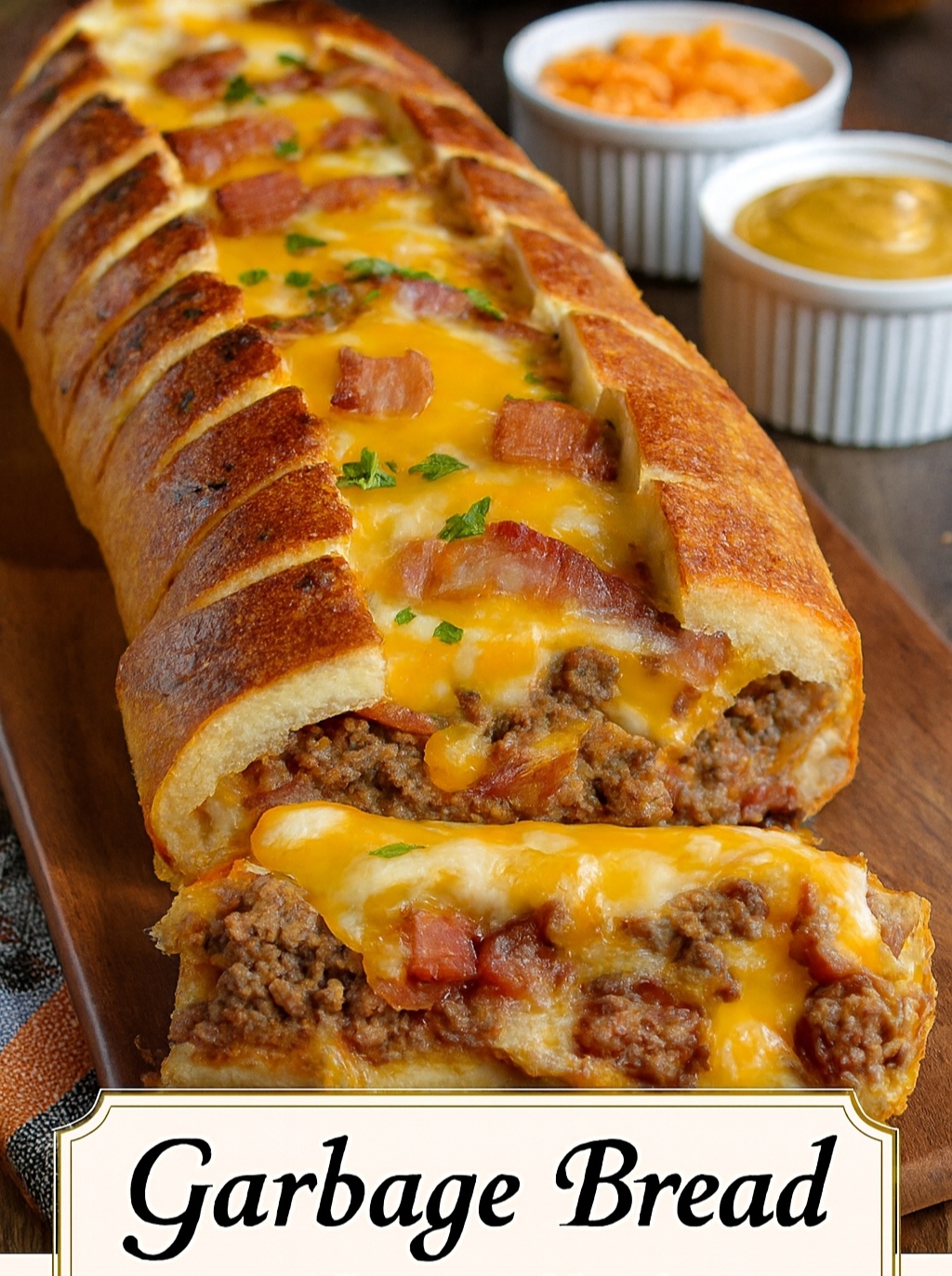
Garbage Bread is a visually striking, deeply comforting dish that delivers flavor, texture, and satisfaction in every slice. When baked to perfection, the exterior becomes golden and crisp, offering a delightful contrast to the soft, savory interior. As you cut through the loaf, each slice reveals spiraled layers of ground beef, melted cheese, glistening condiments, bacon pieces, and bright specks of pickle, creating a presentation that is both rustic and appetizing.
The aroma alone is enough to draw anyone to the kitchen—warm bread, sizzling beef, melted cheese, and tangy mustard mingle into a fragrance reminiscent of classic diner comfort food. The first bite confirms everything the aroma promises: cheesy richness, savory meatiness, tangy pickles, smoky bacon, and the perfect blend of ketchup and mustard, all enveloped in a warm, tender bread shell.
Every component of Garbage Bread contributes to its all-around appeal. The bread holds everything together yet never overwhelms the filling. The beef provides substance, the bacon adds crunch, the cheese melts into dreamy smoothness, and the pickles cut through richness with welcome acidity. This balance makes Garbage Bread both hearty and bright, indulgent yet approachable, comforting yet exciting—truly a dish that satisfies every craving.
Nutritional Information
Garbage Bread is a comfort food dish with a moderate nutritional profile depending on serving size and ingredient variations. While it is more indulgent than light, it also offers protein, carbohydrates, and fats in a balanced structure that makes it perfect for an occasional treat or satisfying meal. Understanding its nutritional composition allows you to enjoy it mindfully while appreciating the richness that makes it special.
A typical slice provides a combination of beef protein, cheese fats, and carbohydrates from the bread dough. The bacon adds additional richness and flavor, while the condiments and pickles contribute small amounts of sugar and sodium. Depending on portion size, an average serving may range between 350–480 calories, with protein content around 18–25 grams. Adjustments like substituting lean beef, reducing cheese, or adding vegetables can alter these numbers significantly.
While Garbage Bread is not designed as a health-focused recipe, it fits comfortably into a balanced diet when enjoyed occasionally and paired with lighter sides such as salads or roasted vegetables. Eating it as part of a mindful meal rather than a hurried snack enhances satisfaction and encourages a healthier relationship with indulgent foods.
Conclusion
Garbage Bread is much more than a way to use leftovers—it is a celebration of creativity, comfort, and bold flavors wrapped into a warm, golden loaf. Its combination of cheesy richness, savory beef, smoky bacon, tangy pickles, and soft bread makes it a dish that appeals to adults and children alike. Whether you prepare it for game day, a busy weeknight, or a gathering with friends, Garbage Bread never fails to impress and satisfy.
Its versatility also guarantees that it never grows old. With endless variations—such as taco fillings, pizza toppings, breakfast ingredients, or vegetarian alternatives—Garbage Bread can adapt to any craving or occasion. Its simplicity, affordability, and crowd-pleasing nature elevate it from casual comfort food to a reliable household favorite worth making again and again.
In today’s fast-paced world, Garbage Bread represents the kind of cooking that brings people together: warm, satisfying, shareable, and made with love. It reminds us that great food does not need to be complicated, expensive, or elaborate—sometimes, the most memorable meals are those made from what we already have, transformed with a bit of creativity and care.
Recommendation
If you are looking for a dish that is easy to prepare, comforting to eat, visually appealing, and guaranteed to become a family favorite, Garbage Bread is the perfect choice. It is ideal for casual meals, parties, gatherings, and moments when you want something delicious without spending hours in the kitchen. The recipe is forgiving, customizable, and endlessly adaptable, making it suitable for cooks of all skill levels.
To elevate the experience, consider serving Garbage Bread alongside crisp salad greens, roasted vegetables, or a flavorful dipping sauce beyond Thousand Island. Barbecue sauce, ranch dressing, chipotle mayo, or honey mustard can all add fun flavor twists. Experiment with ingredients, adapt the fillings to match your cravings, and explore seasonal variations to keep the recipe fresh and exciting.
Above all, enjoy Garbage Bread as a shared dish. Slice it thick for hearty dinners or thin for appetizers, and watch how quickly it disappears once placed on the table. Its warm, melty, flavorful nature appeals to nearly everyone, making it a reliable go-to recipe you will turn to again and again.
Embracing Healthful Indulgence
Indulgence and wellness do not have to exist on opposite ends of the spectrum. When enjoyed mindfully, dishes like Garbage Bread can be part of a balanced lifestyle—one that values nourishment, pleasure, and the joy of cooking with creativity. Homemade comfort foods offer emotional satisfaction, culinary expression, and the ability to choose quality ingredients free from unnecessary additives.
Embracing healthful indulgence means savoring rich dishes slowly, appreciating the craftsmanship that transforms simple ingredients into something memorable. It means cooking with intention, sharing meals with loved ones, and recognizing that comfort foods have a place in a joyful, sustainable diet. Garbage Bread is a wonderful example of a dish that brings warmth, family connection, and satisfaction while still allowing for balance and moderation.
By approaching indulgent foods with curiosity, gratitude, and awareness, you can enjoy every bite without guilt. Garbage Bread invites you to reconnect with the pleasures of homemade cooking—celebrating flavor, creativity, and comfort while honoring your own sense of balance and well-being.