Homemade Chocolate Cake 🤤🤤 — A Complete Deep-Dive Guide
Introduction
There is something universally comforting about a homemade chocolate cake, a dessert that transcends borders, cultures, and generations. For many people, the aroma of cocoa blooming in the oven evokes childhood memories, family gatherings, or even the quiet joy of indulging in a personal moment of sweetness after a long day. Chocolate cake has remained one of the most beloved desserts in the world because it carries a familiar warmth, a softness that melts on the tongue, and a depth of flavor that feels both luxurious and simple at the same time. Making chocolate cake at home brings not only delicious results but also the pleasure of crafting something with your own hands, choosing quality ingredients, and embracing the creativity of baking. Whether you are an experienced baker or someone discovering the magic of the kitchen for the first time, this recipe offers a timeless foundation upon which your personal touch can shine. The process of mixing dry ingredients, slowly incorporating the wet ones, and seeing the batter come together into a smooth chocolate ribbon is almost therapeutic. A homemade chocolate cake is more than a dessert—it’s an expression of care, celebration, and the pure happiness found in sharing something delicious with others.
Origin and Cultural Significance
Chocolate cake, in its earliest form, did not exist until chocolate became affordable enough for common households, and this transformation occurred during the 19th century. Before that, chocolate was mainly consumed as a beverage by the elite, often unsweetened and used for medicinal purposes. When innovations in cocoa processing allowed chocolate to be produced on a mass scale, bakers began experimenting with combining it into cakes. The introduction of baking powder and baking soda also made cakes lighter and softer, which created the foundation for the modern chocolate cake we know today. Throughout history, chocolate cake evolved into a universal symbol of celebration, frequently appearing at birthdays, weddings, holidays, and countless family events. In many cultures, chocolate represents luxury, warmth, comfort, and affection, making chocolate desserts particularly meaningful during moments of joy or emotional connection. The cake became a staple in American, European, and Middle Eastern bakeries, each region adding its own twist, such as richer frostings, syrup-soaked layers, or the addition of coffee to enhance the chocolate flavor. Today, chocolate cake holds cultural significance as a treat that feels special no matter how many times you have tasted it. Its presence often signals a shared experience, bringing people together around the table to enjoy something sweet and heartfelt. The homemade version maintains an even deeper importance because it carries the personal effort and love of the baker, reinforcing its value beyond the flavor alone.
Ingredients Quantity
The beauty of this recipe lies in the harmony of everyday ingredients that come together to create a tender, moist, and deeply flavorful chocolate cake. For the cake itself, you will need 1 and 3/4 cups (220g) of all-purpose flour, which provides the structure, and 1 and 1/2 cups (300g) of granulated sugar for sweetness and moisture retention. Cocoa powder, specifically 3/4 cup (65g) of unsweetened cocoa powder, delivers the rich chocolate flavor and color. The chemical leaveners—1 and 1/2 teaspoons each of baking powder and baking soda—ensure the cake rises beautifully with a delicate crumb. A half teaspoon of salt balances the sweetness and enhances the cocoa. To bring the batter together, two large eggs add richness and stability, while 1 cup (240ml) of whole milk contributes moisture and tenderness. Vegetable oil, at 1/2 cup (120ml), guarantees a soft, velvety texture even after chilling. Vanilla extract, measured at 2 teaspoons, adds aromatic sweetness. The key to achieving a smooth, pourable batter is the addition of 1 cup (240ml) of boiling water, which intensifies the cocoa flavor and creates a glossy consistency. For the frosting, you will need 1 cup (230g) of softened unsalted butter to create a creamy base, along with 3 and 1/2 cups (440g) of powdered sugar for sweetness and structure. Another 1/2 cup (45g) of cocoa powder deepens the chocolate intensity, while 1/4 cup (60ml) of milk and 2 teaspoons of vanilla extract help create a light, fluffy, and spreadable frosting.
Optional Additions
Although this chocolate cake recipe is complete and perfectly balanced on its own, optional additions allow you to tailor the flavor and texture to your personal preference. You can include a teaspoon of instant coffee or espresso powder to enhance the chocolate depth without making the cake taste like coffee. Chocolate chips or chopped dark chocolate can be added to the batter to create melted pockets of richness throughout the cake. For a more aromatic twist, a pinch of cinnamon or a touch of nutmeg can warm the overall flavor profile. Some bakers enjoy adding a tablespoon of sour cream or Greek yogurt to increase moisture and create a subtle tang that complements the sweetness. You can also introduce layers of texture by including crushed nuts, such as walnuts or hazelnuts, either in the batter or sprinkled between the cake layers. For those who love a gourmet touch, raspberry jam or salted caramel spread between the layers can introduce a delightful contrast. Each optional addition enhances the cake’s versatility, allowing you to transform a classic chocolate cake into a unique dessert that reflects your creativity.
Tips for Success
Achieving a perfectly moist, tender, and evenly baked chocolate cake requires attention to a few essential techniques. First, ensure that your dry ingredients are well sifted or thoroughly whisked to eliminate lumps, especially in the cocoa powder, which tends to clump. Proper mixing ensures a smooth batter and a lighter crumb. When incorporating the wet ingredients, avoid overmixing, as this can develop too much gluten and make the cake dense. Adding the boiling water is a crucial step—pour it slowly and mix carefully to avoid splattering while ensuring the cocoa dissolves fully, resulting in a deeper flavor. Always prepare your baking pans by greasing and flouring them or lining them with parchment paper to prevent sticking. Preheating the oven to 350°F (175°C) ensures an even temperature that helps the cake rise properly. When baking, resist the urge to open the oven door too early, as this can cause the cake to collapse. Use a toothpick to check for doneness; it should come out with a few moist crumbs but not wet batter. Let the cake cool completely before frosting to prevent the buttercream from melting. For the frosting, whip the butter until it becomes pale and fluffy before adding the dry ingredients, and adjust the milk quantity as needed to achieve your desired consistency.
Instructions
Preheat your oven to 350°F (175°C) and prepare two 9-inch round cake pans by greasing and flouring them or lining them with parchment paper. Begin by combining the dry ingredients in a large bowl: flour, granulated sugar, cocoa powder, baking powder, baking soda, and salt. Whisk them thoroughly to break up any lumps and create a uniform mixture. Add the eggs, whole milk, vegetable oil, and vanilla extract to the bowl, then beat the mixture on medium speed until the batter becomes smooth and well blended. Slowly pour in the boiling water while stirring; the batter will become thin, which is expected and essential for achieving a moist texture. Divide the batter evenly between the two prepared pans. Place the pans in the preheated oven and bake for 30 to 35 minutes, or until a toothpick inserted into the center of each cake comes out clean. Once baked, allow the cakes to rest in the pans for about 10 minutes, then transfer them to wire racks to cool completely. While the cakes cool, prepare the frosting by beating softened unsalted butter until creamy. Gradually add powdered sugar and cocoa powder, mixing on low speed until combined. Add milk and vanilla extract, then whip the frosting on high speed until light and fluffy. When the cakes are completely cool, spread a generous layer of frosting over the top of one cake layer, place the second layer on top, and frost the entire exterior of the cake.
Description
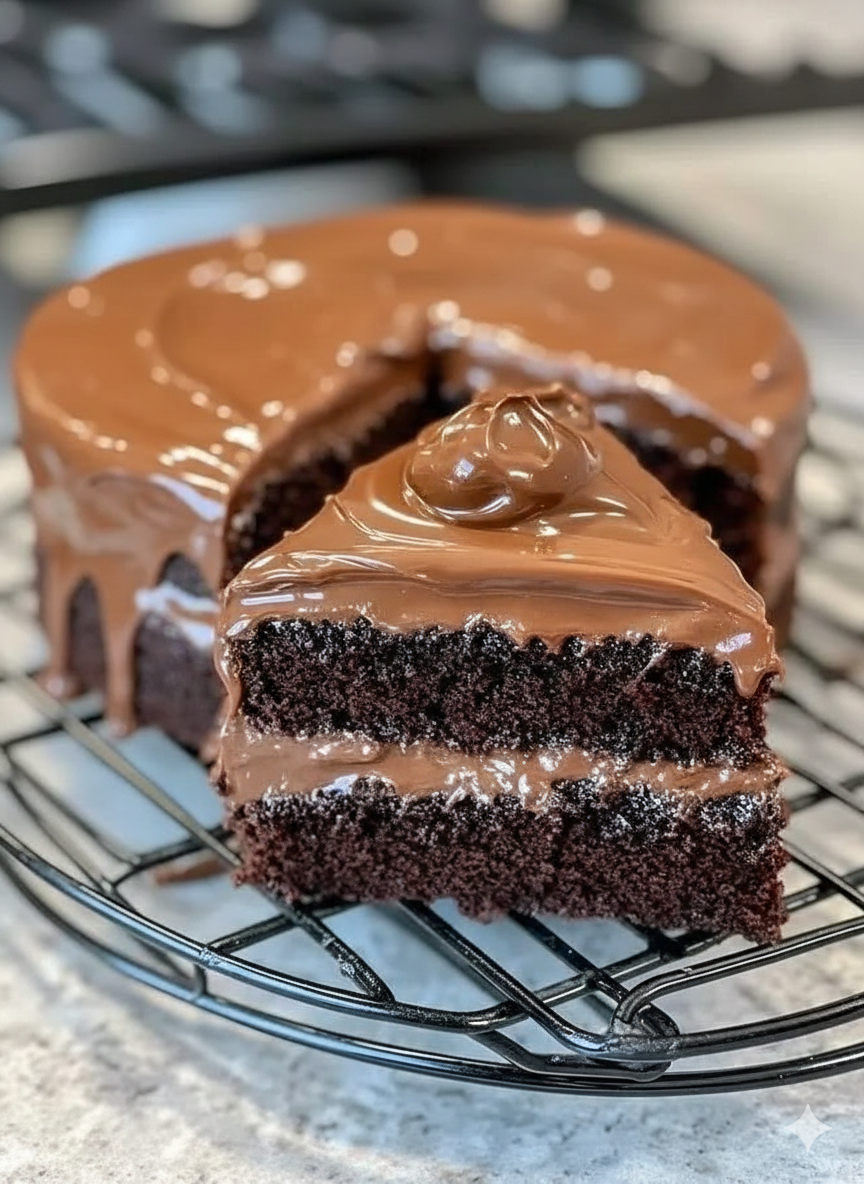
This homemade chocolate cake emerges from the oven with a rich, deep color and an aroma that fills the kitchen with warmth and anticipation. Its texture is soft, moist, and velvety, thanks to the combination of oil, milk, and boiling water in the batter. The crumb is tender yet stable enough to hold layers of frosting without crumbling. The frosting itself is smooth, silky, and intensely chocolatey, with a perfect balance of sweetness and depth. When sliced, the cake reveals evenly baked layers that glisten slightly from their moisture, and the frosting spreads beautifully without dragging or tearing the cake. Each bite offers a harmonious blend of soft cake and creamy frosting, making the experience indulgent but not overly heavy. Whether enjoyed freshly baked or chilled the next day, the flavor remains consistently delightful, with the cocoa’s richness becoming even more pronounced over time.
Nutritional Information
While chocolate cake is primarily enjoyed as a dessert rather than a health-focused food, understanding its nutritional components can help you enjoy it mindfully. A typical slice of this homemade chocolate cake with frosting contains carbohydrates from the sugar and flour, fats from the butter and oil, and a moderate amount of protein from the eggs and milk. Cocoa powder contributes antioxidants, while the fat content provides satiety and richness. Depending on the portion size, one slice may range between 350 to 500 calories, with variations depending on frosting thickness and added ingredients. Although not low in sugar or fat, homemade chocolate cake allows for better ingredient control compared to store-bought versions, avoiding preservatives and artificial additives. Enjoying it in moderation fits comfortably into a balanced lifestyle.
Conclusion
Homemade chocolate cake holds an enduring place in the world of desserts because it offers so much more than flavor. It represents comfort, celebration, creativity, and connection. Baking this cake from scratch invites you to slow down, engage your senses, and enjoy the rewarding transformation of simple ingredients into something extraordinary. Whether you make it for a birthday, a family gathering, or simply to treat yourself, this cake delivers a deeply satisfying experience that brings joy to both baker and guest. Sharing a slice becomes a small act of love, and mastering this recipe provides a reliable dessert you can return to for years to come.
Recommendation and Embracing Healthful Indulgence
While this chocolate cake is undeniably indulgent, it can absolutely have a place in a health-minded lifestyle when enjoyed thoughtfully. Consider pairing your slice with fresh fruit, sharing portions with loved ones, or serving it at gatherings where celebration is part of the moment. If you wish to lighten the recipe, you can experiment with reducing the sugar slightly, using high-quality cocoa for extra flavor without added calories, or incorporating nutrient-rich toppings such as berries or nuts. The goal is not to eliminate indulgence but to embrace it with balance, intention, and appreciation. A dessert like this becomes even more enjoyable when seen as an occasional treat that enhances life’s joyful moments.